
The global drywall plastering market is currently undergoing a period of dynamic transformation, characterized by robust growth, significant regional shifts, and a rapidly evolving landscape influenced by technological advancements and an increasing focus on sustainable practices. With worldwide drywall consumption reaching an impressive 11.1 billion square meters and a market value of approximately $23.3 billion in 2022, the industry has demonstrated substantial expansion, reflecting a notable global adoption trend since 2007. This comprehensive report delves into the intricate details of this market, providing an in-depth analysis of its current state, projecting future growth trajectories, and dissecting the key factors that are shaping its evolution.
As we navigate towards 2027, the market is poised for continued, albeit moderate, growth, with global demand expected to expand by approximately 1.8% annually, ultimately reaching 12.2 billion square meters. This anticipated steady increase is underpinned by a confluence of factors, including the resurgence of key regional markets, particularly China’s outsized influence, and a strategic shift towards commercial construction as the primary growth engine. Furthermore, the industry is grappling with persistent challenges, such as labor shortages, which are simultaneously catalyzing innovation in automation and robotics, while the critical imperative of environmental sustainability is driving significant shifts towards eco-friendly products and recycling initiatives across the supply chain.
Key Takeaways:
- Global drywall consumption reached 11.1 billion sq. meters ($23.3 billion) in 2022, projected to hit 12.2 billion sq. meters by 2027.
- China is the largest market, expected to drive 44% of global demand gains through 2027, propelled by commercial construction.
- North America remains a major consumer (U.S. to sell ~28 billion sq. ft. in 2024), but growth is leveling off compared to dynamic Asia-Pacific.
- Commercial construction (offices, hotels) is the dominant growth segment, forecast to reach 6.8 billion sq. meters by 2027, largely driven by urbanization and public infrastructure.
- Market value may slightly decrease to $22.7 billion by 2027 due to price normalization post-pandemic peaks, despite volume growth.
- Labor shortages (~20% gap) are spurring automation, with robotics boosting productivity 3-5x in some tasks.
- Sustainability is a critical focus, with only 2% of U.S. drywall scrap recycled and a 22% uptick in ‘eco-drywall’ product launches in two years.
1. Executive Summary
The global drywall market, a critical component of modern construction, is experiencing a period of robust and steady growth, underpinned by evolving regional demands, technological advancements, and an increasing focus on sustainability. In 2022, worldwide drywall consumption reached an impressive 11.1 billion square meters, translating to a market value of approximately $23.3 billion at the manufacturer level1. This represents a substantial increase from approximately 7.8 billion square meters in 20072, indicating a significant global adoption trend. Projections indicate that this growth trajectory will continue moderately, with global demand expected to expand by approximately 1.8% annually, reaching 12.2 billion square meters by 20273. This executive summary provides a comprehensive overview of the current state of the global drywall market, detailing key drivers, regional dynamics, emerging trends, and the challenges faced by the industry.
The market’s expansion is not uniform, with certain regions emerging as primary growth engines. Notably, China has solidified its position as the world’s largest drywall market, and despite a slowdown in 2022 due to COVID-19 lockdowns and real estate curbs, it is projected to drive approximately 44% of global drywall demand gains through 20274. This resurgence is largely fueled by a rapid shift from traditional plaster to modern drywall methods, particularly in commercial construction projects5. Meanwhile, North America, historically a dominant player, continues to be a major market, with the United States anticipating around 28 billion square feet of wallboard sales in 20246 and consuming approximately 45 million tons of gypsum in 20237, although its growth is now leveling off compared to the more dynamic Asia-Pacific region8.
A significant trend influencing the market is the increasing dominance of commercial construction. Non-residential buildings, including offices, hotels, and institutional facilities, are expected to account for 6.8 billion square meters of drywall use by 2027, growing at an annual rate of approximately 3.4%9. This growth significantly outpaces the residential segment, which is projected to remain relatively flat at around 5.4 billion square meters10. This divergence highlights the impact of government investments in public infrastructure and rapid urbanization, particularly in Asia and Africa, where large-scale commercial projects are driving drywall adoption1112.
Market value and pricing have experienced considerable flux. The early 2020s saw substantial price inflation, with U.S. drywall prices surging for seven consecutive quarters, including an 8% jump in Q3 2022 alone, reaching record highs1314. This was attributed to supply chain disruptions, raw material hikes, and robust demand. However, as supply chains normalize and demand cools, prices are stabilizing. The global market value is paradoxically expected to slightly decrease to $22.7 billion by 2027 despite volume growth, due to the normalization of prices from their pandemic-era peaks15.
Other critical factors shaping the industry include persistent labor shortages, which are spurring innovation in robotics and automation, and a growing emphasis on sustainability. The shortfall of skilled drywall installers, estimated at a ~20% gap, is accelerating the adoption of robotic systems for tasks like heavy sheet lifting and sanding, which have shown to boost productivity by 3–5 times in some cases161718. Furthermore, the significant environmental impact of drywall, from gypsum mining to its contribution to 30–40% of global landfill waste19, is driving demand for recycling and “greener” solutions. Only about 2% of U.S. drywall scrap is currently recycled into new wallboard20, and its decomposition in landfills can release toxic hydrogen sulfide gas21, prompting stricter regulations and increased investment in recycling infrastructure by major manufacturers. A 22% uptick in “eco-drywall” product launches in the last two years underscores this growing trend22.
1.1 Global Drywall Market Size and Growth Projections
The global drywall market demonstrates a trajectory of consistent, albeit moderate, growth. In 2022, the worldwide consumption of drywall material reached 11.1 billion square meters, representing a substantial market value of approximately $23.3 billion at the manufacturer level. This data, provided by The Freedonia Group, highlights the industry’s significant scale and economic contribution1. This recent figure represents a considerable expansion from 2007, when global consumption stood at approximately 7.8 billion square meters2, illustrating a nearly 42% increase in volume over 15 years. This growth indicates a continued global shift towards more efficient and modern construction methods, with drywall steadily replacing traditional plastering techniques in an increasing number of countries.
Looking ahead, market forecasts project a sustained upward trend in demand. Global drywall demand is expected to grow at an average annual rate of approximately 1.8% through 2027, culminating in a projected total demand of 12.2 billion square meters3. This positive outlook by Freedonia (2024) is predicated on a broader recovery in the construction sector post-pandemic, coupled with the continued adoption of drywall in developing and emerging economies. While this growth rate is moderate, it reflects a mature product category that continues to find new applications and geographical penetration.
Interestingly, while volume is projected to increase, the market value is expected to experience a slight decline. Global market value is forecast to tick down slightly to $22.7 billion by 202715. This apparent paradox is largely attributed to the normalization of drywall prices. Following significant price surges during 2021–2022, driven by supply chain disruptions and raw material cost inflation, unit prices are expected to stabilize and ease. Essentially, the industry anticipates selling more square meters of drywall but at a more normalized price point per unit as supply chain issues are resolved15.
The intensity of drywall usage varies dramatically across different regions, reflecting diverse construction practices. North America, for instance, has historically shown a very high per capita usage compared to the global average23. While the overall growth is moderate, this regional nuance suggests that there remains significant untapped potential in markets where drywall adoption is still in its nascent stages.
1.2 Regional Dynamics and Leading Markets
The geographic landscape of the global drywall market has undergone substantial shifts, with a notable rebalancing of influence. Historically, North America dominated drywall consumption, accounting for almost half of global sales in 200724. However, the Asia-Pacific region has now emerged as the largest market, largely driven by the colossal demand from China.
China’s Pivotal Role: China has become the undisputed leader in the global drywall market, both in terms of consumption and production. After a challenging 2022, which saw a slump in demand due to stringent COVID-19 lockdowns and government-imposed restrictions on the real estate sector25, China is experiencing a significant rebound. Forecasts suggest that China will contribute an extraordinary 44% of global drywall demand gains through 20274. This accelerated growth is primarily fueled by a strategic shift in Chinese construction from traditional, often labor-intensive, plaster and concrete methods to modern drywall techniques, particularly within the commercial building sector (e.g., offices, public infrastructure)5. This underscores China’s outsized influence; its market dynamics can significantly sway global trends.
North American Consistency, Slower Growth: The United States remains the second-largest drywall market and a significant consumer. Following a robust post-pandemic revival, U.S. wallboard sales are expected to reach approximately 28 billion square feet in 20246. The consumption of gypsum, the primary raw material for drywall, also hit 45 million tons in 2023 in the U.S.7, reflecting a healthy domestic industry. However, North America’s growth is now maturing and leveling off, especially when compared to the rapid expansion seen in Asia-Pacific markets8. While drywall is standard in North American homes, with an estimated per capita usage of ~11 square meters annually in the U.S.26, signifying high penetration, other regions are catching up rapidly.
Emerging Markets as Future Growth Engines: The long-term growth narrative increasingly centers on emerging economies in South Asia, Southeast Asia, Africa, and parts of Latin America. These regions, characterized by vast populations, rising urbanization, and increasing incomes, possess immense construction needs but currently exhibit lower drywall adoption rates27. As these markets evolve, transitioning from traditional building materials to more efficient and standardized solutions, drywall demand is anticipated to surge. This is particularly true for non-residential construction, where multinational builders often introduce drywall as the preferred method for its speed and flexibility28. While residential adoption might be slower due to cultural preferences and cost considerations, the overall trajectory points towards a gradual global convergence in drywall usage, with these regions progressively increasing their per capita consumption.
The manufacturing base for drywall is also highly concentrated. In 2022, just eight countries—China, the US, Japan, South Korea, Russia, Germany, Canada, and the UK—collectively accounted for over 70% of global drywall output29. China and the United States alone represent a substantial share of this production, with China’s output being roughly one-third of the global volume30. This concentration means global supply chains and market stability are significantly influenced by economic and construction cycles within these key regions.
| Metric | 2022 (Actual) | 2027 (Projected) | CAGR (2022-2027) |
|---|---|---|---|
| Global Consumption (Volume) | 11.1 billion m²1 | 12.2 billion m²3 | ~1.8%3 |
| Global Market Value | $23.3 billion1 | $22.7 billion15 | ~-0.5% (value decline due to price normalization) |
| China’s Contribution to Global Gains | N/A | 44% of global volume gains4 | Significant |
| US Wallboard Sales (Volume) | ~2.6 billion m² (28 billion sq ft)6 | Leveling off (post-recovery) | Moderate |
| Non-Residential Drywall Use | ~55% of total (approx. 6.1 billion m²) | 6.8 billion m²9 | ~3.4%9 |
| Residential Drywall Use | ~45% of total (approx. 5.0 billion m²) | ~5.4 billion m²10 | Flat10 |
1.3 Market Drivers: Commercial Construction and Urbanization
The contemporary global drywall market is predominantly driven by two powerful forces: the accelerating demand from commercial construction and the relentless pace of urbanization, particularly in emerging economies. These factors are shaping where and how drywall is utilized, leading to a significant shift in segmental dominance.
Commercial Construction Leads the Way: The non-residential sector has firmly established itself as the primary growth engine for drywall. By 2027, drywall consumption in offices, hotels, hospitals, educational institutions, and other commercial and institutional buildings is projected to reach an impressive 6.8 billion square meters, marking an annual growth rate of approximately 3.4%9. This stands in stark contrast to the residential segment, which is expected to remain relatively flat, hovering around 5.4 billion square meters through the same period10. This means that by 2027, non-residential construction will account for over 55% of the total drywall volume, a gap that is set to widen31.
Several factors contribute to this non-residential surge. A key driver is the post-pandemic rebound in sectors such as office and hospitality construction. Businesses are investing in upgrading office spaces to meet new work models, and the revival of travel is spurring new hotel developments. Governments globally are also fueling this demand through significant investments in public infrastructure, including schools, hospitals, and administrative buildings, as a means to stimulate economic recovery and growth1112. Drywall’s inherent advantages — speed of installation, design flexibility, and consistency — make it a preferred choice for large-scale commercial projects, where efficiency and adherence to strict timelines are paramount. Furthermore, multinational contractors often standardize on drywall for interior partitions and ceilings in such projects, introducing these methods to new markets32.
Urbanization as a Catalyst: Rapid urbanization, particularly in Asia-Pacific and Africa, is a crucial underlying factor fueling commercial construction and, consequently, drywall adoption. As urban populations swell and cities expand, there is an urgent need for new infrastructure, commercial centers, residential complexes, and public facilities. Drywall provides a rapid and cost-effective solution for creating interior spaces in these large-scale developments. In many developing countries, drywall is first embraced in commercial and retail environments led by international developers, rather than in traditional homebuilding which may still rely on cheaper masonry or plaster28. Countries like India, Thailand, and Indonesia are experiencing significant increases in drywall use, especially in high-rise construction and prefabricated housing units designed to accommodate growing urban populations efficiently33.
While drywall is standard in North American homes (e.g., ~11 m² per capita in the U.S.26), its penetration in homebuilding in many other regions remains limited. In some parts of Western Europe and Japan, stagnant housing starts further constrain residential drywall growth34. This contrast highlights that the primary market opportunity for drywall expansion currently lies in the commercial and institutional sectors of rapidly urbanizing regions, where the benefits of modern “dry construction” techniques are quickly realized and adopted.
1.4 Pricing Volatility and Supply Chain Normalization
The global drywall market has experienced significant pricing volatility in recent years, largely a consequence of unprecedented supply chain disruptions and surging demand. The early 2020s marked a period of steep cost inflation, creating substantial challenges for contractors and developers.
Pandemic-Era Price Surges: During 2021 and 2022, drywall prices escalated dramatically. In the United States, wallboard prices recorded increases for seven consecutive quarters, with a staggering 8% jump in Q3 2022 alone13. By this point, U.S. drywall prices had reached their highest levels in decades, even surpassing the peaks observed during the robust 2020 housing boom35. This inflationary pressure was not unique to the U.S.; global drywall price indexes in 2022 were reportedly 20–30% above pre-pandemic norms.
The primary drivers behind this sharp increase were multifaceted:
- Soaring Input Costs: Essential raw materials, particularly gypsum, paper (for the board facings), and energy (especially natural gas for kiln drying), saw significant price hikes36. Geopolitical events and global energy crises further exacerbated these costs.
- Supply Chain Disruptions: The COVID-19 pandemic led to widespread factory shutdowns, labor shortages, and logistical bottlenecks, constraining production and transportation. Manufacturers struggled to keep pace with demand, resulting in acute shortages and extended lead times. Contractors faced delays, with typical 1–2 week deliveries stretching to 6–8+ weeks in some regions3738.
- Robust Demand: Despite the logistical challenges, strong construction and renovation activity, particularly in residential sectors fueled by low interest rates and a desire for more living space, maintained high demand for building materials like drywall.
Stabilization and Normalization: Entering 2023, the market began to show signs of stabilization. Industry reports indicated that by late 2022, drywall material supply had “begun to stabilize” following the previous shortages39. As supply chains improved globally and construction activity normalized, the intense upward price pressures started to ease. Consequently, drywall prices leveled off in 2023. Industry analysts now forecast a return to more typical inflation rates, approximately 2–3% annually, for building materials by 202440. This normalization trend is further evidenced by the projection that the global drywall market value will slightly decrease from $23.3 billion in 2022 to $22.7 billion by 2027, even as volume increases15. This decline in value reflects the subsidence of the elevated pricing that characterized the supply crunch.
While the immediate crisis has passed, the experience of recent years has prompted the industry to focus on creating more resilient supply chains. Strategies include localizing gypsum sourcing, maintaining surge production capacity, and actively pursuing recycling initiatives to buffer against future disruptions. Despite the stabilization, overall material costs remain approximately 25% higher than 2020 levels in some markets41, indicating a new baseline relative to the pre-pandemic era.
1.5 Technological Innovations and Labor Efficiency
The persistent challenge of skilled labor shortages within the drywall industry is proving to be a powerful catalyst for technological innovation, particularly in robotics and automation. A significant 20% gap is estimated in the availability of skilled drywall installers, especially in developed markets, necessitating solutions that enhance productivity and reduce reliance on demanding manual labor16.
The Rise of Robotics: Robotic systems are no longer confined to manufacturing floors but are increasingly making their way onto construction sites. For drywall, these robots are designed to tackle repetitive, physically taxing, and often injury-prone tasks. Examples include:
- Robotic Sanding and Finishing: Automated systems equipped with AI guidance can apply joint compound and sand surfaces with remarkable precision. On a commercial project in Pennsylvania (the “Netflix House” experience center), an AI-guided drywall sanding robot demonstrated a 300% to 400% increase in productivity (3-5 times faster) for Level 4/5 finishes compared to manual methods1842. This not only speeds up work but also significantly reduces worker fatigue, especially for overhead sanding tasks1742.
- Automated Lifting and Placement: Robots are being developed to handle heavy drywall sheets, particularly for ceiling installations. What traditionally required multiple workers can now be managed by one worker with robotic assistance, dramatically reducing strain and improving safety17.
These innovations address the dual challenges of labor scarcity and the physical demands of drywall work. Early adopters report that robotics lead to more consistent quality, fewer callbacks for corrections, and an overall reduction in injuries associated with repetitive motions1743. While still in their emerging phase, the market for wall-plastering robots is projected to grow significantly, with forecasts predicting a ~12% annual increase, reaching over $1 billion by 202844. This indicates a growing appetite among contractors to invest in labor-saving technologies to maintain project schedules and overcome workforce limitations.
Advanced Drywall Materials and Tools: Alongside robotics, the materials themselves and manual tools are also evolving. Lightweight drywall panels, which are typically 20–30% lighter than standard boards, have been widely adopted, easing the physical burden on installers. Specialized boards offering enhanced moisture resistance, mold protection, soundproofing, and fire resistance are becoming standard, with approximately 46% of new construction projects globally incorporating such performance-oriented drywall22. Paperless drywall, with fiberglass facings, specifically targets mold prevention in damp environments. Moreover, advances in finishing tools, such as lighter automatic taping tools and dust-reducing sanding systems with vacuum attachments, improve both efficiency and worker health. Quick-setting and low-dust joint compounds further streamline the finishing process, allowing for faster curing times and cleaner job sites. These material and tool innovations collectively contribute to a more efficient, less physically demanding, and higher-quality drywall plastering process.
1.6 Sustainability and Environmental Concerns
Sustainability has rapidly risen to the forefront of industry concerns, addressing the environmental footprint of drywall throughout its lifecycle. From raw material extraction to disposal, the industry faces mounting pressure to adopt more eco-friendly practices.
Environmental Impact of Production and Waste:
- Resource Extraction: The mining and production of gypsum, the core material, inherently carry a carbon footprint. While some manufacturers are making strides, the energy-intensive processes contribute to greenhouse gas emissions.
- Waste Generation: Drywall waste represents a significant environmental problem. Construction and demolition (C&D) debris, which includes gypsum board, constitutes an estimated 30–40% of global landfill waste19. In the U.S. alone, millions of tons of drywall scrap are generated each year.
- Low Recycling Rates: Despite gypsum’s recyclability, the current recycling rate for drywall is remarkably low. In the United States, only about 2% of gypsum drywall waste is recycled into new wallboard20. The vast majority ends up in landfills.
- Hazardous Landfill Emissions: When landfilled with organic municipal solid waste, gypsum can decompose under anaerobic conditions to produce hydrogen sulfide gas21. This gas is characterized by a “rotten-egg” odor and can be toxic in higher concentrations, posing environmental and public health risks near landfill sites.
Emerging Sustainable Solutions: Recognizing these challenges, governments and the industry are implementing stricter regulations and investing in greener solutions:
- Landfill Restrictions: Some jurisdictions have already taken decisive action. The UK, for example, banned the co-disposal of gypsum with biodegradable waste in landfills in 2009 to prevent toxic gas formation, effectively mandating separate recycling or disposal45. Similar initiatives to boost drywall recycling or even ban its landfill disposal are being explored in U.S. states like Massachusetts and California.
- Manufacturer Initiatives: Leading producers are investing heavily in recycling infrastructure and sustainable production. Etex, a major building materials group, reported a 54% increase in its use of recycled gypsum since 2018, positioning itself as a leader in European gypsum recycling2246. Etex has also achieved a 20% reduction in absolute CO₂ emissions since 2018 through plant modernization and renewable energy adoption47. Similarly, China’s BNBM, one of the world’s largest producers, announced that all its Chinese drywall factories achieved “nearly zero emissions” in 2022 through improved dust collection, waste gypsum recycling, and cleaner energy usage48.
- Eco-Drywall Products: The market is witnessing a surge in “eco-drywall” product launches, with a 22% uptick in the last two years22. These products often feature higher recycled content, lower embodied carbon, or are produced using novel, more sustainable binders. Lightweight panels also contribute to sustainability by reducing material usage and transportation emissions.
- Alternative Gypsum Sources: The decline of synthetic gypsum (a byproduct of coal-fired power plants, which are being phased out globally) is pushing manufacturers to seek alternative gypsum sources, making recycled drywall an increasingly attractive feedstock495051. This aligns supply needs with environmental goals.
The imperative for sustainability is reshaping industry practices, driving innovation, and influencing regulatory frameworks, pushing the drywall sector towards a more circular economy model.
The evolving landscape of the global drywall market presents both opportunities and challenges. The growth in demand, particularly from commercial construction in emerging economies, signifies a dynamic market with considerable upside. However, cost volatility, labor shortages, and environmental mandates necessitate continuous innovation and adaptation. The next section of this report will delve deeper into the raw materials and manufacturing processes that underpin this industry, exploring the inputs, technologies, and challenges associated with drywall production.

2. Global Drywall Market Overview and Growth Projections
The global drywall market is a dynamic and expanding sector within the broader construction industry, characterized by robust demand, evolving regional dynamics, and a growing emphasis on sustainability and technological innovation. Drywall, also known as plasterboard or gypsum board, has become an indispensable building material worldwide due to its advantages in cost-effectiveness, ease of installation, fire resistance, and acoustic properties. This section provides a comprehensive analysis of the global drywall market, detailing current consumption figures, market values, growth projections to 2027, and the multifaceted factors influencing its expansion, including construction trends, regional adoption rates, and emerging challenges and opportunities.
2.1. Current Global Market Size and Forecasted Growth (2022-2027)
The global drywall market demonstrates a trajectory of steady growth, underscored by increasing adoption in both traditional and emerging economies. In 2022, worldwide drywall consumption reached an impressive **11.1 billion square meters**, representing a market value of approximately **$23.3 billion** at the manufacturer level. This marks a substantial increase of roughly 42% in volume from 2007, when global consumption stood at approximately 7.8 billion square meters [1][2][3]. Looking ahead, industry forecasts predict continued moderate expansion. Global drywall demand is projected to grow at an annual rate of approximately **1.8% through 2027**, reaching an estimated **12.2 billion square meters** [4]. This moderate growth outlook is largely supported by a post-pandemic recovery in construction activity and the ongoing adoption of modern construction methods in developing regions. While volume is expected to increase, the market value is anticipated to experience a slight contraction. Following significant price surges during 2021-2022 due to pandemic-related supply chain disruptions and elevated raw material costs, prices are expected to normalize as supply chains stabilize. Consequently, the global market value is projected to tick down slightly to **$22.7 billion by 2027** [5][6]. This indicates that while more drywall will be consumed, unit prices are expected to ease from their recent peaks. The Freedonia Group (2024) elaborates that product usage intensity varies considerably across countries. For instance, North America has historically shown significantly higher per-capita usage compared to the global average [7]. This disparity highlights both the maturity of certain markets and the significant growth potential in others as they transition towards more industrialized building practices.
Table 2.1: Global Drywall Market Size and Projections (2022 vs. 2027)
| Metric | 2022 Data | 2027 Projection | Annual Growth Rate (2022-2027) |
|---|---|---|---|
| Global Consumption Volume | 11.1 billion m² | 12.2 billion m² | ~1.8% |
| Global Market Value | $23.3 billion | $22.7 billion | Slight decline (due to price normalization) |
2.2. Regional Dynamics and Dominant Markets
The global drywall market is experiencing a notable shift in regional dominance, moving away from its historical concentration in North America towards the Asia-Pacific region.
2.2.1. China’s Pivotal Role in Market Expansion
China has emerged as the unequivocal leader in the global drywall market. Critically, China is projected to drive approximately **44% of global drywall demand gains through 2027** [8][9]. After a period of sluggish performance in 2022, primarily attributed to stringent Zero-COVID policies and real estate slowdowns, China’s drywall consumption is accelerating once more. This resurgence is fueled by a significant shift in its construction sector, particularly in commercial buildings, where traditional plaster and concrete methods are increasingly being replaced by modern drywall techniques [10]. The *Freedonia Group (2024)* anticipates that Chinese market growth will “accelerate from the 2017–2022 pace” [11]. As both the largest producer and consumer, China’s economic and construction trends have an outsized influence on the global drywall landscape.
2.2.2. North America: A Mature but Significant Contributor
The United States, while experiencing slower growth compared to emerging markets, remains the second-largest drywall market globally. The nation saw a robust post-pandemic recovery, with approximately **28 billion square feet (approximately 2.6 billion m²) of wallboard sold in 2024**, nearing its mid-2000s record levels [12][13]. This rebound was significantly influenced by a housing recovery and increased renovation activities. In terms of raw materials, U.S. gypsum consumption reached an estimated **45 million tons in 2023** for various products including wallboard [14]. However, the Gypsum Association (2024) suggests that future growth in the U.S. may level off due to factors like higher interest rates and elevated construction costs. Historically, in 2007, North America accounted for nearly half of global drywall usage [15]; however, its share has been progressively overtaken by the Asia-Pacific region as developing markets expand their adoption of drywall.
2.2.3. Per Capita Usage Disparities and Emerging Market Potential
Drywall usage presents significant per capita disparities globally, reflecting diverse construction traditions and economic development levels. North America leads with notably high per-capita usage; for example, the U.S. averages approximately **11 square meters of drywall per person per year**, and Canada about 10 m², underscoring its ubiquitous presence in residential construction [16]. In stark contrast, many European and developed Asian countries exhibit per-capita usage ranging from **1 to 2 square meters**, where traditional methods like masonry and wet plaster remain common [17]. Some cultures, such as Italy and Taiwan, historically showed even lower uptake, near the world average of about 1.2 square meters per person [18]. These significant differences highlight immense growth potential. As global preferences shift, and modern, efficient building techniques become more widespread, countries with low current drywall penetration offer substantial upside for future demand. The global market is gradually moving towards a convergence, with more regions expected to adopt drywall at levels closer to developed countries, thereby increasing the global average consumption. Developing regions like South Asia and the Middle East are already demonstrating above-average growth rates in drywall production and consumption [19].
Table 2.2: Drywall Per Capita Usage in Selected Regions (Approximate)
| Region/Country | Approximate Annual Per Capita Drywall Usage | Primary Construction Method Influence |
|---|---|---|
| United States | ~11 m² | Wood/steel frame, standard for interiors |
| Canada | ~10 m² | Wood/steel frame, standard for interiors |
| Many European/Developed Asian Countries | 1–2 m² | Masonry, wet plaster remains common |
| Italy/Taiwan (Historically) | ~1.2 m² | Traditional masonry, wet plaster dominant |
2.3. Factors Influencing Market Expansion
2.3.1. Commercial Construction as a Primary Demand Driver
A significant trend shaping the global drywall market is the accelerating demand from the non-residential construction sector. Offices, hotels, institutions, and other commercial structures are now the dominant and faster-growing segment for drywall. Projections indicate that drywall use in non-residential buildings will reach **6.8 billion square meters by 2027**, growing at an impressive **~3.4% annually** [20][21]. This significantly outpaces the residential segment, which is expected to remain relatively flat at around **5.4 billion square meters through 2027** [22]. The growth in non-residential construction is propelled by several factors:
- Post-pandemic rebound: A resurgence in office development and upgrades, alongside a recovery in the hospitality sector, contributes substantially to demand as businesses modernize spaces and travel resumes [23].
- Government investments: Public infrastructure projects, such as schools and hospitals, funded by governments seeking to stimulate economies, heavily utilize drywall for its efficiency and design flexibility [24].
- Urbanization: Rapid urbanization, particularly in Asia and Africa, leads to the construction of large-scale commercial and mixed-use developments where drywall is favored for speed and modern aesthetics [25] [26].
- Standardization by multinational builders: International construction firms often standardize on drywall for interior partitions and ceilings due to its inherent advantages, facilitating its adoption in new markets, especially in commercial projects where speed is critical [27].
By 2027, non-residential construction is expected to account for over 55% of the total drywall volume, with this gap between non-residential and residential consumption continuing to widen [28].
2.3.2. Evolution of Residential Segment and Regional Adoption
While the non-residential sector leads in growth, the residential segment presents a more nuanced picture. In North America, drywall remains standard in homebuilding. However, in lower-income countries, traditional methods like masonry or plaster often persist in home construction, primarily due to cost considerations [29]. In these regions, drywall is typically first embraced in commercial and retail construction, often introduced by multinational developers, before gradually penetrating the residential market. Stagnant housing starts in mature markets like parts of Western Europe and Japan are also limiting residential drywall growth [30]. Despite these challenges, opportunities exist within the residential sphere:
- Renovation and remodeling: Developed markets experience significant drywall demand from renovation and remodeling activities. The U.S., for example, saw a renovation boom during 2020-2022 that drove substantial drywall sales.
- Disaster rebuilding: Areas affected by natural disasters frequently require massive quantities of drywall for reconstruction, leading to temporary spikes in local demand.
- Affordable housing and prefabrication: In developing countries, affordable housing initiatives embracing prefabrication and “dry construction” methods can accelerate drywall adoption, offering faster and more efficient building solutions [31].
The overall residential drywall demand is expected to remain flat in volume over the near term, with significant uptake dependent on the widespread modernization of housing construction techniques in developing regions [32].
2.3.3. Key Players and Market Structure
The global drywall market is characterized by a significant degree of consolidation, with a handful of multinational firms exerting substantial influence. The leading manufacturers are:
- Knauf (Germany)
- Beijing New Building Materials (BNBM), part of state-owned CNBM (China)
- Saint-Gobain (France) [33]
Other major players include Eagle Materials and Georgia-Pacific (U.S.). BNBM, for instance, sold **2.09 billion square meters of wallboard in 2022**, equating to roughly 19% of global demand [34]. These companies pursue growth through both acquisitions and strategic new factory investments in high-growth regions. Examples include Saint-Gobain’s new drywall plants in India and China, and Knauf’s facility in Uzbekistan [35]. While market shares are often regionally concentrated (e.g., BNBM/CNBM dominate China, USG and National Gypsum lead in North America), cross-border expansion is a key strategy. Asian manufacturers, such as BNBM/CNBM, are increasingly investing in plants in Africa and the Middle East, while Western firms continue to expand their footprint in Asia [36]. This competitive dynamic ensures that the market remains responsive to regional growth drivers and technological advancements.
2.4. Price Volatility and Supply Chain Resilience
The early 2020s presented significant challenges to the drywall market, primarily due to unprecedented price volatility and supply chain disruptions.
2.4.1. Surging Prices (2021-2022)
During 2021-2022, the global drywall industry experienced severe price inflation. In the U.S., wallboard prices climbed for **seven consecutive quarters through Q3 2022**, with an **8% jump in Q3 2022 alone** [37][38]. This pushed average drywall prices to their highest levels in decades, surpassing even the previous peaks during the 2020 housing boom [39]. The primary drivers for this escalation included:
- Soaring input costs: Raw materials such as gypsum, paper, and energy (for kiln drying) experienced significant price hikes [40].
- Pandemic-related disruptions: Global supply chains were severely strained, impacting production and logistics capabilities.
- High demand: Strong renovation and new construction demand, particularly in the residential sector, contributed to upward price pressure [41].
Globally, drywall price indexes in 2022 were 20-30% above pre-pandemic norms, with many contractors facing extended lead times of 6-8+ weeks, up from the usual 1-2 weeks [42][43].
2.4.2. Stabilization and Future Outlook for Pricing
By late 2022 and throughout 2023, the situation improved markedly. Drywall supply chains began to stabilize as manufacturers caught up with demand and disruptions eased [44]. Demand normalization also contributed to abating price pressures [45]. Consequently, drywall prices leveled off in 2023, and industry analysts anticipate a return to more normal inflation rates of approximately **2-3% annually by 2024** for building materials [46]. Despite this stabilization, overall material costs still remain about 25% higher than 2020 levels [47]. The *Freedonia Group* projects that the global drywall market value will slightly decrease from $23.3 billion in 2022 to **$22.7 billion by 2027**, even with volume growth, reflecting the normalization of previously elevated pricing [48]. This shift provides some relief for builders and project budgets.
2.5. Sustainability Challenges and Opportunities
The drywall industry faces increasing scrutiny regarding its environmental footprint, prompting significant efforts toward sustainability and circularity.
2.5.1. Waste Management and Recycling
Construction and demolition (C&D) debris constitutes a substantial portion of global landfill waste, estimated at **30-40%** [49][50]. Gypsum drywall is a major contributor to this stream. Despite its recyclability, recycling rates for drywall are remarkably low. In the United States, only about **2% of gypsum drywall waste is recycled into new wallboard** [51]. The vast majority ends up in landfills, where it poses environmental hazards. When mixed with organic waste, gypsum can decompose and release **toxic hydrogen sulfide gas**, which carries a distinct “rotten egg” odor and can be dangerous in high concentrations [52]. This environmental concern has led to stricter regulations in some regions. For example, the UK’s Environment Agency banned the co-disposal of gypsum drywall with biodegradable waste in landfills in 2009, effectively mandating separate recycling [53]. This regulatory push, combined with rising landfill costs and a dwindling supply of synthetic gypsum, is spurring industry and entrepreneurial efforts in recycling. Companies like USA Gypsum and waste management firms like DTG Recycle are emerging to collect and process drywall scrap for reuse in agriculture, cement, and new wallboard production [54].
2.5.2. Raw Material Supply Shifts: Decline of Synthetic Gypsum
A critical unaddressed challenge for drywall manufacturers is the changing availability of gypsum raw materials. Historically, a significant portion of gypsum came from **synthetic gypsum**, a byproduct of coal-fired power plant flue-gas desulfurization. However, the global transition away from coal-fired power for environmental reasons has led to a dwindling supply of this synthetic source. In the U.S. and EU, numerous coal plants have closed or reduced output since 2015, directly impacting synthetic gypsum availability [55]. The decline of synthetic gypsum necessitates a greater reliance on **mined natural gypsum** or increased recycling. Importing natural gypsum is costly due to its bulk and low value-to-weight ratio [56]. This dynamic makes recycling scrap drywall an increasingly attractive and economically viable source of gypsum feed material for manufacturers, aligning sustainability goals with supply security [57].
2.5.3. Emergence of “Greener” Drywall Solutions
In response to environmental concerns, the industry is increasingly investing in “greener” drywall solutions. Major producers like Etex have made significant strides, reporting a **54% increase in recycled gypsum usage since 2018** and a **20% reduction in absolute CO₂ emissions** across their operations [58][59]. Innovations include:
- Higher recycled content: Boards incorporate more recycled gypsum, reducing demand for virgin materials.
- Lightweight boards: Reduced material per square meter helps cut transportation emissions and handling effort.
- Lower carbon production: Investments in modernizing plants, using renewable energy, and optimizing logistics are reducing the carbon footprint of manufacturing.
- Eco-drywall product launches: The market has seen a **22% uptick in “eco-drywall” products** in the last two years, indicating growing demand for sustainable options [60].
These efforts align with builder and consumer demand for materials that contribute to green building certifications and improved indoor air quality.
2.6. Impact of Technology and Labor Dynamics
2.6.1. Robotics and Automation in Drywall Plastering
A critical factor influencing drywall plastering is the persistent **shortage of skilled labor**, estimated at a **20% gap** in developed markets [61]. This has driven a significant interest in automation and robotics to boost productivity and reduce manual labor.
- Robotic finishing: Autonomous drywall finishing robots can perform repetitive tasks like sanding and joint compound application, especially on large commercial projects. A notable example is the “Netflix House” project in Pennsylvania, where an AI-guided sanding robot achieved a **five-fold (300%+) increase in surface finishing productivity** for Level 4/5 finishes, while also reducing worker fatigue [62] [63].
- Robotic lifts: Mechanical lifts can handle heavy drywall sheets for ceiling installations, reducing the need for multiple workers and minimizing physical strain [64].
These robots deliver consistent quality, minimize rework, and address the inherent challenges of strenuous and repetitive drywall work [65][66]. The market for wall-plastering robots is projected to grow ~12% annually, exceeding **$1 billion by 2028**, indicating a significant future investment in these labor-saving technologies.
2.6.2. Advances in Drywall Materials and Tools
Beyond robotics, innovations in the drywall product itself and associated tools are enhancing efficiency and performance:
- Lightweight panels: Boards that are **20-30% lighter** than standard drywall have gained widespread adoption since their introduction in the 2010s, reducing handling labor and improving ergonomics.
- High-performance boards: Specialized products like **paperless drywall** (with fiberglass facings) offer enhanced mold and moisture resistance. Other performance-driven boards provide superior soundproofing, impact resistance, and fire resistance. Approximately **46% of new construction projects globally** incorporate specialized drywall for better performance [67].
- Improved finishing tools: Automatic taping tools are becoming lighter and more efficient, speeding up joint compound application. Dust-reducing sanding tools with vacuum attachments improve site cleanliness and worker health.
- Advanced compounds: Quick-setting and low-dust joint compounds accelerate finishing times and improve indoor air quality.
These material and tool innovations collectively contribute to faster project completion times, reduced labor intensity, and higher quality finishes, making drywall a more competitive option in modern construction processes.
2.7. Conclusion and Transition to Next Section
The global drywall market is characterized by steady growth in volume, driven largely by non-residential construction and accelerating adoption in emerging economies, particularly China. While the market value is expected to stabilize after recent price surges, the underlying demand for drywall as a fast, efficient, and versatile building material remains robust. The industry is actively responding to challenges such as skilled labor shortages through automation and evolving its products to meet higher standards of sustainability and performance. The decline of synthetic gypsum and the imperative to reduce construction waste are pushing manufacturers towards greater recycling and greener production methods, shaping a more circular economy for drywall. The influence of international and local building codes, traditional construction practices, and the willingness of smaller contractors to adopt new technologies will dictate the pace of drywall penetration in different regions. As the market continues to evolve, understanding the nuances of localized demand, regulatory landscapes, and the competitive environment will be crucial for stakeholders. The next section will delve deeper into the specific application of drywall plastering, examining its technical aspects, best practices, and the role of specialized products in achieving desired performance criteria. This includes a detailed look at the various levels of finish, joint treatment, and the tools and materials used by plasterers to meet the market’s evolving demands for quality and efficiency.
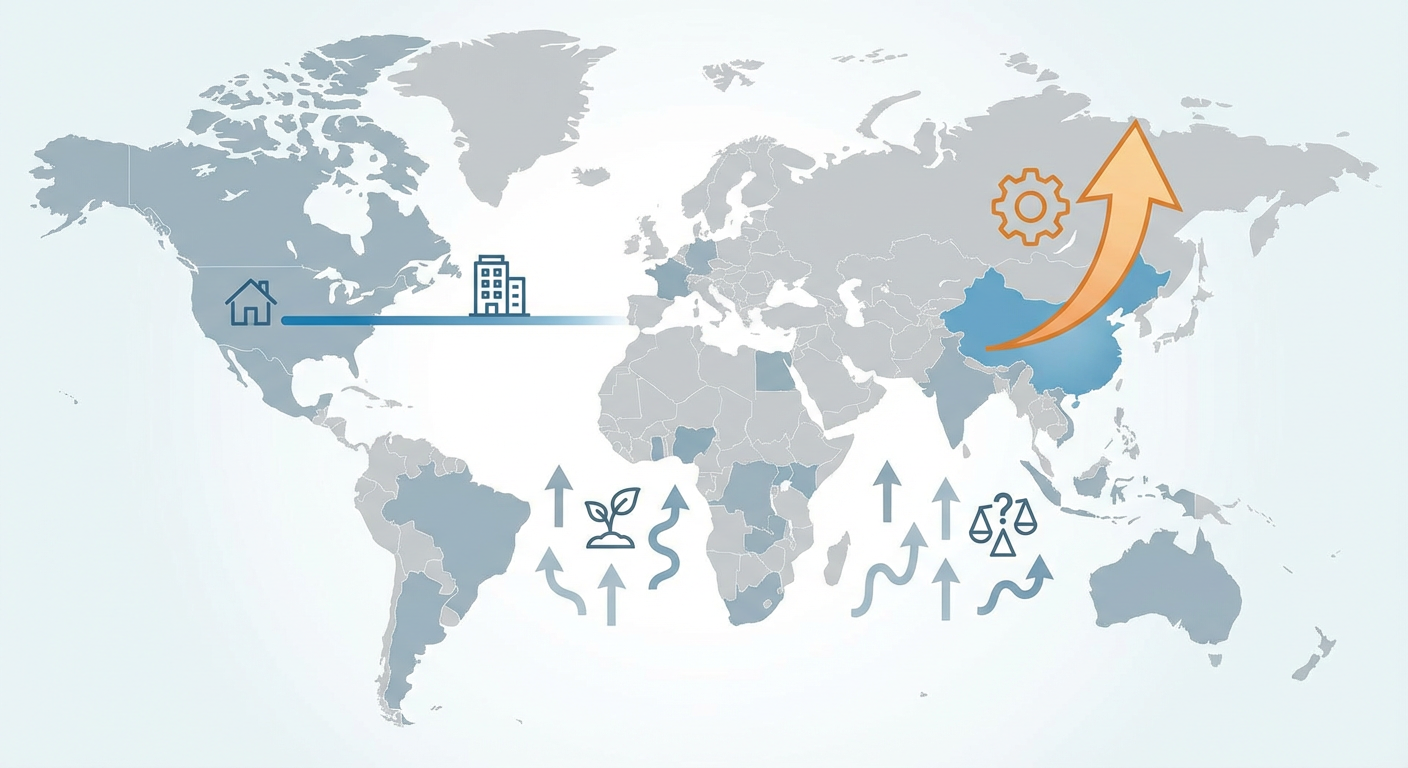
3. Regional Market Dynamics: China, North America, and Emerging Economies
The global drywall market, while exhibiting steady overall growth, is characterized by a complex interplay of regional dynamics. Differing construction traditions, economic development trajectories, regulatory environments, and prevailing building technologies create distinct market landscapes across the world. This section delves into the significant regional variations, specifically focusing on China’s burgeoning demand, the mature yet stable North American market, and the unique patterns of growth and adoption challenges observed in emerging economies. By examining these diverse regional forces, a comprehensive understanding of the global drywall industry’s past, present, and future trajectory can be formed.
3.1 Global Drywall Market Overview: Shifting Power Centers and Consumption Patterns
The worldwide demand for drywall has shown robust and consistent growth over the past two decades. In 2022, global drywall consumption reached an impressive 11.1 billion square meters, representing a market value of approximately $23.3 billion at the manufacturer level [1]. This figure marks a substantial increase from approximately 7.8 billion square meters in 2007, indicating a significant rise in adoption as more countries embrace drywall construction methods [2]. Projections for the coming years anticipate continued moderate growth, with global demand expected to climb by roughly 1.8% annually, reaching an estimated 12.2 billion square meters by 2027 [3]. This moderate growth outlook from The Freedonia Group underscores a post-pandemic construction recovery and the ongoing expansion into emerging markets. However, it is crucial to note that while volume is increasing, the market value is predicted to slightly decrease to $22.7 billion by 2027 [4]. This anticipated decline in value, despite rising volumes, is primarily attributed to the normalization of gypsum board prices following the sharp increases observed during 2021–2022 when supply chain disruptions and raw material cost hikes pushed prices to record highs.
Historically, North America held a dominant position in the global drywall market. In 2007, the region accounted for nearly 48% of worldwide drywall sales [36]. However, this dynamic has fundamentally shifted. The Asia-Pacific region has now emerged as the largest market, largely driven by the colossal demand from China, which has surpassed the United States as the world’s leading drywall consumer. Together, China and the U.S. alone accounted for over 50% of global drywall output in 2022 [37]. Developing regions such as South Asia and the Middle East are also experiencing growth rates that exceed the global average, signaling a strategic pivot for international manufacturers towards these expanding territories [38]. In contrast, mature markets like North America and Western Europe are now characterized by slower, more stable growth [39], focusing more on renovation and specialized applications rather than rapid new construction expansion.
The intensity of drywall usage also varies significantly on a per-capita basis, reflecting diverse construction traditions and economic development stages. North America stands out with exceptionally high per-capita consumption. The United States, for instance, utilizes approximately 11 square meters of drywall per person per year, with Canada showing similar levels of around 10 square meters [40]. This high usage reflects the widespread adoption of light-frame construction and drywall as a standard interior finish in residential and commercial buildings across these countries. In contrast, many European and developed Asian nations exhibit considerably lower per-capita usage, typically ranging from 1 to 2 square meters [41]. This is largely due to the persistence of traditional masonry construction and wet plaster finishes. In certain cultures, drywall penetration remains minimal, with countries like Italy and Taiwan historically averaging around 1.2 square meters per person, close to the global average [42]. These disparities highlight significant growth potential in regions where the transition from traditional building methods to modern drywall techniques is still in its early stages. As preferences evolve and modern construction practices spread globally, countries with low current adoption rates present substantial upside for future drywall demand.
The global drywall market is dominated by a few multinational corporations that exert considerable influence over production and supply chains. Key players include Knauf (Germany), Beijing New Building Materials (BNBM), which is part of the state-owned China National Building Material (CNBM) group and the world’s largest producer by volume, and Saint-Gobain (France) [18]. Other significant firms in the industry’s top tier include Eagle Materials and Georgia-Pacific (U.S.) [19]. These companies operate vast production networks and have strategically expanded their footprints through targeted acquisitions and the establishment of new manufacturing facilities in high-growth regions. For example, Saint-Gobain has recently inaugurated new gypsum board plants in rapidly developing markets like India and China, reflecting a strategic response to localized demand surges [20]. Similarly, BNBM alone sold an impressive 2.09 billion square meters of wallboard in 2022 [21], accounting for nearly 19% of global demand, underscoring its immense scale and China’s central role in the industry. The market exhibits regional concentration, with specific manufacturers dominating their home territories (e.g., Knauf and Saint-Gobain in Europe, BNBM/CNBM in China, and USG and National Gypsum in North America). However, competitive dynamics are evolving, with Asian manufacturers increasingly expanding their overseas operations, such as BNBM/CNBM’s investments in Africa and the Middle East, while Western firms continue to penetrate Asian markets, fostering a truly globalized competitive landscape.
3.2 China’s Accelerating Demand: The Global Growth Engine
China has firmly established itself as the world’s most significant drywall market, not only in terms of current consumption but also as the primary driver of future global growth. Despite experiencing a challenging year in 2022 due to stringent Zero-COVID lockdowns and a slowdown in its real estate sector, China’s drywall market is set for a substantial rebound and expansion. Forecasts indicate that China will account for approximately 44% of global drywall demand gains through 2027 [5]. The Freedonia Group projects that Chinese market growth will “accelerate from the 2017–2022 pace,” contributing nearly half of the global drywall volume increase over the 2022–2027 period [14].
3.2.1 Drivers of Chinese Drywall Growth
- Shift from Traditional Materials: A primary catalyst for China’s accelerating demand is the ongoing transition from traditional building materials, such as wet plaster or concrete, to modern drywall systems. This shift is particularly pronounced in the country’s rapid urbanization and the construction of new commercial and institutional buildings [6].
- Commercial Construction Boom: Much of China’s projected growth in drywall consumption is concentrated in the non-residential sector, including offices, hotels, educational institutions, and urban commercial projects. Drywall offers advantages in terms of speed of installation, design flexibility, and consistency, which are highly valued in large-scale commercial developments.
- Government Initiatives and Urbanization: The Chinese government’s continued investment in public infrastructure, coupled with an accelerated pace of urbanization, particularly in second and third-tier cities, fuels significant construction activity. Drywall is increasingly being adopted in these large-scale projects to meet ambitious construction timelines and efficiency targets.
- Modern Building Techniques: As China’s construction industry modernizes, there is a growing embrace of industrialized building methods, including prefabrication and dry construction techniques. Drywall panels are well-suited for these methods, which reduce on-site labor and construction time.
The rebound in China’s construction sector, particularly after the temporary setbacks of the Zero-COVID policy, underscores the country’s outsized influence on global drywall trends. As the largest drywall producer and consumer worldwide, China’s domestic market performance directly impacts the global industry. In 2022, Beijing New Building Materials (BNBM), a leading Chinese drywall producer, experienced a 12% year-on-year drop in sales volume to 2.09 billion square meters, primarily due to the domestic real estate slowdown [21]. However, BNBM simultaneously pursued international expansion and environmental upgrades, demonstrating resilience and adaptability in a volatile market [82]. The anticipated recovery and sustained growth in China’s commercial construction sector are expected to significantly boost overall global drywall demand in the coming years.
3.3 North America: A Mature but Steady Market
The North American drywall market, historically the global leader, now represents a mature but steady segment of the industry. Despite being surpassed by Asia-Pacific in overall consumption, the United States remains the second-largest drywall market globally, characterized by high per-capita usage and a well-established infrastructure. After recovering from the severe downturn following the 2008–2011 housing crisis, the U.S. market has shown robust performance. In 2024, the United States saw approximately 28 billion square feet (roughly 2.6 billion square meters) of wallboard sold, approaching the record levels seen in the mid-2000s [22]. This rebound has been supported by a resurgence in housing demand and renovation activities.
3.3.1 Key Characteristics and Trends in North America
- High Per-Capita Consumption: As mentioned, the U.S. exhibits an exceptionally high per-capita drywall usage of approximately 11 square meters per year [8]. This reflects drywall’s omnipresence in both residential and commercial construction, particularly given the prevalence of light-frame construction methods that are well-suited for drywall applications.
- Gypsum Consumption: The scale of the North American industry is further highlighted by its raw material consumption. In 2023, approximately 45 million metric tons of gypsum were used in the U.S. for wallboard production, cement, and other applications [23].
- Post-Pandemic Revival & Leveling Growth: The U.S. market experienced a strong post-pandemic revival, with a surge in residential and renovation activity. However, future growth is anticipated to level off. The Gypsum Association notes that U.S. drywall shipments have largely returned to pre-recession volumes, but higher interest rates and elevated construction costs may temper stronger gains in the near future.
- Dominance of Non-Residential Sector: Similar to global trends, the non-residential sector is increasingly driving drywall demand in North America. By 2027, non-residential drywall use is projected to reach 6.8 billion square meters globally, growing at ~3.4% annually, significantly outpacing the residential segment [9]. This trend is driven by a post-pandemic rebound in commercial building, government investments, and the continuous need for modern office, retail, and institutional spaces [11].
- Renovation and Remodeling: A significant portion of residential drywall demand in North America comes from renovation and remodeling, rather than just new construction. The renovation boom of 2020–2022, spurred by remote work and homeowners investing in their properties, led to substantial drywall sales for home improvements and extensions.
- Disaster Rebuilding: North America is also susceptible to natural disasters, and rebuilding efforts often create temporary surges in drywall demand. Following hurricanes, floods, or wildfires, large quantities of new drywall are required to replace damaged interiors, sometimes leading to localized shortages.
While the North American market may not exhibit the explosive growth rates seen in emerging economies, its sheer volume, established industry infrastructure, and consistent demand from both new construction and renovation projects ensure its continued importance in the global drywall landscape. The industry is focused on maintaining efficiency, adapting to evolving building codes (e.g., for fire and sound), and addressing labor shortages through technological adoption.
3.4 Emerging Economies: Growth Patterns and Adoption Challenges
Emerging economies across South Asia, Southeast Asia, Africa, and parts of Latin America represent the next frontier for significant drywall market expansion. These regions are characterized by large and growing populations, increasing urbanization, and improving economic conditions, leading to immense construction needs. While the current per-capita drywall usage in many of these markets is low compared to North America, the potential for growth is substantial as traditional construction methods give way to modern techniques.
3.4.1 Growth Drivers in Emerging Markets
- Rapid Urbanization: Cities in emerging economies are expanding at an unprecedented rate, necessitating the rapid construction of high-rise residential buildings, commercial complexes, and public infrastructure. Drywall offers faster installation and greater efficiency compared to traditional masonry, making it attractive for such projects [12].
- Infrastructure Development: Governments in these regions are heavily investing in developing modern infrastructure, including new hospitals, schools, transportation hubs, and government buildings. These large-scale projects often adopt international building standards and modern materials like drywall.
- Foreign Direct Investment and International Developers: Multinational construction firms and developers operating in emerging markets often bring with them Western building practices, which typically rely on drywall for interior partitions and ceilings. For instance, Saint-Gobain and Knauf have strategically established new board plants in India and Uzbekistan, respectively, to cater to rising local demand [20].
- Affordable Housing Initiatives: In some emerging economies, affordable housing programs are exploring prefabricated and modular construction methods as a means to rapidly deliver housing units. Drywall is a key component in these systems, offering faster build times and reduced on-site labor requirements.
3.4.2 Adoption Challenges in Emerging Markets
Despite the significant growth potential, drywall adoption in emerging economies faces several challenges:
- Cultural and Traditional Preferences: Many cultures in developing countries have long-standing traditions of using masonry (brick or concrete blocks) for walls, often perceived as more durable or insulating. Shifting these deeply ingrained preferences, particularly in residential construction, can be slow. Homebuilders may stick to cheaper masonry or plaster for housing while multinational builders embrace drywall for commercial projects [10].
- Cost Sensitivity: In many lower-income settings, initial material cost is a critical factor. While drywall can offer long-term cost benefits through faster construction and reduced labor, the upfront material cost may be higher than locally sourced traditional materials.
- Lack of Skilled Labor and Training: The existing labor force in emerging markets may be highly skilled in traditional plastering and masonry but lack the expertise required for drywall installation and finishing. This necessitates significant investment in training and skill development to support widespread adoption, though there is a short-term labor gap [27].
- Supply Chain and Logistics: Establishing efficient supply chains for drywall, including manufacturing, distribution, and access to necessary ancillary materials (like joint compound, tape, and fasteners), can be challenging in regions with underdeveloped infrastructure. Countries like India, Thailand, and Indonesia are identified as high-growth markets that are rapidly adopting drywall, especially in high-rise and prefabricated construction [46].
- Building Codes and Regulations: Local building codes may not always be updated to fully accommodate or standardize drywall usage, or they may lack the necessary enforcement mechanisms. This can create uncertainty for developers and hinder widespread adoption.
- Environmental Concerns: While modern drywall offers sustainability advantages, waste management, including recycling, can be a major challenge in countries with nascent recycling infrastructure. The low recycling rate of drywall globally (only ~2% in the U.S. [15]) is an even greater concern in regions with less developed waste management systems.
The pace of drywall adoption in emerging markets often follows a distinct pattern: it is typically embraced first in large-scale commercial and government projects, where speed, efficiency, and modern aesthetics are prioritized. Residential adoption tends to be slower, especially in low-income segments, but gains traction as urbanization increases, labor costs rise, and the benefits of dry construction become more apparent. Examples such as the construction of new megacities or smart cities (e.g., Egypt’s new capital city, Saudi Arabia’s NEOM project) often integrate Western building practices, including extensive drywall use, contributing to regional growth.
The global outlook points towards a gradual convergence, wherein more emerging regions will integrate drywall into their construction practices at rates approaching those of developed nations, thereby elevating overall global consumption. This will require sustained efforts in education, infrastructure development, and policy reform to overcome existing barriers and unlock the full potential of these dynamic markets. The growth in these regions, albeit from a smaller base, is vital for the continued moderate expansion of the global drywall market, influencing manufacturing capacities and strategic investments by leading players.
The regional market dynamics highlight a global industry in transition. China’s immense demand and North America’s mature stability offer a backdrop against which the unique opportunities and challenges of emerging economies are unfolding. Understanding these regional nuances is critical for manufacturers, suppliers, and contractors aiming to navigate the evolving landscape of drywall plastering effectively.
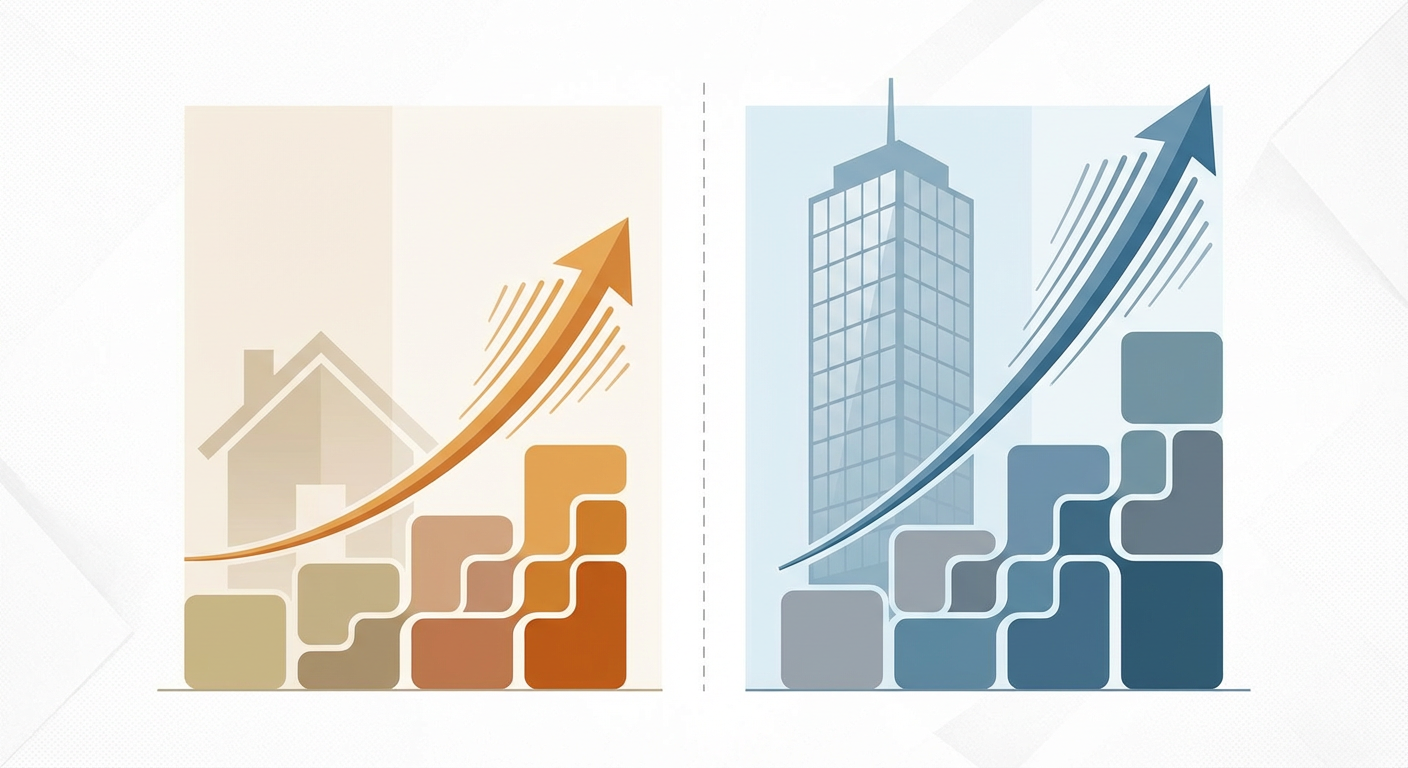
4. Market Segmentation: Residential vs. Non-Residential Demand
The global drywall market, a cornerstone of modern construction, exhibits distinct demand patterns across its primary segments: residential and non-residential construction. Understanding these segments is crucial for industry stakeholders, as their individual growth trajectories, adoption rates, and specific requirements significantly influence market strategies, product development, and regional investment. While residential construction has historically been a foundational driver for drywall demand in mature markets, the non-residential sector has emerged as the dominant growth engine globally, projected to expand at a considerably faster pace. This section will delve into the demand drivers from both residential and non-residential construction sectors, highlight the segment currently experiencing faster growth, and explore the implications of these trends for the broader drywall industry.
4.1 Evolution of Drywall Demand Across Construction Sectors
The journey of drywall from its invention to its current ubiquity in construction has seen varying adoption rates across different building types and geographical regions. In its nascent stages and early widespread adoption, particularly in North America, drywall primarily found its stride in residential building. Its ease of installation, fire resistance, and smooth finish made it a superior alternative to traditional wet plaster for interior walls and ceilings in homes. However, market dynamics have shifted considerably over the decades, leading to a new hierarchy of demand. Globally, the drywall market, valued at approximately **$23.3 billion** in 2022 with a volume of **11.1 billion square meters** of consumption, is anticipated to reach **12.2 billion square meters by 2027**, growing at a moderate annual rate of approximately **1.8%** [1],[3]. This aggregate growth, however, masks a fundamental divergence between the residential and non-residential segments. The Freedonia Group notes that product usage intensity varies widely by country, with North America historically exceeding the global per-capita average [13]. This historical context is vital in understanding the current state of market segmentation. In many developing economies, the introduction and widespread adoption of drywall often follow a specific trajectory. Drywall is first embraced in commercial and institutional settings, such as offices, retail spaces, and hotels, often driven by multinational builders seeking efficient, standardized construction methods. Homebuilders, particularly in lower-income countries, tend to stick to more traditional and often cheaper masonry or plaster alternatives [5]. This pattern of adoption has a profound effect on the overall market segmentation on a global scale, contributing to the faster growth observed in the non-residential sector.
4.2 Non-Residential Construction: The Dominant Growth Engine
The non-residential sector has firmly established itself as the larger and more rapidly expanding market for drywall globally. This segment encompasses a broad range of structures, including commercial offices, retail establishments, hotels, educational institutions, healthcare facilities, and public infrastructure projects. Projections indicate that drywall use in these non-residential buildings is set to reach **6.8 billion square meters by 2027**, demonstrating a robust annual growth rate of approximately **3.4%** [4]. This represents a significant acceleration and leadership in demand, far outpacing the residential counterpart. Several factors underpin this strong performance:
4.2.1 Urbanization and Infrastructure Development
Rapid urbanization, particularly in Asia and Africa, is a principal driver. As cities expand and populations grow, there is an immense need for new commercial and public infrastructure. Governments are investing heavily in public infrastructure projects, including schools, hospitals, and administrative buildings, to support this growth. These large-scale projects often adopt modern construction techniques, where drywall is preferred for its speed of installation, design flexibility, and structural efficiency [6],[7]. The ability to complete interior fit-outs quickly and efficiently makes drywall an attractive option for developers facing tight deadlines and significant project scales.
4.2.2 Post-Pandemic Rebound and Commercial Upgrades
The non-residential market is experiencing a strong rebound following the pandemic-induced slowdown [7]. Many companies are upgrading existing office spaces or constructing new ones to meet evolving workplace demands, such as hybrid work models and enhanced health and safety standards. Similarly, the recovery of global travel and tourism is fueling new hotel constructions and renovations. These projects often prioritize interior aesthetics, acoustic performance, and fire safety, all attributes where specialized drywall products excel. Drywall systems can provide excellent sound insulation, critical for spaces like hotels and modern offices, and offer various fire ratings essential for compliance with stringent building codes in commercial properties.
4.2.3 Economic Stimulus and Government Investment
Governments worldwide are increasingly using infrastructure investment to stimulate flagging economies. Public projects, ranging from new government offices to renovated civic centers, leverage drywall for its cost-effectiveness, speed, and versatility. In China, for example, much of the growth in drywall demand is concentrated in modern non-residential construction, including offices and urban commercial projects, as builders transition from traditional masonry to drywall techniques [15]. This shift reflects a global trend towards embracing more industrialized and efficient construction methods over traditional, labor-intensive approaches.
4.3 Residential Construction: Flattening Demand in Mature Markets
In stark contrast to the dynamic growth in the non-residential sector, global residential drywall demand is projected to remain relatively stable, hovering around **5.4 billion square meters** through 2027 [5]. This stagnation is largely attributed to a combination of factors, primarily affecting mature markets.
4.3.1 Stagnant Housing Starts in Developed Economies
Many developed regions, including parts of Western Europe, Japan, and certain areas of the United States, are experiencing stagnant housing starts [9]. Factors such as aging populations, high interest rates, rising construction costs, and limited developable land contribute to a slowdown in new home construction. This directly impacts residential drywall consumption, as new builds are a primary source of demand.
4.3.2 Persistent Use of Traditional Building Methods
In various regions, particularly lower-income countries, traditional methods like masonry or wet plaster continue to dominate residential construction. These methods are often cheaper, easier for local laborers to implement with existing skills, and deeply ingrained in cultural building practices [5]. While drywall offers advantages in terms of speed and finish quality, the initial investment in training and equipment, as well as the perception of durability, can deter homebuilders from adopting it. This poses a significant barrier to residential drywall market expansion in these regions.
4.3.3 Market Maturity and Per Capita Usage Disparities
In highly developed markets like North America, drywall has already achieved near-saturation in residential construction. The United States, for instance, exhibits a per capita drywall usage of approximately **11 square meters annually** [8], indicating its widespread adoption in homes. In contrast, many European and developed Asian countries see per capita usage of only **1-2 square meters** [42], due to the prevalence of masonry and wet plaster. These disparities highlight that while high-penetration markets offer limited growth potential in new residential builds, low-penetration markets face challenges in shifting established building traditions. However, even within the residential segment, certain sub-sectors maintain importance: * **Renovation and Remodeling:** In mature markets, renovation and remodeling activities are significant drivers of residential drywall demand. Homeowners undertaking upgrades, expansions, or home office additions frequently use drywall. The U.S. witnessed a renovation boom in 2020–2022, which contributed to substantial drywall sales. * **Disaster Rebuilding:** Natural disasters often trigger localized spikes in residential drywall demand as damaged homes require extensive reconstruction. * **Affordable Housing Programs:** In some developing countries, government-backed affordable housing initiatives are exploring prefabricated or ‘dry construction’ methods, including drywall, to build faster and more economically. Despite these factors, the overall global trend for residential drywall demand is one of stability rather than significant growth, especially when compared to the non-residential sector.
4.4 Quantitative Comparison of Residential and Non-Residential Market Growth
To further illustrate the divergence in growth trajectories, a direct comparison of demand figures is essential.
| Market Segment | Projected Demand by 2027 (Billion m²) | Annual Growth Rate (2022-2027) | Share of Total Drywall Volume (2027) |
|---|---|---|---|
| Non-Residential | 6.8 | ~3.4% | >55% |
| Residential | ~5.4 | Flat | <45% |
| Global Total | ~12.2 | ~1.8% | 100% |
Derived from GlobeNewswire (ResearchAndMarkets) 2024 data [4],[5]The table clearly demonstrates that by 2027, non-residential construction is expected to contribute over **55%** of the total drywall volume, solidifying its position as the primary demand segment. The residential sector, while substantial in absolute terms, is not projected to contribute to overall market growth in the coming years.
4.5 Implications for the Drywall Industry
The differing growth rates and demand drivers across residential and non-residential segments carry significant implications for drywall manufacturers, suppliers, and contractors.
4.5.1 Strategic Focus and Investment
Manufacturers are increasingly aligning their strategies and investments with the faster-growing non-residential sector. This includes developing specialized products tailored to commercial needs, such as higher fire-rated boards, enhanced acoustic panels, and impact-resistant drywall for high-traffic areas. Companies like Saint-Gobain are expanding their presence in high-growth regions, exemplified by new gypsum board plants in India and China, heavily targeting urban commercial and institutional projects [22]. The design flexibility and performance standards often required in non-residential projects also encourage innovation in drywall compositions and system solutions.
4.5.2 Product Development and Specialization
The non-residential segment demands a wider array of specialized drywall products. This includes:
- Fire-rated boards (Type X, Type C): Essential for code compliance in commercial buildings, hospitals, and multi-story structures.
- Acoustic drywall: Designed to reduce sound transmission, critical for offices, hotels, and educational facilities.
- Moisture and mold-resistant panels: Used in commercial kitchens, bathrooms, and other high-humidity environments.
- Impact-resistant boards: For areas subject to heavy wear, such as corridors in schools or healthcare facilities.
The focus shifts from general-purpose boards to engineered solutions that meet specific performance criteria, often integrated into larger building systems. Almost half of new construction projects globally, approximately **46%**, now incorporate specialized drywall products [34].
4.5.3 Market Penetration in Emerging Economies
In emerging markets, the strategy needs to be dual-pronged. While initial adoption often occurs in the non-residential sector, long-term growth will eventually require penetration into residential markets. This involves addressing cost sensitivities, educating local builders on the benefits of drywall over traditional materials, and potentially adapting products to suit local housing styles and construction practices. The disparity in per capita usage between North America and other regions (e.g., 11 m² in the U.S. versus 1-2 m² in many European and Asian countries) underscores the vast untapped potential in residential segments, provided cultural and economic barriers can be overcome [8],[42].
4.5.4 Impact on Labor and Technology Adoption
The sustained demand from the non-residential sector, coupled with ongoing labor shortages, is accelerating the adoption of technology and automation in drywall installation. Non-residential projects, often standardized and large-scale, are ideal candidates for robotic drywall tools and automated finishing systems. Robotic systems can handle heavy sheet lifting, repetitive sanding, and precise joint compound application, reducing crew fatigue and boosting productivity [18],[19]. This is particularly relevant as the industry faces a skilled drywall installer shortfall estimated at around **20%** [17]. The “Netflix House” project, which saw a a **300-400% boost** in finishing productivity using robotic sanding, serves as a compelling example of this trend [20].
4.5.5 Supply Chain Dynamics
The dominance of non-residential demand also influences supply chain strategies. Greater emphasis will be placed on bulk supply for large commercial projects, potentially leading to fewer, larger orders. Manufacturers will need to ensure robust production capacities to handle significant project volumes. Furthermore, the push for more sustainable and “greener” drywall solutions, driven by corporate environmental, social, and governance (ESG) goals and green building certifications prevalent in commercial construction, will also shape raw material procurement and manufacturing processes [12].
4.6 Conclusion: A Shifting Landscape
The market segmentation analysis reveals a clear trajectory for the drywall industry: while residential construction remains a foundational segment, especially in mature markets, the impetus for global growth is firmly rooted in the non-residential sector. The robust demand from commercial, institutional, and infrastructure projects, particularly in rapidly urbanizing regions, offers significant opportunities for expansion and innovation. Conversely, the residential market presents varied growth prospects, with stagnation in mature economies offset by potential in emerging markets that can overcome traditional building preferences. The implications for the drywall industry are profound. Success in this evolving landscape will hinge on a strategic focus on the non-residential sector, continued investment in specialized products, expansion into high-growth emerging economies, and accelerated adoption of labor-saving technologies. As global construction continues its growth, understanding these nuanced market dynamics will be paramount for stakeholders to thrive and adapt to future demands. The next section will delve deeper into the regional market dynamics and the key countries driving this global demand.
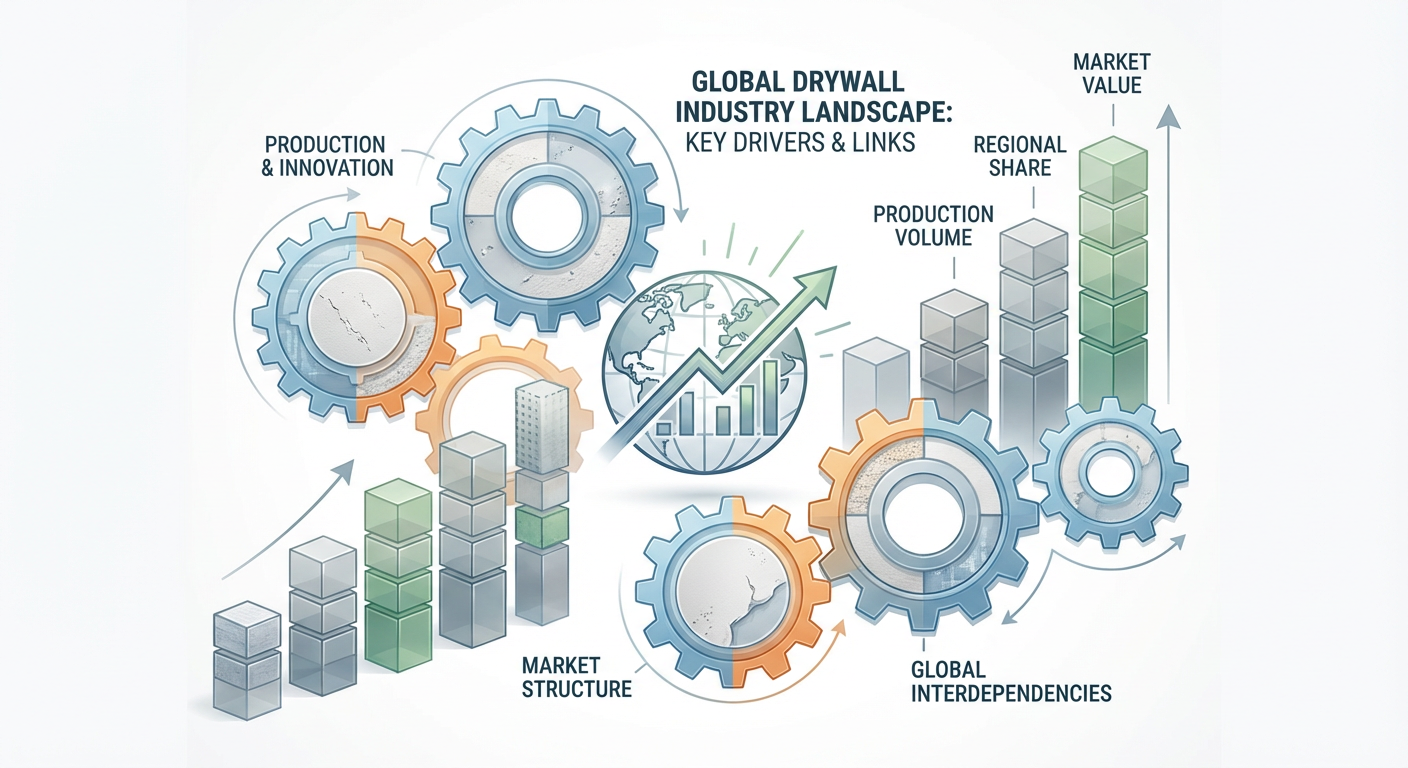
5. Drywall Industry Landscape: Production, Manufacturers, and Market Structure
The global drywall industry, a cornerstone of modern construction, stands as a dynamic and evolving sector, characterized by robust demand, significant regional shifts, and an increasing focus on sustainability and technological innovation. Far from being a static commodity market, drywall production and consumption are influenced by macroeconomic factors, evolving building practices, and intense competition among key global players. This section delves into the intricacies of this landscape, providing a comprehensive overview of global production and consumption trends, the structure and strategies of leading manufacturers, and the major forces shaping the industry’s future. In 2022, worldwide drywall consumption reached an impressive **11.1 billion square meters**, representing an estimated market value of around **$23.3 billion** at the manufacturer level[1]. This figure signifies a substantial increase from approximately 7.8 billion square meters in 2007, demonstrating a long-term growth trajectory as more countries adopt drywall construction over traditional plastering methods[2]. Projections for the coming years anticipate continued moderate growth, with global demand expected to expand at an annual rate of approximately **1.8%**, reaching **12.2 billion square meters by 2027**[3]. However, it is crucial to note that despite volume growth, the market value is forecast to slightly decline to $22.7 billion by 2027, as elevated pricing experienced during the supply chain disruptions of 2021-2022 normalizes[12]. This illustrates a market poised for volumetric expansion but facing unit price stabilization.
5.1 Global Production and Consumption Trends
The global drywall market is defined by several overarching trends, including significant regional shifts in demand, the increasing dominance of non-residential construction, and a varying per-capita usage due to diverse building traditions.
5.1.1 Shifting Geographical Dominance and Regional Growth Drivers
Historically, North America, particularly the United States, held a dominant position in global drywall consumption. In 2007, North America accounted for nearly **48% of worldwide drywall sales**[34]. However, the market has undergone a significant geographical shift, with the Asia-Pacific region now emerging as the largest market. China, in particular, has become the world’s largest drywall market, surpassing the United States[35]. China is poised to be the primary driver of global drywall demand gains through 2027, accounting for approximately **44% of new global drywall demand**[4]. Following a period of sluggish performance in 2022 due to strict COVID-19 lockdowns and real estate market curbs, China’s drywall demand is once again accelerating. Freedonia Group projections indicate that Chinese market growth will “accelerate from the 2017–2022 pace,” contributing a substantial **44% of global drywall volume gains** between 2022 and 2027[4]. This resurgence is largely fueled by the nation’s ongoing urbanization and a shift in construction practices from traditional masonry to modern drywall techniques, particularly in the non-residential sector such as offices and urban commercial projects[5]. While North America remains a significant player, its growth trajectory is more moderate. The United States, as the second-largest drywall market, experienced a robust post-pandemic recovery. In 2024, approximately **28 billion square feet (approximately 2.6 billion square meters) of wallboard were sold** in the U.S.[6], nearing pre-recession record levels. U.S. gypsum consumption reached **45 million tons in 2023**[7], driven by a housing rebound, though future growth is expected to level off. Other developed markets in Western Europe and Japan are also experiencing slower growth compared to emerging markets[10]. Emerging markets are demonstrating considerable growth potential. Regions like South Asia, Southeast Asia, Africa, and parts of Latin America, despite having lower per-capita drywall usage currently, present significant construction needs fueled by rising populations and improving economic conditions. Forecasts suggest that Africa/Middle East and Central/South America will experience above-average drywall production growth through 2027[36], albeit from a smaller base. The potential for countries like India and Indonesia to embrace drywall for mass housing could significantly boost global volumes, alongside government initiatives to update building codes and promote drywall in new construction projects[52].
5.1.2 Non-Residential Construction as the Primary Growth Engine
A crucial trend driving global drywall demand is the increasing dominance of the non-residential construction sector. Drywall use in commercial buildings, including offices, hotels, schools, hospitals, and retail establishments, is projected to reach **6.8 billion square meters by 2027**, growing at an annual rate of approximately **3.4%**[8]. This significantly outpaces the residential segment, which is forecast to remain relatively flat at around **5.4 billion square meters** through 2027[9]. This widening gap is attributed to several factors:
- Post-pandemic rebound: The non-residential market is experiencing a rebound, particularly in offices and hospitality, as companies upgrade facilities and travel resumes[11].
- Government investments: Government investments in public infrastructure projects and urbanization initiatives in regions like Asia and Africa are fueling demand for drywall in large-scale projects[13].
- Multinational contractors: International construction firms often standardize on drywall for partitions and ceilings in commercial projects due to its speed, flexibility, and modern construction methods[40].
- Developing market adoption: In lower-income countries, drywall is typically first adopted in offices and retail construction by multinational builders, who value modern methods and efficiency, while homebuilders may stick to cheaper masonry or traditional plaster[10].
By 2027, non-residential construction is expected to contribute over **55% of the total drywall volume** globally[14]. This demonstrates a strategic shift where global companies targeting drywall expansion will increasingly focus on commercial and industrial segments, particularly in emerging markets.
5.1.3 Per Capita Usage Disparities
Drywall usage intensity varies dramatically across countries, reflecting differing construction traditions and economic development. North America continues to lead in per-capita consumption, with the U.S. utilizing approximately **11 square meters of drywall per person per year** (Canada around 10 m²), indicative of its ubiquitous use in homes[15]. In contrast, many European and developed Asian countries have significantly lower per-capita usage, often ranging from only **1 to 2 square meters**[38], where traditional methods like masonry and wet plaster remain common. Some cultures, like Italy and Taiwan, historically used around **1.2 square meters per person**, close to the global average[39]. These disparities highlight substantial growth potential in regions where preferences shift and modern building techniques, often driven by efficiency and cost-effectiveness, lead to increased drywall adoption.
5.2 Leading Manufacturers and Market Structure
The global drywall market is characterized by a moderate level of consolidation, dominated by a few multinational giants and several strong regional players. These companies engage in strategic expansion, capacity investments, and a growing emphasis on sustainable practices.
5.2.1 Top Producing Countries and Concentration of Output
Drywall production is geographically concentrated. In 2022, a mere **8 countries were responsible for over 70% of global drywall output**[16]. These nations include China, the United States, Japan, South Korea, Russia, Germany, Canada, and the UK, each producing at least **270 million square meters** in that year[16]. China and the United States together account for a disproportionately large share, with China’s output alone representing roughly one-third of the global volume. This concentration implies that global supply is significantly influenced by the economic and construction cycles within these key regions.
5.2.2 Key Global Players and Market Shares
The global drywall manufacturing landscape is led by a few prominent companies:
- Knauf (Germany): A leading global player with a strong presence across continents.
- Beijing New Building Materials (BNBM) / CNBM (China): The largest producer by volume globally, closely tied to China’s state-owned construction sector.
- Saint-Gobain (France): Another multinational giant with extensive operations worldwide.
Additional top-tier manufacturers include **Eagle Materials** and **Georgia-Pacific** (U.S.), and Etex, among others[17]. To illustrate the scale of these operations, **BNBM alone sold 2.09 billion square meters of wallboard in 2022**[18], representing approximately 19% of the total global demand. This highlights the substantial influence of individual manufacturers on the global market. Market shares often exhibit regional concentration. For instance, Knauf and Saint-Gobain are dominant in Europe, while BNBM/CNBM hold sway in China. In North America, USG and National Gypsum are major players. These firms actively pursue cross-border expansion strategies, including new plant constructions and acquisitions in high-growth regions. Recent examples include Saint-Gobain’s new drywall plants in China and India, and Knauf’s investment in a plant in Uzbekistan[19]. This strategic diversification aims to capitalize on emerging market demand and mitigate risks associated with reliance on single markets.
| Manufacturer | Headquarters | Key Market / Strategy | Notable Data/Example |
|---|---|---|---|
| Knauf | Germany | Global presence, particularly strong in Europe. Expanding capacity strategically. | New plant in Uzbekistan to tap growing markets[19]. |
| Beijing New Building Materials (BNBM) / CNBM | China | World’s largest producer by volume. Dominant in China. Expanding internationally. | Sold 2.09 billion m² in 2022 (19% global demand), invested in plants in Uzbekistan and Thailand despite domestic slump[18][47]. |
| Saint-Gobain | France | Global building materials giant. Strategic investments in high-growth markets. | Opened new drywall plants in China and India[19]. |
| US Gypsum (USG) | U.S. | Major player in North America. Pioneer of lightweight drywall. | Contributes to U.S. wallboard sales of ~28 billion sq ft in 2024[6]. |
| Etex (Siniat brand) | Belgium | Strong focus on sustainability and recycling. European market leader in recycling. | Increased recycled gypsum usage by 54% since 2018, reduced CO₂ emissions by 20% (2018-2022)[27]. |
| Eagle Materials | U.S. | Significant North American presence. | — |
| Georgia-Pacific | U.S. | Leading North American building materials company. | — |
5.2.3 Market Consolidation and Competitive Dynamics
The market structure within specific regions is often highly consolidated. In North America, for example, a handful of producers dominate the wallboard supply. This regional consolidation can affect pricing power and supply stability. Competitive dynamics are also shifting, with Asian manufacturers like BNBM/CNBM increasingly investing in overseas plants, particularly in Africa and the Middle East[37]. Simultaneously, Western firms are actively expanding into Asian markets. This global interplay of expansion and consolidation characterizes the current competitive landscape.
5.3 Challenges and Strategic Responses in the Drywall Industry
The drywall industry faces a confluence of challenges, from labor shortages and volatile material costs to environmental concerns, necessitating innovative strategic responses from manufacturers and contractors.
5.3.1 Labor Shortages and the Rise of Automation
A critical challenge, particularly in developed markets like the United States, is a persistent **shortfall of skilled drywall installers and finishers**, estimated to be about **20% below required levels**[20]. This scarcity, driven by an aging workforce and fewer young people entering the trades, contributes to project delays and escalating labor costs. In response, the industry is increasingly turning to **robotics and automation** to enhance efficiency and alleviate manual labor demands. Robotic systems are being deployed for tasks such as heavy sheet lifting, repetitive sanding, and precise application of joint compound[21]. Case studies, such as the “Netflix House” project in Pennsylvania, have demonstrated a **3-5x (300-400%) increase in surface finishing productivity** using AI-guided drywall sanding robots, while significantly reducing worker fatigue from overhead tasks[22]. The market for wall-plastering robots alone is projected to grow by approximately **12% annually**, potentially reaching an estimated **$1 billion by 2028**[23]. This technological adoption is not merely about replacing labor but about augmenting human capabilities, improving safety, and ensuring consistent quality in the face of workforce constraints.
5.3.2 Volatile Material Costs and Supply Chain Resilience
The early 2020s witnessed unprecedented **price inflation in drywall**, largely due to pandemic-related supply chain disruptions and surging raw material costs. In the U.S., drywall prices escalated for seven consecutive quarters through Q3 2022, with an **8% jump in Q3 2022 alone**[12], reaching record highs. Overall, U.S. drywall prices climbed approximately **25% from 2020 to 2022**[12]. Contractors also grappled with extended lead times, at times waiting 6-8+ weeks for deliveries that typically took 1-2 weeks[12]. By late 2022, supply chains began to stabilize, and demand cooled, leading to a moderation in price pressures. Analysts anticipate a return to normal inflation rates (~2-3% annually) by 2024[12], and global market value is expected to slightly decline to $22.7 billion by 2027 as prices normalize[12]. The industry is focused on building more resilient supply chains, including investing in capacity and exploring local sourcing of gypsum and recycled content to mitigate future disruptions.
5.3.3 Environmental Impact and the Push for Sustainability
The environmental footprint of drywall, from production to disposal, is a growing concern. Gypsum mining and manufacturing contribute to carbon emissions, and drywall waste poses a significant challenge. Construction and demolition (C&D) debris, including gypsum board, accounts for an estimated **30-40% of global landfill waste**[24]. In the U.S., millions of tons of drywall scrap are generated annually, yet only about **2% is recycled** into new wallboard[25]. The practice of landfilling gypsum with biodegradable waste is particularly problematic, as it leads to the release of toxic hydrogen sulfide gas[26], prompting stricter regulations, such as the UK’s 2009 ban on co-disposal of gypsum with biodegradable waste[26]. In response, governments and manufacturers are intensifying efforts towards sustainability and circularity:
- Increased Recycling: Major producers like Etex and Saint-Gobain are investing in recycling facilities. Etex, for instance, reported a **54% increase in recycled gypsum usage since 2018**[27]. Entrepreneurial companies like USA Gypsum and DTG Recycle are emerging to process clean drywall scrap for reuse in agriculture, cement, and new wallboard production[28].
- Eco-friendly Product Development: There has been a **22% uptick in “eco-drywall” product launches** in the last two years[29], including boards with higher recycled content, lower embodied carbon, and reduced weight.
- Emissions Reduction: Manufacturers are also focused on reducing their carbon footprint in production. BNBM, for example, announced that all its Chinese drywall factories achieved “nearly zero emissions” in 2022 through improved dust collection, waste recycling, and cleaner energy[47]. Etex cut its absolute CO₂ emissions by **20% between 2018 and 2022**[27].
These initiatives reflect a growing industry commitment to address environmental concerns, comply with regulations, and meet the rising demand for green building materials.
5.3.4 Shifting Gypsum Raw Material Supply
A less visible but significant challenge is the changing availability of gypsum. Historically, a substantial portion of gypsum used in drywall came from **synthetic gypsum**, a byproduct of coal-fired power plant scrubbers. However, the global shutdown of coal-fired power plants for greener energy alternatives has led to a shrinking supply of synthetic gypsum[30]. This has necessitated an increased reliance on mined natural gypsum, and in some regions like the U.S., a rise in imports[31]. Since gypsum is bulky and costly to transport, this shift raises raw material costs for manufacturers. This dynamic further enhances the appeal of recycling scrap drywall as a viable source of gypsum, aligning sustainability goals with supply chain security[32].
5.4 Innovations and Future Outlook
The drywall industry is not only responding to challenges but also proactively innovating to meet future demands for efficiency, performance, and sustainability.
5.4.1 High-Performance Drywall Products
Product innovation is a constant in the drywall market. Manufacturers have developed:
- Lightweight panels: Boards that are **25-30% lighter** than standard drywall, which significantly reduce installation labor and improve worker ergonomics. These now constitute a significant share of sales in markets like the U.S.[33].
- Moisture and mold-resistant boards: Standard for high-humidity areas, often featuring fiberglass facings instead of paper (paperless drywall) to prevent mold growth[33]. Globally, about **46% of new construction projects incorporate specialized drywall** (e.g., insulated, mold-resistant) for enhanced performance[33].
- Enhanced fire, sound, and impact resistance: Specialized boards like Type X (fire-rated), as well as multi-layered systems for superior soundproofing and impact resistance, cater to diverse building performance requirements.
- Pre-finished and prefabricated solutions: Some suppliers offer panels with factory-applied base coats or entire wall assemblies, speeding up on-site finishing and integrating with modular construction trends.
These product innovations align with increasing client expectations and regulatory requirements for improved building performance and longevity.
5.4.2 Integration with Off-Site Construction
The broader construction industry’s shift towards **prefabrication and modular building** is poised to transform drywall installation. The future may see entire wall assemblies, complete with steel framing, attached drywall, and even pre-spackled joints, manufactured in factories and shipped to sites ready for swift installation. This off-site approach promises reduced waste, improved quality control, and faster construction timelines, effectively turning drywall work into an assembly process rather than a fully manual on-site trade. While 3D printing of structural walls is emerging, drywall’s cost and ease for non-structural partitions remain highly competitive. This evolution could require drywall contractors to adapt their business models, shifting from purely on-site work to factory-based production or specialized installation crews for pre-fabricated units.
5.4.3 Continued Technological Adoption and Smart Drywall
Beyond robotics, the industry is increasingly leveraging various digital tools and technologies:
- BIM Integration: Building Information Modeling (BIM) is used for precise planning of interior layouts, enabling accurate off-site cutting of drywall and better coordination with other trades.
- Digital Layout Tools: Laser measurements and digital scanners ensure framing accuracy, reducing errors and rework.
- Augmented Reality (AR): AR can be used for quality control, projecting BIM models onto installed walls to verify compliance with plans, such as the presence of fire-rated layers[50].
- Advanced Finishing Tools: Automatic taping tools are becoming lighter and more ergonomic, while dust-reducing sanding tools with vacuum attachments improve site cleanliness and worker health. Quick-setting and low-dust joint compounds further enhance efficiency and air quality.
Further down the line, we might see innovations such as drywall with embedded sensors for moisture detection or RFID tags for tracking and verification, leading to “smarter” walls. This continued technological adoption aims to make drywall installation and finishing more efficient, less physically demanding, and more precise.
5.5 Conclusion: A Dynamic Future
The drywall industry is navigating a complex but promising landscape. While facing immediate challenges such as skilled labor shortages, the enduring demand for efficient and high-performance building solutions is driving innovation. The moderate but steady growth forecast, coupled with the increasing emphasis on non-residential construction and emerging market penetration, suggests a robust future. The commitment to sustainability, evidenced by aggressive recycling initiatives and the development of eco-friendly products, will not only address environmental concerns but also create new market opportunities and competitive advantages. As technology, from robotics to advanced materials, continues to reshape practices, the drywall industry is poised for continuous evolution, delivering faster, smarter, and greener solutions for the built environment. The next section will delve into the types of drywall products available, focusing on their specific properties, applications, and performance characteristics.
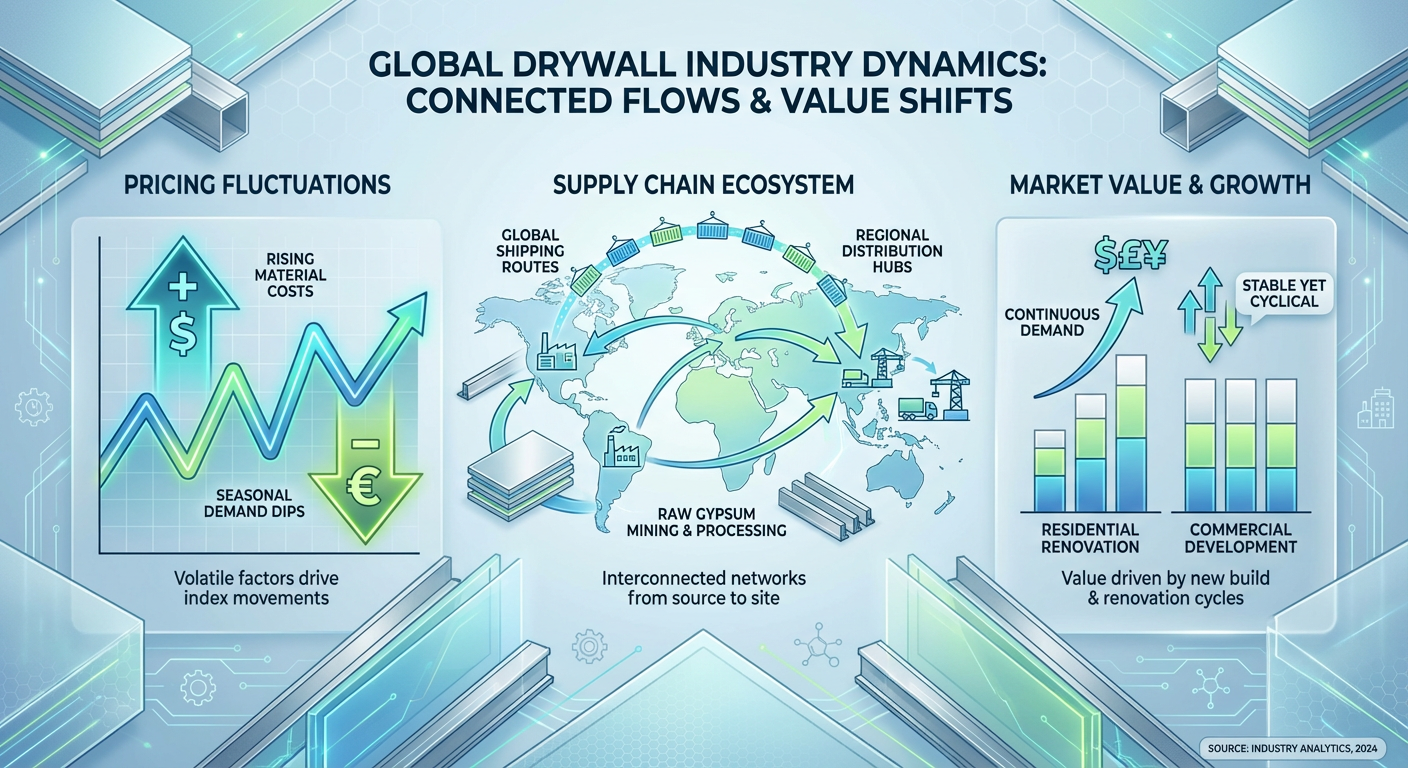
6. Pricing Trends, Supply Chain, and Market Value Fluctuations
The global drywall market, a critical component of modern construction, has experienced significant dynamism in recent years, particularly concerning pricing, supply chain resilience, and overall market value. While witnessing robust demand and steady growth in volume, the industry has also navigated unprecedented challenges, including sharp price escalations, raw material volatility, and the strategic shifts necessitated by evolving global economic landscapes and increasing sustainability imperatives. Understanding these interwoven dynamics is crucial for stakeholders across the construction value chain. The worldwide consumption of drywall reached an impressive **11.1 billion square meters in 2022**, representing a market value of approximately **$23.3 billion** at the manufacturer level[1]. This figure signifies a substantial increase, reflecting a 42% volume rise from the roughly 7.8 billion square meters recorded in 2007[2]. Forecasts indicate a continued, though moderate, annual growth rate of about **1.8%**, projecting global demand to reach **12.2 billion square meters by 2027**[3]. This long-term trend underscores the product’s increasing adoption worldwide, even as regional growth rates and pricing sensitivities vary.
6.1 Price Volatility and Market Stabilization (2021-2023)
The period between 2021 and 2022 was marked by significant price inflation across the construction materials sector, and drywall was no exception. This surge was primarily driven by a confluence of factors, including pandemic-induced supply chain disruptions, escalating raw material costs, and unexpectedly strong demand from housing and renovation markets.
6.1.1 The Surge in 2021-2022: A Perfect Storm
The onset of the COVID-19 pandemic initiated a cascade of events that severely strained global supply chains. Lockdowns, labor shortages, and logistical bottlenecks impacted everything from shipping containers to raw materials. For drywall, this translated into restricted output and increased lead times. Simultaneously, global housing markets experienced a boom, fueled by low interest rates, remote work driving demand for larger homes, and a surge in renovation activities. This high demand, coupled with constrained supply, inevitably led to price hikes. In the United States, a key indicator, drywall prices demonstrated a remarkable ascent. They increased for **seven consecutive quarters through Q3 2022**, with a notable **8% jump in Q3 2022 alone**[17]. This pushed average drywall prices to their highest levels in decades, surpassing even the peak observed during the pre-pandemic housing rush in 2020[17]. Globally, drywall price indexes registered **20-30% above pre-pandemic norms by 2022**[18]. This dramatic increase was not solely attributable to supply chain friction. Significant spikes in key input costs also played a crucial role:
- Gypsum: The primary raw material, gypsum, faced its own supply challenges, including a dwindling supply of synthetic gypsum (a byproduct of coal-fired power plants) as coal plants were decommissioned. This forced greater reliance on mined natural gypsum, often requiring longer and more expensive transportation.
- Paper: The paper facing that encapsulates the gypsum core also saw price increases due to global pulp demand and manufacturing disruptions.
- Energy: The production of drywall is energy-intensive, particularly for the kiln drying process. Soaring natural gas prices, especially in Europe, along with higher transportation fuel costs, directly impacted manufacturing expenses and were passed on to consumers[18].
The cumulative effect was a challenging environment for contractors, who not only faced elevated costs but also experienced **long lead times**, sometimes extending to 6-8 weeks for deliveries that would typically take 1-2 weeks[18]. This necessitated careful project planning and often resulted in increased project costs and delays.
6.1.2 Stabilization and Projected Decline: The Post-Pandemic Correction
As 2023 approached, the intense price pressure began to ease. Several factors contributed to this normalization:
- Improved Supply Chains: By late 2022, manufacturers had largely caught up with demand, and global supply chains started to recover from the shocks of the pandemic. This led to a stabilization of drywall material availability[19].
- Cooling Demand: The extraordinary demand for housing and renovations began to moderate as interest rates rose and economic uncertainties increased. A more normalized construction activity environment reduced the upward pressure on prices[20].
- Increased Capacity: Some manufacturers invested in expanding production capacity during the high-demand period, which helped alleviate shortages as supply chains recovered.
Consequently, drywall prices leveled off in 2023. Industry analysts now forecast a return to more typical inflation rates for building materials, estimated at approximately **2-3% annually by 2024**[21]. Despite easing, overall material costs, including drywall, remain about **25% higher than 2020 levels**[22], indicating a new, albeit stabilized, baseline. Looking ahead, despite an anticipated volume growth of 1.8% annually, the global drywall market value is actually projected to tick down slightly from **$23.3 billion in 2022 to $22.7 billion by 2027**[1]. This seemingly contradictory trend highlights the expectation that the elevated pricing experienced during the supply crunch will subside as market conditions further normalize. Essentially, while more drywall will be consumed, unit prices are expected to ease, providing some relief to construction budgets.
| Metric | 2022 | Projected 2027 | Change (2022-2027) | Underlying Factors |
|---|---|---|---|---|
| Global Volume (billion m²) | 11.1[1] | 12.2[3] | +9.9% (+1.1 billion m²) | Moderate growth in construction; increased adoption in emerging markets. |
| Global Value ($ billion) | $23.3[1] | $22.7[14] | -2.6% (-$0.6 billion) | Normalization of prices after 2021-2022 surge; resolution of supply chain issues. |
| Annual Growth Rate (Volume) | N/A | ~1.8%[3] | N/A | Consistent, moderate expansion driven by global development. |
| U.S. Drywall Prices | Record highs (e.g., +8% in Q3 2022)[17] | Stabilized, returning to 2-3% annual inflation[21] | Significant decline from peak | Improved supply chains, cooling demand, increased capacity. |
6.2 Global Market Value Fluctuations and Influencing Factors
The global drywall market’s valuation is not just a reflection of supply and demand for the finished product; it is intricately linked to a complex web of regional economic performance, raw material availability, and competitive dynamics among major manufacturers.
6.2.1 Regional Contributions and Economic Powerhouses
The global drywall market, valued around $23.3 billion in 2022, is heavily influenced by a few key regions and countries. The Asia-Pacific region, particularly China, has now become the largest market, surpassing North America’s historical dominance. China is projected to account for approximately **44% of global drywall demand gains through 2027**[4]. After a weak 2022 marked by strict COVID lockdowns and real estate curbs, China’s drywall demand is accelerating again, largely driven by large-scale **non-residential construction projects** like offices and urban commercial centers, where modern drywall techniques are replacing traditional plaster or concrete[5]. The United States remains the second-largest drywall market. Following recovery from the 2008–2011 housing crash, the U.S. consumed approximately **28 billion square feet of drywall in 2024** (roughly 2.6 billion square meters)[10]. The consumption of raw gypsum in the U.S. reached around **45 million metric tons in 2023** for various applications including wallboard[11]. While the U.S. market has rebounded strongly, future growth is anticipated to be more moderate, influenced by factors like higher interest rates and construction costs.
6.2.2 Non-Residential vs. Residential Demand Impact
A critical shift in drywall market value dynamics is the increasing importance of the non-residential sector. By 2027, drywall usage in commercial, institutional, and industrial buildings (offices, hotels, schools) is projected to reach **6.8 billion square meters**, growing at an annual rate of approximately **3.4%**[6]. This significantly outpaces the residential segment, which is expected to remain relatively flat at around **5.4 billion square meters** through 2027[7]. This trend is a key driver of market value, as non-residential projects often involve larger volumes and may utilize specialized, higher-value drywall products. Governments’ investments in public infrastructure and rapid urbanization in areas like Asia and Africa further fuel this segment, as multinational builders adopt drywall for its speed and efficiency[8],[9].
6.2.3 Major Players and Competitive Landscape Influence
The market value is also shaped by the strategies and market power of leading manufacturers. The global drywall industry is dominated by a few large multinational corporations, including **Knauf (Germany), Beijing New Building Materials (BNBM) – a subsidiary of China National Building Material (CNBM), and Saint-Gobain (France)**[15]. Other significant players include Eagle Materials and Georgia-Pacific in the U.S. These firms exert considerable influence on pricing and supply. For instance, BNBM alone sold **2.09 billion square meters of wallboard in 2022**[16], representing approximately 19% of global demand, emphasizing the concentration of production. These companies strategically invest in new production facilities in high-growth regions. Saint-Gobain, for example, has established new drywall plants in China and India to capitalize on rising demand[15]. Such investments expand capacity and can, in the long term, contribute to price stabilization by ensuring adequate supply. The competitive landscape is evolving, with Asian manufacturers increasingly expanding their global footprint and Western firms pushing into Asian markets, leading to new dynamics in market share and pricing strategies.
6.3 Supply Chain Resilience and Raw Material Constraints
Beyond immediate pricing, the long-term stability and value proposition of the drywall market are heavily dependent on supply chain resilience and access to raw materials, particularly gypsum.
6.3.1 Post-Pandemic Supply Chain Improvements
The acute shortages and long lead times for construction materials, including drywall, experienced in the early 2020s, served as a stark reminder of supply chain vulnerabilities[23]. However, concerted efforts by manufacturers and logistics providers, coupled with a moderation of demand, led to significant improvements. By late 2022, drywall material supply began to stabilize as manufacturers caught up after the initial COVID-19 disruptions[24]. This improved logistical flow and increased inventory played a crucial role in normalizing prices.
6.3.2 The Shifting Gypsum Landscape
A more structural challenge impacting the supply chain is the evolving source of gypsum. Historically, a significant portion of gypsum used in drywall manufacturing was **synthetic gypsum**, a byproduct generated by the desulfurization process in coal-fired power plants[27]. This synthetic source provided a readily available and often cost-effective alternative to mined natural gypsum. However, the global shift towards cleaner energy and the decommissioning of coal-fired power plants have drastically reduced the availability of synthetic gypsum. This trend is particularly evident in the U.S. and Europe, where environmental regulations have accelerated coal plant closures. As a result, drywall manufacturers are increasingly reliant on **mined natural gypsum**[27]. This reliance introduces several challenges:
- Increased Mining: While natural gypsum is abundant, opening new mines faces environmental regulations and local opposition.
- Higher Transportation Costs: Gypsum is bulky and heavy, making long-distance transportation costly. As synthetic sources dwindle, manufacturers may need to source natural gypsum from more distant mines or rely on imports, further increasing logistics expenses[28].
- Supply Tightness: The shift can lead to localized gypsum shortages and higher raw material costs, directly impacting drywall production expenses.
This dynamic makes **recycling scrap drywall** an increasingly attractive and vital source for gypsum material[28]. Some U.S. drywall plants are already incorporating recycled content to mitigate raw material supply risks, a trend expected to grow as both sustainability goals and supply needs align.
6.4 The Role of Sustainability in Market Value
Sustainability considerations are rapidly gaining prominence and influencing market value through various mechanisms, from regulatory pressures to consumer preferences and resource management.
6.4.1 Waste Management and Environmental Impact
The construction industry is a major generator of waste, with construction and demolition (C&D) debris alone accounting for an estimated **30-40% of global landfill waste**[25]. Gypsum drywall forms a substantial part of this waste stream. In the U.S., millions of tons of drywall are scrapped annually, yet only a minuscule **2% is recycled into new wallboard**[26]. The vast majority ends up in landfills. Landfilling gypsum board poses environmental risks. When mixed with biodegradable waste, gypsum can decompose anaerobically, releasing **hydrogen sulfide gas**, which is toxic in concentration and creates an unpleasant odor[26]. This environmental concern has led to stricter regulations in some regions. For instance, the **UK’s Environment Agency banned the co-disposal of gypsum drywall with biodegradable waste in landfills in 2009**, effectively mandating separate recycling or disposal methods[29].
6.4.2 Recycling Initiatives and “Eco-Drywall”
The low recycling rates and environmental concerns are driving significant investment and innovation in sustainable practices. Companies like Etex, a major European building materials group, have made substantial progress. Etex reported a **54% increase in recycled gypsum usage since 2018**[30] and achieved a **20% reduction in absolute CO₂ emissions** across its operations between 2018 and 2022[30]. Such initiatives demonstrate that aggressive recycling can align with profitability by mitigating raw material risks and meeting customer demand for green products. There’s also a growing market for **”eco-drywall,”** which includes products made with higher recycled content, lower carbon production footprints, or novel binders. The market has seen a **22% uptick in “eco-drywall” product launches in the last two years**[16], indicating a rising demand from builders looking to satisfy green building certifications and enhance indoor air quality. Innovators like USA Gypsum and waste management firms like DTG Recycle show how entrepreneurial efforts are closing the loop for drywall. USA Gypsum processes new construction drywall scraps into pulverized gypsum for agricultural use, cement production, and even back to drywall manufacturers[31],[32]. DTG Recycle has observed a significant increase in drywall diverted from landfills to recycling, especially with tightening regulations and rising disposal costs[33],[34]. These examples underscore a growing trend towards circularity, where waste becomes a valuable resource, impacting both environmental footprint and market economics.
6.5 Labor Shortages and Technology Adoption: Impact on Overall Project Value
While not directly impacting drywall material pricing, persistent labor shortages in the construction industry, specifically among skilled drywall installers, indirectly affect the overall project value and demand for solutions that minimize labor input. An estimated **20% gap** exists in the required number of skilled drywall installers in developed markets[16]. This shortage drives up labor costs and extends project timelines. In response, the industry is increasingly turning to **robotics and automation**. Robotic systems capable of handling heavy sheet lifting, applying joint compound, and performing repetitive sanding are gaining traction. For instance, on the “Netflix House” project in Pennsylvania, an autonomous drywall finishing robot achieved a **five-fold (300%+) increase in surface finishing productivity** for high-grade work, significantly reducing worker fatigue[27]. The market for wall-plastering robots is projected to grow **~12% annually**, potentially reaching **$1 billion by 2028**. This shift, initially driven by labor constraints, ultimately impacts total project costs and the demand for innovative, labor-saving drywall solutions. The various factors discussed, from price volatility and supply chain resilience to sustainability and labor dynamics, paint a picture of a drywall market that is robust in its core demand but continually adapting to external pressures and internal innovations. The stabilization of prices after a turbulent period, combined with a growing focus on efficiency and environmental responsibility, will shape the industry’s trajectory and its contribution to the overall construction market value in the coming years. The next section will delve deeper into **6. Drywall Plastering Techniques and Materials**, exploring the evolution of installation methods, the characteristics of various drywall types, and their applications in modern construction.
7. Sustainability and Environmental Impact of Drywall
Drywall, a ubiquitous material in modern construction, has significantly transformed interior finishing practices due to its efficiency, cost-effectiveness, and versatility. However, the widespread adoption and ever-increasing demand for drywall come with a considerable environmental footprint that spans its entire life cycle, from resource extraction and manufacturing to disposal. As global drywall consumption reached an estimated 11.1 billion square meters in 2022, valued at approximately $23.3 billion, and is projected to grow to 12.2 billion square meters by 2027[1][3], the environmental implications associated with its production and disposal cannot be overlooked. This section provides a comprehensive examination of these concerns, including the impacts of gypsum mining, the substantial generation of construction waste, persistently low recycling rates, and the ecological hazards posed by landfilling discarded drywall. It also highlights emerging solutions and the industry’s evolving efforts towards more sustainable practices.
7.1. Gypsum Mining and Resource Consumption
The primary raw material for drywall is gypsum (calcium sulfate dihydrate), a naturally occurring mineral. The extraction of natural gypsum through mining operations, typically open-pit mining, carries several environmental externalities. These include habitat destruction, landscape alteration, dust pollution, and potential impacts on water quality in surrounding areas. While natural gypsum remains a significant input, a substantial portion of gypsum used in drywall manufacturing has historically come from “synthetic gypsum,” a byproduct of flue-gas desulfurization (FGD) processes in coal-fired power plants. This synthetic gypsum, also known as flue-gas desulfurization gypsum (FGDG), offered an environmentally beneficial end-use for a waste product and reduced reliance on virgin mined gypsum.
The shifting energy landscape, however, is altering this resource supply dynamic. As coal-fired power plants are phased out globally in favor of cleaner energy sources, the availability of synthetic gypsum is rapidly shrinking. This trend is particularly evident in the United States and Europe. In the U.S., overall gypsum production has been declining, leading to increased reliance on imports of natural gypsum to meet demand. For instance, approximately 45 million metric tons of gypsum were consumed in the U.S. in 2023 for various applications, including wallboard[10]. The decline in synthetic gypsum supply means that a greater proportion of the industry’s raw material needs must be met through continued natural gypsum mining or, increasingly, through recycling initiatives. The bulkiness of gypsum also makes long-distance transportation costly and energy-intensive, creating challenges for manufacturers as readily available local sources dwindle. This makes recycling an increasingly attractive and necessary avenue for sourcing gypsum material, helping to mitigate the environmental impacts of mining and reduce transportation emissions.
7.2. Construction Waste Generation and Low Recycling Rates
One of the most pressing environmental concerns associated with drywall is the colossal amount of waste generated throughout its life cycle, from initial construction to demolition. The construction and demolition (C&D) industry is a significant contributor to global waste. Globally, construction and demolition debris, including gypsum board, constitutes an estimated 30–40% of all landfill waste[11]. The U.S. Environmental Protection Agency (EPA) estimated that the country generated over 600 million tons of C&D waste in 2018[11], a figure that continues to rise with increased construction activity.
Drywall plays a substantial role in this waste stream. During new construction, it is common for 10-15% of drywall material to be scrapped due to off-cuts, damages, or measurement errors. Demolition and renovation projects generate even larger quantities of discarded gypsum board. Despite gypsum’s inherent recyclability, the actual recycling rates for drywall scrap are remarkably low. In the United States, only about 2% of gypsum drywall waste is recycled into new wallboard, with the vast majority ending up in landfills[6][12]. This translates to millions of tons of drywall entering landfills annually; some analyses suggest up to 15 million tons of gypsum drywall waste generated each year in North America alone.
The reasons for this low recycling rate are multifaceted:
- Logistical Challenges: Collecting and transporting drywall waste separately from other C&D debris requires dedicated infrastructure, which is often lacking. Mixed C&D waste streams make effective sorting difficult and expensive.
- Contamination Concerns: Drywall must be clean to be recycled efficiently. Contaminants such as paint, joint compound, screws, and other building materials must be removed, adding complexity and cost to the process.
- Proximity to Recycling Facilities: There are only a handful of specialized drywall recycling facilities in regions like the U.S., making transport to these facilities uneconomical for many construction sites.
- Economic Incentives: Historically, landfilling has been a cheaper option than recycling in many areas, providing little financial incentive for contractors to divert drywall waste.
Yet, this situation is gradually changing. Industry experts highlight the significant upside for increased drywall recycling as both environmental regulations and the economics of raw material supply shift[6]. Some U.S. drywall plants are already incorporating recycled gypsum into their new boards to offset dwindling synthetic gypsum supplies and reduce costs.
7.3. Environmental Hazards of Landfill Disposal
The disposal of drywall in landfills, particularly when co-mingled with biodegradable organic waste, poses a significant environmental hazard: the release of toxic hydrogen sulfide gas. When gypsum (calcium sulfate dihydrate) is buried in oxygen-deprived conditions alongside organic matter, microorganisms can chemically reduce the sulfate in the gypsum to sulfide. In acidic conditions, this sulfide is then converted into hydrogen sulfide (H₂S) gas. Hydrogen sulfide is notoriously recognized by its “rotten-egg” odor, but more critically, it is corrosive, flammable, and highly toxic even at low concentrations. Elevated levels can cause adverse health effects and are a safety concern for landfill workers and nearby communities.
This hazard has prompted regulatory action in some jurisdictions. For example, the United Kingdom, a front-runner in addressing this issue, enacted legislation in 2009 that **banned the co-disposal of gypsum drywall with biodegradable waste in landfills**[7]. This regulation effectively necessitated the separation and recycling of drywall waste to prevent the formation and emission of hydrogen sulfide gas. Similar initiatives have been explored or implemented in parts of the United States, such as Massachusetts and California, where efforts are underway to boost drywall recycling or even restrict its landfill disposal. These regulations, coupled with increasing landfill tipping fees and growing environmental awareness, are creating a stronger impetus for the construction industry to find more sustainable alternatives to disposal.
7.4. Emerging Recycling Initiatives and Sustainable Solutions
Recognizing the substantial environmental impact of drywall, the industry is increasingly investing in recycling and the development of “greener” drywall solutions. These efforts are driven by a combination of regulatory pressure, corporate sustainability goals, and evolving market demand from builders seeking more environmentally friendly materials.
7.4.1. Advancements in Drywall Recycling Infrastructure
The shift away from landfilling is fostering the growth of dedicated drywall recycling operations. Companies like USA Gypsum, based in Pennsylvania, have emerged as pioneers in this sector. USA Gypsum specializes in collecting clean new construction drywall scraps and processing them into pulverized gypsum. This recycled gypsum is then repurposed for:
- New Wallboard Production: Manufacturers can incorporate recycled gypsum back into their production streams, closing the loop and reducing the need for virgin raw materials.
- Agricultural Soil Amendments: Gypsum is a valuable soil conditioner, improving soil structure and mitigating sodium toxicity.
- Cement Production: Gypsum is an additive in cement manufacturing, regulating the setting time of concrete.
On the U.S. West Coast, DTG Recycle, a major construction waste management firm, reported a significant increase in drywall diverted from landfills to recycling facilities, particularly during the 2021-2022 construction boom[44]. Matt Dunyon, DTG’s director of operations, emphasized that escalating disposal costs and landfill restrictions in some areas make recycling an economically viable and environmentally preferable option[12][44]. Such entrepreneurial efforts demonstrate that drywall recycling can be scaled up as regulatory and economic conditions align. The success of these pioneers is crucial for establishing models that can be replicated globally.
Major drywall manufacturers are also leading the charge. Etex, a Belgium-based building materials group and maker of the Siniat plasterboard brand, is a salient example. Between 2018 and 2022, Etex achieved a remarkable 54% increase in its use of recycled gypsum[9]. The company invested in robust waste collection and processing capabilities, positioning itself as “the most advanced gypsum recycler in Europe.” This commitment not only reduced Etex’s environmental footprint but also mitigated its reliance on potentially volatile raw material supply chains. Similarly, BNBM (Beijing New Building Materials), a Chinese drywall giant, has invested in environmental upgrades, with all its Chinese drywall factories reportedly achieving “nearly zero emissions” in 2022 through improved dust collection, waste gypsum recycling, and cleaner energy usage[8].
7.4.2. Development of “Eco-Drywall” Products
Beyond increasing recycling rates, the industry is innovating to produce more inherently sustainable drywall panels. The market has seen a 22% uptick in “eco-drywall” product launches in the last two years[20]. These products often feature:
- Higher Recycled Content: Boards are designed to incorporate a greater percentage of recycled gypsum, reducing demand for virgin resources.
- Lower Weight: Manufacturers are developing lighter-weight panels by optimizing the gypsum core formula, using additives like air entrainment, fiberglass, or perlite. These boards can be 20-30% lighter than standard panels, reducing material consumption and easing transportation burdens, thereby lowering the carbon footprint associated with logistics. They also offer ergonomic benefits for installers[14].
- Alternative Binders and Materials: Research is exploring alternative binders or supplements to gypsum to create greener wallboard. Magnesium oxide (MgO) boards, for instance, offer different chemical compositions and performance characteristics which may be more environmentally benign depending on their manufacturing process and end-of-life options. Agricultural waste fibers are also being investigated as potential additives or replacements.
- Lower Carbon Production: Manufacturers are investing in cleaner production processes, such as modernizing plants, utilizing renewable energy sources, and optimizing energy-intensive steps like kiln drying. Some plants are even piloting electric or renewable-powered kilns to drastically cut greenhouse gas emissions[67].
These innovations align with construction industry trends towards green building certifications and increasing client demand for sustainable materials. The continuous refinement of drywall formulations and manufacturing methods signals a clear commitment from leading manufacturers to reduce the embodied energy and overall environmental impact of their products.
Overall, the sustainability and environmental impact of drywall are complex issues with significant challenges. However, the industry is increasingly acknowledging these concerns and actively pursuing solutions. The convergence of tightening regulations, declining synthetic gypsum availability, rising landfill costs, and growing environmental awareness among consumers and builders is driving a paradigm shift towards a more circular and sustainable drywall economy. The next decade will likely see significant advancements in recycling infrastructure, product innovation, and responsible resource management within the drywall sector, paving the way for a more environmentally conscious construction industry.
The growing emphasis on sustainability also intersects with evolving building codes and performance expectations. For instance, the use of lightweight or eco-friendly drywall may be incentivized or mandated in green building projects, affecting product choices and installation practices. This continuous push for higher performance—whether in terms of fire resistance, sound attenuation, or moisture management—while simultaneously reducing environmental impact, is shaping the future of drywall plastering. This constant evolution is a critical aspect for contractors and manufacturers to consider, as explored further in the following sections regarding market dynamics and technological advancements.—
REFERENCES
- The Freedonia Group. (2024, March 11). Production of Drywall Exceeds 12 Billion Square Meters in 2027. Retrieved from https://www.freedoniagroup.com/press-releases/production-of-drywall-exceeds-12-billion-square-meters-in-2027#:~:text=%28Saint,facilities%20in%20Florida
- GlobeNewswire. (2024, August 13). Drywall Market Report 2024–2027: China to Account for 44% of Global Drywall Gains. Retrieved from https://www.globenewswire.com/fr/news-release/2024/08/13/2928964/28124/en/Drywall-Market-Report-2024-2027-China-to-Account-for-44-of-Global-Drywall-Gains.html#:~:text=Global%20demand%20for%20drywall%20is,Growth%20will%20be%20supported%20by
- Resource Erectors. (2022, June 6). Construction Materials Recycling on the Rise: Part 1. Retrieved from https://resource-erectors.com/construction-materials-recycling-on-the-rise-part-1#:~:text=,AmericanRecycler.com
- Ecofficiency. (2018). Plasterboard Contamination may result in Contamination Charges. Retrieved from https://www.ecofficiency.co.uk/plasterboard-contamination-may-result-in-contamination-charges#:~:text=is%20mixed%20in%20with%20other,and%20for%20the%20receiving%20site
- Global Gypsum News. (2023, April 14). BNBM’s sales take a hit in 2022. Retrieved from https://www.globalgypsum.com/news/item/1958-bnbm-s-sales-take-a-hit-in-2022#:~:text=China%3A%20BNBM%E2%80%99s%20operating%20income%20fell,achieved%20%E2%80%9Cnearly%20zero%20emissions%E2%80%9D%20in
- Global Gypsum News. (2023, March 17). Etex increases sales and earnings in 2022. Retrieved from https://www.globalgypsum.com/news/itemlist/tag/Results?start=40#:~:text=Belgium%3A%20Etex%27s%20sales%20were%20Euro3,totalled%20Euro645m%2C%20up%20by%2013
- Walls & Ceilings. (2024). Wallboard Product Sales in the U.S. from 2010 to 2024. Retrieved from https://www.wconline.com/articles/97202-wallboard-product-sales-in-the-us-from-2010-to-2024#:~:text=Wallboard%20Product%20Sales%20in%20the,from%202010%20to%202024
- BigRentz. (2021, July 13). 24 Construction Waste Statistics & Tips to Reduce Landfill Debris. Retrieved from https://www.bigrentz.com/blog/construction-waste-statistics/#:~:text=6,can%20end%20up%20as%20waste
- American Recycler. (2022). Drywall Recycling Presents Challenges. (Referenced via Resource Erectors).
- Walls & Ceilings. (2023). How Robotics Are Reshaping the Drywall and Finishing Industry. Retrieved from https://www.wconline.com/articles/97719-how-robotics-are-reshaping-the-drywall-and-finishing-industry#:~:text=One%20of%20the%20biggest%20benefits,of%20overhead%20or%20repetitive%20sanding
- GlobalGrowthInsights. (n.d.). Drywall Panels Market Market Size & Share [2033]. Retrieved from https://www.globalgrowthinsights.com/market-reports/drywall-panels-market-118590#:~:text=installers.%20%2A%20Industry%20Impact%3A%2046,and%202024%20by%20key%20manufacturers
- Resource Erectors. (2022, June 6). Construction Materials Recycling on the Rise: Part 1. Retrieved from https://resource-erectors.com/construction-materials-recycling-on-the-rise-part-1#:~:text=With%20transportation%20costs%20spiking%20in,to%20the%20current%20construction%20boom
- Global Gypsum News. (2023, March 17). Etex increases sales and earnings in 2022. Retrieved from https://www.globalgypsum.com/news/item/1949-etex-increases-sales-and-earnings-in-2022#:~:text=,in%20first%20half%20of%202025
8. Innovations in Drywall Products and Installation Technology
The drywall industry, while rooted in a mature product, is experiencing a transformative period driven by a confluence of factors including environmental imperatives, persistent labor shortages, and an ever-increasing demand for higher performance in construction materials. This section delves into the cutting-edge advancements in drywall products, from advanced material compositions to specialized high-performance boards, and explores the burgeoning integration of robotics and automation in drywall installation and finishing processes. These innovations are not merely incremental improvements but rather strategic responses to long-standing industry challenges, aiming to enhance efficiency, safety, sustainability, and overall construction quality.
The global demand for drywall remains robust, reaching 11.1 billion square meters in 2022, valued at approximately $23.3 billion [1]. This significant market size, projected to grow to 12.2 billion square meters by 2027 [3], underscores the importance of continued innovation. Asia-Pacific, particularly China, is driving much of this growth, with China alone expected to account for 44% of global drywall demand gains through 2027 [4]. This global market expansion, coupled with regional disparities in adoption and pressing industry challenges, creates a fertile ground for technological advancement.
8.1. Advances in Drywall Product Composition and Performance
The core gypsum panel has undergone significant evolution, moving beyond standard wallboard to meet diverse construction requirements and address environmental concerns. Manufacturers are increasingly focusing on specialized high-performance boards that offer enhanced properties, contributing to more resilient, comfortable, and sustainable buildings.
8.1.1. Lightweight Panels: Reducing Strain and Boosting Efficiency
One of the most impactful innovations in drywall products over the last decade has been the introduction and widespread adoption of lightweight panels. By strategically adjusting the gypsum core formula, often through the incorporation of air entrainment, fiberglass, or perlite, manufacturers have produced boards that are considerably lighter than their traditional counterparts. These lightweight drywall panels can be 20–30% lighter than standard 1/2-inch drywall sheets [14]. This reduction in weight translates directly into significant benefits for installers and contractors.
The primary advantage is ergonomic: lighter boards are easier to carry, lift, and maneuver on job sites, substantially reducing the physical strain on workers. This addresses a critical industry concern as drywall installation is highly labor-intensive and manual handling of heavy sheets often leads to injuries and fatigue. In the United States, the adoption of lightweight drywall surged after manufacturers like USG introduced products such as “UltraLight” drywall in the early 2010s. Contractors quickly recognized the productivity benefits, as lightweight boards could sometimes enable a single worker to perform tasks that previously required two, or allow crews to complete installations faster with less physical exertion. This innovation has had a broad impact, making these boards a significant segment of overall drywall sales due to their ergonomic and efficiency advantages [14].
8.1.2. Specialized High-Performance Boards: Beyond Basic Wall Covering
Beyond weight reduction, a diverse array of specialized drywall products has emerged, each engineered to address specific performance criteria in modern building design. These boards represent a shift from drywall as a mere interior surface to a critical component of a building’s functional and structural integrity.
- Moisture-Resistant and Mold-Resistant Boards: A major Achilles’ heel of traditional paper-faced drywall in damp environments was its susceptibility to moisture absorption and subsequent mold growth. The innovation of moisture-resistant and mold-resistant boards directly tackles this issue. These products often feature a gypsum core treated with additives to repel water, and, crucially, replace the traditional paper facing with fiberglass mats. This “paperless drywall” design significantly inhibits mold formation and enhances durability in areas prone to humidity, such as bathrooms, basements, utility rooms, and exterior sheathing applications [14]. Their use is becoming standard in such applications and is increasingly specified by architects and builders concerned with indoor air quality and building longevity.
- Enhanced Fire Resistance (Type X and C): While standard drywall offers inherent fire resistance, Type X and Type C gypsum boards are specifically formulated to provide extended fire protection. Type X boards incorporate fiberglass fibers into the gypsum core, which helps the panel maintain its integrity longer under fire exposure. Type C goes a step further with additional chemical additives, offering even greater resistance. These specialized boards are essential for meeting stringent building codes in fire-rated wall and ceiling assemblies, especially in commercial buildings, multi-family residences, and areas requiring passive fire protection [42].
- Soundproofing and Acoustic Performance: With increased population density and a demand for quieter indoor environments, drywall products designed for enhanced acoustic performance have gained traction. These can include denser gypsum cores, multi-layer systems with viscoelastic damping compounds (often referred to as “green glue”), or boards specifically engineered to reduce sound transmission. By incorporating these products, designers can significantly improve the STC (Sound Transmission Class) ratings of walls and ceilings, fostering more comfortable and productive spaces in offices, healthcare facilities, and residential multi-unit buildings [42].
- Impact and Abuse-Resistant Boards: For high-traffic areas prone to wear and tear, such as hospital corridors, school hallways, commercial kitchens, or retail spaces, impact-resistant drywall is crucial. These boards typically feature a denser core, fiberglass mesh reinforcement, or a hard, abrasion-resistant surface. They are designed to withstand bumps, scrapes, and punctures far better than standard drywall, reducing maintenance and repair costs over the building’s lifespan [14].
- Thermal Performance: While not as prevalent as insulation, some drywall products integrate features to improve thermal resistance, such as a foil-backed facing. These can contribute marginally to the thermal envelope, particularly in conjunction with other insulation components, supporting overall energy efficiency efforts.
The collective impact of these specialized boards is substantial. Data indicates that approximately 46% of new construction projects globally incorporate specialized drywall (e.g., insulated or mold-resistant panels) to achieve better performance outcomes [14]. This demonstrates a clear industry trend towards prioritizing performance, durability, and occupant well-being in drywall selection.
8.1.3. Paperless Drywall: A Durable and Mold-Resistant Alternative
Paperless drywall stands out as a significant advancement in product composition, directly addressing the vulnerabilities of traditional paper-faced gypsum board. Instead of paper, these boards feature fiberglass mats or similar non-organic facings laminated to the gypsum core. This simple yet effective change dramatically improves several key performance aspects:
- Mold and Mildew Resistance: As paper is an organic food source for mold, its removal is paramount in preventing mildew growth. Fiberglass facings are inorganic and thus highly resistant to mold and mildew, making paperless drywall ideal for humid or moisture-prone areas like basements, bathrooms, kitchens, and climates with high humidity levels.
- Water Resistance: While not fully waterproof, the fiberglass facing helps the board resist water absorption far better than paper, reducing the risk of deterioration, delamination, and structural weakening when exposed to moisture.
- Durability: The fiberglass mat often provides a tougher, more scuff-resistant surface than paper, making the board more durable during handling, installation, and even after finishing.
The trade-off can sometimes be a slightly different texture to finish, requiring specific primers and joint compounds for optimal results. However, the benefits in terms of longevity, indoor air quality, and peace of mind in moisture-sensitive applications have driven significant adoption of paperless drywall products [14].
8.1.4. The Rise of “Eco-Drywall” and Sustainability-Focused Products
Sustainability is rapidly becoming a defining characteristic of new drywall product development. The industry is responding to increasing environmental awareness, stricter regulations, and market demand for greener building materials. The “eco-drywall” segment encompasses products that address environmental impact across their lifecycle:
- Recycled Content: Manufacturers are increasing the percentage of recycled gypsum in their new boards. Given that millions of tons of drywall scrap are generated annually in the U.S. alone, with only about 2% recycled into new wallboard currently [17], there’s immense potential. Companies like Etex have made significant strides, reporting a 54% increase in recycled gypsum usage since 2018 [20]. This not only reduces landfill waste but also conserves virgin gypsum resources.
- Lower Embodied Carbon: Efforts are underway to reduce the carbon footprint associated with drywall production, from sourcing raw materials to manufacturing processes. This includes optimizing energy consumption in kilns (some plants are piloting electric or renewable-powered kilns [51]), using local suppliers to reduce transportation emissions, and employing more efficient manufacturing techniques.
- Alternative Binders and Core Materials: Research is exploring the use of alternative binders or supplements to gypsum, and even entirely different composite materials. While still nascent and facing challenges in cost and scalability, this area of innovation seeks to either reduce reliance on gypsum or introduce entirely new low-impact wallboard solutions.
- Indoor Air Quality (IAQ): Eco-drywall also focuses on improving IAQ by reducing VOC (Volatile Organic Compound) emissions from the boards themselves, and by providing mold and moisture resistance to prevent microbial growth that can harm air quality.
The market for eco-drywall is expanding rapidly, with a notable 22% increase in “eco-drywall” product launches in the last two years alone [21]. This trend is driven by builders seeking materials that aid in green building certifications, reduce waste, and provide healthier indoor environments, highlighting a significant and growing segment of the drywall market. However, the industry still faces a substantial challenge in ramping up gypsum recycling rates from a current low of ~2% in the U.S. [17] to more ambitious targets of over 20% by 2030 [51], which will require significant investment in infrastructure and logistical solutions.
8.2. Robotics and Automation in Installation and Finishing
Perhaps the most revolutionary innovations in drywall plastering are occurring in the realm of installation and finishing processes, primarily driven by the persistent labor shortages facing the construction industry. With an estimated 20% gap in skilled drywall installers, contractors are actively seeking technological solutions to enhance productivity and reduce reliance on manual labor [22].
8.2.1. Robotic Systems for Installation and Heavy Lifting
The physical demands of hanging drywall, especially heavy sheets on ceilings or large commercial panels, make it a prime candidate for automation. Robotic systems are emerging to address the strenuous and often injury-prone aspects of installation:
- Robotic Drywall Lifts: Advanced robotic lifts can handle heavy gypsum sheets, positioning them precisely against studs or ceiling joists. This allows a single worker to fasten the board, streamlining a task that traditionally required a team of two or three. Such systems reduce physical strain, enhance safety by minimizing overhead work, and improve installation speed [23].
- Automated Measurement and Cutting: While less common at present, prototypes and early commercial systems are being developed that can take precise measurements, cut drywall panels (including complex shapes for openings like windows or outlets), and even route paths for electrical or plumbing. Integrated with Building Information Modeling (BIM) data, these systems could significantly reduce material waste and on-site labor for cutting and fit-ment.
The adoption of these technologies is a direct response to rising labor costs and the shrinking pool of skilled manual labor. By augmenting human workers with robotic assistance, construction firms can maintain project schedules and potentially improve safety records.
8.2.2. Automation in Drywall Finishing: Taping, Mudding, and Sanding Bots
The finishing phase of drywall—taping, applying joint compound (mudding), and sanding—is highly repetitive, requires significant skill, and is often physically taxing. This area has seen some of the most promising robotic innovations.
- Robotic Sanding and Finishing Bots: Companies are introducing autonomous or semi-autonomous robots designed to perform critical finishing tasks. An exemplary case study involved Performance Contracting Inc. (PCI) partnering with robotics firm Okibo on the 100,000 sq. ft. “Netflix House” project in Pennsylvania [25]. The autonomous drywall finishing robot used on this commercial build handled high ceilings and expansive wall areas, applying joint compound and sanding surfaces. The project reported a remarkable five-fold increase in surface finishing productivity (a 400% boost) for Level 4/5 finishes compared to manual methods [24]. Beyond speed, these robots virtually eliminated worker fatigue from overhead or repetitive sanding, enhancing safety and reducing the risk of repetitive strain injuries [23]. The robots also delivered consistent quality, minimizing rework and callbacks for quality corrections [44]. The market for wall-plastering robots alone is projected to grow approximately 12% annually, exceeding $1 billion by 2028 [13], signaling strong investment and future adoption in this segment.
The integration of robotics is set to reshape the drywall and finishing industry significantly. While robotics are not yet replacing workers wholesale, they are enabling smaller crews to be more productive and safer, filling critical labor gaps, and allowing skilled tradespeople to focus on more complex, intricate tasks that still require human dexterity and judgment [43].
8.3.2. Evolution of Finishing Tools and Materials
Even traditional finishing tools and materials have seen continuous innovation, making the process more efficient and safer:
- Automatic Taping Tools: While not new, modern automatic taping tools are lighter and more ergonomic, designed to reduce operator fatigue. These tools apply joint compound and tape in a single pass, increasing speed and consistency compared to manual methods.
- Dust-Reducing Tools: Sanding is a major source of fine gypsum dust, which poses health risks and creates significant cleanup challenges. Dust-reducing sanding tools integrated with vacuum systems are now common, capturing airborne particles at the source.
- Advanced Joint Compounds: Manufacturers have developed specialized joint compounds that offer faster drying times, lower dust formulations, and improved workability.
- Quick-setting compounds can harden in 20–45 minutes, dramatically speeding up multi-coat finishes compared to traditional compounds that require 24 hours per coat [44].
- Low-dust compounds are formulated so that when sanded, the dust particles are heavier and fall directly to the floor instead of remaining suspended in the air, improving site cleanliness and worker health [44].
- Spray-Applied Textures: For certain aesthetic requirements, spray-applied textures (e.g., orange peel or popcorn) can be rapidly applied using hopper guns, offering a much faster alternative to elaborate smooth skim coats while maintaining a professional finish [44].
These innovations in tools and materials contribute significantly to overall project efficiency, quality, and the reduction of physical burden on skilled plasterers.
8.4. Addressing Industry Challenges Through Innovation
The innovation discussed above directly addresses several critical challenges faced by the drywall industry today.
8.4.1. Alleviating the Skilled Labor Shortage
The severe shortage of skilled drywall installers and finishers, estimated to be a 20% gap in developed markets [22], is arguably the primary driver for automation. Robotics and labor-saving tools fill this gap by:
- Increasing Productivity per Worker: Robots enable fewer workers to accomplish more, as demonstrated by the 5x productivity increase on the Netflix House project .
- Increased Recycling: The low recycling rate of drywall (only ~2% in the U.S. [17]) is a major concern, as gypsum in landfills can generate toxic hydrogen sulfide gas [18]. Innovations like dedicated recycling facilities (e.g., those operated by Etex [20] and entrepreneurial ventures like USA Gypsum and DTG Recycle [26]) are crucial. These efforts divert millions of tons of waste from landfills and convert them back into valuable gypsum feedstock, addressing the diminishing supply of synthetic gypsum due to the phase-out of coal-fired power plants [27].
- Eco-Friendly Products: The proliferation of “eco-drywall” products with higher recycled content and lower embodied carbon helps builders meet green building standards and reduces the overall environmental footprint of construction [21].
- Reduced Waste Through Precision: Digital tools and prefabrication reduce on-site waste by optimizing cuts and minimizing errors, contributing to a more sustainable construction process.
Stringent regulations, such as the UK’s ban on landfilling gypsum with biodegradable waste since 2009 [19], are also catalyzing recycling innovation and investment.
8.4.3. Meeting Higher Performance Expectations and Volatile Costs
Modern buildings demand more from their interior linings: better fire protection, superior acoustics, greater durability, and consistent finish quality [42]. Innovations in product composition and installation techniques allow the industry to meet these elevated expectations. Furthermore, while the early 2020s saw significant price volatility due to supply chain disruptions [52].Integrated Digital Workflows: BIM will become even more central, seamlessly linking design, fabrication, and installation. Augmented and virtual reality tools will become commonplace for planning, training, and quality control.
The drywall industry, while seemingly traditional, is actually a vibrant ecosystem of innovation. These advancements ensure drywall retains its position as a preferred interior lining material, capable of meeting the evolving demands of modern, sustainable construction.
The next section will expand on the sustainability discussion by examining the material life cycle of drywall, specifically focusing on energy consumption, raw material sourcing, and waste management from cradle to grave.
9. Frequently Asked Questions
Understanding the intricacies of any industry often comes down to addressing the most common queries stakeholders and newcomers alike may have. Drywall plastering, a fundamental component of modern construction, is no exception. This section aims to provide comprehensive answers to frequently asked questions, delving into the current market dynamics, regional variations, technological advancements, and pressing sustainability concerns that shape the industry. The information presented herein is meticulously drawn from recent research, offering a deep dive into the underlying data and trends.
What are the current global market trends for drywall plastering?
The global drywall market is characterized by robust and steady growth, reflecting its increasing adoption in construction worldwide. In 2022, global drywall consumption reached an impressive **11.1 billion square meters**, translating to a market value of approximately **$23.3 billion** at the manufacturer level. This figure represents a significant increase, up roughly 42% from the 7.8 billion m² recorded in 2007, underscoring a continuous expansion as more countries embrace drywall construction over traditional methods[1][2]. **Projected Growth:** Looking ahead, the market is poised for sustained, albeit moderate, growth. Forecasts indicate an annual expansion of approximately **1.8% through 2027**, pushing global demand to an estimated **12.2 billion m²** [3]. This positive outlook by Freedonia (2024) is predicated on a post-pandemic recovery in construction activity and the continued integration of drywall in emerging economies. Interestingly, despite the projected increase in volume, the market value is anticipated to slightly decrease to **$22.7 billion by 2027**[4]. This expected dip in value, alongside an increase in volume, suggests a normalization of gypsum board prices after the sharp increases observed in 2021–2022, as supply chain issues resolve and inflationary pressures ease. **Regional Shifts and Dominance:** A significant trend is the notable shift in regional drywall consumption. Historically, **North America** spearheaded the market, accounting for nearly 48% of global drywall sales in 2007[5]. However, this dynamic has been redefined, with the **Asia-Pacific region** now standing as the largest market. **China**, in particular, has emerged as the dominant force, surpassing the U.S. to become the world’s largest drywall market and producer. Its influence is projected to be profound, driving an estimated **44% of global drywall demand gains through 2027**[6][7]. This resurgence follows a sluggish 2022, attributed to strict COVID lockdowns and real estate restrictions, but Chinese demand for drywall, especially in commercial buildings, is accelerating as construction shifts from traditional plaster and concrete techniques[8]. China’s market growth is expected to “accelerate from the 2017–2022 pace,” further solidifying its critical role in global drywall trends[7]. The U.S. remains a significant player, holding the position of the second-largest drywall market. It experienced a robust post-pandemic recovery, with approximately **28 billion square feet of wallboard sold in 2024**[9], nearing pre-recession record levels from the mid-2000s. Annual U.S. gypsum consumption reached **45 million tons in 2023** across various applications, including wallboard and cement, reflecting the substantial domestic industry scale[10]. However, its future growth trajectory is anticipated to be slower compared to emerging markets, with growth leveling off. **Commercial vs. Residential Demand:** The **non-residential sector** has become the primary growth engine for drywall globally, outstripping the residential segment. Drywall usage in commercial spaces such as offices, hotels, hospitals, and educational institutions is projected to reach **6.8 billion m² by 2027**, growing at an annual rate of approximately **3.4%**[11]. This growth is significantly higher than the residential segment, which is expected to remain relatively flat, around **5.4 billion m²** through 2027[12]. Factors such as government investments in public infrastructure, increased urbanization in Asia and Africa, and a post-pandemic rebound in office and hospitality construction are fueling this demand[13][14]. By 2027, non-residential construction is set to account for over 55% of the total drywall volume. In lower-income countries, multinational builders often first embrace drywall for offices and retail, prioritizing speed and modern construction methods, while homebuilders tend to stick to more traditional, cheaper materials like masonry or plaster[15]. This table summarizes key global market trends:
| Metric | 2022 Data | 2027 Projection | Growth Rate (CAGR) | Key Trend/Insight |
|---|---|---|---|---|
| Global Drywall Consumption (Volume) | 11.1 billion m² | 12.2 billion m² | ~1.8% annually | Steady adoption, especially in emerging markets. |
| Global Drywall Market (Value) | $23.3 billion | $22.7 billion | Slight decline (negative CAGR) | Price normalization after 2021-2022 surges. |
| China’s Contribution to Global Gains | N/A (Significant market) | 44% of global volume gains | Accelerating from 2017-2022 pace | Leading demand driver, especially in non-residential. |
| U.S. Wallboard Sales (Volume) | ~24.5 billion sq. ft. (estimated from 2024 forecast) | ~28 billion sq. ft. (projected for 2024) | Slower growth post-recovery | Strong rebound from post-2008 crash. |
| Non-Residential Drywall Demand | Less than residential | 6.8 billion m² | ~3.4% annually | Dominant growth segment, driven by urbanization and public projects. |
| Residential Drywall Demand | Roughly 5.4 billion m² | ~5.4 billion m² | Flat | Stagnant homebuilding in mature markets. |
**Per Capita Usage Disparities:** Drywall usage intensity varies significantly worldwide, largely due to diverse construction traditions. North America exemplifies the highest per capita use, with approximately **11 m² of drywall per person per year in the U.S.** and about 10 m² in Canada, reflecting its widespread use in residential construction[16]. In contrast, many European and developed Asian countries exhibit much lower per capita usage, ranging from **1–2 m²** annually, where traditional materials like masonry or wet plaster remain prevalent[17]. This substantial gap highlights a considerable growth potential in regions with low penetration as modern building techniques and preferences shift. **Market Value and Pricing Fluctuations:** The global drywall market experienced significant price volatility in the early 2020s. Pandemic-induced supply disruptions and escalating raw material costs led to a surge in drywall prices during 2021–2022. In the U.S., prices climbed for seven consecutive quarters through Q3 2022, with an **8% jump in Q3 2022 alone**, reaching record highs[18]. Globally, drywall price indexes in 2022 stood 20–30% above pre-pandemic norms. However, as supply chains normalize and demand cools, prices are stabilizing. Global market value is expected to tick down slightly to $22.7 billion by 2027 despite volume growth, indicating that the elevated pricing from the supply crunch is subsiding[19]. Industry analysts anticipate a return to normal inflation rates of approximately 2–3% annually for building materials by 2024, although overall material costs remain about 25% higher than 2020 levels[20][22].
What technological advancements are impacting drywall plastering?
Technological advancements are rapidly transforming the drywall plastering industry, driven primarily by the need for increased efficiency, improved safety, and solutions to labor shortages. These innovations range from sophisticated robotics to advanced material compositions and digital integration. **1. Robotics and Automation:** The most striking development is the increasing adoption of robotics and automation to alleviate reliance on manual labor, particularly for repetitive and arduous tasks. A persistent **shortfall of skilled drywall installers, estimated at a 20% gap** in developed markets, is a primary catalyst for this innovation[23]. Robotic systems are being deployed for heavy sheet lifting, applying joint compound, and especially for repetitive sanding.
- Enhanced Productivity: Case studies demonstrate significant productivity gains. On the “Netflix House” project in Pennsylvania, Performance Contracting Inc. (PCI) utilized autonomous drywall finishing robots, reporting a **five-fold increase (300%+ boost)** in surface finishing productivity for Level 4/5 finishes compared to manual methods[25].
- Reduced Worker Strain and Injuries: Robots can handle heavy drywall sheets, eliminating the need for workers to lift awkward loads and reducing physical fatigue associated with overhead tasks like sanding[27]. This not only improves worker well-being but also minimizes injuries. One journeyman finisher on the Netflix House project noted that using the robot allowed him to sand a large room in a day without exhaustion, a stark contrast to manual methods[25].
- Consistent Quality: Robotics contribute to more consistent application of joint compound and smoother finishes, leading to fewer callbacks for quality corrections[27].
- Market Growth: The market for wall-plastering robots is projected to grow by approximately **12% annually**, expected to exceed **$1 billion by 2028** as contractors increasingly invest in labor-saving technologies (ResearchAndMarkets, 2023).
**2. Advances in Drywall Materials:** The composition and characteristics of drywall panels themselves are continually evolving to meet modern construction demands for durability, ease of handling, and enhanced performance.
- Lightweight Drywall: Manufacturers have developed lighter-weight panels, typically **25–30% lighter** than standard boards, through innovations in gypsum core formulations. These panels, exemplified by USG’s “UltraLight” drywall introduced in the 2010s, significantly reduce handling labor and ergonomic strain, thereby improving installer productivity.
- High-Performance Boards: Specialized boards are gaining prominence:
- Moisture- and Mold-Resistant Boards: Made with fiberglass mat facings instead of paper, these “paperless drywall” varieties are essential in high-humidity areas like bathrooms and basements to prevent mold growth.
- Enhanced Fire and Sound Resistance: Beyond standard Type X fire-rated boards, there are products offering superior soundproofing for multi-family dwellings and impact resistance for high-traffic commercial spaces. Roughly **46% of new construction projects globally incorporate specialized drywall, such as insulated or mold-resistant panels**[31].
- Eco-Drywall: This rapidly growing segment features boards with higher recycled content, lower carbon footprints during production, or novel binders, with a **22% increase in eco-drywall product launches in 2023–2024**[31].
**3. Digital Tools and BIM Integration:** The integration of digital technologies and Building Information Modeling (BIM) is streamlining the planning and execution phases of drywall installation.
- Precise Planning: BIM allows for detailed planning of interior partition layouts, enabling precise off-site cutting of drywall panels and improved coordination with other trades like electrical and plumbing.
- Workflow Optimization: Digital scanners and layout tools on-site ensure framing accuracy, reducing on-site adjustments. Prototypes of CNC machines and drywall-cutting robots, driven by BIM data, can accurately cut openings for fixtures, minimizing manual errors and waste.
- Quality Control: Augmented Reality (AR) tools are being explored for quality assurance, allowing inspectors to overlay BIM models onto installed walls to verify compliance with design specifications.
**4. Improved Finishing Tools and Compounds:** Even traditional tools and materials are seeing significant advancements for speed and quality.
- Advanced Taping Tools: Lighter, more ergonomic automatic taping tools (bazookas, flat boxes) speed up joint compound and tape application and smoothing, greatly enhancing efficiency over manual methods.
- Dust-Reducing Sanding: Sanding tools with vacuum attachments improve air quality and worker health by capturing fine gypsum dust.
- Enhanced Joint Compounds: Quick-setting compounds that cure in 20–45 minutes (compared to 24 hours for traditional mud) accelerate multi-coat finishing. Low-dust compounds are available to minimize airborne particles during sanding. Spray-applied texture finishes offer a rapid alternative to smooth skim coats.
These technological shifts are making drywall plastering more efficient, less labor-intensive, safer, and capable of delivering higher performance and quality, addressing critical challenges faced by the construction industry.
How is sustainability addressed in the drywall plastering industry?
Sustainability has become a growing imperative in the drywall plastering industry, addressing the environmental impacts throughout the product’s life cycle, from raw material extraction to disposal. The industry is actively responding with new regulations, recycling initiatives, and the development of greener products. **1. Drywall Waste and Landfill Concerns:** Drywall contributes significantly to construction and demolition (C&D) waste, which globally accounts for an estimated **30–40% of landfill waste**[34]. In the U.S. alone, millions of tons of drywall scrap are generated annually, yet only about **2% is recycled into new wallboard**[36].
- **Hydrogen Sulfide Gas**: When gypsum drywall is landfilled with organic waste, it can decompose anaerobically, emitting toxic **hydrogen sulfide gas**, which has a foul “rotten egg” odor and can be dangerous in concentrated amounts[36]. This environmental hazard has prompted stricter regulations.
- **Landfill Bans**: The UK, for example, enacted a ban in 2009 prohibiting the co-disposal of gypsum with biodegradable waste in landfills, effectively mandating separate disposal or recycling methods[39]. Similar initiatives or considerations are growing in the U.S., with some states exploring bans or incentives for drywall recycling.
**2. Recycling Initiatives and Increased Recycled Content:** Governments and manufacturers are investing in solutions to increase drywall recycling rates.
- **Manufacturer Investment**: Major producers like Etex and Saint-Gobain are heavily investing in recycling facilities. Etex, for instance, reported a **54% increase in its use of recycled gypsum between 2018 and 2022**[41]. Companies like USA Gypsum and DTG Recycle are emerging as key players in separating and processing drywall waste for reuse[43].
- **Closed-Loop Systems**: Some “closed-loop” programs are being implemented where construction off-cuts are returned to plants for reprocessing into new boards, a practice expected to expand.
- **Logistical Challenges**: Despite the potential, scaling up drywall recycling faces logistical and economic hurdles. It requires clean scrap collection, removal of contaminants (screws, tape, paint), and processing into gypsum powder suitable for new board production. As of 2022, only a “handful” of specialized facilities performed this economically in the U.S.[43].
**3. Shift in Gypsum Resource Supply (Natural vs. Synthetic Gypsum):** The availability of raw gypsum is also driving sustainability efforts.
- **Decline of Synthetic Gypsum**: Historically, a significant portion of gypsum for drywall came from “synthetic gypsum,” a byproduct of coal-fired power plants. However, as coal plants shut down due to environmental policies, the supply of synthetic gypsum is diminishing[46].
- **Increased Reliance on Natural/Recycled Gypsum**: This shift necessitates greater reliance on mined natural gypsum or, increasingly, recycled content. Mined gypsum is bulky and costly to transport, making local recycling an increasingly attractive and sustainable source of raw material[46].
**4. “Greener” Drywall Products and Production:** Manufacturers are developing products with reduced environmental footprints.
- **Eco-Drywall**: The “eco-drywall” segment is experiencing rapid growth, with a **22% increase in product launches in 2023–2024**[31]. These products include boards with higher recycled content, lower embodied carbon, and innovative binders.
- **Lower Emissions**: Companies are investing in cleaner manufacturing processes. Etex, for example, achieved a **20% reduction in absolute CO₂ emissions** from 2018 to 2022 by modernizing plants and using renewable energy sources[41]. Some plants are piloting electric or renewable-powered kilns for gypsum drying.
- **Sustainability Roadmaps**: Major industry players, including Saint-Gobain, have committed to achieving carbon neutrality by 2050, demonstrating a long-term commitment to sustainability.
**Conclusion on Sustainability:** The drywall industry is undergoing a significant transformation towards more sustainable practices. This is driven by regulatory pressures, the diminishing supply of synthetic gypsum, and increasing demand from builders and consumers for environmentally responsible materials. Efforts to boost recycling rates, develop greener products, and reduce production emissions are becoming central to the industry’s future trajectory.
Are there significant regional specificities in drywall plastering practices and adoption?
Yes, regional specificities play a crucial role in shaping drywall plastering practices and its adoption rates across the globe. These differences are influenced by historical building traditions, economic development levels, regulatory environments, climatic conditions, and cultural preferences. **1. Historical Building Traditions and Material Preferences:**
- **North America and Australia**: In North America, drywall (gypsum board) has been the standard for interior walls and ceilings for decades, aligning with the prevalence of wood or steel frame construction. Per capita usage is exceptionally high, with the U.S. consuming approximately **11 m² per person annually**[16]. This reflects a deeply ingrained building culture where drywall is synonymous with interior finishing.
- **Europe and Parts of Asia**: Many European countries and developed Asian nations historically rely on masonry construction (brick, block, concrete) and wet plaster finishes. In these regions, per capita drywall usage is significantly lower, typically **1–2 m² annually**[17]. While drywall is gaining ground in commercial and high-rise residential projects, traditional methods persist in many homes.
- **Latin America, Africa, and Emerging Asia**: In these regions, traditional methods like masonry and concrete blocks are still very common, particularly in residential construction due to lower material costs and historical practices. Drywall adoption often begins in the non-residential sector (offices, retail, hospitals) and large-scale urban development projects, led by international firms introducing modern construction techniques[15].
**2. Economic Development and Urbanization:**
- **Emerging Markets as Growth Drivers**: Countries in South Asia, Southeast Asia, Africa, and parts of Latin America are identified as future growth engines for drywall. Rapid urbanization, economic growth, and an increasing need for faster, more efficient construction methods are driving adoption from a relatively low base[54]. For example, countries like India, Thailand, and Indonesia are increasingly utilizing drywall in high-rise constructions and prefabricated housing[55].
- **Initial Commercial Adoption**: In developing countries, drywall is often first embraced in commercial and institutional projects, where speed and consistency are prioritized. Local homebuilders, however, are typically slower to switch from cheaper, traditional brick or block walls primarily due to cost considerations and established methods[15].
**3. Regulatory Environments and Building Codes:**
- **Fire Safety and Sound Insulation**: Modern building codes, particularly in commercial and multi-family residential structures globally, increasingly mandate performance requirements that favor drywall. Fire safety regulations often require fire-rated gypsum board (Type X), while demands for enhanced sound insulation (STC ratings) lead to drywall assemblies with multiple layers and soundproofing materials. These regulations drive drywall use even in regions with strong traditional material preferences.
- **Environmental Regulations**: As discussed, advanced environmental regulations, such as the UK’s ban on landfilling gypsum with biodegradable waste, directly influence regional drywall disposal and recycling practices, leading to specialized infrastructure for sustainability[39].
**4. Climate and Specialized Product Needs:**
- **Humid Climates**: Regions with high humidity or frequent rainfall (e.g., coastal areas, tropical zones) drive demand for moisture-resistant and mold-resistant drywall products. These specialized boards are more widely adopted in such areas to prevent common issues like mold and water damage.
- **Extreme Temperatures**: In climates with significant temperature fluctuations, drywall can be integrated into thermal insulation systems, though the primary insulation materials beneath the drywall layer itself vary regionally.
**5. Labor Availability and Training:**
- **Skilled Labor Shortages**: Developed countries like the U.S. face a significant shortage of skilled drywall installers and finishers, estimated around a **20% gap**[23]. This pushes these regions towards labor-saving technologies, including lightweight boards, automatic tools, and robotics.
- **Abundant Labor**: In some developing countries with a large labor pool, manual plastering and masonry might remain economically viable even if slower, delaying the adoption of mechanized drywall techniques. However, as labor costs rise with economic development, interest in faster, drywall-based methods increases.
In summary, while North America continues to exhibit the highest per capita usage and specific practices for drywall plastering, emerging markets across Asia, Africa, and Latin America are poised for significant growth, largely driven by urbanization and the adoption of modern construction methods in non-residential sectors. These regional variations highlight the dynamic landscape of the global drywall industry, influenced by a complex interplay of cultural, economic, and technological factors. This concludes our in-depth look at frequently asked questions regarding drywall plastering. The next section will delve into the future outlook and predictions for the industry, building upon the trends and innovations discussed here.
References
- Global Drywall – Market Size, Market Share, Market Leaders, Demand Forecast, Sales, Company Profiles, Market Research, Industry Trends and Companies – The Freedonia Group
- Board Away | Walls & Ceilings
- Drywall Market Report 2024-2027: China to Account for 44%
- Drywall Market Report 2024-2027: China to Account for 44%
- Drywall Market Report 2024-2027: China to Account for 44%
- Wallboard Product Sales in the U.S. from 2010 to 2024 | Walls & Ceilings
- Wallboard Product Sales in the U.S. from 2010 to 2024 | Walls & Ceilings
- Board Away | Walls & Ceilings
- Drywall Market Report 2024-2027: China to Account for 44%
- Drywall Market Report 2024-2027: China to Account for 44%
- Drywall Market Report 2024-2027: China to Account for 44%
- Drywall Market Report 2024-2027: China to Account for 44%
- Board Away | Walls & Ceilings
- Drywall Market Report 2024-2027: China to Account for 44%
- Drywall Market Report 2024-2027: China to Account for 44%
- Drywall Market Report 2024-2027: China to Account for 44%
- Construction’s supply chain outlook: more shortages, price hikes ahead | Construction Dive
- Drywall Market Report 2024-2027: China to Account for 44%
- Construction’s supply chain outlook: more shortages, price hikes ahead | Construction Dive
- Construction’s supply chain outlook: more shortages, price hikes ahead | Construction Dive
- Construction’s supply chain outlook: more shortages, price hikes ahead | Construction Dive
- Construction’s supply chain outlook: more shortages, price hikes ahead | Construction Dive
- Construction’s supply chain outlook: more shortages, price hikes ahead | Construction Dive
- Construction’s supply chain outlook: more shortages, price hikes ahead | Construction Dive
- Drywall Panels Market Market Size & Share [2033]
- How Robotics Are Reshaping the Drywall and Finishing Industry | Walls & Ceilings
- How Robotics Are Reshaping the Drywall and Finishing Industry | Walls & Ceilings
- Okibo and PCI Team Up on Netflix House Project in Pennsylvania | Walls & Ceilings
- 24 Construction Waste Statistics | BigRentz
- Construction Materials Recycling on the Rise: Part 1 – Resource Erectors
- Construction Materials Recycling on the Rise: Part 1 – Resource Erectors
- Plasterboard Contamination may result in Contamination Charges | Ecofficiency
- Results – Gypsum industry news from Global Gypsum
- Drywall Panels Market Market Size & Share [2033]
- Global Drywall – Market Size, Market Share, Market Leaders, Demand Forecast, Sales, Company Profiles, Market Research, Industry Trends and Companies – The Freedonia Group
- Board Away | Walls & Ceilings
- Board Away | Walls & Ceilings
- Drywall Market Report 2024-2027: China to Account for 44%
- Drywall Market Report 2024-2027: China to Account for 44%
- Drywall Market Report 2024-2027: China to Account for 44%
- Drywall Market Report 2024-2027: China to Account for 44%
- Drywall Market Report 2024-2027: China to Account for 44%
- Drywall Market Report 2024-2027: China to Account for 44%
- Drywall Market Report 2024-2027: China to Account for 44%
- Drywall Market Report 2024-2027: China to Account for 44%
- Drywall Market Report 2024-2027: China to Account for 44%
- Production of Drywall Exceeds 12 billion Square Meters in 2027 – The Freedonia Group
- Production of Drywall Exceeds 12 billion Square Meters in 2027 – The Freedonia Group
- Global Drywall – Market Size, Market Share, Market Leaders, Demand Forecast, Sales, Company Profiles, Market Research, Industry Trends and Companies – The Freedonia Group
- Drywall Market Report 2024-2027: China to Account for 44%
- BNBM’s sales take a hit in 2022
- Production of Drywall Exceeds 12 billion Square Meters in 2027 – The Freedonia Group
- Wallboard Product Sales in the U.S. from 2010 to 2024 | Walls & Ceilings
- Wallboard Product Sales in the U.S. from 2010 to 2024 | Walls & Ceilings
- Wallboard Product Sales in the U.S. from 2010 to 2024 | Walls & Ceilings
- Construction’s supply chain outlook: more shortages, price hikes ahead | Construction Dive
- Construction’s supply chain outlook: more shortages, price hikes ahead | Construction Dive
- Construction’s supply chain outlook: more shortages, price hikes ahead | Construction Dive
- Construction’s supply chain outlook: more shortages, price hikes ahead | Construction Dive
- Construction’s supply chain outlook: more shortages, price hikes ahead | Construction Dive
- Construction’s supply chain outlook: more shortages, price hikes ahead | Construction Dive
- Construction’s supply chain outlook: more shortages, price hikes ahead | Construction Dive
- Construction’s supply chain outlook: more shortages, price hikes ahead | Construction Dive
- Drywall Market Report 2024-2027: China to Account for 44%
- 24 Construction Waste Statistics | BigRentz
- 24 Construction Waste Statistics | BigRentz
- 24 Construction Waste Statistics | BigRentz
- 24 Construction Waste Statistics | BigRentz
- Construction Materials Recycling on the Rise: Part 1 – Resource Erectors
- Construction Materials Recycling on the Rise: Part 1 – Resource Erectors
- Plasterboard Contamination may result in Contamination Charges | Ecofficiency
- Construction Materials Recycling on the Rise: Part 1 – Resource Erectors
- Construction Materials Recycling on the Rise: Part 1 – Resource Erectors
- Construction Materials Recycling on the Rise: Part 1 – Resource Erectors
- Construction Materials Recycling on the Rise: Part 1 – Resource Erectors
- Okibo and PCI Team Up on Netflix House Project in Pennsylvania | Walls & Ceilings
- How Robotics Are Reshaping the Drywall and Finishing Industry | Walls & Ceilings
- How Robotics Are Reshaping the Drywall and Finishing Industry | Walls & Ceilings
- How Robotics Are Reshaping the Drywall and Finishing Industry | Walls & Ceilings
- How Robotics Are Reshaping the Drywall and Finishing Industry | Walls & Ceilings
- Drywall Panels Market Market Size & Share [2033]
- Drywall Panels Market Market Size & Share [2033]
- Global Drywall – Market Size, Market Share, Market Leaders, Demand Forecast, Sales, Company Profiles, Market Research, Industry Trends and Companies – The Freedonia Group
- Drywall Market Report 2024-2027: China to Account for 44%
- Gypsum Board Market Size, Trends, Share, Growth & Industry Research 2030
- Board Away | Walls & Ceilings
- Production of Drywall Exceeds 12 billion Square Meters in 2027 – The Freedonia Group
- Production of Drywall Exceeds 12 billion Square Meters in 2027 – The Freedonia Group
- Board Away | Walls & Ceilings
- Board Away | Walls & Ceilings
- Board Away | Walls & Ceilings
- Board Away | Walls & Ceilings
- Board Away | Walls & Ceilings
- Global Drywall – Market Size, Market Share, Market Leaders, Demand Forecast, Sales, Company Profiles, Market Research, Industry Trends and Companies – The Freedonia Group
- Production of Drywall Exceeds 12 billion Square Meters in 2027 – The Freedonia Group
- BNBM’s sales take a hit in 2022
- Drywall Market Report 2024-2027: China to Account for 44%
- Drywall Market Report 2024-2027: China to Account for 44%
- Drywall Market Report 2024-2027: China to Account for 44%
- Drywall Market Report 2024-2027: China to Account for 44%
- Drywall Market Report 2024-2027: China to Account for 44%
- Drywall Market Report 2024-2027: China to Account for 44%
- Drywall Market Report 2024-2027: China to Account for 44%
- Global Drywall – Market Size, Market Share, Market Leaders, Demand Forecast, Sales, Company Profiles, Market Research, Industry Trends and Companies – The Freedonia Group
- Drywall Market Report 2024-2027: China to Account for 44%
- Board Away | Walls & Ceilings
- Drywall Market Report 2024-2027: China to Account for 44%
- Drywall Market Report 2024-2027: China to Account for 44%
- How Robotics Are Reshaping the Drywall and Finishing Industry | Walls & Ceilings
- How Robotics Are Reshaping the Drywall and Finishing Industry | Walls & Ceilings
- Okibo and PCI Team Up on Netflix House Project in Pennsylvania | Walls & Ceilings
- How Robotics Are Reshaping the Drywall and Finishing Industry | Walls & Ceilings
- How Robotics Are Reshaping the Drywall and Finishing Industry | Walls & Ceilings
- Drywall Panels Market Market Size & Share [2033]
- 2025-12-19 | Walmart and other US companies want to build a pipeline of skilled tradespeople
- Construction’s supply chain outlook: more shortages, price hikes ahead | Construction Dive
- Construction’s supply chain outlook: more shortages, price hikes ahead | Construction Dive
- Results – Gypsum industry news from Global Gypsum
- Results – Gypsum industry news from Global Gypsum
- Construction Materials Recycling on the Rise: Part 1 – Resource Erectors
- Construction Materials Recycling on the Rise: Part 1 – Resource Erectors
- Construction Materials Recycling on the Rise: Part 1 – Resource Erectors
- Construction Materials Recycling on the Rise: Part 1 – Resource Erectors
- Construction Materials Recycling on the Rise: Part 1 – Resource Erectors
- Construction Materials Recycling on the Rise: Part 1 – Resource Erectors
- Gypsum Board Market Size to Grow by USD 17.02 Billion from 2023 to 2028 | AI’s Market Revolution – Technavio Report | Technavio
- Production of Drywall Exceeds 12 billion Square Meters in 2027 – The Freedonia Group
- Etex increases sales and earnings in 2022
- Okibo and PCI Team Up on Netflix House Project in Pennsylvania | Walls & Ceilings
- Okibo and PCI Team Up on Netflix House Project in Pennsylvania | Walls & Ceilings
- Okibo and PCI Team Up on Netflix House Project in Pennsylvania | Walls & Ceilings
- Okibo and PCI Team Up on Netflix House Project in Pennsylvania | Walls & Ceilings
- Okibo and PCI Team Up on Netflix House Project in Pennsylvania | Walls & Ceilings
- BNBM’s sales take a hit in 2022
- BNBM’s sales take a hit in 2022
- BNBM’s sales take a hit in 2022
- BNBM’s sales take a hit in 2022
- BNBM’s sales take a hit in 2022
- Results – Gypsum industry news from Global Gypsum
- Results – Gypsum industry news from Global Gypsum
- Results – Gypsum industry news from Global Gypsum
- Results – Gypsum industry news from Global Gypsum
- Construction Materials Recycling on the Rise: Part 1 – Resource Erectors
- Construction Materials Recycling on the Rise: Part 1 – Resource Erectors
- Construction Materials Recycling on the Rise: Part 1 – Resource Erectors
- Construction Materials Recycling on the Rise: Part 1 – Resource Erectors
- Construction Materials Recycling on the Rise: Part 1 – Resource Erectors
- Construction Materials Recycling on the Rise: Part 1 – Resource Erectors
- Construction Materials Recycling on the Rise: Part 1 – Resource Erectors
- Construction Materials Recycling on the Rise: Part 1 – Resource Erectors
- Production of Drywall Exceeds 12 billion Square Meters in 2027 – The Freedonia Group
- Production of Drywall Exceeds 12 billion Square Meters in 2027 – The Freedonia Group
- Drywall Market Report 2024-2027: China to Account for 44%
- Drywall Market Report 2024-2027: China to Account for 44%
- Construction’s supply chain outlook: more shortages, price hikes ahead | Construction Dive
- Construction’s supply chain outlook: more shortages, price hikes ahead | Construction Dive
- How Robotics Are Reshaping the Drywall and Finishing Industry | Walls & Ceilings
- How Robotics Are Reshaping the Drywall and Finishing Industry | Walls & Ceilings
- Okibo and PCI Team Up on Netflix House Project in Pennsylvania | Walls & Ceilings
- Okibo and PCI Team Up on Netflix House Project in Pennsylvania | Walls & Ceilings
- Construction Materials Recycling on the Rise: Part 1 – Resource Erectors
- Construction Materials Recycling on the Rise: Part 1 – Resource Erectors
- Plasterboard Contamination may result in Contamination Charges | Ecofficiency
- BNBM’s sales take a hit in 2022
- Results – Gypsum industry news from Global Gypsum
- Results – Gypsum industry news from Global Gypsum
- Wallboard Product Sales in the U.S. from 2010 to 2024 | Walls & Ceilings
- Wallboard Product Sales in the U.S. from 2010 to 2024 | Walls & Ceilings
- 24 Construction Waste Statistics | BigRentz
- 24 Construction Waste Statistics | BigRentz
- Construction Materials Recycling on the Rise: Part 1 – Resource Erectors
- Construction Materials Recycling on the Rise: Part 1 – Resource Erecto