
The global construction industry is undergoing a significant transformation, driven by an escalating demand for both efficient and aesthetically superior interior finishing solutions. At the forefront of this evolution is advanced drywall finishing, a sector that has moved far beyond rudimentary installations to embrace sophisticated techniques, materials, and technologies. This report provides a comprehensive overview of the economic impact of these advancements, highlighting their critical role in market growth, the substantial return on investment (ROI) they offer in both residential and commercial projects, and the pivotal influence of continuous innovation.
The global drywall and gypsum market, a foundational component of modern construction, was valued at an impressive $29.3 billion in 2022 and is projected to reach $51.9 billion by 2032, demonstrating a robust compound annual growth rate (CAGR) of approximately 6.1%. This expansion underscores a worldwide demand for versatile, efficient interior solutions. Even more dramatically, the broader global drywall market, encompassing both materials and installation, is expected to nearly double from $44.8 billion in 2024 to an astonishing $81.7 billion by 2034, growing at an annual rate of 6.2%. This growth is not merely quantitative; it signifies a qualitative shift towards higher-quality finishes, driven by booming renovation trends and new construction worldwide. Advanced drywall finishing techniques are no longer just an optional upgrade but a key differentiator, fundamentally enhancing property value and project efficiency across all construction segments.
Key Takeaways
- Global drywall market projected to double from $44.8B (2024) to $81.7B (2034), driven by demand for quality finishes.
- Advanced finishing significantly enhances property value; a Level 5 finished home sold $60,000 above listing in 10 days.
- “Job-ready” automatic taping tools can boost contractor productivity by 15%, adding ~$44,000 in annual billings per 3-person crew.
- Automated pumping systems achieved a 50% jump in productivity on large commercial projects, saving 1,400 labor hours and ~$84,000 in wages.
- Faster drying compounds and automated systems significantly compress project timelines, leading to reduced financing costs and quicker occupancy.
- High-end drywall finishes are increasingly marketed as value-adds, enabling higher resale prices or rents for residential and commercial properties.
- Continuous innovation in drywall technology is crucial for contractors to meet escalating demand and maintain competitive advantage.
1. Executive Summary
The landscape of the global construction industry is undergoing a significant transformation, driven by an escalating demand for both efficient and aesthetically superior interior finishing solutions. At the forefront of this evolution is advanced drywall finishing, a sector that has moved far beyond rudimentary installations to embrace sophisticated techniques, materials, and technologies. This executive summary provides a comprehensive overview of the economic impact of these advancements, highlighting their critical role in market growth, the substantial return on investment (ROI) they offer in both residential and commercial projects, and the pivotal influence of continuous innovation.
The global drywall and gypsum market, a foundational component of modern construction, was valued at an impressive $29.3 billion in 2022 and is projected to reach $51.9 billion by 2032, demonstrating a robust compound annual growth rate (CAGR) of approximately 6.1%[1]. This expansion underscores a worldwide demand for versatile, efficient interior solutions. Even more dramatically, the broader global drywall market, encompassing both materials and installation, is expected to nearly double from $44.8 billion in 2024 to an astonishing $81.7 billion by 2034, growing at an annual rate of 6.2%[2]. This growth is not merely quantitative; it signifies a qualitative shift towards higher-quality finishes, driven by booming renovation trends and new construction worldwide. Advanced drywall finishing techniques are no longer just an optional upgrade but a key differentiator, fundamentally enhancing property value and project efficiency across all construction segments.
The sections that follow delve into the escalating global demand for high-quality drywall finishes, the profound productivity gains being realized through advanced techniques, and the distinct ROI benefits observed in commercial and residential projects. Finally, it examines how continuous innovation, particularly through automation and new methodologies, is driving future economic value within the drywall finishing sector.
1.1 Global Demand and Market Trajectory of Advanced Drywall Finishing
The global construction boom, characterized by burgeoning urbanization, increased disposable incomes, and a worldwide push for modernization, is directly fueling the unprecedented growth in the drywall and gypsum market. This sector, far from being a static background industry, is now recognized as a dynamic contributor to overall construction value. The remarkable projection of the global drywall market nearly doubling in size to $81.7 billion by 2034 from its $44.8 billion valuation in 2024[2] signifies not just expanding volume but also a profound shift in market expectations regarding quality and finish. This rapid expansion, reflected in a 6.2% annual growth rate, is a clear indicator of sustained investment in interior finishes across diverse global markets.
Historically, drywall was considered primarily a functional material, serving as a partition or surface. However, this perception has evolved dramatically. Today, the quality of drywall finishing is increasingly recognized as a potent driver of property value and aesthetic appeal. Investors, developers, and discerning buyers are acutely aware that superior finishes, such as impeccably smooth walls, distinct custom textures, or meticulously applied skim coats, contribute significantly to a property’s perceived luxury and durability. Anecdotal evidence, such as a renovated home with a Level 5 finish selling for $60,000 above its listing price in just 10 days[3], underscores this paradigm shift. While buyers may not explicitly use the term “Level 5 finish,” they instinctively perceive the elevated quality, which translates into tangible benefits like faster sales and premium pricing.
The surge in home renovation and retrofitting activities globally is another powerful catalyst for this market expansion. Aging building stock in developed economies, coupled with changing lifestyle preferences and the enduring impact of remote work trends, has driven significant investment in property upgrades. Home improvement spending remains robust, with owners willing to invest in superior finishes, understanding their capacity to enhance market value. This factor contributes substantially to the 6%+ annual growth rate observed in the gypsum and drywall sector[1]. Moreover, rising affluence in emerging economies means that a growing middle class now expects, and is willing to pay for, higher interior quality, pushing drywall finishing standards upwards.
This evolving market has also led to a clear bifurcation. While basic drywall installation remains a commoditized service, there is a distinct premium being paid for advanced finishing solutions. Specialized contractors offering services such as Level 5 finishing, comprehensive skim-coating, or unique decorative textures are reporting higher profit margins. Regional market data confirms this trend: Europe, with its strong emphasis on sustainability and high-quality materials, is a key adopter of finishing innovations, evidenced by its robotic finishing market value of approximately $350 million in 2024[4]. Similarly, Asia-Pacific, with a robotic drywall market valued at about $300 million in the same year[5], is rapidly investing in similar technologies to meet escalating quality expectations. This global push for quality spans from luxury condominiums in major metropolitan centers to large-scale commercial developments, indicating that advanced drywall finishing is integral to both productivity and profitability in modern construction. The trajectory is undeniable: drywall finishing is assuming an increasingly critical economic role, prompting stakeholders to scale operations and accelerate innovation to meet rising demand.
1.2 Unleashing Productivity: Advanced Drywall Techniques Slash Time and Costs
The drywall finishing process has long been synonymous with manual labor, intricate detailing, and time-intensive operations. However, a significant paradigm shift is underway, propelled by the introduction of advanced tools and methodologies that are fundamentally altering productivity metrics and cost structures. The core principle driving this transformation is that increased efficiency translates directly into enhanced profitability for contractors and greater value for clients.
Tangible evidence suggests that equipping drywall crews with modern, high-quality tools, such as automatic tapers and mechanical mud pumps, yields substantial returns. Contractors have reported productivity boosts of up to 15% through the use of “job-ready” automatic taping tools[6]. When translated into financial terms, this seemingly modest percentage gain accumulates rapidly. At an average labor rate of approximately $47 per hour, a 15% increase in productivity equates to an additional $282 in output per worker per week. For a standard three-person finishing crew, this can result in roughly $44,000 in additional annual billings[6]. This represents a direct and compelling return on investment for tooling, demonstrating how targeted equipment upgrades can significantly enhance a contractor’s revenue and profit margins without increasing headcount.
For larger commercial projects, these efficiency gains become even more pronounced. A notable case involves Wall-tech Inc. in Wisconsin, which achieved an extraordinary 50% jump in drywall finishing productivity by deploying an automated drywall compound pumping system[7]. On a project involving two 400,000 sq ft office buildings for Epic Systems, a crew of just five tapers completed the work in approximately three months, a task that would typically require eight to nine workers operating manually[7]. The financial impact was staggering: the project realized a saving of 1,400 labor hours, equivalent to over $84,000 in wages, representing more than 23% of the total labor cost across both buildings[8]. The contractor affirmed that the upfront cost of the pumping system was recouped “many times over” on this single project[9], showcasing a clear and rapid ROI for strategic investment in advanced equipment.
Beyond material application, advanced techniques also accelerate project timelines by compressing cycle times. Innovations such as fast-drying joint compounds, automated sanding systems, and specialized corner finishers significantly reduce the waiting periods between applications and minimize manual effort. These advancements allow for multiple coats to be applied within a single day, a feat that would be impractical with traditional methods. The economic ripple effect is profound: shorter finishing cycles shave days, or even weeks, off interior build-outs, enabling subsequent trades to commence earlier. This acceleration translates into reduced general conditions costs, lower financing charges for developers, and quicker occupancy or revenue generation opportunities. Time saved, in the construction vernacular, is unequivocally money earned.
The benefits extend beyond mere speed. Advanced tools contribute to enhanced quality control and consistency. An automatic taper, for example, applies a uniform layer of tape and joint compound, minimizing inconsistencies and significantly reducing the likelihood of future defects such as cracks or visible seams[10]. This “getting it right the first time” approach drastically cuts down on rework, which is a notorious drain on project budgets. Construction rework accounts for an average of 52% of total project cost growth and up to 22% of schedule overruns[11]. By mitigating these issues through superior upfront finishing, advanced techniques directly safeguard profit margins.
Crucially, these productivity enhancements serve as a strategic response to persistent labor shortages plaguing the construction industry. The homebuilding sector alone anticipates a 32% skilled labor shortfall by 2025, necessitating approximately 439,000 new workers to meet demand[12]. This deficit contributes to an estimated $10.8 billion in annual losses due to extended build times and an estimated 19,000 homes left unbuilt in 2024, representing an $8.14 billion economic loss[13]. In this context, advanced drywall finishing tools are not merely efficiency enhancers but essential business necessities. They empower existing skilled workers to achieve significantly more, allowing builders to maintain project schedules and quality standards with a smaller workforce. The investment in automated tools, which is considerably less than the annual salary of an additional worker, demonstrates a compelling ROI by effectively multiplying the output of the available labor pool.
1.3 Return on Investment in Commercial Projects: Efficiency, Quality, and the Bottom Line
In the high-stakes environment of commercial construction, where monumental projects like office towers, sprawling hospitals, and international airports demand exacting precision and rigid timelines, advanced drywall finishing techniques offer a compelling return on investment on multiple fronts. The intricate relationship between project schedule and cost means that any acceleration in the finishing stages, which often lie on the critical path, can yield substantial savings in overheads and financing expenses.
Advanced drywall finishing directly addresses this critical need for speed. Robotic finishing systems, for example, have demonstrated the capacity to reduce finishing times by as much as 60% on large-scale commercial ventures[14]. This accelerated timeline can translate into weeks shaved off a project’s overall duration. For a developer, completing a commercial building sooner means an earlier commencement of leasing or operational activities, leading to reduced interest payments on construction loans and a significantly faster generation of revenue. The ROI here is dual-faceted: it manifests as both avoidance of escalating costs (e.g., penalties for delays, prolonged general conditions) and an expedited path to profitability through earlier occupancy.
Beyond speed, advanced methods are instrumental in achieving high-quality finishes without incurring prohibitive costs, a critical balance in commercial construction where aesthetic standards and functional specifications are rigorous. Major contractors, such as Webcor, have reported that integrating robotic finishing systems, like those from Canvas, allows them to deliver a Level 5 finish at “a higher level of quality now at the same cost” as traditional methods[15]. This represents an immediate ROI: an upgraded product (smoother, more consistent walls) is delivered without an increase in expenditure, providing a competitive edge for the contractor and added value for the client. Furthermore, Webcor anticipates that as these technologies mature and scale, they will eventually achieve “the same quality at lower cost” than manual processes[16], signaling a widening ROI gap in favor of advanced techniques.
The reduction in rework and punch-list items is another significant contributor to commercial ROI. In large commercial projects, correcting defects – such as visible joints, inconsistent textures, or surface imperfections – after initial completion is a notorious drain on profits, causing delays and requiring costly re-mobilization of trades. Given that rework can constitute an average of 52% of total project cost growth and up to 22% of schedule overruns[11], the ability of advanced finishing techniques to deliver “right-first-time” quality is invaluable. Precision provided by automated systems or highly skilled application minimizes imperfections, reducing the need for extensive punch-list corrections. Eliminating even a fraction of potential rework can translate into substantial savings in labor, materials, and crucial project time, directly bolstering profit margins.
The commercial success story of Wall-tech Inc. with their drywall pumping system for Epic Systems, detailed previously, serves as a powerful illustration. By saving 1,400 labor hours and $84,000 on a single office complex[8], the contractor not only enhanced their profit on that specific job but also freed up valuable labor resources to undertake additional projects concurrently. For the client, Epic Systems, earlier project completion likely meant reduced interim facility costs and an expedited move-in. Scaling such efficiency across multi-building campuses or nationwide commercial rollouts can lead to multi-million-dollar savings, ensuring projects are delivered under budget and on schedule. This macroeconomic impact underscores the strategic importance of investing in advanced drywall finishing for commercial stakeholders.
While the initial investment in advanced finishing may appear higher, savvy commercial decision-makers recognize the long-term gains. For instance, a Level 5 finish, which may require approximately 40% more labor hours than a standard Level 4 finish[17], might carry a higher upfront cost. However, in environments with critical lighting or high-gloss paint specifications, a Level 5 finish becomes essential to prevent visible imperfections, avoiding expensive call-backs and reputational damage. In high-end retail, corporate headquarters, or luxury hospitality sectors, the prestige and longevity afforded by a superior finish often far outweigh the initial cost differential. Ultimately, for commercial developers and building owners, advanced drywall finishing is an investment in consistent quality, accelerated project delivery, reduced rework, and enhanced long-term asset value, ensuring a compelling ROI.
1.4 Return on Investment in Residential Projects: Value, Resale, and Satisfaction
In the residential sector, where emotional appeal and perceived quality significantly influence buyer decisions, advanced drywall finishing has emerged as a surprisingly potent driver of return on investment. The seamless integration of aesthetics and craftsmanship, achieved through superior finishing, can profoundly impact property values, accelerate sales, and enhance tenant satisfaction.
A primary benefit of investing in advanced drywall finishing is its direct correlation with higher resale values and faster property sales. In a competitive housing market, meticulous attention to detail can be a significant differentiator. Realty professionals increasingly observe that homes featuring smooth, flawless walls exude a distinct sense of luxury and refinement, thereby commanding premium prices. A compelling real-world example from a Milwaukee suburb involved a dated 1970s split-level home that struggled to sell. After a renovation that included an uncompromising focus on a perfect Level 5 skim coat across all main living areas, the property was relaunched. The transformation was dramatic, and the home sold in just 10 days, fetching an astounding $60,000 above its initial listing price[3]. This direct financial uplift, attributed to superior craftsmanship in drywall finishing, underscores its potential as a strategic investment for home flippers and luxury homebuilders seeking to maximize resale value.
Advanced drywall finishing also plays a crucial role in market differentiation. While premium kitchens and bathrooms are established selling points, the consistent quality of interior wall finishes is increasingly recognized as a hallmark of a well-built home. As one builder astutely noted, “Buyers today value quality over sheer size… a compact home with flawless finishes outshines a larger one with mediocre work”[18]. This insight highlights that ROI extends beyond monetary gains to include marketability. Properties with exceptionally finished interiors tend to attract more prospective buyers or renters, potentially reducing the time a property spends on the market and fostering competitive bidding, which ultimately drives up the final sale price.
Beyond initial sale, advanced finishing contributes to the long-term lifecycle value of a property through enhanced durability and reduced maintenance requirements. Properly taped and mudded joints, especially those utilizing advanced techniques like precise paper tape embedding or high-performance setting-type compounds, are less susceptible to common issues like nail pops or hairline cracks over time. While homeowners might not immediately quantify this as ROI, builders and warranty providers certainly recognize the financial benefits of fewer call-backs for repairs. Moreover, the strategic use of specialized drywall types, such as mold-resistant panels in high-humidity areas or abuse-resistant varieties in high-traffic zones, may entail a higher upfront cost but pre-empts more expensive problems later, such as mold remediation or frequent repairs[19]. The ROI here lies in risk mitigation, extended structural integrity, and prolonged aesthetic appeal.
The benefits of superior drywall finishing also extend to the rental and multi-family property markets. Landlords and developers of apartments and condominiums can justify higher rents for units that offer exceptional interior quality. For instance, the inclusion of soundproof drywall between units, an advanced but highly valued feature, can command a premium rental rate due to significantly enhanced occupant comfort and privacy[20]. In multi-family settings, the ROI may manifest as higher occupancy rates, reduced turnover, and increased rent per square foot, as residents are willing to pay more for high-quality living spaces demonstrated by features like smooth, blemish-free walls.
For custom homebuilders and remodelers, achieving optimal ROI requires a strategic approach to balancing cost and benefit. While a Level 5 finish across an entire house will substantially increase labor costs (with a roughly 40% increase compared to a Level 4 finish[17]), judicious application is key. High-impact areas, such as great rooms with abundant natural light revealing every surface detail, kitchens with glossy finishes, or luxurious master suites, are prime candidates for Level 5 or artisan textures. Conversely, utility spaces like closets or secondary bedrooms might be adequately served by a Level 4 finish. This selective application allows builders to contain costs while still capitalizing on the highest-value areas, ensuring that the incremental investment in advanced finishing yields the greatest possible return, whether through a higher appraisal, quicker sale, or enhanced rental income.
1.5 Innovation Driving ROI: Automation and New Techniques in Drywall
The drywall finishing industry is in the midst of an innovation surge, with automation and novel techniques rapidly becoming cornerstones for enhanced efficiency and profitability. The integration of advanced technologies is not merely a trend; it’s a strategic imperative for achieving profound returns on investment.
The emergence of robotics in drywall finishing represents a monumental economic game-changer. Early adopters are reporting substantial ROI, primarily through drastic labor savings, unparalleled consistency, and significant safety improvements. The global robotic drywall finishing systems market is experiencing rapid growth, forecast to expand at a compound annual growth rate of approximately 13.7% annually (2025–2033) to reach $4.20 billion by 2033[21]. Such growth underscores the industry’s widespread adoption and confidence in these technologies. These robots possess the capability to tirelessly apply joint compound and sand large surfaces, often overnight, a task impossible for human labor alone. With a single operator overseeing multiple robotic units, the future envisions a significant reduction in onsite labor requirements, allowing one individual to achieve the output of what traditionally required an entire crew[22]. This directly translates to reduced labor costs on large-scale projects and dramatically accelerated project timelines without compromising quality. The increasing partnerships between major contractors like DPR, Swinerton, and Webcor with robotics companies such as Canvas[23] unequivocally signal industry confidence in the economic viability and competitive advantage offered by these investments.
Another transformative innovation is the pivot towards prefabrication and off-site finishing. This method involves the factory-based assembly of wall panels, often complete with insulation, pre-finished surfaces, and even initial coats of paint, before being transported for on-site installation[24]. While this approach redistributes some costs to the off-site manufacturing phase, it yields significant reductions in on-site labor and project duration. Prefabrication benefits from controlled environmental conditions, allowing for more consistent quality, easier access for workers or robots, and immunity from adverse weather conditions. The ROI is evident in significantly compressed construction schedules, reduced material waste, and the ability for different trades to work in parallel (e.g., structural work proceeding on-site while finishing is underway in the factory). Early data suggests that panelization can cut weeks off interior build-out times, delivering substantial cost savings for projects with critical deadlines.
Beyond physical automation, digital tools and enhanced precision are indirectly amplifying drywall finishing ROI. Building Information Modeling (BIM) and advanced digital layout tools ensure that framing is executed with pinpoint accuracy. This precision translates into better-fitting drywall, fewer gaps, and minimized inconsistencies, which in turn reduces the need for extensive mudding and floating during the finishing phase[25]. Laser-guided screeding and even AI-powered cameras are being deployed to detect and correct imperfections at early stages, preventing costly rework. While these are not direct finishing tools, they contribute to a “right-first-time” approach, minimizing errors and saving considerable time, labor, and materials. Specialized software and apps also aid in optimizing crew scheduling, tracking drying times, and managing inventory, enhancing overall project efficiency.
The economic benefits of innovative finishing techniques also extend to safety and workforce development. Tools such as telescoping automatic finish boxes and robotic arms reduce the necessity for workers to operate on stilts or ladders, thereby mitigating the risk of falls and injuries. Fewer workplace injuries result in lower insurance premiums, reduced worker’s compensation claims, and minimized lost labor time, presenting a tangible financial ROI for contractors. Furthermore, these advanced tools can make the drywall trade more appealing and accessible to a new generation of workers. Individuals who might be deterred by the strenuous nature of manual mudding can be attracted to roles involving the supervision or operation of automated equipment. In an industry facing a chronic labor shortage (as evidenced by a 32% workforce deficit expected in residential construction by 2025[12]), attracting and retaining a skilled workforce is paramount. As Webcor noted, the introduction of robots helps in attracting a “different type of worker” into drywall trades[26], potentially reducing the impact of labor scarcity over the long term.
Finally, embracing advanced drywall finishing is a strategic move for long-term competitiveness and future-proofing businesses. As more firms adopt these efficient and quality-driven methods, those resistant to change risk being outmaneuvered in terms of cost and delivery speed. The projected growth of the robotic drywall finishing market to over $4 billion by 2033[21] indicates that current cutting-edge technologies will likely become industry standards within the next decade. Early investment allows companies to gradually integrate technology, refine operational best practices, and train their workforce, thereby building a sustainable competitive advantage. The ROI here extends beyond individual project margins to encompass enhanced business viability – enabling companies to handle higher volumes, adapt to evolving industry demands, and solidify their position in a rapidly innovating construction landscape.
1.6 Key Findings and Conclusion
The research unequivocally demonstrates that advanced drywall finishing is no longer a peripheral consideration but a central pillar of economic success in modern construction. The global market for drywall is experiencing robust growth, propelled by the twin forces of increasing construction activity and a rising demand for superior interior aesthetics across both residential and commercial sectors. This demand is translating into substantial financial returns for projects that prioritize high-quality finishing.
Key Findings:
- Market Growth and Value Enhancement: The global drywall market is poised for significant expansion, with projections indicating a near-doubling from $44.8 billion in 2024 to $81.7 billion by 2034[2]. This growth is intrinsically linked to the value-adding potential of advanced finishes. Properties featuring premium drywall finishes, such as a Level 5 skim coat, have been shown to sell faster and at substantial premiums, exemplified by a renovated home selling for $60,000 above listing in just 10 days[3].
- Dramatic Productivity Gains: Advanced tools and technologies are revolutionizing drywall finishing productivity. Automatic taping tools can boost finisher output by up to 15%, translating to approximately $44,000 in additional annual billings for a typical three-person crew[6]. On larger commercial projects, automated pumping systems have delivered even more impressive results, such as a 50% increase in productivity and $84,000 in wage savings on a single project[8].
- Accelerated Project Timelines: Advanced finishing techniques—particularly robotics—are dramatically shortening construction schedules. Robotic systems have demonstrated the ability to cut drywall finishing times by up to 60%, reducing a process that typically takes 5–7 days to just 2 days for a high-quality finish[14]. This acceleration translates into reduced project carrying costs and earlier revenue generation.
- Direct ROI in Commercial Projects: In commercial construction, advanced finishing systems provide higher quality at equivalent costs, and are expected to achieve higher quality at lower costs as technology scales[16]. This dual benefit of quality and efficiency leads to fewer defects, reduced rework (which accounts for over 50% of cost overruns[11]), and ultimately, greater profitability and client satisfaction.
- Enhanced Residential Value and Appeal: For residential projects, advanced drywall finishing is proving to be a powerful differentiator. Strategic application of premium finishes can significantly increase property appeal and market price, with homebuilders reporting “multiples in returns” on their investment[27]. This is critical in competitive markets.
- Addressing Labor Shortages: With an anticipated 32% skilled labor shortfall in residential construction by 2025[12], advanced finishing technologies are not just desirable but essential. They enable contractors to do more with fewer hands, mitigating industry challenges and helping to recoup significant economic losses, such as the estimated $10.8 billion annually due to extended build times[13].
- Innovation and Future-Proofing: The rapid growth of the robotic drywall finishing market, projected to reach $4.2 billion by 2033[21], underlines a strong industry shift towards automation, prefabrication, and digital tools. These innovations offer not only immediate efficiency gains but also strategic advantages in safety, consistency, and long-term competitiveness. Leading contractors are actively embracing these technologies, understanding their critical role in shaping the future of construction.
In conclusion, the economic impact of advanced drywall finishing is profound and multi-faceted. It acts as a powerful lever for enhancing property values, significantly improving project efficiency, and addressing critical industry challenges such as labor shortages. The tangible ROI achieved through productivity gains, accelerated project delivery, reduced rework, and superior aesthetic outcomes demonstrates that investing in advanced drywall finishing is a highly strategic and economically sound decision for all stakeholders in the construction ecosystem. As the industry continues to evolve, innovation in this sector will remain a key driver of both operational excellence and financial performance, ensuring a prosperous future for businesses that embrace these transformative advancements.
The subsequent sections of this report will delve deeper into each of these areas, providing a granular analysis of market trends, technological innovations, and specific case studies across diverse project types to further illustrate the comprehensive economic benefits. —
References:
- [1] Allied Market Research. (2023, October). Gypsum & Drywall Market Size, Share, Growth Outlook by 2032. https://www.alliedmarketresearch.com/gypsum-and-drywall-market
- [2] Danny’s Drywall Services. (2025, July 29). Drywall Finishing Techniques Boost Property Resale Value. https://www.dannysdrywall.services/news/drywall-finishing-techniques-boost-property-resale-value/
- [3] Danny’s Drywall Services. (2025, July 29). Drywall Finishing Techniques Boost Property Resale Value. https://www.dannysdrywall.services/news/drywall-finishing-techniques-boost-property-resale-value/
- [4] Growth Market Reports. (2024). Robotic Drywall Finishing Systems Market Research Report 2033. https://growthmarketreports.com/report/robotic-drywall-finishing-systems-market
- [5] Growth Market Reports. (2024). Robotic Drywall Finishing Systems Market Research Report 2033. https://growthmarketreports.com/report/robotic-drywall-finishing-systems-market
- [6] Association of the Wall and Ceiling Industry (AWCI). (2011, November). Finishers Boost Productivity by 15 Percent with Better Tools. https://www.awci.org/media/feature-articles/finishers-boost-productivity-by-15-percent-with-better-tools/
- [7] Walls & Ceilings Magazine. (2016, June 1). Labor-saving Technology Allows Finishing Veteran to Reduce Job Costs. https://www.wconline.com/articles/90194-labor-saving-technology-allows-finishing-veteran-to-reduce-job-costs
- [8] Walls & Ceilings Magazine. (2016, June 1). Labor-saving Technology Allows Finishing Veteran to Reduce Job Costs. https://www.wconline.com/articles/90194-labor-saving-technology-allows-finishing-veteran-to-reduce-job-costs
- [9] Walls & Ceilings Magazine. (2016, June 1). Labor-saving Technology Allows Finishing Veteran to Reduce Job Costs. https://www.wconline.com/articles/90194-labor-saving-technology-allows-finishing-veteran-to-reduce-job-costs
- [10] Association of the Wall and Ceiling Industry (AWCI). (2011, November). Finishers Boost Productivity by 15 Percent with Better Tools. https://www.awci.org/media/feature-articles/finishers-boost-productivity-by-15-percent-with-better-tools/
- [11] Buildern. (n.d.). Construction Rework: Costs, Causes, and Solutions. https://buildern.com/resources/blog/construction-rework-costs-statistics-eliminations/
- [12] Contractor Accelerator. (n.d.). Residential Contractor Employment Crisis: 2025 Labor Shortage Hits Record 32%. https://contractoraccelerator.com/blog/residential-contractor-employment-crisis-2025-labor-shortage-hits-record-32
- [13] NAHB Press Release. (2025, June 10). New Study Reveals Significant Economic Impact of Housing Industry Labor Shortage. https://www.nahb.org/news-and-economics/press-releases/2025/06/new-study-reveals-significant-economic-impact-of-housing-industry-labor-shortage
- [14] NEWS WADE. (2026, January 4). Drywall Finishing Robots Accelerate Construction Schedules. https://newswade.com/drywallrobot/
- [15] Engineering News-Record (ENR). (2022). More Contractors See Benefits of Drywall Finishing Robot. https://www.enr.com/articles/53423-more-contractors-see-benefits-of-drywall-finishing-robot
- [16] Engineering News-Record (ENR). (2022). More Contractors See Benefits of Drywall Finishing Robot. https://www.enr.com/articles/53423-more-contractors-see-benefits-of-drywall-finishing-robot
- [17] Active Estimating. (2023, August). Finishing Level Requirements and Their Cost Impacts. https://www.activeestimating.com/post/finishing-level-requirements-and-their-cost-impacts
- [18] Danny’s Drywall Services. (2025, July 29). Drywall Finishing Techniques Boost Property Resale Value. https://www.dannysdrywall.services/news/drywall-finishing-techniques-boost-property-resale-value/
- [19] Danny’s Drywall Services. (2025, July 29). Drywall Finishing Techniques Boost Property Resale Value. https://www.dannysdrywall.services/news/drywall-finishing-techniques-boost-property-resale-value/
- [20] Danny’s Drywall Services. (2025, July 29). Drywall Finishing Techniques Boost Property Resale Value. https://www.dannysdrywall.services/news/drywall-finishing-techniques-boost-property-resale-value/
- [21] Growth Market Reports. (2024). Robotic Drywall Finishing Systems Market Research Report 2033. https://growthmarketreports.com/report/robotic-drywall-finishing-systems-market
- [22] Engineering News-Record (ENR). (2022). More Contractors See Benefits of Drywall Finishing Robot. https://www.enr.com/articles/53423-more-contractors-see-benefits-of-drywall-finishing-robot
- [23] Association of the Wall and Ceiling Industry (AWCI). (n.d.). High-Tech Tools. https://www.awci.org/media/feature-articles/high-tech-tools/
- [24] Association of the Wall and Ceiling Industry (AWCI). (n.d.). The Labor Shortage: Nuisance or Catastrophe? https://www.awci.org/media/feature-articles/the-labor-shortage-nuisance-or-catastrophe/
- [25] Association of the Wall and Ceiling Industry (AWCI). (n.d.). High-Tech Tools. https://www.awci.org/media/feature-articles/high-tech-tools/
- [26] Engineering News-Record (ENR). (2022). More Contractors See Benefits of Drywall Finishing Robot. https://www.enr.com/articles/53423-more-contractors-see-benefits-of-drywall-finishing-robot
- [27] Danny’s Drywall Services. (2025, July 29). Drywall Finishing Techniques Boost Property Resale Value. https://www.dannysdrywall.services/news/drywall-finishing-techniques-boost-property-resale-value/
2. The Booming Global Drywall Market and Demand for Quality Finishes
The global construction landscape is in a state of dynamic growth, driven by a confluence of factors including rapid urbanization, increasing disposable incomes, and a persistent need for housing and commercial infrastructure development across both emerging and mature economies. At the heart of this expansion lies the gypsum and drywall market, a sector that has transitioned from merely providing basic construction materials to becoming a critical determinant of interior quality, efficiency, and property value. The demand for advanced drywall finishing, in particular, is not just a trend but a fundamental shift, reflecting a global appetite for superior aesthetics, enhanced functionality, and optimized project delivery.
Analysts project significant expansion within this market. The worldwide drywall and gypsum market, valued at a substantial $29.3 billion in 2022, is on a robust trajectory to reach an estimated $51.9 billion by 2032, demonstrating a compound annual growth rate (CAGR) of approximately 6.1% over this period[1]. This impressive growth underscores the increasing reliance on drywall as an efficient and versatile solution for interior surfacing in both residential and commercial applications. Furthermore, when considering the comprehensive global drywall market, encompassing both materials and installation services, the figures become even more compelling. This broader market stood at $44.8 billion in 2024 and is forecast to nearly double, escalating to an impressive $81.7 billion by 2034, maintaining a consistent annual growth rate of 6.2%[2]. This trajectory signifies a sustained and substantial investment in higher-quality interior finishes worldwide, creating a massively favorable environment for businesses specializing in advanced drywall finishing techniques. This section will delve into the drivers behind this boom, the evolving demand for quality finishes, and the economic implications for various stakeholders in the construction industry.
The Global Construction Boom Fueling Drywall Market Expansion
The burgeoning global drywall market is intrinsically linked to the broader expansion of the construction industry. As populations grow and economies develop, there is an ever-present requirement for new buildings and the renovation of existing structures. This demand manifests differently across various regions but uniformly contributes to the increased consumption of drywall and associated finishing services.
For instance, in emerging economies across Asia, Latin America, and Africa, rapid urbanization and an expanding middle class are driving massive investments in residential housing, commercial complexes, and public infrastructure. Drywall offers a cost-effective, efficient, and versatile solution for creating interior spaces, making it a material of choice for large-scale developments. In developed nations like those in North America and Europe, while new construction remains strong, the emphasis is increasingly shifting towards renovation, retrofitting, and the pursuit of higher quality standards in both new builds and existing properties. This dual-pronged demand ensures sustained growth for the drywall market.
The transition of drywall from a mere utilitarian component to a key factor in aesthetic and functional value is noteworthy. Historically, drywall might have been considered a basic background material. However, modern construction and consumer preferences have elevated its status. Developers and homeowners alike now recognize that seamlessly finished walls, precise angles, and custom textures contribute significantly to a property’s overall appeal and perceived value. This is particularly evident with premium finishes such as a Level 5 finish, which provides a mirror-like smoothness essential for critical lighting conditions and high-gloss paint applications. Buyers are increasingly discerning, and while they may not specifically use terms like “Level 5,” they implicitly recognize and appreciate the quality and flawless appearance of superior wall surfaces[3].
The renovation and retrofitting trends play a crucial role in this market expansion. In North America and Europe, an aging building stock necessitates continuous upgrades. Concurrently, global home renovation spending remains robust, fueled by factors such as work-from-home trends that have heightened awareness of interior aesthetics and functionality. Property owners are consistently willing to invest in better finishes, understanding that such improvements can lead to higher market prices and quicker sales. This global renovation boom is a significant contributor to the 6%+ annual growth rate observed in the gypsum and drywall sector[4]. In emerging economies, a growing middle class aspires to higher interior quality, pushing drywall finish standards upward and creating new market segments for advanced finishing solutions.
This market is also showing a clear bifurcation: while basic drywall installation remains somewhat commoditized, there is a distinct upswing in demand for advanced finishing solutions. Specialized contractors offering services like Level 5 finishing, Venetian plasters, skim-coating, and decorative drywall techniques are reporting higher margins and increasing demand. This growth is evidenced by regional data, such as Europe’s expanding adoption of finishing innovations, with its robotic drywall finishing market valued at approximately $350 million in 2024[5]. Similarly, the Asia-Pacific region, with its robotic market estimated at $300 million in 2024, is progressively investing in advanced technology to meet burgeoning quality expectations[6]. This global pursuit of quality, stretching from luxury residential towers in major cities to large-scale commercial developments, highlights the evolving economic significance of advanced drywall finishing.
The Critical Role of Quality Finishes in Property Value and Market Appeal
The demand for high-quality drywall finishes is increasingly influencing property values and market appeal across both residential and commercial sectors. Gone are the days when a functional wall sufficed; today’s discerning buyers and tenants expect perfection, and that expectation directly correlates with financial returns.
In residential projects, premium drywall finishes have been shown to significantly boost property values and accelerate sales. For example, a renovated home featuring a Level 5 finish successfully sold for $60,000 above its listing price and within an astonishing 10 days on the market[7]. This demonstrates that while buyers might not be familiar with the technical term “Level 5,” they undeniably perceive the superior quality of flawless walls. This perception is a powerful driver in competitive markets, leading to faster sales cycles and price premiums. Homebuilders are increasingly acknowledging this, reporting that investments in advanced drywall finishing yield substantial returns upon sale. High-end finishes, such as smooth skim-coated walls, custom textures, or specialized drywall (e.g., soundproof or mold-resistant varieties), are now strategically marketed as value-adds. These features help new constructions and renovated homes command higher resale prices or achieve premium rental rates[8][9]. The impact is global, with home renovation spending becoming a strong contributor to the overall growth of the drywall industry[10].
The market differentiation offered by superior finishes cannot be overstated. In a saturated housing market, a well-executed Level 5 finish or unique textured walls can distinguish a property. Developers note that even smaller homes, if equipped with flawless Level 5 finishes, can “outshine” larger homes with less meticulous drywall work[11]. This observation emphasizes that perceived quality, often conveyed through impeccable interior surfaces, can be a more potent selling point than sheer size. For residential developers and real estate investors, strategically investing in advanced finishes is a savvy move to enhance marketability, attract a broader pool of potential buyers or renters, reduce time on the market, and ultimately secure higher financial returns.
In commercial projects, quality finishes are equally critical, albeit often for different reasons. Beyond aesthetics, the consistency and durability inherent in advanced finishing contribute to long-term cost benefits. Commercial spaces, such as high-end offices, hospitality venues, or retail establishments, often require a Level 5 finish due to critical lighting conditions and the need for a pristine appearance. Delivering this quality efficiently, without extensive rework, translates directly into ROI for commercial developers. Fewer defects mean less rework, reduced call-backs, and potentially higher tenant satisfaction, all without incurring budget overruns. As major contractors attest, advanced finishing technologies can deliver higher-quality walls at the same, or eventually lower, cost compared to traditional methods[12]. This allows developers to meet stringent architectural specifications and tenant expectations without compromising project timelines or profitability.
Furthermore, the long-term value proposition of advanced finishes extends to maintenance and longevity. Properly executed drywall joints and surfaces are less prone to cracking, nail pops, and other common issues, reducing future repair and maintenance costs. The specification of specialized drywall products, such as mold-resistant panels in high-humidity areas or abuse-resistant board in high-traffic commercial corridors, incurs a higher upfront cost but prevents much more expensive problems downstream, such as mold remediation or frequent repairs. This aspect of advanced finishing offers a robust ROI through risk reduction and enhanced durability, preserving the aesthetic integrity and structural soundness of the property over its lifecycle[13].
The synergy between quality finishes and market value is clear: properties with advanced drywall finishing enjoy distinct advantages in desirability, speed of sale or lease, and ultimately, a higher financial appraisal. The shift in market perception highlights that investing in superior interior surfaces is a direct contribution to a property’s overall economic success.
Efficiency and Productivity Gains: The Economic Imperative
The drywall finishing sector is undergoing a profound transformation, driven by an urgent need for efficiency and productivity gains. The labor-intensive nature of traditional drywall finishing, combined with a severe shortage of skilled labor, has made the adoption of advanced tools and technologies an economic imperative rather than a luxury. These innovations are demonstrably cutting labor costs, accelerating project timelines, and increasing overall profitability for contractors.
One of the most immediate impacts is seen in worker productivity through the adoption of advanced tools. Surveys indicate that equipping finishers with high-quality, “job-ready” automatic taping tools can boost individual productivity by an impressive 15%[14]. To put this into a tangible economic perspective, at an average labor rate of $47 per hour, this translates to approximately $282 in extra output per worker per week. For a small three-person finishing crew, these efficiency gains can accumulate to about $44,000 in additional annual billings[15]. These figures underscore how even modest improvements in efficiency, achieved by investing in better equipment, directly bolster a contractor’s revenue and profit margins, providing a compelling return on investment for tool acquisition.
For larger commercial projects, these gains are often dramatically amplified. A real-world example from a Wisconsin firm, Wall-tech Inc., vividly illustrates this. When tasked with finishing two 400,000 square foot office buildings, they deployed an automated drywall compound pumping system. This technology allowed a crew of just five workers to accomplish the work that would traditionally require eight to nine. The result was a remarkable 50% surge in productivity[16]. Over a three-month project duration, this innovative approach led to a saving of 1,400 labor hours and over $84,000 in wages, representing a 23% reduction in labor cost for that single project[17]. The upfront cost of the pumping system was recouped “many times over” in labor savings, a clear and undeniable ROI for the contractor[18].
Beyond hand-held tools and pumping systems, the advent of robotic drywall finishing systems represents the cutting edge of productivity enhancement. These systems can radically shorten construction timelines. Semi-automated finishing robots, such as those developed by Canvas, have been proven to cut drywall finishing schedules by up to 60% on some projects[19]. Traditionally, achieving a Level 5 finish might involve five to seven days of manual mudding and sanding. With robotic solutions, the same high-quality finish can be achieved in as little as two days, with the robot applying mud on the first day and sanding on the second[20]. This accelerated process dramatically compresses project durations, leading to sooner project completion and occupancy, thereby reducing carrying costs and allowing developers to monetize their assets faster. The value proposition here is not just in labor savings but in the significantly reduced overall project timeline, which can translate into millions saved on large commercial developments.
The drive for efficiency is also profoundly shaped by the pervasive skilled labor shortage in the construction industry. The homebuilding sector, for instance, faces an alarming 32% skilled labor shortfall in 2025, necessitating approximately 439,000 new workers to meet current demand[21]. This deficit is not merely an inconvenience; it imposes significant economic costs, including an estimated $10.8 billion in annual losses due to extended build times[22]. Furthermore, in 2024 alone, this shortage is projected to result in 19,000 unbuilt homes, representing a substantial $8.14 billion economic loss[23]. In this challenging environment, automation and advanced tools are not just quality enhancements but essential business solutions, enabling builders to maintain project schedules and quality standards with a smaller workforce. By shifting repetitive, strenuous tasks to machines, human crews can focus on oversight, intricate detail work, and areas requiring unique skill sets, thereby optimizing labor utilization and mitigating the impacts of the ongoing labor crisis.
The economic imperative for productivity gains is undeniable. Advanced drywall finishing techniques and technologies offer a viable pathway to overcoming labor shortages, reducing project costs, and accelerating delivery, ultimately delivering significant ROI for all involved stakeholders.
Mitigating Rework and Achieving “Right-First-Time” Quality
One of the hidden yet most insidious costs in construction is rework. Defined as tasks that must be performed again due to errors, omissions, or defective materials, rework can significantly erode project profitability, extend schedules, and damage a contractor’s reputation. Advanced drywall finishing plays a critical role in mitigating these costs by enabling a “right-first-time” approach to interior surfacing.
Data consistently highlights the financial drain of rework. Construction rework accounts for an average of 52% of total project cost growth and can lead to as much as a 22% increase in schedule overruns[24]. In drywall finishing, common errors like visible joints, uneven textures, or insufficient preparation often appear on punch lists, requiring costly re-sanding, re-mudding, and re-painting. These seemingly minor issues can cascade into significant delays for subsequent trades, leading to penalties, increased general conditions costs, and a frustrated client.
Investing in skilled finishers or leveraging advanced finishing technology directly addresses this problem. Skilled artisans, with their meticulous attention to detail and extensive experience, can apply joint compound and sand surfaces to a high standard, minimizing the chances of imperfections. When advanced tools are introduced, they amplify this effect. For example, an automatic taper applies a uniform layer of tape and mud, enhancing consistency and significantly reducing the likelihood of future cracks or visible seams[25]. Similarly, robotic finishing systems deliver unparalleled precision and consistency across large surface areas, drastically reducing variability that can lead to rework.
Consider the cumulative impact on a large commercial project. Eliminating even a small percentage of punch-list items related to drywall can save thousands of dollars in labor and materials, not to mention avoiding potential schedule delays. For a project like a hotel, where numerous rooms must be finished to a high standard, preventing a full round of post-paint wall touch-ups can result in substantial savings, not only in direct costs but also in accelerating the project handover date. The earlier a client can take possession and begin operations, the sooner they realize revenue, which further contributes to the overall ROI of quality finishing.
The “right-first-time” philosophy embodied by advanced drywall finishing offers several concrete benefits:
- Cost Avoidance: Directly reduces expenses associated with materials, labor, and supervision for rework.
- Schedule Adherence: Prevents delays caused by repeated fixing of imperfections, ensuring subsequent trades can proceed on time.
- Enhanced Quality: Results in a consistently higher standard of finish, which contributes to overall property appeal and value.
- Reputation Protection: Delivering defect-free work enhances a contractor’s reputation, leading to more future business and fewer warranty claims.
- Improved Client Satisfaction: Clients appreciate projects delivered on time, within budget, and to the specified quality, fostering stronger relationships.
By preventing errors at the source rather than correcting them later, advanced drywall finishing transforms a reactive, costly process into a proactive, efficient one. This strategic investment upfront demonstrably leads to significant long-term savings and improved profitability across all project types.
Innovation Momentum: Robotics and Future-Proofing the Industry
The drywall finishing industry is in the midst of an unprecedented wave of innovation, significantly driven by advancements in automation and digital technologies. This momentum is not merely about novelty but represents a strategic response to persistent industry challenges, particularly labor shortages, and a concerted effort to enhance efficiency, quality, and ultimately, ROI.
Central to this innovation is the rise of robotic drywall finishing systems. These automated solutions, designed to handle the strenuous and repetitive tasks of mud application and sanding, are proving to be economic game-changers. The market for global robotic drywall finishing systems, valued at $1.32 billion in 2024, is projected to surge to $4.20 billion by 2033, growing at a rapid 13.7% CAGR annually[26]. This robust growth underscores the industry’s increasing confidence in these technologies. Early adopters, including major contractors like Webcor, DPR, and Swinerton, have partnered with companies like Canvas to pilot these robots on high-profile projects, such as San Francisco International Airport’s Terminal 1[27]. Their experiences highlight significant benefits:
- Labor Savings: Robots can reduce on-site finishing labor requirements by approximately 40%[28], allowing human workers to focus on specialized and supervisory roles, thereby addressing skilled labor gaps.
- Accelerated Schedules: These systems can compress drywall finishing timelines by up to 60%, delivering a Level 5 finish in as little as two days compared to a traditional five to seven days manually[19].
- Enhanced Consistency and Quality: Robots provide unparalleled precision in mud application and sanding, resulting in highly consistent and smooth surfaces, often exceeding human capability in uniformity. Webcor has reported achieving “higher quality now at the same cost” with robots, with expectations of achieving even better quality at lower costs as the technology matures[12].
- Safety Improvements: By taking over tasks that involve working at heights or repetitive motions, robots reduce the risk of fatigue and injury for human workers, leading to a safer job site and potentially lower insurance costs.
Beyond robotics, other innovative approaches are transforming drywall finishing:
- Prefabrication and Off-Site Finishing: The trend towards manufacturing finished wall panels in controlled factory environments is gaining traction. These panels, which can include insulation, pre-finished surfaces, and even paint, are then transported to the construction site for rapid installation[29]. This shifts labor from the unpredictable on-site environment to a more efficient, quality-controlled factory setting, significantly cutting on-site labor and project timelines.
- Digital Tools and BIM Integration: Building Information Modeling (BIM) and other digital tools are enhancing precision from the outset. By ensuring highly accurate framing and structural elements, these tools minimize issues that would otherwise complicate drywall installation and finishing, such as uneven surfaces or misaligned studs[30]. This indirect impact on finishing efficiency and quality is crucial for a “right-first-time” approach.
- Material Science Advances: Ongoing developments in joint compounds, primers, and coatings are also contributing. Fast-drying compounds, for instance, reduce waiting times between coats, accelerating project flow. Specialized compounds offer enhanced durability, mold resistance, or improved adhesion, contributing to the longevity and quality of the finished surface.
The industry’s enthusiastic adoption of these innovations is also evident in the strong acceptance by trade unions, who increasingly view them as a natural evolution in construction tools that augment, rather than replace, human skill[32]. For contractors, embracing advanced finishing technologies is not merely about operational improvement; it is about future-proofing their business. Early investment allows companies to scale their use of technology, refine best practices, and train their workforce for new roles—roles that are often less physically demanding and more technologically advanced, thereby attracting a “different type of worker” into the trade[34]. This helps to mitigate the pervasive labor shortages and builds a more sustainable workforce for the future.
In essence, the innovation momentum in drywall finishing is creating a new paradigm for construction. It’s an investment that promises not only immediate ROI through reduced labor, faster schedules, and higher quality but also enables businesses to remain competitive, adapt to future industry demands, and ultimately secure long-term profitability.
Conclusion to Section 2
The global drywall market is experiencing significant growth, driven by an expanding construction industry and an increasing demand for high-quality interior finishes worldwide. This section has highlighted the substantial market value and projected growth, underscoring the shift from basic utility to an emphasis on aesthetic and functional excellence. The economic imperative for this shift is clear: advanced drywall finishing delivers tangible ROI through increased property values, faster sales cycles, and critical market differentiation in both residential and commercial sectors. Furthermore, productivity gains realized through better tools, automated systems, and robotic technologies are directly addressing chronic labor shortages, compressing project timelines, and drastically reducing costly rework. As the industry continues to innovate, embracing these advanced techniques and technologies will be crucial for contractors and developers seeking to optimize their economic outcomes. The next section will delve deeper into the specific financial metrics and ROI calculations for advanced drywall finishing in various project types. —
Table 2.1: Global Drywall & Finishing Market Projections (2022-2034)
| Market Segment | Value (2022/2024) | Projected Value (2032/2034) | CAGR | Source |
|---|---|---|---|---|
| Global Gypsum & Drywall Market | $29.3 billion (2022) | $51.9 billion (2032) | 6.1% | Allied Market Research[1] |
| Global Drywall Market (materials & installation) | $44.8 billion (2024) | $81.7 billion (2034) | 6.2% | Danny’s Drywall Services (Industry Blog)[2] |
| Global Robotic Drywall Finishing Systems Market | $1.32 billion (2024) | $4.20 billion (2033) | 13.7% | Growth Market Reports[26] |
| North America Robotic Drywall Finishing Market | ~$500 million (2024) | N/A (largest share globally) | N/A | Growth Market Reports[5] |
| Europe Robotic Drywall Finishing Market | ~$350 million (2024) | N/A | N/A | Growth Market Reports[35] |
| Asia-Pacific Robotic Drywall Finishing Market | ~$300 million (2024) | N/A | N/A | Growth Market Reports[36] |
Table 2.2: Impact of Advanced Drywall Finishing on Productivity and Costs
| Impact Area | Specific Data Point | Economic Implication | Source |
|---|---|---|---|
| Productivity Increase (Advanced Tools) | Up to 15% boost for finishers with automatic taping tools | $282 extra output/worker/week; ~$44,000 additional annual billings for a 3-person crew | AWCI[14] |
| Productivity Increase (Automated Pumping System) | 50% jump in drywall finishing productivity on two 400,000 sq ft office buildings | Saved 1,400 labor hours and over $84,000 in wages (23% of labor cost) on a 3-month project | Walls & Ceilings Magazine[16] |
| Finishing Schedule Reduction (Robotics) | Up to 60% time savings on large jobs; Level 5 finish in 2 days vs. 5-7 days manually | Accelerates project delivery, reduces carrying costs, allows earlier revenue generation | NEWS WADE[19] |
| Labor Reduction (Robotics) | ~40% less labor needed for on-site finishing | Mitigates skilled labor shortages, optimizes workforce utilization, reduces labor expenditures per project | NEWS WADE[28] |
| Rework Costs | Accounts for ~52% of project cost growth and up to 22% of schedule overruns | Investing in “right-first-time” quality avoids significant budget overruns, delays, and reputation damage | Buildern.com[24] |
| Skilled Labor Shortage (Residential) | 32% workforce deficit by 2025 (~439,000 workers needed) | $10.8 billion annual losses from extended build times; 19,000 homes unbuilt in 2024 ($8.14 billion economic loss) | NAHB[21] |
Sources:
- Allied Market Research. (2023, October). Gypsum & Drywall Market Size, Share, Growth Outlook by 2032. Retrieved from https://www.alliedmarketresearch.com/gypsum-and%20drywall-market
- Danny’s Drywall Services (Industry Blog). (2025, July 29). Drywall Finishing Techniques Boost Property Resale Value. Retrieved from https://www.dannysdrywall.services/news/drywall-finishing-techniques-boost-property-resale-value/
- Danny’s Drywall Services (Industry Blog). (2025, July 29). Drywall Finishing Techniques Boost Property Resale Value. Retrieved from https://www.dannysdrywall.services/news/drywall-finishing-techniques-boost-property-resale-value/
- Allied Market Research. (2023, October). Gypsum & Drywall Market Size, Share, Growth Outlook by 2032. Retrieved from https://www.alliedmarketresearch.com/gypsum-and-drywall-market
- Construction Dive. (2021, June 16). Drywall finishing robot saves time, prevents injuries. Retrieved from https://www.constructiondive.com/news/drywall-finishing-robot-saves-time-prevents-injuries/601183/
- Growth Market Reports. (2024). Robotic Drywall Finishing Systems Market Research Report 2033. Retrieved from https://growthmarketreports.com/report/robotic-drywall-finishing-systems-market
- Danny’s Drywall Services (Industry Blog). (2025, July 29). Drywall Finishing Techniques Boost Property Resale Value. Retrieved from https://www.dannysdrywall.services/news/drywall-finishing-techniques-boost-property-resale-value/
- Danny’s Drywall Services (Industry Blog). (2025, July 29). Drywall Finishing Techniques Boost Property Resale Value. Retrieved from https://www.dannysdrywall.services/news/drywall-finishing-techniques-boost-property-resale-value/
- Danny’s Drywall Services (Industry Blog). (2025, July 29). Drywall Finishing Techniques Boost Property Resale Value. Retrieved from https://www.dannysdrywall.services/news/drywall-finishing-techniques-boost-property-resale-value/
- Danny’s Drywall Services (Industry Blog). (2025, July 29). Drywall Finishing Techniques Boost Property Resale Value. Retrieved from https://www.dannysdrywall.services/news/drywall-finishing-techniques-boost-property-resale-value/
- Danny’s Drywall Services (Industry Blog). (2025, July 29). Drywall Finishing Techniques Boost Property Resale Value. Retrieved from https://www.dannrysdrywall.services/news/drywall-finishing-techniques-boost-property-resale-value/
- Engineering News-Record (ENR). (2022). More Contractors See Benefits of Drywall Finishing Robot. Retrieved from https://www.enr.com/articles/53423-more-contractors-see-benefits-of-drywall-finishing-robot
- Danny’s Drywall Services (Industry Blog). (2025, July 29). Drywall Finishing Techniques Boost Property Resale Value. Retrieved from https://www.dannysdrywall.services/news/drywall-finishing-techniques-boost-property-resale-value/
- AWCI (Association of the Wall and Ceiling Industry). (2011, November). Finishers Boost Productivity by 15 Percent with Better Tools. Retrieved from https://www.awci.org/media/feature-articles/finishers-boost-productivity-by-15-percent-with-better-tools/
- AWCI (Association of the Wall and Ceiling Industry). (2011, November). Finishers Boost Productivity by 15 Percent with Better Tools. Retrieved from https://www.awci.org/media/feature-articles/finishers-boost-productivity-by-15-percent-with-better-tools/
- Walls & Ceilings Magazine. (2016, June 1). Labor-saving Technology Allows Finishing Veteran to Reduce Job Costs. Retrieved from https://www.wconline.com/articles/90194-labor-saving-technology-allows-finishing-veteran-to-reduce-job-costs
- Walls & Ceilings Magazine. (2016, June 1). Labor-saving Technology Allows Finishing Veteran to Reduce Job Costs. Retrieved from https://www.wconline.com/articles/90194-labor-saving-technology-allows-finishing-veteran-to-reduce-job-costs
- Walls & Ceilings Magazine. (2016, June 1). Labor-saving Technology Allows Finishing Veteran to Reduce Job Costs. Retrieved from https://www.wconline.com/articles/90194-labor-saving-technology-allows-finishing-veteran-to-reduce-job-costs
- NEWS WADE (Tech News Site). (2026, January 4). Drywall Finishing Robots Accelerate Construction Schedules. Retrieved from https://newswade.com/drywallrobot/
- NEWS WADE (Tech News Site). (2026, January 4). Drywall Finishing Robots Accelerate Construction Schedules. Retrieved from https://newswade.com/drywallrobot/
- Contractor Accelerator. (N.D.). Residential Contractor Employment Crisis: 2025 Labor Shortage Hits Record 32%. Retrieved from https://contractoraccelerator.com/blog/residential-contractor-employment-crisis-2025-labor-shortage-hits-record-32
- NAHB Press Release. (2025, June 10). New Study Reveals Significant Economic Impact of Housing Industry Labor Shortage. Retrieved from https://www.nahb.org/news-and-economics/press-releases/2025/06/new-study-reveals-significant-economic-impact-of-housing-industry-labor-shortage
- NAHB Press Release. (2025, June 10). New Study Reveals Significant Economic Impact of Housing Industry Labor Shortage. Retrieved from https://www.nahb.org/news-and-economics/press-releases/2025/06/new-study-reveals-significant-economic-impact-of-housing-industry-labor-shortage
- Buildern.com. (N.D.). Construction Rework: Costs, Causes, and Solutions. Retrieved from https://buildern.com/resources/blog/construction-rework-costs-statistics-eliminations/
- AWCI (Association of the Wall and Ceiling Industry). (2011, November). Finishers Boost Productivity by 15 Percent with Better Tools. Retrieved from https://www.awci.org/media/feature-articles/finishers-boost-productivity-by-15-percent-with-better-tools/
- Growth Market Reports. (2024). Robotic Drywall Finishing Systems Market Research Report 2033. Retrieved from https://growthmarketreports.com/report/robotic-drywall-finishing-systems-market
- AWCI (Association of the Wall and Ceiling Industry). (N.D.). High-Tech Tools. Retrieved from https://www.awci.org/media/feature-articles/high-tech-tools/
- NEWS WADE (Tech News Site). (2026, January 4). Drywall Finishing Robots Accelerate Construction Schedules. Retrieved from https://newswade.com/drywallrobot/
- AWCI (Association of the Wall and Ceiling Industry). (N.D.). The Labor Shortage: Nuisance or Catastrophe? Retrieved from https://www.awci.org/media/feature-articles/the-labor-shortage-nuisance-or-catastrophe/
- AWCI (Association of the Wall and Ceiling Industry). (N.D.). High-Tech Tools. Retrieved from https://www.awci.org/media/feature-articles/high-tech-tools/
- Engineering News-Record (ENR). (2022). More Contractors See Benefits of Drywall Finishing Robot. Retrieved from https://www.enr.com/articles/53423-more-contractors-see-benefits-of-drywall-finishing-robot
- Engineering News-Record (ENR). (2022). More Contractors See Benefits of Drywall Finishing Robot. Retrieved from https://www.enr.com/articles/53423-more-contractors-see-benefits-of-drywall-finishing-robot
- Growth Market Reports. (2024). Robotic Drywall Finishing Systems Market Research Report 2033. Retrieved from https://growthmarketreports.com/report/robotic-drywall-finishing-systems-market
- Growth Market Reports. (2024). Robotic Drywall Finishing Systems Market Research Report 2033. Retrieved from https://growthmarketreports.com/report/robotic-drywall-finishing-systems-market
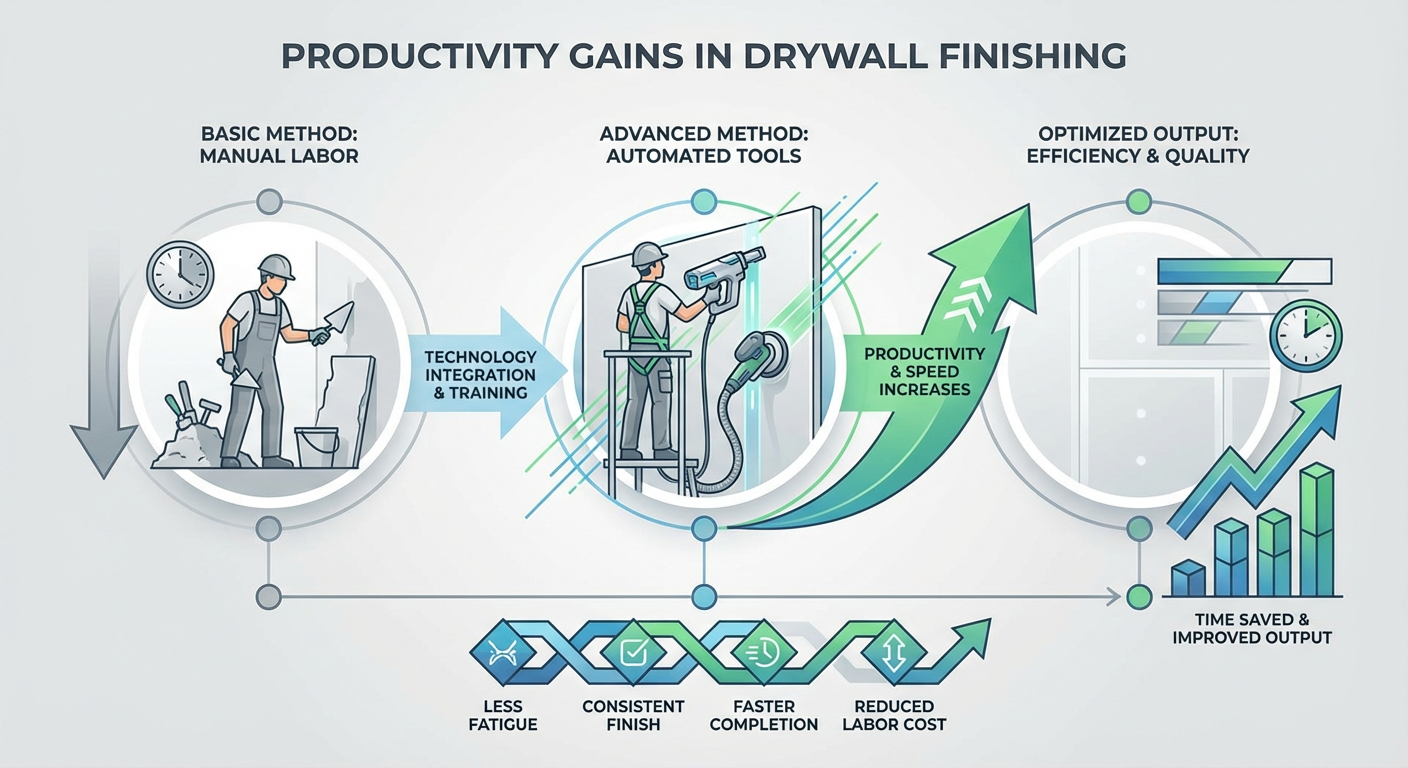
3. Productivity Gains Through Advanced Tools and Techniques
The drywall finishing industry, traditionally characterized by labor-intensive processes, is undergoing a transformative shift driven by the adoption of advanced tools and innovative techniques. This evolution is not merely about achieving superior aesthetic results; it is fundamentally reshaping finisher productivity, significantly reducing labor hours, and directly impacting contractor profitability across both commercial and residential construction projects. In an era marked by accelerating global construction demand and persistent skilled labor shortages, the strategic deployment of modern finishing equipment and methodologies has become a critical differentiator for businesses seeking to maximize efficiency and secure a competitive edge. This section delves into the specific mechanisms through which advanced drywall tools—ranging from automatic tapers and compound pump systems to sophisticated robotic finishers—are revolutionizing the work environment, quantifying their economic benefits, and underscoring their irreplaceable role in fostering a more productive and profitable construction landscape.
3.1 The Imperative for Enhanced Productivity in Drywall Finishing
The global construction industry faces escalating demand, with the overall drywall and gypsum market projected to grow from its 2022 valuation of $29.3 billion to an estimated $51.9 billion by 2032, registering a compound annual growth rate (CAGR) of 6.1%[1]. This expansion underscores a pressing need for more efficient and cost-effective finishing solutions. Concurrently, the broader global drywall market, encompassing materials and installation, is expected to surge from $44.8 billion in 2024 to an impressive $81.7 billion by 2034, reflecting a consistent 6.2% annual growth[2]. Such robust market growth, however, is juxtaposed against a significant challenge: a deepening skilled labor shortage. The residential construction sector in particular is grappling with a substantial deficit, projected to face a 32% skilled labor shortfall by 2025, necessitating approximately 439,000 new workers to meet burgeoning demand[3]. This scarcity has tangible and severe economic consequences, including an estimated $10.8 billion in annual losses attributed to extended project build times and approximately 19,000 homes left unbuilt in 2024, representing an $8.14 billion economic loss[4]. In this environment, enhancing productivity through advanced tools and techniques is no longer a luxury but a strategic necessity. By enabling fewer workers to accomplish more work in less time, these innovations directly address the labor crunch, mitigate project delays, and minimize the financial repercussions of an inadequate workforce. Moreover, the hidden costs associated with poor quality and subsequent rework – which can account for an average of 52% of total project cost growth and up to 22% of schedule overruns – further amplify the need for “right-first-time” finishing practices enabled by specialized equipment[5].
3.2 Automatic Tapers and Flat Boxes: Foundational Productivity Boosters
At the forefront of productivity enhancement in drywall finishing are automatic taping tools and flat box systems. These mechanical tools represent a significant leap from traditional hand-taping methods, offering substantial improvements in speed, consistency, and material application.
3.2.1 Quantifiable Productivity Gains
Surveys and industry reports consistently demonstrate that equipping finishers with “job-ready” automatic taping tools can boost individual productivity by up to 15%[6]. This percentage increase translates directly into significant financial gains for contractors. Assuming a labor rate of $47 per hour, a 15% increase in productivity equates to approximately $282 in extra output per worker per week[7]. For a small three-person finishing crew, this seemingly modest individual gain compounds to an additional $44,000 in annual billings[8]. This figure represents direct revenue or profit generated solely through the efficiency offered by these tools, effectively paying for the equipment multiple times over within a year. The productivity benefit extends beyond mere speed. Automatic tapers apply a uniform layer of tape and joint compound simultaneously, ensuring a consistent and strong bond across every joint. This mechanical precision significantly reduces the likelihood of imperfections such as air bubbles, uneven compound distribution, or weak adhesion that can lead to costly callbacks and rework down the line[9]. Flat boxes, used in conjunction with automatic tapers, further enhance efficiency by quickly and smoothly applying the first and second coats of compound over taped joints and screws. The ability of these tools to maintain consistent material thickness and width across long seams means fewer passes are required and less sanding is necessary, further trimming labor hours.
3.2.2 Impact on Labor Hours and Skill Utilization
The impact of automatic tools on labor hours is profound. Traditional hand-taping is a slow, physically demanding process that requires significant skill to achieve a smooth, level finish. Automatic tapers and flat boxes automate the repetitive and most physically arduous aspects of joint finishing, allowing skilled finishers to focus on more intricate tasks such as detailed corner work, ceiling lines, and specialized textures. This shift in task allocation optimizes the utilization of skilled labor, ensuring that experienced professionals are applying their expertise where it adds the most value, rather than on monotonous, physically draining work. Moreover, these tools can partially mitigate the effects of the skilled labor shortage. By making the finishing process more efficient, contractors can complete projects with smaller crews or tackle more projects with the same number of personnel. This translates into increased output per worker, addressing the demand side of the labor equation without needing to find additional skilled hands, which are increasingly scarce.
3.3 Compound Pump Systems: Revolutionizing Material Application
Beyond automatic tapers, sophisticated compound pump systems are transforming the application of joint compound, especially on large-scale commercial projects. These systems move prepared joint compound from large containers directly to the application tools, eliminating the need for manual mixing, carrying heavy buckets, and frequently refilling small pans.
3.3.1 Dramatic Productivity and Cost Savings
The economic benefits of compound pump systems are staggering, as evidenced by real-world applications. A notable example is Wall-tech Inc. in Wisconsin, which deployed a high-volume drywall pumping system on a large commercial project involving two 400,000 sq ft office buildings for Epic Systems[10]. Traditionally, a job of this magnitude would require 8 to 9 workers. However, by leveraging the pump system, a crew of just 5 tapers successfully completed both buildings in approximately three months[11]. This represents an astonishing 50% increase in productivity[12]. The financial implications of this productivity boost were substantial:
- Reduced Labor Hours: The project saved 1,400 labor hours across both buildings, which represented a 23% reduction in total labor compared to traditional methods[13].
- Wage Savings: This translated to over $84,000 in wage savings for the contractor on that single project alone (approximately $42,000 per building)[14].
The upfront investment in the compound pump system was recouped “many times over” within the span of this one project[15]. This case study powerfully illustrates how specialized equipment can yield exponential returns on investment, particularly for contractors handling large commercial volumes.
3.3.2 Operational Advantages and Material Efficiency
Aside from direct labor savings, compound pump systems offer several operational advantages:
- Reduced Physical Strain: Eliminates the strenuous task of frequent manual mixing and carrying of heavy buckets, reducing worker fatigue and the risk of injuries.
- Consistent Mix: Ensures a consistent, lump-free joint compound mixture, which contributes to a smoother finish and reduces the need for spot repairs.
- Minimized Waste: Better control over material application minimizes waste, leading to cost savings on compound.
- Faster Drywall Cycles: The efficiency of application can also contribute to faster drying times for larger areas, accelerating the overall project schedule.
By streamlining the workflow and minimizing manual effort, these pump systems enable crews to maintain high levels of output throughout the workday, delivering finished spaces faster and with greater consistency.
3.4 Robotic Drywall Finishers: The Next Frontier in Automation
The most disruptive innovation in drywall finishing is the advent of robotic systems. These autonomous or semi-autonomous machines are designed to execute the repetitive and physically demanding tasks of mudding and sanding, pushing the boundaries of productivity and quality.
3.4.1 Unprecedented Schedule Acceleration
Robotic drywall finishing systems are delivering unprecedented reductions in project timelines. On some projects, these systems have been shown to cut drywall finishing schedules by as much as 60%[16]. Traditionally, achieving a high-quality finish (such as Level 5, which often involves multiple coats and extensive sanding) can take 5 to 7 days of manual labor for a given area. Robotic solutions, however, can complete the mudding on the first day and sanding on the second, achieving a Level 5 finish in just two days[17]. A striking example of this acceleration was observed on a 73,000 sq ft civic building project, where a drywall finishing robot enabled crews to achieve a Level 5 finish in just one day for each coated area, compared to approximately six days using traditional manual methods[18]. This dramatic compression of the finishing schedule has significant economic implications for developers and general contractors:
- Reduced Overheads: Shorter project durations mean reduced general conditions costs, such as site management, utilities, and temporary facilities.
- Faster Occupancy/Revenue Generation: Commercial projects can be completed and open for business sooner, allowing for earlier revenue generation or lease agreements. Residential projects can be sold or occupied more quickly, reducing carrying costs for developers.
- Mitigated Penalties: Avoiding project delays helps circumvent potential penalty clauses in contracts.
The global market for robotic drywall finishing systems, valued at $1.32 billion in 2024, is projected to surge to $4.2 billion by 2033, demonstrating a rapid CAGR of 13.7%[19]. This substantial growth indicates widespread industry adoption and confidence in the ROI these systems provide. North America actively leads this market, accounting for approximately 38% of the global share, roughly $500 million in 2024, driven by high labor costs and technologically advanced construction practices[20].
3.4.2 Addressing Labor Shortages and Enhancing Quality
Robotic finishers directly address the skilled labor shortage by reducing the labor requirements for finishing tasks by approximately 40%[21]. Human workers transition to supervisory roles, quality control, and intricate detail work, while the robots handle the arduous, repetitive, and often ergonomically challenging tasks of broad surface finishing. This not only makes the available workforce more efficient but also reduces physical strain on workers, contributing to better safety outcomes and a more appealing work environment. Furthermore, robots offer unparalleled consistency and precision, delivering higher quality finishes than may be consistently achievable by manual methods, especially across expansive surfaces. Webcor, a major general contractor, in partnership with robotic startup Canvas, found that using their robotic system allowed them to achieve “a higher level of quality now at the same cost” as traditional methods on projects like San Francisco International Airport’s Terminal 1[22]. They even anticipate achieving the “same quality at lower cost” as the technology scales[23]. This ability to deliver superior quality without increasing costs, and with the potential for future cost reduction, presents a clear and compelling ROI for commercial developers through fewer defects, reduced rework, and enhanced tenant satisfaction.
3.5 Other Advanced Techniques and Their Productivity Impact
Beyond specific tools, several other advanced techniques contribute significantly to productivity gains in drywall finishing:
3.5.1 Advanced Joint Compounds and Fillers
The development of faster-drying joint compounds and specialized setting-type compounds allows for quicker successive coats, reducing the waiting time between applications. This can significantly shorten the overall finishing cycle. Some fast-setting compounds enable finishers to apply multiple coats within a single workday, an impossibility with traditional air-drying compounds. Similarly, lightweight all-purpose compounds improve handling and reduce fatigue.
3.5.2 Specialized Application Tools
A range of specialized hand tools and motorized equipment enhances specific aspects of finishing:
- Corner Finishers: Dedicated tools for internal and external corners ensure crisp, straight lines and even compound application, reducing manual effort and potential imperfections.
- Sanding Poles and Sanders: Lightweight, ergonomic sanding poles and electric power sanders with dust extraction capabilities improve efficiency, reduce dust, and enhance worker comfort, leading to sustained productivity.
- Drywall Lifts and Hoists: While primarily for installation, these tools indirectly impact finishing productivity by ensuring panels are accurately and securely installed, minimizing gaps and unevenness that would require more extensive finishing work.
3.5.3 Prefabrication and Off-Site Finishing
A growing trend in construction, prefabrication extends to drywall finishing. Wall panels or entire modules can be assembled and fully finished off-site in controlled factory environments. This approach offers several productivity advantages:
- Controlled Environment: Eliminates weather-related delays, ensures consistent temperature and humidity for better material performance, and provides optimal lighting for quality control.
- Parallel Workflows: Drywall installation and finishing can occur simultaneously with structural construction, compressing total project timelines.
- Industrialized Efficiency: Factory settings allow for specialized machinery, assembly-line efficiency, and potentially robotic assistance that may not be feasible on a dynamic job site.
Although transferring some costs to the prefabrication phase, this method drastically cuts on-site labor and time, contributing to overall project ROI through expedited delivery and reduced waste[24].
3.5.4 Digital Integration and BIM
Indirectly, digital tools like Building Information Modeling (BIM) and laser-guided layout systems contribute to finishing productivity. By ensuring highly accurate framing and panel installation, BIM helps minimize errors that would otherwise require significant finishing effort to correct. Precise alignment means fewer gaps, straighter walls, and less compound needed to feather out imperfections, saving labor and material costs.
3.6 Financial Impact and Return on Investment (ROI)
The cumulative effect of these advanced tools and techniques is a substantial enhancement in ROI for contractors and developers. The initial investment in equipment, training, and adopting new workflows is consistently offset by measurable cost savings and increased project throughput.
3.6.1 Direct Cost Reductions
| Efficiency Source | Type of Reduction | Quantified Impact | Source |
|---|---|---|---|
| Automatic Tapers/Flat Boxes | Labor Hours | Up to 15% increase in finisher productivity | AWCI[25] |
| Annual Billings | ~$44,000 extra per 3-person crew annually | AWCI[26] | |
| Compound Pump Systems | Labor Hours (large commercial) | ~50% productivity increase, 23% less labor (1,400 hours saved) | Walls & Ceilings Magazine[27] |
| Wage Savings (large commercial) | $84,000 saved on a single 3-month project | Walls & Ceilings Magazine[28] | |
| Robotic Finishers | Labor Requirements | ~40% less on-site finishing labor needed | News Wade[29] |
| Project Schedule | Up to 60% reduction in finishing schedules | News Wade[30] |
3.6.2 Indirect Financial Benefits
- Reduced Rework: By achieving higher quality finishes, reducing errors, and preventing defects like visible joints or uneven textures, contractors avoid costly rework. Construction rework accounts for an average of 52% of total project cost growth and up to 22% of schedule overruns[31]. Advanced tools enable a “right-first-time” approach, saving significant money and time.
- Improved Project Delivery: Faster project completion means contractors can take on more projects annually, increasing their overall revenue potential. For developers, delivering projects ahead of schedule reduces financing costs and allows faster market entry or occupancy.
- Enhanced Reputation and Business Growth: Contractors known for efficiency, speed, and high-quality finishes gain a competitive advantage, attracting more clients and securing higher-value projects.
- Mitigation of Labor Shortage Risks: By augmenting the capabilities of existing crews, advanced tools enable contractors to sustain operations and meet demand even with a limited skilled workforce, thereby safeguarding against lost revenue from unbuilt projects.
- Workforce Attraction and Retention: Investing in modern tools can make the trade more attractive to new workers, reducing the physical burden and showcasing a forward-thinking employer. This can help ease long-term labor challenges.
In summary, the transition to advanced drywall finishing tools and techniques represents a strategic investment that generates substantial financial returns. From the foundational efficiency of automatic tapers to the transformative capabilities of robotic systems, these innovations address critical industry challenges—labor scarcity, schedule pressures, and quality demands—while simultaneously bolstering contractor profitability and project ROI. The rapid expansion of the robotic drywall finishing market and widespread adoption by major contractors underscore the industry’s recognition that embracing these technologies is essential for future success and sustainability. This deep dive into the productivity gains offered by advanced drywall finishing tools and techniques highlights their profound economic impact. The next section will build upon this foundation, exploring the tangible return on investment that these cutting-edge methods bring to both commercial and residential projects, examining case studies, specific financial metrics, and strategic considerations for diverse construction stakeholders.
4. Return on Investment (ROI) in Residential Projects
In the dynamic and often highly competitive residential construction and renovation market, every investment decision is scrutinized for its potential return. While visible elements like kitchen appliances and bathroom fixtures often steal the spotlight, the underlying quality of interior finishes, particularly drywall, plays a crucial yet frequently underestimated role in determining a property’s market value, sale velocity, and overall desirability. Advanced drywall finishing techniques, from meticulous Level 5 skim coats to specialized soundproofing and moisture-resistant panels, are increasingly recognized not merely as construction necessities but as strategic investments that directly contribute to a superior Return on Investment (ROI) for homeowners, developers, and investors alike. This section delves into how these advanced techniques translate into tangible economic benefits in residential projects, exploring their impact on property values, market differentiation, and accelerated sales, supported by specific case studies and market data.
4.1 Elevating Property Values Through Superior Finishes
The aesthetic appeal and perceived quality of a home are paramount in influencing its market valuation. Flawless walls and ceilings, often achieved through advanced drywall finishing, contribute significantly to this perception, creating a sense of luxury and meticulous craftsmanship that resonates with discerning buyers. This heightened perception directly translates into higher appraisal values and, ultimately, increased sale prices.
4.1.1 The “Level 5 Finish” Advantage
Among the different standards of drywall finishing, Level 5 represents the pinnacle of quality, involving a full skim coat over the entire surface of the drywall to eliminate even minor imperfections before painting. This meticulous process ensures a perfectly smooth, uniform substrate that dramatically enhances the appearance of painted surfaces, particularly under critical lighting conditions (e.g., large windows, recessed lighting). While more labor-intensive and costly upfront, the market has demonstrated a clear preference for properties exhibiting this level of quality. A compelling case from Milwaukee, USA, illustrates this point vividly. A dated 1970s split-level home, struggling to attract buyers, underwent a renovation where an “unusual emphasis” was placed on drywall finishing. The investor opted for a meticulous Level 5 skim coat across all main areas of the house. The resulting transformation was dramatic; the once ordinary walls became smooth and reflective, imparting a “like-new” custom home feel to the interior. The property subsequently sold in just **10 days for $60,000 above its initial listing price** in 2025[27]. Realtors involved noted that potential buyers immediately “sensed the superior craftsmanship,” even if they weren’t explicitly aware of what a Level 5 finish entailed. This single example underscores how a strategic investment in premium drywall finishing can yield substantial financial dividends, demonstrating a clear and measurable ROI. The incremental cost of achieving such a finish – which can demand approximately **40% more labor hours than a standard Level 4 finish**[19] – is often outweighed by the significant increase in market value and sale velocity.
4.1.2 Beyond Aesthetics: Long-Term Value and Durability
The ROI of advanced drywall finishing extends beyond immediate curb appeal and sale prices. Superior finishing techniques also contribute to the long-term durability and reduced maintenance requirements of a residential property. Properly taped and mudded joints, especially when reinforced with paper tape embedding or setting-type compounds, are less prone to common issues such as “nail pops” or surface cracks that can develop over time due to building movement or environmental factors. This enhanced structural integrity of the wall surface translates into fewer future repair call-backs for builders and warranty providers, saving considerable expenditure. Furthermore, specialized drywall products, often integrated with advanced finishing, offer specific functional benefits that add lifecycle value:
- Mold-Resistant Drywall: Applied in high-humidity areas like bathrooms, kitchens, and basements, this product prevents costly mold remediation, preserving the property’s health and structural integrity[25].
- Soundproof Drywall: Used between units in multi-family dwellings or between sensitive rooms in single-family homes, acoustic drywall significantly improves occupant comfort and privacy, a feature many renters and buyers are willing to pay a premium for[25].
- Abuse-Resistant Drywall: Installed in high-traffic zones or children’s play areas, this type of drywall maintains its appearance longer, reducing the frequency and cost of repairs and repainting[25].
These specialized applications, while costing more initially, act as preventative measures, mitigating future expenses and preserving the home’s quality, thus contributing to greater long-term value retention. The ROI in these instances is found in risk reduction, extended product lifespan, and enhanced occupant satisfaction.
4.2 Accelerating Sales and Market Differentiation
In a crowded real estate market, distinguishing a property from its competitors is crucial for achieving faster sales and commanding premium prices. Advanced drywall finishing plays a critical role in offering this differentiation, attracting more buyers and reducing the time a property spends on the market.
4.2.1 Standing out in a Competitive Market
While features like high-end kitchen appliances and luxurious bathrooms are common selling points, the subtle yet profound impact of impeccably finished walls and ceilings can set a property apart. High-end homebuilders and renovators are now leveraging Level 5 finishes and custom drywall textures as key differentiators. As one developer observed, “Buyers today value quality over sheer size… a compact home with flawless finishes outshines a larger one with mediocre work”[28]. This insight highlights a shift in buyer priorities, where overall craftsmanship and attention to detail are perceived as indicators of a well-built and desirable home. Consider the case of Cream City Construction in Milwaukee, which undertook a “gut renovation” of a century-old duplex. Despite the challenges presented by the aged structure and uneven existing surfaces, the contractor employed modern drywall techniques, including “layered mud coats, meticulous sanding, and a final full-surface skim coat,” to achieve perfectly smooth walls and ceilings[30]. This commitment to a Level 5 finish transformed the dated duplex into a sleek, contemporary interior. The property subsequently sold for a “significantly higher price than its pre-renovation value,” generating substantial profit. The project manager explicitly stated, “We invested heavily in drywall… It returned multiples of that in profit”[31]. This direct correlation between increased investment in finishing and maximized profit demonstrates a clear ROI through market differentiation.
4.2.2 Faster Sales Cycles
Beyond price premiums, advanced drywall finishing contributes to faster sales. A home that presents flawlessly finished interiors minimizes buyer objections related to quality and potential renovation costs. Buyers are often willing to pay more for a “move-in ready” home feeling, where the walls convey a sense of care and perfection. This reduces negotiation time and accelerates the closing process. The Milwaukee renovation example, selling in just 10 days, directly showcases this benefit. In residential markets, time on market (TOM) is a critical metric, and reducing it through superior finishing can save homeowners and investors carrying costs, such as mortgage payments, utilities, and taxes, during the selling period.
4.2.3 Appeal in the Rental Market
The benefits of advanced drywall finishing also extend to the residential rental market. Developers of apartments and condominiums find that superior finishes can justify higher rental rates and lead to increased occupancy. Tenants perceive well-finished units as higher quality, leading to greater satisfaction and reducing turnover. For instance, incorporating soundproof drywall between units is a premium feature that many renters are willing to pay extra for, significantly enhancing living comfort and justifying a higher rental price point[25]. In multi-family developments, units with higher-grade interiors, without wavy seams or rough textures, are likely to sell or lease quicker, reflecting an overall higher-perceived value of the property. The ROI in such cases is realized through increased rental income and potentially higher property valuations for landlords and developers.
4.3 Strategic Allocation of Advanced Finishing: Balancing Cost and Benefit
While the benefits of advanced drywall finishing in residential projects are evident, a blanket application of the highest-grade finishes across an entire property might not always be the most cost-effective approach. Strategic allocation of resources is key to maximizing ROI.
4.3.1 Targeted Application for Maximum Impact
Homebuilders and remodelers often employ a tiered approach to drywall finishing, applying different levels of finish based on the specific area of the house and its functional/aesthetic requirements. This strategy allows them to control costs while still reaping the benefits of advanced finishing where it matters most.
| Finishing Level | Description | Typical Residential Application | ROI Rationale |
|---|---|---|---|
| Level 3 | Two coats of joint compound applied to tape and fasteners. | Areas to be covered by textured finishes, heavy wallpapers, or non-critical lighting areas. | Cost-effective for areas where visual imperfections are concealed; still provides a durable base. |
| Level 4 | Three coats of joint compound applied to tape and fasteners, sanded smooth. The industry standard. | Standard painted walls and ceilings in most residential rooms (bedrooms, secondary living spaces). | Good balance of quality and cost; acceptable for most paint finishes and standard lighting conditions. |
| Level 5 | All joints and fastener heads treated as Level 4, plus a thin skim coat (or two) of joint compound applied to the entire surface. | Areas with critical lighting (large windows, glossy paint, up-lighting), entryways, living rooms, master suites where luxury is desired. | Highest aesthetic return; enhances property value and marketability significantly, especially in high-visibility areas. Justifies up to 40% more labor[19]. |
By strategically applying Level 5 finishes to high-impact areas like great rooms with abundant natural light, kitchens with glossy backsplashes, or luxurious master suites, builders can maximize aesthetic appeal without incurring the significant additional cost across the entire property. This targeted approach ensures that the incremental investment in high-quality finishing yields the greatest possible return, as buyers mentally factor in the perfection of the interior in these key spaces.
4.3.2 Investing for Reduced Rework and Call-Backs
The cost of rework in construction is a significant drain on profitability, with construction rework accounting for an average of **52% of total project cost growth and up to 22% of schedule overruns**[20]. In residential projects, drywall finishing errors, such as visible joints, uneven textures, or poorly applied skim coats, frequently appear on punch lists. Rectifying these issues after painting involves additional labor for re-sanding, re-priming, and re-painting, incurring substantial costs and delaying project completion. Investing in skilled finishers or advanced finishing technologies upfront can significantly reduce these errors. By delivering “right-first-time” quality, advanced drywall finishing minimizes rework expenses and prevents schedule slippages, directly improving profit margins and ROI for contractors and homeowners alike. The adage “you get what you pay for” is particularly true here; a slightly higher initial investment in quality finishing can prevent much larger costs down the line.
4.4 The Context of a Growing Market and Labor Shortages
The residential construction sector currently operates within a robust yet challenging environment characterized by market growth and a persistent labor shortage. These factors further accentuate the importance and ROI of advanced drywall finishing.
4.4.1 Booming Residential Construction and Renovation
The global drywall and gypsum market, a direct proxy for interior finishing activity, epitomizes strong growth. Valued at **$29.3 billion in 2022**, it is projected to reach **$51.9 billion by 2032** with a compound annual growth rate (CAGR) of 6.1%[1]. More broadly, the global drywall market (materials and installation) is expected to nearly **double from $44.8 billion in 2024 to $81.7 billion by 2034**, growing at an annual rate of 6.2%[2]. This significant expansion is driven by both new residential construction and a surging demand for renovations. Home renovation spending remains consistently high, with homeowners globally showing a willingness to invest in better finishes due to perceived market value increases[6]. The “work-from-home” trend and fierce real estate competition have further fueled this demand, as individuals seek to improve their living spaces (or prepare them for sale). This booming market provides a fertile ground for advanced drywall finishing services to thrive, as discerning clients increasingly seek higher quality results.
4.4.2 Mitigating the Impact of Labor Shortages
The residential homebuilding sector faces a critical skilled labor shortage, with a projected **32% deficit in 2025**, requiring approximately 439,000 new workers to meet demand[9]. This shortage is not merely an inconvenience; it leads to **$10.8 billion in annual losses** due to extended build times and an estimated **19,000 homes going unbuilt in 2024**, representing an **$8.14 billion economic loss**[10]. In this challenging environment, advanced drywall finishing techniques, particularly those incorporating automation and efficiency-boosting tools, offer a crucial solution. Technologies such as automated taping tools can boost finisher productivity by **up to 15%**[7], translating to an additional **$282 in output per worker per week**, or an extra **$44,000 in annual billings for a 3-person crew**[7]. Even more significantly, robotic finishing systems, which are predicted to see rapid adoption, can reduce finishing schedules by **up to 60%** and decrease labor requirements by approximately **40%**[8]. These automated solutions, once primarily seen as quality enhancers, are now also strategic investments for maintaining project timelines and mitigating the financial impact of labor scarcity. By enabling fewer workers to accomplish more, advanced tools become not just a quality choice but a business imperative, contributing directly to ROI by ensuring projects stay on schedule and costs are controlled.
4.5 Case Studies Illustrating Residential ROI
The theoretical benefits of advanced drywall finishing are consistently validated by real-world residential projects:
- Milwaukee Residential Flip: As detailed earlier, a dated 1970s Milwaukee home, renovated with a meticulous Level 5 skim coat, sold for **$60,000 above listing in just 10 days**[27]. This demonstrated a clear, immediate financial return on the investment in superior finishing, validating its power in boosting resale value.
- Cream City Construction’s Duplex Renovation: This high-end contractor’s deep investment in Level 5 finishing for a century-old duplex renovation resulted in the property selling for a “significantly higher price” than its pre-renovation value, with the project manager confirming it “returned multiples” of the investment in drywall[31]. This highlights the ROI potential even in challenging renovation scenarios.
- Developer Perspective on Differentiation: Quasius Construction, a developer in Sheboygan, emphasized that “smaller homes with flawless Level 5 finishes can outshine larger homes with mediocre drywall work”[12]. This indicates that the perceived luxury and quality conveyed by advanced finishes can provide a competitive edge regardless of property size, attracting discerning buyers and potentially leading to quicker sales at desired price points.
These examples collectively demonstrate that advanced drywall finishing is more than just an aesthetic upgrade; it is a calculated investment that yields measurable financial benefits in the residential sector. The ability to command higher sale prices, reduce time on the market, mitigate future maintenance costs, and differentiate a property in a competitive environment directly contributes to a superior Return on Investment for all stakeholders, from individual homeowners to large-scale residential developers. In conclusion, the economic impact of advanced drywall finishing in residential projects is profound. It serves as a powerful tool for enhancing property aesthetics, increasing perceived value, accelerating sales, and providing long-term durability. As the market for quality interiors continues to grow and labor challenges persist, the strategic adoption of advanced finishing techniques will remain a key driver of ROI and a significant competitive advantage in the residential construction landscape. The next section will shift our focus to the commercial sector, exploring the Return on Investment (ROI) benefits of advanced drywall finishing in large-scale commercial and institutional projects.
5. Return on Investment (ROI) in Commercial Projects
Commercial construction projects, from office buildings and retail centers to healthcare facilities and educational institutions, operate under immense pressure to deliver on time and within budget, all while maintaining high standards of quality. In this high-stakes environment, every decision, especially concerning interior finishes, can significantly impact the project’s overall financial success and the long-term value of the asset. Advanced drywall finishing, once considered a potential luxury, is now proving to be a critical investment that yields substantial returns across various key performance indicators for commercial developers and contractors alike. This section will meticulously assess the economic benefits derived from advanced drywall finishing techniques in commercial construction, exploring how accelerated project timelines, improved quality consistency, reduced rework, and overall cost savings contribute to a compelling Return on Investment (ROI). The global drywall market itself underscores the growing importance of this sector. Valued at a substantial $29.3 billion in 2022, the worldwide gypsum and drywall market is projected to reach an impressive $51.9 billion by 2032, registering a compound annual growth rate (CAGR) of approximately 6.1% [1]. Furthermore, the broader global drywall market, encompassing materials and installation, is expected to nearly double from $44.8 billion in 2024 to an astonishing $81.7 billion by 2034, growing at an annual rate of 6.2% [2]. This exponential growth reflects a surging demand for efficient and high-quality interior finishing solutions within both residential and commercial construction sectors globally. As this market expands, advanced drywall finishing techniques are emerging not as mere enhancements, but as essential differentiators for profitability and project excellence. Developers and contractors are increasingly realizing that an upfront investment in superior drywall finishing translates directly into significant long-term economic advantages, mitigating risks, improving client satisfaction, and enhancing asset value.
5.1 Accelerated Project Timelines and Their Financial Implications
In commercial construction, the old adage “time is money” is critically true. Delays can lead to escalating labor costs, extended equipment rentals, increased financing charges, and, most importantly, lost revenue opportunities from delayed occupancy or operation. Advanced drywall finishing techniques offer a powerful solution to this challenge by significantly compressing project schedules, thereby generating substantial ROI. One of the most noteworthy advancements in this regard is the advent of robotic finishing systems. These sophisticated technologies are directly addressing the traditionally labor-intensive and time-consuming nature of drywall finishing. Robotic drywall finishing systems have been shown to **cut drywall finishing schedules by up to 60%** on certain projects [3]. This drastic reduction is transformative. For instance, manual mudding and sanding processes, which typically span five to seven days to achieve high-quality finishes, can be completed by robotic systems in as little as two days [4]. The robot applies joint compound on the first day, and sanding is performed on the second, allowing for a remarkably fast turnaround even for demanding Level 5 finishes [4]. Consider the detailed case of Webcor, a major general contractor, and their partnership with Canvas, a construction robotics startup, for projects like San Francisco International Airport’s Terminal 1 Boarding Area B. On a 73,000 sq ft civic center project, the Canvas robotic drywall finishing system dramatically reduced the initial coating time from approximately six days to just one day for each area [5], [6]. This single fact underscores the immense potential for schedule compression. For a commercial developer, shaving weeks or even months off a project schedule can mean the difference between incurring hundreds of thousands or even millions of dollars in general conditions costs, and generating revenue from tenants or operations significantly sooner. The implications of such time savings are multifaceted:
- Reduced Overhead Costs: Shorter project durations mean fewer weeks or months of general contractor overhead, site management staff salaries, temporary utilities, and site security. These “soft costs” can quickly accumulate, and any reduction directly boosts the project’s profitability.
- Lower Interest Payments: Commercial projects often rely on substantial construction loans. Accelerating completion minimizes the period over which interest accrues, directly reducing overall financing costs. For a multi-million-dollar project, even a few weeks saved can translate into tens of thousands of dollars in interest savings.
- Faster Revenue Generation: For developers, the ultimate goal is to bring their asset to market. Whether it’s leasing office space, opening a retail establishment, or admitting patients to a hospital, earlier completion means earlier occupancy and, consequently, earlier revenue streams. This accelerated cash flow model is a significant driver of ROI.
- Avoidance of Penalties and Enhances Reputation: Many commercial contracts include penalty clauses for late delivery. By leveraging advanced finishing techniques to stay on schedule or even finish early, contractors can avoid these costly penalties and strengthen their reputation for timely project delivery, a critical factor in securing future contracts.
The adoption of these technologies is not just an arbitrary trend; it’s a strategic response to market demands and operational challenges. The global robotic drywall finishing systems market alone reached $1.32 billion in 2024 and is projected to grow at a robust 13.7% annually to reach $4.20 billion by 2033 [7]. North America leads this market, accounting for approximately 38% (about $500 million in 2024), driven by high labor costs and a tech-forward construction industry [8]. This rapid uptake confirms the perceived value and tangible ROI derived from faster project completion. Developers and contractors are not merely investing in equipment; they are investing in certainty, efficiency, and an early return on their capital.
5.2 Improved Quality Consistency and Reduced Rework
Quality in commercial construction is non-negotiable. Poor finishing work can lead to costly callbacks, schedule delays due and necessitate extensive rework, which erodes profit margins and damages reputations. Advanced drywall finishing techniques profoundly impact quality consistency and significantly reduce the incidence of rework, thereby delivering substantial economic benefits. The statistical reality of rework is sobering: construction rework accounts for an average of **52% of total project cost growth and up to 22% of schedule overruns** [9]. Drywall finishing errors, such as visible seams, uneven textures, or nail pops, are frequent culprits found during punch lists. Each instance of rework requires additional labor, materials, and time, disrupting subsequent trades and straining relationships between project stakeholders. Advanced drywall finishing addresses this challenge on several fronts:
- Enhanced Precision and Uniformity: Manual drywall finishing is inherently subject to human variability. Even skilled finishers can experience fatigue or slight inconsistencies over vast commercial spaces. Advanced tools, particularly automated and robotic systems, deliver unparalleled precision and uniformity. For example, automatic taping tools apply a consistent layer of tape and mud on every joint, drastically reducing the likelihood of future cracks or visible seams [10]. Robotic systems, once programmed, perform tasks like mud application and sanding with consistent pressure and speed across thousands of square feet, ensuring a Level 5 finish that is truly smooth and flawless.
- “Right First Time” Approach: The core benefit of this enhanced precision is the ability to “get it right the first time.” By minimizing imperfections, advanced finishing reduces the need for touch-ups, re-sanding, and repainting. This directly translates into savings on labor and materials that would otherwise be allocated to corrective work. For a commercial project, eliminating even a fraction of typical rework items can result in significant cost avoidance. Consider a large office building: eliminating errors on 500 joints saves not only the wages of the worker fixing them but also the cost of materials and the delays caused to painters and other follow-on trades.
- Meeting High-Level Specifications Economically: Commercial clients often specify high-level finishes, such as a Level 5 finish, especially in areas with critical lighting or high-gloss paint. Traditionally, achieving a Level 5 finish could demand approximately 40% more labor hours than a standard Level 4 finish [11], significantly increasing costs. However, advanced techniques make achieving these stringent specifications more economically viable. Webcor, through its use of Canvas robots, reported achieving a Level 5 finish “at a higher level of quality now at the same cost” as traditional methods [12]. They even anticipated delivering the same quality at a lower cost as the technology scaled [12]. This represents a clear ROI for developers: gaining superior quality finishes without budget overruns, and in some cases, even achieving cost savings.
- Reduced Client Dissatisfaction and Warranty Claims: A high-quality finish achieved through advanced methods leads to fewer aesthetic issues post-occupancy. This reduces client dissatisfaction, minimizes expensive warranty calls, and protects the contractor’s and developer’s reputation. In the long run, investing in quality upfront is far more cost-effective than dealing with a steady stream of complaints and rework requests after project handover.
- Efficient Utilization of Skilled Labor: While robots handle the repetitive, large-surface finishing, human crews are freed up to focus on intricate detail work, corners, and quality control. This allows skilled finishers to leverage their expertise more effectively, ensuring the overall quality of the project while maximizing their productivity. According to Webcor, the robot focuses on broad, flat surfaces, allowing humans to address the nuanced and detailed areas that require more creative problem-solving and expertise [14].
5.3 Overall Cost Savings for Developers and Contractors
The cumulative effects of accelerated project timelines, improved quality consistency, and reduced rework directly translate into substantial overall cost savings for both commercial developers and contractors. These savings contribute to a compelling ROI, making advanced drywall finishing a strategic imperative rather than an optional upgrade.
5.3.1 Labor Cost Reduction Through Enhanced Productivity
Labor costs are a dominant factor in construction budgets, and the sector faces significant challenges with skilled labor shortages. The homebuilding sector alone is projected to face a 32% skilled labor shortfall in 2025, requiring approximately 439,000 new workers to meet demand [15]. This shortage is causing an estimated $10.8 billion in annual losses from extended build times [16]. In this context, advanced drywall finishing technologies become crucial tools for maximizing the output of available labor.
- Increased Output Per Worker: Even relatively simple advanced tools can yield significant productivity gains. Surveys indicate that “job-ready” automatic taping tools can boost finisher productivity by up to 15% [17]. At an average labor rate of $47/hour, this equates to roughly $282 in additional output per worker per week, or an impressive $44,000 in extra annual billings for a three-person finishing crew [17]. These are direct contributions to a contractor’s profit margin.
- Dramatic Savings with Automation: For large commercial projects, automated systems demonstrate even more profound labor savings. A prime example is Wall-tech Inc.’s experience on a commercial office project in Wisconsin. By deploying a drywall compound pumping system, they achieved a **50% increase in finishing productivity** [19]. This allowed a crew of just five tapers to complete two 400,000 sq ft office buildings in approximately three months, a job that would typically require eight to nine workers [19]. The result was a saving of **1,400 labor hours and over $84,000 in wages** across the project, representing a 23% reduction in labor cost [20]. The upfront cost of the pumping system was recouped “many times over” on this single project [21], illustrating a clear and compelling ROI. Furthermore, robotic finishing systems can reduce on-site finishing labor needs by around 40% [22], allowing human workers to focus on supervision and detail work, thereby optimizing manpower utilization.
- Mitigating Labor Shortage Impact: These labor-saving technologies are not just about cost reduction but also about operational resilience. With a persistent scarcity of skilled labor, contractors using advanced tools can undertake more projects or larger projects with the same or even smaller crews, effectively counteracting the negative economic impacts of labor shortages. This allows companies to maintain project schedules and potentially capture revenue that would otherwise be lost due to insufficient manpower.
5.3.2 Material Cost Optimization
Beyond labor, advanced drywall finishing can lead to more efficient material usage, further contributing to cost savings and ROI.
- Reduced Waste: Manual application of joint compound often leads to waste due to spillage, uneven application, and excessive material usage. Automated systems, like compound pumps and robotics, apply materials more precisely and efficiently, minimizing waste. This is particularly impactful on large commercial projects where thousands of pounds of joint compound are used.
- Fewer Material Purchases Due to Rework: As discussed, advanced finishing reduces rework. This means fewer instances of re-sanding, re-mudding, and re-painting, which in turn reduces the need to purchase additional materials for corrective work.
- Optimized Drying Times: Some advanced materials, such as fast-setting joint compounds, can reduce drying times between coats, accelerating the entire finishing process [24]. This allows for quicker progression to the next phase of construction, enhancing overall project efficiency.
5.3.3 Enhanced Competitive Advantage and Client Satisfaction
The ability to deliver higher quality finishes more quickly and efficiently positions contractors and developers competitively in the market.
- Winning More Bids: Contractors who can offer superior quality and faster completion times are more attractive to commercial clients. The ability to guarantee a Level 5 finish without budget overruns or schedule delays can be a significant differentiator in securing lucrative contracts.
- Client Stickiness and Repeat Business: Delivering projects that exceed expectations in terms of quality and timeliness fosters strong client relationships, leading to repeat business and positive referrals. This intangible benefit contributes significantly to long-term profitability and sustained ROI.
- Higher Asset Value for Developers: For property developers, a building finished with superior drywall work commands higher lease rates or sale prices. High-quality interiors convey professionalism and attention to detail, making the property more appealing to prospective tenants or buyers. This translates into maximum asset valuation and accelerated monetization of the investment.
The comprehensive benefits of advanced drywall finishing in commercial projects are clear. From direct cost savings in labor and materials to indirect gains from accelerated schedules and enhanced reputation, the ROI is multifaceted and significant. The market trends toward greater automation and higher quality standards further solidify the position of advanced finishing as a cornerstone for financial success in modern commercial construction.
5.4 Case Studies Illustrating Commercial ROI
To further solidify the economic arguments, examining real-world applications of advanced drywall finishing in commercial projects provides tangible evidence of compelling returns on investment.
5.4.1 Wall-tech’s Significant Savings on Commercial Offices (Wisconsin)
One notable example comes from Wall-tech Inc., a specialty contractor tasked with completing the drywall finishing for two sprawling 400,000 sq ft office buildings for Epic Systems, a software company, in Wisconsin [25]. Facing a tight project schedule and the ongoing challenge of a limited skilled labor pool, Rob LeRoy, Wall-tech’s finishing superintendent, made a critical decision: to deploy a high-volume drywall pumping system for joint compound application. The impact of this technological investment was dramatic. Instead of the typical 8-9 workers required for a project of this scale, a reduced crew of just **5 tapers managed to complete both buildings in approximately three months** [26]. This innovative approach resulted in a remarkable **50% improvement in productivity** [26]. Quantitatively, the project saw **700 fewer labor hours expended than originally budgeted for each building**, leading to an impressive **$42,000 savings in labor costs on one building, and a total of $84,000 (representing 23% of the total labor cost) across the entire project** [27]. LeRoy explicitly stated that the advanced pump technology “paid for itself many times over” on this single job, highlighting a clear and significant ROI [28]. This case study powerfully demonstrates how embracing advanced finishing tools can enable contractors to maintain profitability and adhere to demanding schedules, even under challenging market conditions, underscoring the formidable ROI in commercial construction.
5.4.2 Webcor & Canvas Robotics at SFO Terminal (California)
Another compelling illustration of ROI in commercial projects comes from the collaboration between Webcor, a large general contractor, and Canvas, a construction robotics startup. This partnership was formed to tackle drywall finishing on high-profile projects, including the modernization of San Francisco International Airport’s Terminal 1 Boarding Area B [29], [30]. Webcor integrated the **Canvas robotic drywall finishing system** on-site, a decision that proved strategically beneficial. The robot was deployed to handle broad surface mud application and sanding, capable of achieving a Level 5 finish, while human crew members focused on detail work [31], [32]. On one specific 73,000 sq ft civic center project, this robotic approach dramatically **reduced the finishing time for initial coats from approximately six days down to just one day** [33], [34]. This rapid acceleration in the finishing phase had a direct positive impact on the overall project schedule. Beyond speed, the quality outcomes were exceptional. Webcor reported that the robot’s work consistently **exceeded expectations for smoothness and consistency** [35], requiring only minor touch-ups from human workers. Crucially, Webcor achieved this **higher quality at no extra cost** compared to traditional methods, and they anticipate that as the technology scales, they will be able to deliver the **same high quality at an even lower cost** [36]. This represents a double ROI: immediate quality improvement without cost increase, with the prospect of future cost reduction. It showcases how, on large-scale commercial builds, investing in cutting-edge automation can not only reduce timelines and labor requirements significantly but also ensure consistent top quality, generating a robust ROI in terms of time savings, labor cost reduction, and superior, consistent results. The engagement of union workers with the technology further highlights a harmonious integration of advanced tools into traditional construction practices, paving the way for broader adoption and sustained ROI across the industry [37]. These case studies provide concrete examples of how advanced drywall finishing techniques directly translate into tangible economic benefits for commercial construction projects. Both scenarios illustrate significant cost savings through labor efficiency and accelerated timelines, coupled with quality improvements that reduce rework and enhance client satisfaction. Such demonstrable ROI signals a clear path forward for commercial developers and contractors seeking greater efficiency and profitability in a competitive market.
5.5 Conclusion and Transition
The assessment of Return on Investment in commercial projects strongly confirms that advanced drywall finishing is not a mere enhancement but a strategic imperative. The detailed analysis presented herein underscores its multifaceted economic benefits, ranging from substantial reductions in project timelines and associated carrying costs to significant improvements in quality consistency, which drastically minimizes expensive rework. Case studies, such as those from Wall-tech Inc. and Webcor, provide compelling quantitative evidence of labor hour savings, direct wage reductions, and accelerated project completion, all contributing to a robust and measurable ROI. The strategic adoption of advanced tools and technologies, including robotic finishing systems and automated pumping equipment, enables developers and contractors to optimize their operations, mitigate the impact of skilled labor shortages, and deliver superior projects more efficiently. As the global drywall market continues its substantial growth trajectory, projected to nearly double by 2034, the competitive landscape will increasingly favor those who embrace innovative finishing solutions [38]. The ability to deliver higher quality at the same or reduced cost, coupled with faster project turnarounds, directly translates into enhanced profitability, stronger client relationships, and a superior competitive advantage. For commercial projects, where every day of delay impacts the bottom line and quality directly influences market value, advanced drywall finishing unequivocally represents a sound and powerful investment. The discussion now transitions to the equally important sphere of residential construction, where the dynamics of ROI are subtly different but equally impactful. In the next section, we will delve into the economic benefits for residential projects, exploring how advanced drywall finishing influences property resale values, market differentiation, and overall homeowner satisfaction. The principles of efficiency and quality remain, but the tangible returns manifest in forms such as premium sale prices, faster turnover rates, and enhanced long-term property appeal.
References
- Allied Market Research. (Oct 2023). Gypsum & Drywall Market Size, Share, Growth Outlook by 2032. alliedmarketresearch.com. Retrieved from https://www.alliedmarketresearch.com/gypsum-and-drywall-market#:~:text=The%20global%20gypsum%20%26%20drywall,Gypsum%20plaster
- Danny’s Drywall Services. (July 29, 2025). Drywall Finishing Techniques Boost Property Resale Value. dannysdrywall.services. Retrieved from https://www.dannysdrywall.services/news/drywall-finishing-techniques-boost-property-resale-value/#:~:text=Today%E2%80%99s%20advanced%20techniques%20think%20mirror,properties%20in%20a%20crowded%20market
- NEWS WADE. (Jan 4, 2026). Drywall Finishing Robots Accelerate Construction Schedules. newswade.com. Retrieved from https://newswade.com/drywallrobot/#:~:text=intensive%20tasks%20in%20construction%3A%20drywall,improving%20worker%20safety%20and%20precision
- NEWS WADE. (Jan 4, 2026). Drywall Finishing Robots Accelerate Construction Schedules. newswade.com. Retrieved from https://newswade.com/drywallrobot/#:~:text=Drywall%20finishing%20usually%20takes%20five,sands%20on%20the%20second%20day
- Construction Dive. (June 16, 2021). Drywall finishing robot saves time, prevents injuries. constructiondive.com. Retrieved from https://www.constructiondive.com/news/drywall-finishing-robot-saves-time-prevents-injuries/601183/#:~:text=One%20example%20was%20the%2073%2C000,quality%20benchmark%20in%20the%20industry
- Construction Dive. (June 16, 2021). Drywall finishing robot saves time, prevents injuries. constructiondive.com. Retrieved from https://www.constructiondive.com/news/drywall-finishing-robot-saves-time-prevents-injuries/601183/#:~:text=According%20to%20a%20case%20study,only%20a%20single%20drying%20cycle
- Growth Market Reports. (2024). Robotic Drywall Finishing Systems Market Research Report 2033. growthmarketreports.com. Retrieved from https://growthmarketreports.com/report/robotic-drywall-finishing-systems-market#:~:text=market%20size%20reached%20USD%201,increasing%20demand%20for%20automation%20in
- Growth Market Reports. (2024). Robotic Drywall Finishing Systems Market Research Report 2033. growthmarketreports.com. Retrieved from https://growthmarketreports.com/report/robotic-drywall-finishing-systems-market#:~:text=Systems%20industry%2C%20with%20a%20market,majority%20of%20regional%20demand%2C%20driven
- Buildern. (n.d.). Construction Rework: Costs, Causes, and Solutions. buildern.com. Retrieved from https://buildern.com/resources/blog/construction-rework-costs-statistics-eliminations/#:~:text=to%20an%20average%20of%2052,overruns%20of%20up%20to%2022
- AWCI (Association of the Wall and Ceiling Industry). (Nov 2011). Finishers Boost Productivity by 15 Percent with Better Tools. awci.org. Retrieved from https://www.awci.org/media/feature-articles/finishers-boost-productivity-by-15-percent-with-better-tools/#:~:text=%E2%80%9CEvery%20finisher%20has%20a%20slightly,tailor%20tools%20to%20a%20particular
- Active Estimating. (Aug 2023). Finishing Level Requirements and Their Cost Impacts. activeestimating.com. Retrieved from https://www.activeestimating.com/post/finishing-level-requirements-and-their-cost-impacts#:~:text=experienced%20installers,up%20in%20terms%20of%20cost
- Engineering News-Record (ENR). (2022). More Contractors See Benefits of Drywall Finishing Robot. enr.com. Retrieved from https://www.enr.com/articles/53423-more-contractors-see-benefits-of-drywall-finishing-robot#:~:text=Airport,%E2%80%9D
- Engineering News-Record (ENR). (2022). More Contractors See Benefits of Drywall Finishing Robot. enr.com. Retrieved from https://www.enr.com/articles/53423-more-contractors-see-benefits-of-drywall-finishing-robot#:~:text=Airport,%E2%80%9D
- Engineering News-Record (ENR). (2022). More Contractors See Benefits of Drywall Finishing Robot. enr.com. Retrieved from https://www.enr.com/articles/53423-more-contractors-see-benefits-of-drywall-finishing-robot#:~:text=%E2%80%9CThe%20robot%20focuses%20on%20broad,surface%20for%20a%20uniform%20appearance
- Contractor Accelerator. (n.d.). Residential Contractor Employment Crisis: 2025 Labor Shortage Hits Record 32%. contractoraccelerator.com. Retrieved from https://contractoraccelerator.com/blog/residential-contractor-employment-crisis-2025-labor-shortage-hits-record-32#:~:text=The%20construction%20industry%20requires%20approximately,2
- NAHB Press Release. (June 10, 2025). New Study Reveals Significant Economic Impact of Housing Industry Labor Shortage. nahb.org. Retrieved from https://www.nahb.org/news-and-economics/press-releases/2025/06/new-study-reveals-significant-economic-impact-of-housing-industry-labor-shortage#:~:text=%2410,663%20billion%20annually
- AWCI (Association of the Wall and Ceiling Industry). (Nov 2011). Finishers Boost Productivity by 15 Percent with Better Tools. awci.org. Retrieved from https://www.awci.org/media/feature-articles/finishers-boost-productivity-by-15-percent-with-better-tools/#:~:text=In%20fact%2C%20based%20on%20conversations,Enhance%20Productivity
- AWCI (Association of the Wall and Ceiling Industry). (Nov 2011). Finishers Boost Productivity by 15 Percent with Better Tools. awci.org. Retrieved from https://www.awci.org/media/feature-articles/finishers-boost-productivity-by-15-percent-with-better-tools/#:~:text=In%20fact%2C%20based%20on%20conversations,Enhance%20Productivity
- Walls & Ceilings Magazine. (June 1, 2016). Labor-saving Technology Allows Finishing Veteran to Reduce Job Costs. wconline.com. Retrieved from https://www.wconline.com/articles/90194-labor-saving-technology-allows-finishing-veteran-to-reduce-job-costs#:~:text=Using%20the%20drywall%20pumping%20system%2C%20using%20this%20system%2C%E2%80%9D%20says%20LeRoy
- Walls & Ceilings Magazine. (June 1, 2016). Labor-saving Technology Allows Finishing Veteran to Reduce Job Costs. wconline.com. Retrieved from https://www.wconline.com/articles/90194-labor-saving-technology-allows-finishing-veteran-to-reduce-job-costs#:~:text=This%20throughput%20allowed%20the%20team,23%20percent%2C%20and%201%2C400%20hours
- Walls & Ceilings Magazine. (June 1, 2016). Labor-saving Technology Allows Finishing Veteran to Reduce Job Costs. wconline.com. Retrieved from https://www.wconline.com/articles/90194-labor-saving-technology-allows%20finishing-veteran-to-reduce-job-costs#:~:text=across%20both%20buildings%2C%20the%20savings,23%20percent%2C%20and%201%2C400%20hours
- NEWS WADE. (Jan 4, 2026). Drywall Finishing Robots Accelerate Construction Schedules. newswade.com. Retrieved from https://newswade.com/drywallrobot/#:~:text=Instead%20of%20workers%20repeatedly%20returning,across%20thousands%20of%20square%20feet
- NEWS WADE. (Jan 4, 2026). Drywall Finishing Robots Accelerate Construction Schedules. newswade.com. Retrieved from https://newswade.com/drywallrobot/#:~:text=Instead%20of%20workers%20repeatedly%20returning,across%20thousands%20of%20square%20feet
- NEWS WADE. (Jan 4, 2026). Drywall Finishing Robots Accelerate Construction Schedules. newswade.com. Retrieved from https://newswade.com/drywallrobot/#:~:text=Drywall%20finishing%20usually%20takes%20five,sands%20on%20the%20second%20day
- Walls & Ceilings Magazine. (June 1, 2016). Labor-saving Technology Allows Finishing Veteran to Reduce Job Costs. wconline.com. Retrieved from https://www.wconline.com/articles/90194-labor-saving-technology-allows-finishing-veteran-to-reduce-job-costs#:~:text=Drywall%20finishing%20a%20four,recently%20faced%20by%20Rob%20LeRoy
- Walls & Ceilings Magazine. (June 1, 2016). Labor-saving Technology Allows Finishing Veteran to Reduce Job Costs. wconline.com. Retrieved from https://www.wconline.com/articles/90194-labor-saving-technology-allows-finishing-veteran-to-reduce-job-costs#:~:text=Using%20the%20drywall%20pumping%20system%2C%20using%20this%20system%2C%E2%80%9D%20says%20LeRoy
- Walls & Ceilings Magazine. (June 1, 2016). Labor-saving Technology Allows Finishing Veteran to Reduce Job Costs. wconline.com. Retrieved from https://www.wconline.com/articles/90194-labor-saving-technology-allows-finishing-veteran-to-reduce-job-costs#:~:text=This%20throughput%20allowed%20the%20team,23%20percent%2C%20and%201%2C400%20hours
- Walls & Ceilings Magazine. (June 1, 2016). Labor-saving Technology Allows Finishing Veteran to Reduce Job Costs. wconline.com. Retrieved from https://www.wconline.com/articles/90194-labor-saving-technology-allows-finishing-veteran-to-reduce-job-costs#:~:text=across%20both%20buildings%2C%20the%20savings,23%20percent%2C%20and%201%2C400%20hours
- Engineering News-Record (ENR). (2022). More Contractors See Benefits of Drywall Finishing Robot. enr.com. Retrieved from https://www.enr.com/articles/53423-more-contractors-see-benefits-of-drywall-finishing-robot#:~:text=their%20%C2%A0crews,Webcor%2C%20DPR%20Construction%20and%20Swinerton
- Engineering News-Record (ENR). (2022). More Contractors See Benefits of Drywall Finishing Robot. enr.com. Retrieved from https://www.enr.com/articles/53423-more-contractors-see-benefits-of-drywall-finishing-robot#:~:text=says,at%20the%20same%20cost%2C%20and
- Engineering News-Record (ENR). (2022). More Contractors See Benefits of Drywall Finishing Robot. enr.com. Retrieved from https://www.enr.com/articles/53423-more-contractors-see-benefits-of-drywall-finishing-robot#:~:text=%E2%80%9CThe%20robot%20focuses%20on%20broad,surface%20for%20a%20uniform%20appearance
- Engineering News-Record (ENR). (2022). More Contractors See Benefits of Drywall Finishing Robot. enr.com. Retrieved from https://www.enr.com/articles/53423-more-contractors-see-benefits-of-drywall-finishing-robot#:~:text=While%20human%20workers%20come%20around,%E2%80%9D
- Construction Dive. (June 16, 2021). Drywall finishing robot saves time, prevents injuries. constructiondive.com. Retrieved from https://www.constructiondive.com/news/drywall-finishing-robot-saves-time-prevents-injuries/601183/#:~:text=One%20example%20was%20the%2073%2C000,quality%20benchmark%20in%20the%20industry
- Construction Dive. (June 16, 2021). Drywall finishing robot saves time, prevents injuries. constructiondive.com. Retrieved from https://www.constructiondive.com/news/drywall-finishing-robot-saves-time-prevents-injuries/601183/#:~:text=According%20to%20a%20case%20study,only%20a%20single%20drying%20cycle
- Engineering News-Record (ENR). (2022). More Contractors See Benefits of Drywall Finishing Robot. enr.com. Retrieved from https://www.enr.com/articles/53423-more-contractors-see-benefits-of-drywall-finishing-robot#:~:text=While%20human%20workers%20come%20around,%E2%80%9D
- Engineering News-Record (ENR). (2022). More Contractors See Benefits of Drywall Finishing Robot. enr.com. Retrieved from https://www.enr.com/articles/53423-more-contractors-see-benefits-of-drywall-finishing-robot#:~:text=Airport,%E2%80%9D
- AWCI (Association of the Wall and Ceiling Industry). (2022). High-Tech Tools. awci.org. Retrieved from https://www.awci.org/media/feature-articles/high-tech-tools/#:~:text=Published%20reports%20have%20stated%20that,what%20they%20have%20to%20offer
- Danny’s Drywall Services. (July 29, 2025). Drywall Finishing Techniques Boost Property Resale Value. dannysdrywall.services. Retrieved from https://www.dannysdrywall.services/news/drywall-finishing-techniques-boost-property-resale-value/#:~:text=Today%E2%80%99s%20advanced%20techniques%20think%20mirror,properties%20in%20a%20crowded%20market
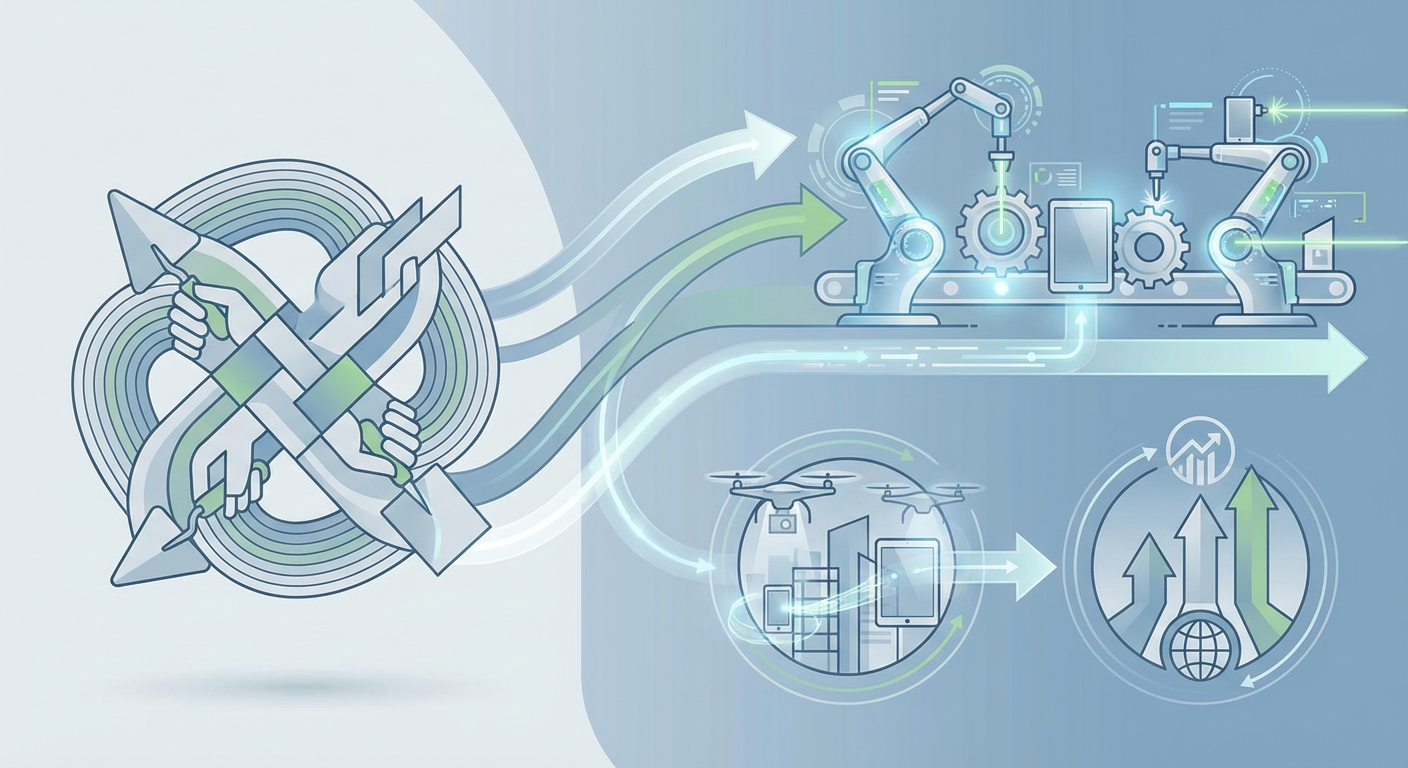
6. Innovation and Automation: The Future of Drywall Finishing
The drywall finishing industry, traditionally characterized by manual labor and time-intensive processes, is undergoing a profound transformation driven by rapid advancements in technology and automation. This shift is not merely an incremental improvement but a fundamental re-imagining of how interior surfaces are prepared, driven by an urgent need to address pervasive labor shortages, enhance efficiency, and deliver consistent, high-quality results. The global drywall and gypsum market, valued at $29.3 billion in 2022, is projected to reach $51.9 billion by 2032, reflecting a substantial 6.1% Compound Annual Growth Rate (CAGR)[1]. Furthermore, the broader global drywall market, encompassing both materials and installation, is expected to surge from $44.8 billion in 2024 to $81.7 billion by 2034, maintaining a robust 6.2% annual growth[2]. This booming market trajectory underscores the increasing economic importance of drywall finishing and concurrently, the critical role innovation plays in meeting escalating demand.
However, this growth is set against a backdrop of significant industry challenges, most notably a severe skilled labor deficit. The homebuilding sector alone is anticipated to face a 32% skilled labor shortfall by 2025, necessitating approximately 439,000 new workers to keep pace with demand[18]. This shortage is not without tangible economic consequences, contributing to $10.8 billion in annual losses from extended build times and an estimated 19,000 homes left unbuilt in 2024, representing an $8.14 billion economic loss[19][20]. In this context, advanced drywall finishing techniques and automation are shifting from desirable enhancements to essential components of business strategy. This section delves into the rapid growth of robotic drywall finishing systems and other emerging technologies, exploring their multifaceted role in addressing these challenges, elevating efficiency, and ultimately future-proofing the drywall industry.
6.1 The Emergence and Growth of Robotic Drywall Finishing Systems
Robotic drywall finishing stands out as a leading frontier in construction automation, poised to revolutionize an industry segment that relies heavily on repetitive, physically demanding tasks. The market for these advanced systems is experiencing explosive growth, with the global robotic drywall finishing systems market reaching $1.32 billion in 2024. It is forecast to grow at an impressive 13.7% annually, reaching $4.20 billion by 2033[10][11]. This rapid expansion is a clear indicator of the industry’s increasing reliance on automation to overcome existing hurdles and capitalize on new opportunities.
6.1.1 Addressing Labor Shortages and Enhancing Productivity
The most immediate and compelling driver for robotic adoption is the critical shortage of skilled drywall finishers. Robots excel at the monotonous and physically taxing aspects of the job, such as applying joint compound and sanding large surfaces. This allows human workers to be redeployed to more intricate tasks, supervision, or other critical stages of a project. For instance, a drywall finishing robot can reduce on-site finishing labor requirements by approximately 40% by handling repetitive mudding and sanding[17]. This reduction is not merely about replacing human labor but about optimizing its deployment, making each remaining worker more productive and less prone to burnout or injury.
The productivity gains are substantial. Traditional manual joint compound application and sanding might span five to seven days for a high-quality finish. However, robotic systems can complete the same tasks in roughly two days – with the first day dedicated to automatic mudding and the second to sanding[16]. This significant reduction in cycle time has a cascading positive effect on overall project schedules. A prime example is Webcor’s partnership with Canvas, a construction robotics startup, for projects like San Francisco International Airport’s Terminal 1. On a 73,000 sq ft civic center project, this robotic approach dramatically cut the finishing time from approximately 6 days to just 1 day for initial coats[14][15]. Such time savings, particularly on large commercial projects, translate directly into reduced general conditions costs and earlier project completion, enabling faster revenue generation for developers.
Furthermore, automation ensures consistent quality, virtually eliminating human variability in application. This reduces the need for expensive rework, which historically accounts for an average of 52% of total project cost growth and up to 22% of schedule overruns in construction[21]. By delivering a “right-first-time” quality, robotic systems directly improve profit margins and return on investment for contractors.
6.1.2 Regional Adoption and Market Dynamics
The adoption of robotic drywall finishing systems varies regionally, largely influenced by labor costs and technological readiness. North America currently accounts for approximately 38% of the global robotic drywall finishing market, valued at around $500 million in 2024[12]. This dominance is driven by high labor costs and a strong embrace of technology in the U.S. and Canadian construction sectors. Europe follows with a market size of approximately $350 million in 2024, while the Asia-Pacific region stands at about $300 million, both areas accelerating their adoption to boost efficiency and quality[13].
Contractors, including major players like Webcor, DPR Construction, and Swinerton, have proactively partnered with companies like Canvas to pilot these robots[22]. Their experiences indicate that while initial costs may be higher, the long-term benefits far outweigh the investment. Webcor, for instance, found that using Canvas’s robotic system allowed them to achieve a Level 5 finish “at a higher level of quality now at the same cost” as traditional methods[5]. They anticipate further efficiencies, aspiring to deliver “the same quality at lower cost” as the technology matures and scales[5]. This signals a clear economic advantage that will compel broader industry adoption.
The table below summarizes the key advantages of robotic drywall finishing:
| Factor | Traditional Manual Finishing | Robotic Drywall Finishing | Economic Impact |
|---|---|---|---|
| Labor Requirement | High, intensive manual labor | Reduced (up to 40% less on-site labor)[17] | Mitigates skilled labor shortages, lowers labor costs. |
| Productivity (Speed) | Slow; 5-7 days for Level 5 finish | Fast; 2 days for Level 5 finish[16] (up to 60% time savings)[8] | Accelerated project timelines, reduced general conditions, earlier revenue. |
| Quality Consistency | Variable, dependent on individual skill | Highly consistent, uniform application | Fewer defects, less rework (rework costs 52% of project cost growth)[21], higher client satisfaction. |
| Cost for Quality | Higher cost for higher quality (e.g., Level 5) | Higher quality at same or lower cost[5] | Improved value proposition, competitive advantage. |
| Worker Safety | Potential for falls, repetitive strain injuries | Reduced physical strain, fewer hazardous tasks | Lower insurance premiums, reduced lost workdays, improved workforce well-being. |
6.2 Beyond Robotics: Other Emerging Technologies
While robotics commands significant attention, the wave of innovation in drywall finishing extends to other crucial technological advancements that collectively reshape the industry’s future.
6.2.1 Advanced Tools and Equipment
Even without full automation, advanced hand tools and equipment significantly boost finisher productivity. For instance, contractors have reported that utilizing high-quality, “job-ready” tools like automatic tapers and flat boxes can boost finisher productivity by up to 15%[3]. This translates into tangible financial gains: at an average labor rate of $47/hour, a 15% productivity increase equates to $282 extra output per worker per week, or roughly $44,000 in additional annual billings for a typical 3-person finishing crew[3]. Such gains dramatically improve contractors’ profit margins and demonstrate a clear Return on Investment (ROI) for equipment upgrades.
A notable example of practical application comes from Wall-tech Inc. in Wisconsin. By deploying a drywall compound pumping system on a commercial project involving two 400,000 sq ft office buildings, they achieved a 50% jump in productivity. This allowed a crew of 5 workers to complete the task usually requiring 8-9, resulting in 1,400 labor hours saved and over $84,000 in wage savings across the two buildings – a 23% reduction in labor cost[4][6]. The upfront cost of the pump was recouped “many times over” on this single project[7], illustrating the immediate and profound ROI of targeted technological investments.
6.2.2 Prefabrication and Off-site Construction
Prefabrication, or off-site construction, is another transformative trend gaining traction. This involves manufacturing drywall panels in a controlled factory environment, often including insulation, pre-finished surfaces, and even paint, before their delivery and installation on-site[23]. While this shifts some of the cost and labor to the manufacturing phase, it offers several benefits:
- Enhanced Quality Control: Factory conditions are less susceptible to environmental variables (temperature, humidity), allowing for more consistent and higher-quality finishes.
- Accelerated Schedules: Off-site fabrication allows finishing work to proceed concurrently with on-site structural work, drastically shortening overall project timelines. Early data suggests panelization can shave weeks off interior build-outs, a substantial cost saving for projects with tight deadlines.
- Reduced On-site Labor and Waste: Prefabrication minimizes on-site clutter, waste, and the need for specialized finishing trades in the field.
6.2.3 Digital Tools and BIM Integration
Digital technologies, such as Building Information Modeling (BIM) and various digital layout tools, are fundamentally improving the precision and efficiency of the drywall process, even if not directly involved in the physical finishing[24]. BIM allows for highly accurate planning and coordination, ensuring that framing is dimensionally correct, which in turn leads to better-fitting drywall and less need for extensive finishing work to correct inconsistencies. Laser-guided leveling tools contribute to flatter, truer walls and ceilings, reducing the effort required for a smooth finish.
Furthermore, cloud-based project management platforms, specialized apps for tracking drying times, and even AI-powered cameras for early defect detection are becoming more common. These tools reduce guesswork, minimize errors, and optimize workflow, leading to significant time and material savings. The overall impact is a “right-first-time” approach, where better planning and execution through digital tools reduce the need for costly rework during the finishing phase.
6.2.4 Future Concepts: Exoskeletons and Advanced Materials
Looking further ahead, research and development are exploring even more advanced solutions. Exoskeletons, for example, could augment human capabilities, reducing physical strain and fatigue for workers performing overhead taping or sanding, thereby increasing their endurance and productivity while mitigating injury risks. Advancements in drywall materials themselves, such as faster-setting compounds that require fewer coats or quicker drying times, and more durable, impact-resistant boards, will also continue to contribute to efficiency and reduce maintenance needs. The continuous evolution in material science, paired with automation, promises a future where drywall finishing is not only faster and more consistent but also more sustainable and less arduous for the human workforce.
6.3 Impact on Addressing the Skilled Labor Shortage
The critical shortage of skilled labor remains one of the most pressing issues facing the construction industry. The substantial economic costs associated with this deficit—$10.8 billion annually in losses from prolonged build times and 19,000 unbuilt homes in 2024 representing an $8.14 billion economic loss for the U.S. housing sector[19][20]—underscore the urgency for innovative solutions. Advanced drywall finishing technologies offer a multi-faceted approach to mitigating this crisis.
Firstly, automation and advanced tools enable existing workers to achieve significantly higher output. By boosting individual finisher productivity by up to 15% with automatic tools, or enabling a 50% increase with pumping systems that allow 5 workers to do the work of 9[4], contractors can accomplish more with fewer hands. This is crucial when new skilled workers are scarce.
Secondly, these technologies can transform the nature of the job, making it more appealing to a new generation of workers. Repetitive, physically demanding, and potentially hazardous manual tasks are often deterrents for new recruits. Robots and mechanical aids reduce physical strain, improving ergonomics and safety. Fewer injuries mean lower insurance premiums and less lost productivity. Major contractors, including union shops, view robotics not as replacements but as tools that elevate the trade. As one contractor noted, incorporating robots can help attract a “different type of worker” into drywall trades[25], potentially drawing individuals interested in technology and machine operation. This shift could broaden the pool of potential workers and help professionalize the trade, offering career paths that involve high-tech equipment operation and oversight rather than just manual labor.
Thirdly, by freeing up skilled artisans from brute-force tasks, these technologies allow them to focus on complex, high-value finishing work, supervision, and quality control – areas where human expertise is irreplaceable. This optimizes the utilization of existing talent, enhancing job satisfaction and skill development.
6.4 Future-Proofing the Industry
The embrace of innovation and automation is not merely a short-term fix but a strategic imperative for future-proofing the drywall finishing industry. The rapid growth of the robotics market to over $4 billion by 2033 signifies that what is considered “cutting-edge” today will likely become standard practice tomorrow[10]. Contractors who ignore these trends risk falling behind in terms of cost-effectiveness, project delivery speed, and quality standards.
Future-proofing in this context involves several key aspects:
- Competitive Advantage: Early adopters of advanced technology gain a significant competitive edge. They can bid more competitively on projects, offer faster completion times, and guarantee higher levels of consistency and quality.
- Adaptability to Market Demands: As client expectations for speed and quality continue to rise in both residential and commercial sectors, technologically adept firms will be better positioned to meet these evolving demands.
- Workforce Resilience: By de-emphasizing purely manual labor and integrating technology, the industry can create a more resilient workforce less vulnerable to demographic shifts and physical demands. It fosters a culture of continuous learning and skill development among employees.
- Sustainability: Precision application by robots and efficient use of materials in prefabrication can lead to reduced waste, contributing to more sustainable construction practices and potentially lower material costs.
The insights clearly suggest that the drywall finishing industry is on an irreversible path toward greater automation and technological integration. The economic benefits, particularly in addressing labor shortages and enhancing productivity and quality, are too compelling to ignore. Companies that strategically invest in these innovations will not only survive but thrive in the evolving landscape of construction.
The next section will further explore the specific Return on Investment (ROI) case studies in both commercial and residential projects, providing quantitative evidence of the financial advantages gleaned from advanced drywall finishing techniques.
References
- Allied Market Research. Gypsum & Drywall Market Size, Share, Growth Outlook by 2032. October 2023 (est.).
- Danny’s Drywall Services. Drywall Finishing Techniques Boost Property Resale Value. July 29, 2025.
- AWCI (Association of the Wall and Ceiling Industry). Finishers Boost Productivity by 15 Percent with Better Tools. November 2011.
- Walls & Ceilings Magazine. Labor-saving Technology Allows Finishing Veteran to Reduce Job Costs. June 1, 2016.
- Engineering News-Record (ENR). More Contractors See Benefits of Drywall Finishing Robot. 2022.
- Walls & Ceilings Magazine. Labor-saving Technology Allows Finishing Veteran to Reduce Job Costs. June 1, 2016.
- Walls & Ceilings Magazine. Labor-saving Technology Allows Finishing Veteran to Reduce Job Costs. June 1, 2016.
- NEWS WADE (Tech News Site). Drywall Finishing Robots Accelerate Construction Schedules. January 4, 2026.
- NEWS WADE (Tech News Site). Drywall Finishing Robots Accelerate Construction Schedules. January 4, 2026.
- Growth Market Reports. Robotic Drywall Finishing Systems Market Research Report 2033. 2024.
- Growth Market Reports. Robotic Drywall Finishing Systems Market Research Report 2033. 2024.
- Growth Market Reports. Robotic Drywall Finishing Systems Market Research Report 2033. 2024.
- Growth Market Reports. Robotic Drywall Finishing Systems Market Research Report 2033. 2024.
- Construction Dive. Drywall finishing robot saves time, prevents injuries. June 16, 2021.
- Construction Dive. Drywall finishing robot saves time, prevents injuries. June 16, 2021.
- NEWS WADE (Tech News Site). Drywall Finishing Robots Accelerate Construction Schedules. January 4, 2026.
- NEWS WADE (Tech News Site). Drywall Finishing Robots Accelerate Construction Schedules. January 4, 2026.
- Contractor Accelerator. Residential Contractor Employment Crisis: 2025 Labor Shortage Hits Record 32%.
- NAHB Press Release. New Study Reveals Significant Economic Impact of Housing Industry Labor Shortage. June 10, 2025.
- NAHB Press Release. New Study Reveals Significant Economic Impact of Housing Industry Labor Shortage. June 10, 2025.
- Buildern. Construction Rework: Costs, Causes, and Solutions.
- AWCI (Association of the Wall and Ceiling Industry). High-Tech Tools.
- AWCI (Association of the Wall and Ceiling Industry). The Labor Shortage: Nuisance or Catastrophe?
- AWCI (Association of the Wall and Ceiling Industry). High-Tech Tools.
- Engineering News-Record (ENR). More Contractors See Benefits of Drywall Finishing Robot. 2022.
7. Addressing the Skilled Labor Shortage with Technology
The construction industry, a cornerstone of economic development globally, faces a persistent and escalating challenge: a severe shortage of skilled labor. This issue, exacerbated by an aging workforce, insufficient new entrants into trades, and increasing demand for construction services, poses significant threats to project timelines, budgets, and overall industry growth. In this environment, advanced drywall finishing technologies and automation are not merely incremental improvements; they are becoming indispensable tools for mitigating these labor deficits, enabling contractors to maintain output, improve efficiency, and reduce costly delays. By leveraging these innovations, the industry can increase output per worker, optimize resource allocation, and ensure project viability in a constrained labor market. The scale of the labor shortage is stark. The homebuilding sector alone is projected to face a 32% skilled labor shortfall by 2025, necessitating approximately 439,000 new workers to meet current demand [17]. The financial repercussions are substantial, with the U.S. housing industry experiencing estimated annual losses of $10.8 billion due to extended build times, leading to roughly 19,000 homes remaining unbuilt in 2024, representing an $8.14 billion economic loss [18]. This critical gap underscores why advanced drywall finishing technologies have transitioned from being a competitive advantage to an operational necessity, allowing builders to achieve more with a smaller workforce.
7.1 The Current State of the Construction Labor Shortage
The skilled labor shortage in construction is a multifaceted problem with deep roots and widespread implications. It affects all segments of the industry, from residential housing to large-scale commercial and infrastructure projects. The drywall finishing trade, specifically, has traditionally relied on highly skilled individuals whose expertise is honed over years of practice. As these experienced professionals retire, the pipeline of new talent is insufficient to replace them, leading to a critical deficit in the workforce.
7.1.1 Demographic Shifts and Workforce Attrition
One primary driver of the shortage is the demographic shift towards an aging workforce. A significant portion of the experienced construction labor force is nearing or has reached retirement age. For example, data from various sources indicate that approximately one in five construction workers is aged 55 or older, with many expected to retire in the next decade. Their departure takes with it decades of invaluable knowledge, technical skills, and practical experience that are difficult to replicate quickly. At the same time, attracting younger generations to skilled trades like drywall finishing has proven challenging. Perceptions of construction work as physically demanding, less technologically advanced, and offering fewer career progression opportunities compared to other sectors have contributed to this decline in interest. This perception often overlooks the increasing integration of advanced technologies and the significant earning potential within skilled trades.
7.1.2 Economic Impacts of Labor Scarcity
The direct consequences of this labor scarcity are severe and far-reaching:
- Project Delays: A lack of sufficient skilled workers directly translates to longer project timelines. Drywall finishing, often occurring on the critical path of interior fit-out, can become a bottleneck, holding up subsequent trades like painting, flooring, and fixture installation. For large commercial projects, delays can incur substantial penalties and increase financing costs. For residential projects, longer build times mean delayed occupancy and slower returns on investment for developers.
- Increased Labor Costs: The basic economic principle of supply and demand dictates that a scarcity of skilled labor drives up wages. When fewer qualified workers are available, contractors must offer higher compensation, overtime, and benefits to attract and retain talent. While beneficial for the workers, this significantly increases overall project costs, impacting contractor profit margins and potentially inflating prices for consumers or clients.
- Reduced Output and Unbuilt Projects: The most significant economic impact is the reduction in overall construction output. The National Association of Home Builders (NAHB) projects that the U.S. housing industry loses $10.8 billion annually due to extended build times resulting from labor shortages, with an estimated 19,000 new homes unbuilt in 2024 alone [19]. This represents a substantial loss in economic activity, job creation, and housing availability.
- Compromised Quality and Increased Rework: In an effort to keep projects moving, some contractors may be forced to employ less experienced or less skilled labor. This can lead to a decline in work quality, resulting in more defects, punch list items, and costly rework. Construction rework accounts for an average of 52% of total project cost growth and up to 22% of schedule overruns [20]. Poor drywall work, such as visible joints or uneven textures, often necessitates significant remedial action, draining resources and further delaying project completion.
This challenging environment provides a powerful impetus for the adoption of technological solutions in drywall finishing. The imperative is clear: to find ways to do more with fewer people, more efficiently, and without compromising quality.
7.2 Advanced Tools and Semi-Automation for Enhanced Productivity
The immediate response to the skilled labor shortage in drywall finishing has been the widespread adoption of advanced tools and semi-automated equipment. These technologies empower existing workers to achieve significantly higher output, effectively multiplying their capabilities and alleviating some of the pressure from labor shortfalls.
7.2.1 Automatic Taping and Finishing Tools
One of the most impactful categories of advanced tools includes “job-ready” automatic taping tools, such as bazookas (automatic taper), flat boxes, corner rollers, and corner finishers. These tools mechanize the traditionally manual and labor-intensive processes of applying tape and joint compound, drastically speeding up application rates and reducing physical strain.
- Productivity Boost: Contractors widely report that utilizing high-quality automatic taping tools can boost finisher productivity by up to 15% [5]. This increase in efficiency translates directly into economic benefits. For a worker earning an average of $47 per hour, a 15% productivity gain equates to approximately $282 in extra output per week. For a modest three-person finishing crew, this boost can result in an additional $44,000 in annual billings [5]. These figures demonstrate a compelling return on investment for contractors investing in such equipment.
- Consistency and Quality: Beyond speed, automatic tools enhance consistency. An automatic taper applies a uniform layer of tape and mud over every joint, which is crucial for achieving high-quality finishes, especially Levels 4 and 5. This uniformity reduces the likelihood of imperfections, such as cracking or noticeable seams, thereby minimizing the need for costly rework and callbacks [5b].
- Reduced Physical Strain: Many of these tools reduce the repetitive motions and physical exertion associated with manual drywall finishing. For instance, mechanical mud pumps eliminate the need for workers to constantly carry heavy buckets of compound. This ergonomic benefit improves worker well-being, reduces the risk of injuries and fatigue, and can help extend the careers of skilled finishers.
7.2.2 Drywall Compound Pumping Systems
For larger commercial projects, drywall compound pumping systems represent a significant leap in productivity. These systems automate the delivery of joint compound from large hoppers directly to automatic tools, eliminating manual mixing and transportation. A notable example comes from Wall-tech Inc. in Wisconsin, which handled the drywall finishing for two 400,000 sq ft office buildings. By deploying a high-volume drywall pumping system, they achieved a ~50% increase in productivity [6]. A crew of just five tapers completed a job that would typically require eight to nine workers, saving 1,400 labor hours and over $84,000 in wages across the project – representing a 23% reduction in labor costs [7]. The upfront cost of the pump was recouped “many times over” on this single project alone, underscoring its immense ROI [7b]. This demonstrates how targeted investment in labor-saving technology can yield dramatic cost reductions and maintain project schedules even with a reduced workforce.
7.2.3 Table: Manual vs. Automatic Taping Tools Productivity Comparison
| Metric | Manual Finishing (Estimated) | Automatic Tools (Estimated) | Difference / Gain |
|---|---|---|---|
| Output per worker (linear feet/day) | 150–200 LF | 250–300 LF | +50-100 LF |
| Productivity increase | N/A | Up to 15% [5] | Significant Improvement |
| Extra output per worker per week (at $47/hr) | N/A | ~$282 [5] | Direct Revenue Gain |
| Additional annual billings (3-person crew) | N/A | ~$44,000 [5] | Enhanced Profitability |
| Quality Consistency | Variable (skill-dependent) | High (uniform application) | Reduced Rework |
| Physical Strain | High (repetitive motions) | Reduced | Improved Worker Well-being |
These semi-automated solutions directly address the labor shortage by making each worker more powerful and efficient. They allow existing skilled laborers to take on more work, maintain faster schedules, and produce higher-quality results, effectively stretching the capabilities of a constrained workforce.
7.3 Robotic Drywall Finishing Systems: The Next Frontier in Automation
While advanced hand tools and compound pumps offer significant productivity gains, robotic drywall finishing systems represent a more profound shift towards automation. These autonomous or semi-autonomous machines are specifically designed to handle the highly repetitive and physically demanding tasks of mud application and sanding, dramatically reducing reliance on manual labor for broad surface finishing.
7.3.1 Market Growth and Adoption
The market for robotic drywall finishing systems is experiencing rapid expansion, signaling increasing industry acceptance and investment. The global robotic drywall finishing systems market was valued at $1.32 billion in 2024 and is forecast to grow at an impressive Compound Annual Growth Rate (CAGR) of 13.7% between 2025 and 2033, reaching $4.20 billion by 2033 [9]. North America leads this market, accounting for approximately 38% of the global share, or about $500 million in 2024, driven by high labor costs and a tech-forward construction sector [11]. Europe and Asia-Pacific also show strong adoption, with markets valued at ~$350 million and ~$300 million, respectively, in 2024 [12]. This global trend underscores that automation in drywall finishing is not a niche solution but a growing necessity.
7.3.2 Operational Efficiency and Time Savings
Robotic systems can compress project timelines significantly. Traditional manual drywall finishing processes, involving multiple coats of joint compound and numerous sanding stages, can take anywhere from five to seven days to achieve a high-quality finish [8]. Robotic systems, like those developed by Canvas, can complete the mud application and sanding for a Level 5 finish in as little as two days [8]. This represents a potential cut in drywall finishing schedules by up to 60% on some projects [8]. A concrete example is Webcor, a major general contractor, and their partnership with Canvas. On a 73,000 sq ft civic center project, using the Canvas robotic system cut the initial coat finishing time from approximately six days to just one day for each coated area [23]. This dramatic acceleration in the finishing phase allows subsequent trades to commence earlier, reducing overall project duration and associated carrying costs. For developers, bringing a commercial building or residential unit to market weeks or even days earlier can translate into millions of dollars in saved financing costs and earlier revenue generation.
7.3.3 Labor Optimization and Skill Redefinition
One of the most critical aspects of robotic drywall finishing is its ability to reduce on-site labor requirements while redefining the roles of skilled workers. Robots can theoretically handle around 40% of the labor traditionally associated with mudding and sanding repetitive, broad surfaces [13]. This does not necessarily eliminate human jobs but rather reallocates the workforce:
- Reduced Manual Labor: The machines take over the physically demanding, repetitive, and dirty tasks, such as applying several layers of joint compound and extensive sanding.
- Upskilling and Supervision: Human crew members transition to supervising the robots, performing detail work (e.g., corners, small patches, intricate architectural features), quality control, and operating the machinery. This elevates the skillset required, transforming manual laborers into technicians and supervisors. “The robot focuses on broad surfaces, giving the human worker a perfect surface for a uniform appearance, and the human worker focuses on the details,” noted a Webcor representative [23].
- Addressing Shortages: By enabling a smaller, more specialized team to accomplish the same amount of work (or more) than a larger, traditional crew, contractors can directly mitigate the impact of labor shortages. Essentially, fewer hands can complete more work more quickly.
7.3.4 Quality and Consistency
Robotic systems offer precision and consistency that is difficult to achieve manually, even by highly skilled workers, especially across vast surfaces. Robots can apply joint compound with metronomic accuracy and sand surfaces uniformly, leading to higher quality finishes (e.g., Level 5) with fewer imperfections. Contractors using robotic finishers, such as Webcor, have reported delivering “higher-quality walls at the same cost” as traditional methods and anticipate achieving “equal quality at lower cost” as the technology matures [14]. This capability reduces rework, minimizes punch list items, and ultimately improves client satisfaction without escalating costs. The adage “getting it right the first time” directly translates to enhanced project profitability by avoiding the spiraling costs associated with correcting errors.
7.3.5 Safety Benefits
Workplace safety is a significant concern in construction. Drywall finishing involves extensive work at height (on stilts or ladders) and exposure to dust from sanding. Robotic systems can perform these tasks, removing human workers from hazardous conditions. This leads to a reduction in fall-related injuries and respiratory issues, contributing to a healthier workforce and lower insurance costs for contractors. It also improves worker morale and retention.
7.4 Complementary Technologies and Future Foresight
The integration of advanced drywall finishing technology extends beyond automatic tools and robotics. Other innovations are emerging that further enhance productivity, quality, and mitigate labor issues.
7.4.1 Prefabrication and Off-site Construction
The trend towards prefabrication involves manufacturing components off-site in controlled factory environments. For drywall, this means wall panels can be built with insulation, pre-finished surfaces, and even paint applied before being transported to the construction site [27].
- Reduced On-site Labor: Prefabrication significantly shifts labor from the construction site to the factory, where conditions are safer and more efficient. This reduces the number of skilled workers needed on-site for finishing tasks.
- Quality Control: Factory settings allow for stringent quality control, consistent application of finishes, and fewer issues related to weather or environmental factors. Robots can also be more easily integrated into a factory production line than on a dynamic construction site.
- Faster Assembly: On-site, pre-finished panels can be rapidly assembled, dramatically accelerating the interior fit-out schedule. This reduces overall project duration and associated costs.
7.4.2 Digital Tools and Building Information Modeling (BIM)
Digital technologies, though not directly finishing tools, play a crucial supporting role:
- Precision and Planning: Building Information Modeling (BIM) allows for highly precise digital models of structures, ensuring that framing is accurate and dimensions are correct. This precision means drywall sheets fit better, reducing the amount of joint compound needed to bridge gaps and minimizing the labor required for floating and leveling walls [27].
- Laser-Guided Systems: Laser-guided screeding and layout systems ensure walls are plumb and true, which is fundamental for achieving a high-quality finish without excessive rework.
- AI and IoT: Emerging technologies like AI-powered cameras can detect imperfections in drywall surfaces even before painting, allowing for early correction. IoT sensors can monitor drying times of joint compound, optimizing the scheduling of subsequent coats and reducing idle time.
7.4.3 Exoskeletons and Ergonomic Aids
While robots take over some tasks, human workers remain essential. Exoskeletons and other ergonomic aids are being developed to support workers in physically demanding tasks, such as overhead work or lifting heavy drywall sheets. These tools aim to reduce fatigue, prevent injuries, and enhance the longevity and productivity of the human workforce.
7.5 Strategic Implications for the Industry
The integration of advanced drywall finishing technologies has several strategic implications for contractors, developers, and the construction industry as a whole.
7.5.1 Enhanced Competitiveness
Contractors who strategically invest in these technologies gain a significant competitive edge. They can bid on projects with tighter schedules, offer more competitive pricing due to labor savings, and deliver higher quality results consistently. This allows them to secure more lucrative contracts and differentiate themselves in a competitive market.
7.5.2 Workforce Development and Retention
While automation might initially raise concerns about job displacement, the reality in construction is more nuanced. Given the severe labor shortage, these technologies free up skilled workers from repetitive tasks, allowing them to focus on more complex, higher-value work, supervision, and problem-solving. It also makes the trade more appealing to a new generation of workers who are accustomed to technology. As Webcor noted, introducing robots helps attract a “different type of worker” into drywall trades [28], potentially mitigating the ongoing labor crunch by broadening the appeal of the profession. Training programs will need to adapt to teach skills in operating, maintaining, and supervising these advanced systems.
7.5.3 Risk Mitigation
By reducing reliance on a large, manual labor force for core tasks, contractors mitigate the risks associated with labor availability and escalating wage costs. Automation provides a degree of predictability and ensures continuity of work even when the skilled labor pool fluctuates. Furthermore, enhanced quality and reduced rework mitigate financial risks associated with defects and schedule overruns, which can account for significant project cost increases [20].
7.5.4 Scalability and Future-Proofing
Embracing advanced technology allows construction businesses to scale their operations more efficiently. Technologies that increase output per worker mean a company can take on more projects without needing to proportionally increase its workforce. This agility is crucial in a fluctuating market. Moreover, with the rapid growth of the drywall tech market, companies that adopt these innovations early will be better positioned to adapt to future industry standards and remain relevant in an increasingly automated construction landscape [29].
7.6 Conclusion: Technology as a Catalyst for Survival and Growth
The severe skilled labor shortage in the construction industry is not merely a nuisance; it represents a fundamental threat to its capacity for growth and efficiency. Advanced drywall finishing technologies and automation are proving to be powerful antidotes to this challenge. From automatic taping tools that boost individual worker productivity by 15% to robotic systems that can cut finishing schedules by up to 60% and reduce on-site labor needs by 40%, these innovations are reshaping how drywall finishing is executed. They enable contractors to deliver projects faster, with higher quality, and at a reduced cost, even with fewer skilled hands available. The economic impact is profound: increased output per worker translates into significant revenue gains for contractors, while reduced project durations and minimized rework save developers millions in carrying costs and penalties. The rise of robotic finishing, projected to grow at 13.7% annually, underscores a industry-wide recognition that technological solutions are paramount. As demographic trends continue to constrain the traditional labor pool, investing in these advanced techniques and tools is no longer optional; it is a critical strategy for survival, enhanced profitability, and sustainable growth across both commercial and residential construction sectors. This strategic shift will not only alleviate the immediate pressures of labor scarcity but also elevate the drywall finishing trade into a more technologically advanced, efficient, and attractive profession for the future workforce. The next section will delve into the long-term sustainability of advanced drywall finishing practices, examining their environmental impact, material efficiency, and contribution to green building initiatives.
8. Mitigating Rework and Enhancing Project Quality
Construction projects are inherently complex endeavors, often fraught with unforeseen challenges, tight deadlines, and demanding budgets. Among the most significant drains on a project’s profitability and schedule is rework – the necessity to repeat tasks or correct errors due to initial non-conformance with specifications or quality standards. This issue is particularly acute in the finishing stages, where imperfections are highly visible and often lead to costly delays and disputes. This section delves into the substantial economic burden of construction rework, particularly concerning drywall finishing, and elucidates how strategic investments in skilled labor and advanced tools can be instrumental in achieving “right-first-time” quality. By meticulously examining the data, case studies, and expert insights, we will demonstrate how such investments reduce defects, minimize punch-list items, and ultimately prevent extensive project cost overruns and schedule delays, thereby enhancing overall project quality and financial return.
The Hidden Costs of Rework in Construction
Rework is arguably one of the most insidious and financially damaging aspects of the construction industry. While specific figures can vary by project type, complexity, and region, research consistently highlights its profound negative impact. One study indicates that construction rework is responsible for an average of 52% of total project cost growth and contributes to as much as 22% of schedule overruns[1]. These aren’t minor adjustments; they represent significant capital and time being poured into rectifying mistakes that could have been avoided. The costs associated with rework extend far beyond the immediate expenses of materials and labor needed for correction. They encompass a broader spectrum of direct and indirect impacts:
- Direct Costs:
- Additional labor hours for removal, repair, and reinstallation.
- Extra material procurement, often expedited, leading to higher costs.
- Increased equipment usage and associated operational expenses.
- Disposal costs for waste generated by rejected or damaged materials.
- Indirect Costs:
- Project delays, leading to increased general conditions (e.g., site supervision, temporary facilities, insurance).
- Extended financing costs for the project owner.
- Reduced productivity of other trades due to sequencing disruptions and site congestion.
- Damage to reputation and client relationships.
- Potential for liquidated damages or penalties for delayed completion.
- Diminished worker morale and increased risk of future errors due to rushed conditions.
In the context of drywall finishing, rework often manifests as visible joint lines, uneven textures, nail pops, or surface imperfections that become glaringly obvious under paint or critical lighting conditions. These issues frequently appear on punch lists, requiring re-sanding, re-mudding, and re-painting, which not only consumes additional resources but also delays subsequent trades like painters and installers of wall-mounted fixtures. The financial implications are substantial. If an initial drywall job requires a Level 5 finish but only achieves a Level 4, the imperfections become visible, necessitating a full skim coat and meticulous re-sanding. This correction can add an estimated 40% more labor hours than the initial Level 4 attempt, effectively doubling the cost of achieving the desired quality for that specific area[2]. This example underscores the principle that investing in skilled finishing or advanced tools upfront to deliver “right-first-time” quality is a far more economical approach than rectifying deficiencies later. The construction industry’s struggle with labor shortages exacerbates the rework problem. The residential construction sector, for instance, faces a projected 32% skilled labor shortfall by 2025, requiring approximately 439,000 new workers to meet demand[3]. This deficit contributes to an estimated $10.8 billion in annual losses due to extended build times and approximately 19,000 homes left unbuilt in 2024, representing an $8.14 billion economic loss[4]. When skilled labor is scarce, there’s a higher propensity for less skilled workers to be employed, which can directly lead to quality issues and, subsequently, a greater need for rework. This vicious cycle highlights the urgent need for strategies that enhance productivity and quality without relying solely on an ever-dwindling pool of manual labor.
Strategic Investment: The Path to ‘Right-First-Time’ Quality
Breaking the cycle of rework requires a proactive approach centered on investing in both human capital (skilled finishers) and technological advancements (advanced tools and automation). The goal is to enhance precision, consistency, and efficiency to achieve the desired quality standard on the first attempt.
1. Investing in Skilled Finishers and Training
While advanced tools are transformative, the expertise of a skilled drywall finisher remains paramount. A finisher’s trained eye, understanding of material properties, and mastery of techniques are irreplaceable for complex areas, bespoke finishes, and quality control. Investing in continuous training for finishing crews on the latest techniques, materials, and equipment operation can significantly reduce errors. This includes:
- Specialized training for achieving various finish levels (e.g., Level 5 skim coat, various textures).
- Education on substrate preparation, joint treatment, and proper drying times.
- Skills development with new tools and machinery.
A highly competent finisher can anticipate potential issues, correct minor inconsistencies early, and ensure that the work meets stringent quality benchmarks. This human element, combined with technological support, forms the bedrock of a “right-first-time” philosophy.
2. Leveraging Advanced Tools for Enhanced Productivity and Precision
The drywall finishing industry has seen a revolution in tools and equipment designed to boost productivity, improve consistency, and reduce physical strain on workers, all contributing to higher quality and less rework.
a. Automatic Taping Tools and Flat Boxes: These mechanical tools significantly speed up the application of tape and compound to seams and corners. Surveys reveal that “job-ready” automatic taping tools can increase finisher productivity by up to 15%[5]. This translates into tangible financial gains: at an average labor rate of $47/hour, a 15% boost means approximately $282 extra output per worker per week, amounting to about $44,000 more in annual billings for a 3-person crew[5]. Such efficiency gains directly improve contractors’ profit margins and represent a compelling ROI on equipment investments. The precision of these tools also ensures a consistent application of compound, reducing variations that often lead to sanding irregularities and visible joints.
b. Drywall Compound Pump Systems: For large commercial projects, bulk compound delivery systems drastically enhance efficiency. A notable example comes from Wall-tech Inc. in Wisconsin, which achieved a 50% jump in drywall finishing productivity by using such a system on two 400,000 sq ft office buildings[6]. This allowed a crew of 5 workers to accomplish the work that would typically require 8-9 workers over a 3-month period. The result was a saving of 1,400 labor hours and over $84,000 in wages, representing a 23% reduction in labor cost for that single project[7]. The upfront cost of the pump system was recouped “many times over” in labor savings, underscoring a clear ROI win[8]. These systems ensure a steady, consistent flow of compound, minimizing waste and manual labor associated with mixing and carrying buckets.
c. Robotic Drywall Finishers: The advent of robotic systems is perhaps the most transformative development in mitigating rework and elevating quality, especially in large-scale commercial applications. The global robotic drywall finishing systems market, valued at $1.32 billion in 2024, is projected to grow rapidly at a 13.7% CAGR, reaching $4.20 billion by 2033[9]. These robots are designed to handle the repetitive and physically demanding tasks of mud application and sanding, achieving remarkable levels of consistency and precision.
- Speed and Schedule Compression: Robotic systems have been shown to **cut drywall finishing schedules by up to 60%** on some projects[10]. Manual mudding and sanding that typically take 5-7 days for a Level 5 finish can be completed by robots in as little as 2 days (first day mudding, second day sanding)[11]. This dramatic acceleration of the schedule means properties can be completed and occupied sooner, significantly reducing carrying costs and enabling earlier revenue generation for developers.
- Consistent Quality: Major contractors, such as Webcor, partnering with companies like Canvas, have piloted robotic drywall finishing systems on high-profile projects like San Francisco International Airport’s Terminal 1[12]. They reported delivering **higher-quality walls at the same cost** as traditional methods, with the expectation to achieve the same quality at even lower costs as the technology scales[13]. This consistency translates directly into fewer defects, minimized punch-list items, and reduced rework. The robot’s work often exceeds expectations for smoothness, requiring only minor touch-ups from human workers[14].
- Labor Efficiency and Safety: Robots can **reduce on-site finishing labor requirements by approximately 40%** by handling repetitive tasks[15]. This allows skilled human workers to focus on supervision, intricate details, and areas where robots cannot operate, maximizing their expertise. Additionally, by reducing the need for workers to perform strenuous tasks, lift heavy materials, or work on stilts and ladders, robots enhance safety and mitigate workplace injuries, leading to lower insurance premiums and increased worker retention.
d. Advanced Drying Solutions and Compounds: Innovations in joint compounds—such as fast-setting compounds and lightweight formulations—along with specialized drying equipment, can also accelerate the finishing process and reduce rework. Faster setting times allow for multiple coats in a single day, reducing the overall time frame and minimizing exposure to environmental factors that can cause imperfections.
The Economic Benefits of Right-First-Time Quality
By achieving “right-first-time” quality through skilled finishing and advanced tools, projects accrue significant economic benefits for both commercial and residential stakeholders.
For Commercial Projects:
| Benefit Area | Impact of Right-First-Time Drywall Finishing | Data/Example |
|---|---|---|
| Reduced Rework Costs | Direct elimination of expenses for additional labor, materials, and waste disposal. | Rework accounts for ~52% of project cost growth[1]. High-quality initial finishing directly counters this. |
| Minimized Schedule Delays | Prevents hold-ups for subsequent trades, allowing projects to finish on time or even early. | Robotic systems cut drywall finishing schedules by up to 60%[10]. |
| Lower General Conditions | Shorter project durations reduce costs associated with site management, rentals, financing. | Finishing 2 x 400,000 sq ft buildings with advanced pumps saved 1,400 labor hours, equivalent to significant general conditions savings[7]. |
| Enhanced Client Satisfaction | Delivering a high-quality product on time and budget fosters trust and repeat business. | Webcor achieved “higher quality at the same cost” with robots, translating to client value[13]. |
| Improved Competitive Advantage | Contractors known for quality and efficiency gain an edge in winning new bids. | Early adopters of robotics, like DPR and Swinerton, leverage technology as a differentiator[16]. |
The case of Wall-tech Inc. on the Epic Systems office buildings provides a vivid illustration. By implementing advanced pumping systems, they not only saved $84,000 in wages but also ensured the project met its tight 3-month deadline by doing the work of 8-9 people with just 5. This eliminated potential penalties for late delivery and boosted their reputation for efficiency[17]. Similarly, Webcor’s use of Canvas robots enabled them to achieve Level 5 finishes with superior consistency at no additional cost, demonstrating a clear quality upgrade that will likely attract premium tenants or buyers once the commercial spaces are operational[13].
For Residential Projects:
| Benefit Area | Impact of Right-First-Time Drywall Finishing | Data/Example |
|---|---|---|
| Increased Property Value | Flawless walls elevate perceived quality, leading to higher sale prices or rents. | A renovated home with Level 5 finish sold for $60,000 above listing in 10 days[18]. |
| Faster Sales/Leases | High-quality finishes make properties more attractive, reducing time on market. | The aforementioned home sold quickly due to “impeccable drywall craftsmanship”[18]. |
| Market Differentiation | Premium finishes set a property apart in a competitive market. | “Smaller homes with flawless Level 5 finishes can outshine larger homes with mediocre drywall”[19]. |
| Reduced Call-Backs/Warranty Issues | Fewer post-occupancy defects such as cracks or nail pops, improving homeowner satisfaction. | While no specific data provided, fewer defects inherently mean fewer warranty claims. |
| Enhanced Occupant Satisfaction | High-quality, durable finishes contribute to more comfortable and appealing living spaces. | Soundproof or mold-resistant drywall (advanced finishing) adds perceived and actual value for occupants[20]. |
In the residential sector, the ROI of advanced drywall finishing directly impacts marketability and value. The Milwaukee case study of an investor renovating a 1970s split-level home with an impeccable Level 5 skim coat is powerful: the home, previously struggling to sell, went for $60,000 above its listing price in just 10 days after the drywall transformation[21]. This demonstrates how perceived luxury and meticulous craftsmanship, even in seemingly mundane elements like walls, can drive premium prices and rapid sales. Cream City Construction, also in Milwaukee, experienced similar multiples in returns on their high-end duplex renovation by heavily investing in advanced drywall techniques, transforming an old property into a sleek, contemporary space that sold at a substantial profit[22].
The Future of Drywall Finishing and Rework Mitigation
The trajectory of the drywall finishing industry points towards continued innovation as a primary driver for mitigating rework and elevating quality. The rapid growth of the robotic drywall finishing market (projected to reach $4.2 billion by 2033) signifies a broad industry shift towards automation and precision[23].
- Integration of Digital Technologies: Building Information Modeling (BIM) and laser-guided layout tools are becoming more prevalent, ensuring greater accuracy from the framing stage, which directly impacts the ease and quality of drywall installation and finishing. Fewer framing errors mean fewer drywall fitment issues, reducing the potential for rework.
- Prefabrication: Off-site fabrication of pre-finished wall panels (with insulation, surfaces, and even paint applied in a controlled factory environment) dramatically reduces on-site finishing work. This controlled environment minimizes errors, allows for higher quality control, and brings finished components to the site, ready for rapid installation, shaving weeks off interior build-outs and significantly reducing the opportunity for on-site rework.
- Material Science Advances: Continuous development in joint compound formulations, tapes, and board technologies will further enhance durability, ease of application, and aesthetic quality, contributing to more consistent “right-first-time” results.
These innovations, coupled with the ongoing importance of skilled labor, provide a comprehensive strategy for the construction industry to combat the pervasive problem of rework. By proactively investing in these advanced approaches, project stakeholders can not only mitigate substantial financial losses and schedule overruns but also consistently deliver higher quality products, fostering greater client satisfaction and enhancing their competitive standing in the market. Ultimately, the decision to invest in advanced drywall finishing techniques and tools is a strategic one, moving beyond mere expense to an investment that consistently delivers positive returns by ensuring that projects are done correctly, efficiently, and to the highest possible standard from the outset. This “right-first-time” ethos is not just a quality slogan; it’s a proven economic imperative in modern construction. Transitioning from the mitigation of rework, the next section will explore the profound impact of advanced drywall finishing on market differentiation and property valuation, examining how the superior aesthetics and performance of these finishes translate into higher premiums and faster sales in competitive real estate markets.
The economic viability and practical implementation of advanced drywall finishing methods are subjects of increasing interest across the construction industry. As the global drywall market continues its impressive growth trajectory, projected to reach $51.9 billion by 2032 and the broader drywall market (materials and installation) to nearly double from $44.8 billion in 2024 to $81.7 billion by 2034, stakeholders are keenly evaluating how advanced techniques and technologies can impact their bottom line [1][2]. This section addresses common inquiries from commercial developers, residential builders, contractors, and property owners regarding the return on investment (ROI), operational advantages, and strategic implications of adopting advanced drywall finishing.
What constitutes ‘Advanced Drywall Finishing’ and how does it differ from traditional methods?
Advanced drywall finishing encompasses a range of techniques, materials, and technological innovations designed to achieve superior aesthetics, enhanced durability, and greater efficiency compared to conventional methods. Traditionally, drywall finishing involved manual application of joint compound (mud) and tape, followed by sanding, typically aiming for a Level 3 or Level 4 finish. Achieving a Level 4 finish, for instance, requires all joints and interior angles to have two separate coats of joint compound, and all fastener heads and accessories to be covered with three separate coats of joint compound, with the surface smooth and free of tool marks and ridges [12].
In contrast, advanced drywall finishing primarily focuses on achieving a Level 5 finish, which represents the highest standard of smoothness and uniformity. A Level 5 finish involves a full skim coat of joint compound applied over the entire surface of the drywall, ensuring a completely uniform surface ready for painting, especially for critical lighting conditions or high-sheen paints [12]. Beyond the aesthetic appeal, advanced methods often incorporate specialized products such as:
- High-performance joint compounds: Fast-setting or lightweight compounds that reduce drying times and improve workability.
- Automated tools: Equipment like automatic tapers, flat boxes, corner rollers, and mud pumps which significantly speed up application and reduce manual labor [5]. For example, a drywall compound pump system on a large commercial job allowed 5 workers to do the work of 9, leading to a 50% increase in productivity and saving 1,400 labor hours [6][7].
- Robotic systems: Autonomous or semi-autonomous robots capable of applying joint compound and sanding large wall surfaces with extreme precision and consistency. The global robotic drywall finishing systems market, valued at $1.32 billion in 2024, is projected to reach $4.2 billion by 2033, growing at a rapid 13.7% CAGR, indicating a strong industry shift towards automation [9][10].
- Specialty drywall boards: Products like soundproof, mold-resistant, fire-resistant, or impact-resistant drywall, which offer functional benefits beyond basic wall construction [4].
- Advanced sanding techniques: Dustless sanding systems or robotic sanders that create a cleaner work environment and a smoother finish with less manual effort [8].
The primary difference lies in the pursuit of perfection and efficiency. While traditional methods rely heavily on the individual skill and endurance of workers, advanced methods leverage technology and superior materials to achieve a consistently higher-quality finish, often in less time and with reduced labor input. This differentiation is crucial for meeting the demands of modern construction, where both aesthetic quality and project timelines are paramount.
What is the typical ROI for residential projects that invest in advanced drywall finishing?
Investing in advanced drywall finishing for residential projects, particularly those aiming for high-end markets or quick sales, consistently demonstrates a strong return on investment. The ROI is multifaceted, encompassing higher resale values, faster sales, and increased buyer satisfaction.
Increased Property Value and Faster Sales: Premium drywall finishes, such as a Level 5 skim coat, contribute significantly to a home’s perceived quality and aesthetic appeal. Buyers often equate flawless walls with a well-built, luxurious product, even if they don’t explicitly know the technical specifications of the finish [4]. One compelling example from a Milwaukee suburb involved a renovated 1970s split-level home that had struggled to sell. After an investor opted for a meticulous Level 5 skim coat on all main areas, the property sold in just 10 days for $60,000 above the initial listing price [11][18]. This rapid sale at a premium price underscores the significant impact of superior finishing on market outcomes. Similarly, Cream City Construction in Milwaukee, after a gut renovation of a century-old duplex using advanced layered mud coats and skim coats, found that the property sold for a significantly higher price than its pre-renovation value, yielding substantial profit. The project manager noted, “We invested heavily in drywall… It returned multiples of that in profit” [20][21].
Market Differentiation: In competitive housing markets, advanced finishing serves as a key differentiator. Builders report that even smaller homes with flawless Level 5 finishes can “outshine” larger homes with mediocre drywall work [11][19]. This ability to stand out helps attract more buyers, potentially leading to bidding wars and increased prices, thus enhancing the overall ROI for the builder or seller [14].
Enhanced Durability and Reduced Call-backs: While less direct, the long-term ROI also includes reduced maintenance and fewer warranty claims. Properly finished drywall, especially with advanced techniques and materials, is less prone to cracking, nail pops, and visible seams [4]. This translates to fewer costly call-backs for builders and a better ownership experience for residents, further enhancing the property’s reputation and value over time. Specialty drywall types such as mold-resistant or soundproof boards, while having a slightly higher upfront cost, can prevent more significant financial outlays for future repairs or provide better living conditions, justifying their initial investment [4][15].
Strategic Investment: While a Level 5 finish can demand around 40% more labor hours than a Level 4 finish, making it more expensive upfront, strategic application is key [12][16]. Applying the highest level of finish in high-visibility areas like living rooms, kitchens, and master bedrooms, and a Level 4 in less critical areas, can optimize costs while maximizing impact. This targeted approach allows builders to achieve a powerful aesthetic impact without overspending, ensuring a positive ROI on their finishing investment.
How do advanced finishing techniques impact productivity and labor costs for contractors?
Advanced drywall finishing techniques and tools are revolutionizing productivity and significantly driving down labor costs, which is a critical factor given the construction industry’s ongoing skilled labor shortage. The residential construction sector, for example, is facing a 32% skilled labor shortfall by 2025, requiring approximately 439,000 new workers to meet demand. This shortage is already causing $10.8 billion in annual losses from extended build times and an estimated 19,000 homes left unbuilt in 2024 [13][14].
- Increased Finisher Productivity: Advanced tools such as automatic tapers, flat boxes, and cornerstone applicators, often referred to as “job-ready” tools, can boost finisher productivity by up to 15% [5][11]. This translates to substantial savings. For typical labor rates of $47/hour, this 15% boost yields an additional $282 in output per worker per week or approximately $44,000 in additional annual billings for a 3-person crew [5][11]. These efficiency gains directly improve contractors’ profit margins and offer a compelling ROI on equipment investments.
- Significant Labor Hour Reductions with Automation: Real-world projects demonstrate even more dramatic savings with the adoption of advanced technology. Wall-tech Inc. in Wisconsin, for example, achieved a 50% productivity increase on a large commercial project (two 400,000 sq ft office buildings) by utilizing an automated drywall compound pump system. This allowed a crew of 5 workers to complete a job that would typically require 8-9 workers, saving 1,400 labor hours and over $84,000 in wages (a 23% reduction in labor cost) over a 3-month period [6][7][12]. The initial cost of the pump was recouped “many times over” on this single project [7].
- Faster Project Timelines: Automation and advanced systems significantly compress project schedules. Robotic drywall finishing systems have been shown to cut drywall finishing schedules by up to 60% [8][13]. A manual mudding and sanding process traditionally takes 5 to 7 days, but robotic solutions can achieve a Level 5 finish in just 2 days (one day for mudding, one for sanding) [8][14]. For a 73,000 sq ft civic building, a drywall finishing robot reduced the Level 5 finishing time for each coated area from approximately 6 days to 1 day [15][16]. These expedited timelines reduce overall project duration and associated carrying costs, enabling properties to be completed and occupied sooner.
- Reduced Labor Requirements: Robotic finishers can reduce on-site finishing labor needs by around 40% [17]. Human crews can then focus on supervision, detail work, and areas inaccessible to robots, optimizing manpower utilization. This is particularly crucial in mitigating the impact of labor shortages, allowing contractors to do more with fewer skilled hands and redeploy workers to other critical tasks.
- Consistency and Quality Control: Advanced tools provide consistency that manual methods often struggle to match. Automatic tapers apply uniform layers of tape and mud, reducing variations and potential imperfections, which decreases the likelihood of rework [11]. Given that construction rework accounts for an average of 52% of total project cost growth and up to 22% of schedule overruns, minimizing errors through advanced finishing tools offers a substantial financial benefit [19].
In essence, advanced finishing techniques allow contractors to enhance efficiency, reduce direct labor costs, accelerate project completion, and achieve higher quality, all of which directly contribute to improved profit margins and a competitive edge in the market.
What are the primary benefits of advanced drywall finishing for commercial projects and large-scale developments?
For commercial projects and large-scale developments, the benefits of advanced drywall finishing extend beyond aesthetics to significantly impact project efficiency, cost control, and overall profitability. The ROI for commercial ventures is closely tied to speed, quality consistency, and minimized rework.
- Accelerated Project Timelines: In commercial construction, time is a critical financial factor. Advanced drywall finishing systems, especially robotic solutions, can drastically reduce the finishing phase of a project. As noted, robotic systems can cut drywall finishing schedules by up to 60% [8][13]. This means projects can be completed weeks or even months ahead of traditional schedules. For developers, this translates into reduced financing costs, earlier tenant occupancy, and faster revenue generation. For instance, finishing an office building sooner can save significant interest on construction loans and allow lease agreements to commence earlier.
- Consistent High Quality at Competitive Costs: Commercial specifications often demand high levels of finish for aesthetic reasons, critical lighting conditions, or brand image. Advanced methods ensure a consistently high-quality finish across vast areas. Contractors using robotic drywall finishers report delivering higher-quality walls at the same cost as traditional methods [20][21]. Furthermore, as the technology scales, they anticipate achieving equal quality at lower cost, offering a competitive advantage [20][22]. This ensures client satisfaction without exceeding budget constraints, and potentially opens doors to more lucrative projects requiring superior finishes.
- Reduced Rework and Punch-List Items: Rework can account for an average of 52% of total project cost growth and up to 22% of schedule overruns in construction [19]. Drywall imperfections are common contributors to punch lists and costly repairs. Advanced techniques and robotic precision significantly reduce defects like visible seams, uneven surfaces, or poor mud adhesion. By achieving a “right-first-time” quality, commercial projects can minimize expensive post-completion repairs and accelerate the handover process, saving substantial costs and avoiding delays.
- Labor Shortage Mitigation and Optimized Workforce Deployment: The severe labor shortage in construction makes it challenging to staff large commercial projects. Advanced drywall finishing, particularly automation, allows contractors to accomplish more work with fewer skilled workers. Robotic systems can reduce on-site finishing labor requirements by around 40% [17]. This frees up skilled human labor for more intricate tasks, supervision, or other projects, optimizing overall workforce utilization and mitigating the risks associated with labor scarcity. Major contractors like Webcor, DPR, and Swinerton are partnering with companies like Canvas to pilot drywall finishing robots, demonstrating the industry’s confidence in this approach [23]. Unions are also increasingly receptive, viewing such technology as an evolution in construction tools [24].
- Enhanced Durability and Tenant Satisfaction: For commercial spaces like offices, retail, or hospitality venues, durable and aesthetically pleasing interiors are crucial for tenant attraction and retention. Advanced finish materials (e.g., impact-resistant drywall in high-traffic corridors, soundproof drywall in office buildings) contribute to a more durable and comfortable environment. While an initial investment, these features can justify higher rental rates and reduce long-term maintenance costs, directly impacting the property’s financial performance.
The cumulative effect of these benefits is a stronger ROI for commercial developers and contractors, making advanced drywall finishing not just an aesthetic choice, but a strategic business imperative.
Are advanced drywall finishing techniques only for high-end projects?
While advanced drywall finishing techniques are highly beneficial and often featured in high-end luxury residential and premium commercial projects, their applications and benefits extend to a much broader range of projects, including mid-range residential builds, multi-family housing, and various commercial sectors. The perception that they are exclusive to luxury segments is evolving as the industry recognizes the wider economic and practical advantages.
- Efficiency and Cost-Saving in Mid-Range Projects: The productivity gains offered by advanced tools and automation are relevant to projects of all scopes. For instance, automatic taping tools and mud pumps, which can boost finisher productivity by 15% and deliver significant labor savings, are not prohibitively expensive and offer quick ROI even on standard residential or commercial jobs [5][11][6]. These tools enable contractors to complete more square footage in less time with fewer workers, directly reducing labor costs per project. This is particularly attractive for developers of multi-family housing or strip malls, where repetitive tasks can be dramatically sped up.
- Mitigating Labor Shortages Across All Tiers: The construction industry’s skilled labor shortage affects all project tiers. Advanced techniques and automation become essential tools for companies struggling to find enough skilled workers, regardless of the project’s luxury level. By making existing crews more efficient, or by employing robots for repetitive tasks, contractors can maintain project schedules and quality standards on mid-range projects that might otherwise suffer due to insufficient labor [13].
- Quality and Durability for Long-Term Value: Even mid-tier residential and commercial properties benefit from enhanced durability and reduced maintenance needs. Using specialized materials like mold-resistant drywall in bathrooms or fire-rated drywall in specific commercial zones are not exclusive to “high-end” but are often building code requirements or smart long-term investments. Achieving a Level 4 or a consistent Level 5 finish in certain areas of a mid-range home or office can significantly reduce future repair costs and improve occupant satisfaction, appealing to a broader market of buyers and tenants [4].
- Strategic Application: Rather than applying a full Level 5 finish everywhere, which incurs the 40% additional labor cost compared to Level 4, builders can strategically deploy advanced finishing. For example, a mid-range home might feature a Level 5 finish in the main living areas and kitchen, and Level 4 in bedrooms and hallways. This targeted application balances cost with key aesthetic impact, maximizing value where it matters most for the price point [12][16]. Similarly, in commercial spaces, a Level 5 might be reserved for lobbies and high-visibility public areas, with more standard finishes in back offices or storage areas.
- Competitive Advantage: As advanced drywall finishing becomes more accessible and cost-effective, offering superior finishes can become a standard expectation. Even in competitive markets for mid-range housing, a smoother, more durable wall finish can help a property stand out without necessarily categorizing it as “luxury.”
Therefore, while high-end projects are natural adopters due to their focus on premium aesthetics, the efficiency, cost-saving, and quality benefits of advanced drywall finishing make them increasingly relevant and advantageous for a diverse range of commercial and residential projects across various price points.
What challenges might prevent widespread adoption of advanced drywall finishing, and how can they be overcome?
Despite the clear economic and practical benefits, several challenges can hinder the widespread adoption of advanced drywall finishing techniques and technologies. Addressing these challenges requires strategic planning, investment, and collaboration within the industry.
- Upfront Investment Costs: Manual drywall tools are relatively inexpensive. In contrast, advanced automated tools, specialized materials, and particularly robotic systems, represent a significant capital investment. For example, while basic drywall tools may cost a few hundred dollars, a robotic drywall finishing system is a considerably larger investment [9].
Overcoming:- Demonstrating Clear ROI: Emphasis must be placed on communicating the rapid and significant ROI through labor savings ($84,000 saved on a single commercial project with a pump system [7]), increased productivity (up to 50% with automated pumps [6]), and faster project delivery (60% reduction in finishing schedules [8]).
- Financing Options: Equipment leasing programs, government incentives for technology adoption, and partnerships with technology providers can make investments more palatable for smaller contractors.
- Phased Adoption: Contractors can start with less expensive automated hand tools (e.g., automatic tapers, flat boxes) to realize initial productivity gains before investing in larger robotic solutions.
- Skilled Labor Shortage and Training Curve: While advanced tools can mitigate labor shortages, they also require a different skillset. Workers need training to operate and maintain new equipment, leading to an initial learning curve and potential resistance from a workforce accustomed to traditional methods. The industry faces a 32% skilled labor shortfall in 2025[13], so adapting the existing workforce is crucial.
Overcoming:- Training and Upskilling Programs: Manufacturers and contractors must invest in comprehensive training programs to equip workers with the necessary skills for operating and maintaining advanced equipment. Webcor noted that introducing robots helps attract a “different type of worker” into drywall trades, which can help address the labor crunch [25].
- Union Collaboration: Engaging with trade unions to develop training pathways and integrate new technologies into apprenticeship programs can foster acceptance and ensure a skilled workforce. Major contractors collaborating with Canvas have found unions to be receptive to these advancements [24].
- Focusing on Efficiency: Highlighting how new tools reduce physical strain and improve safety can increase worker buy-in and job satisfaction.
- Resistance to Change: The construction industry can be slow to adopt new technologies, often preferring established practices due to familiarity, perceived risks of new methods, or simply a lack of awareness regarding advancements.
Overcoming:- Pilot Programs and Case Studies: Showcasing successful implementations through pilot projects and publishing detailed case studies (like Wall-tech’s $84,000 savings [7] or Webcor’s speed and quality improvements [20]) can demonstrate tangible benefits and build confidence.
- Industry Standards and Best Practices: Developing and promoting industry standards for advanced finishing techniques can alleviate concerns about quality and consistency.
- Education and Awareness Campaigns: Targeted campaigns through industry associations, trade shows, and publications can educate stakeholders about the advantages and practicalities of advanced drywall finishing.
- Integration with Existing Workflows: Incorporating new technologies requires adjustments to project planning, scheduling, and coordination with other trades. Achieving optimal benefits requires rethinking traditional workflows.
Overcoming:- BIM and Digital Planning: Utilizing Building Information Modeling (BIM) and other digital planning tools can help integrate advanced finishing into overall project schedules, ensuring precision from framing to final paint [26].
- Modular Construction and Prefabrication: Exploring off-site prefabrication of wall panels with finished drywall can significantly streamline on-site work and reduce coordination complexities [27].
- Collaborative Partnerships: Fostering stronger collaboration between general contractors, drywall contractors, and technology providers to develop integrated solutions and optimize project execution.
- Quality Control and Standardization Concerns: Some might question whether automation can consistently deliver the nuanced touch of a highly skilled human finisher, especially for Level 5 finishes.
Overcoming:- Rigorous Testing and Certification: Technology providers must offer robust evidence of consistent quality, meeting or exceeding industry standards. Webcor reported that robotic work often exceeded expectations for smoothness and consistency [20].
- Hybrid Approaches: A common strategy involves using robots for broad, repetitive tasks and skilled human finishers for detail work, complex angles, and final quality checks. This optimizes both efficiency and quality.
By actively addressing these challenges through education, investment, and collaboration, the construction industry can accelerate the widespread adoption of advanced drywall finishing, unlocking its full economic potential across all project types.
How does the evolution of drywall materials contribute to advanced finishing and its ROI?
The evolution of drywall materials is a crucial, often overlooked, component of advanced finishing, contributing significantly to its overall ROI. Modern drywall sheets and joint compounds are engineered to enhance performance, durability, and finishing efficiency, complementing the advancements in tools and techniques.
- Specialized Drywall Boards: The market now offers a variety of specialized drywall types tailored for specific performance requirements, moving beyond the standard gypsum board:
- Mold-Resistant Drywall: Ideal for high-humidity areas like bathrooms, basements, and kitchens, these boards help prevent mold growth. While they may have a slightly higher upfront cost, the ROI comes from preventing costly mold remediation and improving indoor air quality, which enhances property value and tenant satisfaction [4][15].
- Soundproof Drywall: Designed with higher density and often multi-layered construction, soundproof drywall significantly reduces noise transmission between rooms or units. In multi-family residential or commercial spaces, this can command higher rents, increase occupancy rates, and lead to greater tenant satisfaction. The ROI is realized through premium pricing and reduced tenant turnover [4][15].
- Fire-Resistant Drywall (Type X or C): These boards contain additives (like glass fibers) that enhance fire resistance, crucial for meeting building codes in commercial and multi-family structures. The ROI here is primarily in safety, regulatory compliance, and potentially lower insurance premiums.
- Impact-Resistant/Abuse-Resistant Drywall: Featuring tougher core materials or fiberglass mesh, these boards are designed to withstand more abuse in high-traffic commercial hallways, schools, or healthcare facilities. They reduce the frequency and cost of repairs, offering a long-term maintenance ROI.
- Advanced Joint Compounds: Joint compounds have also undergone significant improvements, directly impacting finishing efficiency and quality:
- Lightweight Compounds: These are easier to mix, apply, and sand, reducing worker fatigue and improving overall productivity. Their lighter weight also reduces shipping costs and overall material handling.
- Fast-Setting (Hot Mud) Compounds: Unlike traditional drying-type compounds that rely on water evaporation, fast-setting mud cures chemically, significantly reducing drying times between coats. This allows multiple coats to be applied in a single day, drastically compressing project schedules and enabling faster project completion (a key component of the 60% schedule reduction seen with advanced methods [8]). The ROI comes from shorter timelines and reduced labor due to fewer waiting periods.
- Dustless/Low-Dust Compounds: These formulations produce less airborne dust during sanding, creating a cleaner work environment, reducing cleanup time, and improving worker health and safety. While not directly impacting the finish, they contribute to overall project efficiency and site conditions.
- Integrated Systems: Modern drywall materials are often designed to work optimally with advanced tools and techniques. For example, the precise application of joint compound by an automated pump or robotic system maximizes the benefits of fast-setting compounds by applying them uniformly and efficiently.
The ongoing innovation in drywall materials directly contributes to the ROI of advanced finishing by enabling superior performance, faster application, enhanced durability, and tailored solutions for specific project needs. These material advancements, coupled with sophisticated tools and techniques, create a comprehensive approach to achieving higher quality and efficiency in drywall finishing for both residential and commercial applications.
What does the future hold for advanced drywall finishing, and what new innovations are on the horizon?
The future of advanced drywall finishing is characterized by accelerating innovation, largely driven by the dual pressures of labor shortages and the demand for greater efficiency and quality. The industry is embracing technology at an unprecedented pace, with a clear trajectory toward more automation, integration, and sustainable practices.
- Robotics and AI Integration: The most prominent innovation is the continued proliferation and sophistication of robotic finishing systems. The global robotic drywall finishing systems market is projected to reach $4.2 billion by 2033 (from $1.32 billion in 2024), reflecting this trend [9][10]. Future robots will likely feature enhanced AI for precise surface analysis, adaptive application based on real-time conditions, and greater autonomy, potentially allowing a single operator to manage multiple machines across a job site. AI-powered cameras may also become standard for quality control, catching imperfections in real-time.
- Prefabrication and Off-Site Construction: There’s a growing movement towards prefabricating finished wall panels in controlled factory environments. This allows for assembly-line efficiency, reduced waste, and consistent quality. Wall panels can be pre-insulated, pre-finished, and even pre-painted, significantly reducing on-site labor and project timelines. This approach also allows for advanced finishing to be performed in optimal conditions, rather than on a construction site exposed to weather or other trades [27].
- BIM and Digital Workflow Integration: Building Information Modeling (BIM) will become even more central to drywall finishing. BIM integration allows for precise planning, clash detection, and material optimization, ensuring that framing is accurate and walls are ready for an ideal finish. Laser-guided systems for layout and application will further enhance precision, reducing errors and rework [26].
- Augmented Reality (AR) and Wearable Tech: AR tools could assist finishers by overlaying digital plans onto physical walls, highlighting areas needing attention or guiding intricate designs. Wearable technologies like exoskeletons could reduce the physical strain of manual drywall work, improving worker safety and extending careers, especially important given the aging workforce [27].
- Advanced Materials and Sustainable Solutions: Innovation in materials will continue, with a focus on sustainability, enhanced performance, and ease of application. This includes:
- Eco-friendly compounds: Lower VOC (Volatile Organic Compound) and green-certified joint compounds.
- Faster-drying, stronger materials: Continuing the trend of quick-setting compounds to further compress schedules.
- Smart drywall: Boards embedded with sensors for humidity, temperature, or even structural integrity monitoring.
- Self-healing materials: Although still nascent, future materials might inherently resist minor cracks or damage, reducing long-term maintenance.
- Enhanced Safety and Health Measures: With automation taking over physically demanding and hazardous tasks (like sanding), the drywall trade will become safer. Dust extraction systems will become more efficient, improving air quality for workers.
The trajectory for advanced drywall finishing is clear: it will become increasingly automated, integrated, and high-tech. These innovations are not just about incremental improvements; they represent a fundamental shift in how drywall is installed and finished, aiming to solve critical industry challenges related to labor, cost, speed, and quality. Early adopters of these technologies will gain a significant competitive advantage, shaping the future of construction.
The overall growth of the global drywall market, projected to double from $44.8 billion in 2024 to $81.7 billion by 2034, creates an expansive environment for advanced finishing solutions to thrive [2]. As more commercial and residential projects adopt these cutting-edge practices, the industry will continue to redefine what’s possible in interior construction, establishing new benchmarks for efficiency, profitability, and aesthetic excellence.
References
- Gypsum & Drywall Market Size, Share, Growth Outlook by 2032
- Drywall Finishing Techniques Boost Property Resale Value – Danny’s Drywall Services
- Drywall Finishing Techniques Boost Property Resale Value – Danny’s Drywall Services
- Drywall Finishing Techniques Boost Property Resale Value – Danny’s Drywall Services
- Drywall Finishing Techniques Boost Property Resale Value – Danny’s Drywall Services
- Drywall Finishing Techniques Boost Property Resale Value – Danny’s Drywall Services
- Drywall Finishing Techniques Boost Property Resale Value – Danny’s Drywall Services
- Finishers Boost Productivity by 15 Percent with Better Tools – Association of the Wall and Ceiling Industry
- Labor-saving Technology Allows Finishing Veteran to Reduce Job Costs | 2016-06-01 | Walls & Ceilings Online
- Labor-saving Technology Allows Finishing Veteran to Reduce Job Costs | 2016-06-01 | Walls & Ceilings Online
- Labor-saving Technology Allows Finishing Veteran to Reduce Job Costs | 2016-06-01 | Walls & Ceilings Online
- Drywall Finishing Robots Accelerate Construction Schedules – NEWS WADE
- Drywall Finishing Robots Accelerate Construction Schedules – NEWS WADE
- More Contractors See Benefits of Drywall Finishing Robot | Engineering News-Record
- More Contractors See Benefits of Drywall Finishing Robot | Engineering News-Record
- Residential Contractor Employment Crisis: 2025 Labor Shortage Hits…
- New Study Reveals Significant Economic Impact of Housing Industry Labor Shortage | NAHB
- New Study Reveals Significant Economic Impact of Housing Industry Labor Shortage | NAHB
- Construction Rework: Costs, Causes, and Solutions
- Robotic Drywall Finishing Systems Market Research Report 2033
- The Labor Shortage: Nuisance or Catastrophe? – Association of the Wall and Ceiling Industry
- Gypsum & Drywall Market Size, Share, Growth Outlook by 2032
- Drywall Finishing Techniques Boost Property Resale Value – Danny’s Drywall Services
- Robotic Drywall Finishing Systems Market Research Report 2033
- Robotic Drywall Finishing Systems Market Research Report 2033
- Robotic Drywall Finishing Systems Market Research Report 2033
- Robotic Drywall Finishing Systems Market Research Report 2033
- Finishers Boost Productivity by 15 Percent with Better Tools – Association of the Wall and Ceiling Industry
- Finishers Boost Productivity by 15 Percent with Better Tools – Association of the Wall and Ceiling Industry
- Labor-saving Technology Allows Finishing Veteran to Reduce Job Costs | 2016-06-01 | Walls & Ceilings Online
- Labor-saving Technology Allows Finishing Veteran to Reduce Job Costs | 2016-06-01 | Walls & Ceilings Online
- Labor-saving Technology Allows Finishing Veteran to Reduce Job Costs | 2016-06-01 | Walls & Ceilings Online
- Labor-saving Technology Allows Finishing Veteran to Reduce Job Costs | 2016-06-01 | Walls & Ceilings Online
- Drywall finishing robot saves time, prevents injuries | Construction Dive
- Drywall finishing robot saves time, prevents injuries | Construction Dive
- Drywall Finishing Robots Accelerate Construction Schedules – NEWS WADE
- Drywall Finishing Robots Accelerate Construction Schedules – NEWS WADE
- Drywall Finishing Robots Accelerate Construction Schedules – NEWS WADE
- Residential Contractor Employment Crisis: 2025 Labor Shortage Hits…
- New Study Reveals Significant Economic Impact of Housing Industry Labor Shortage | NAHB
- New Study Reveals Significant Economic Impact of Housing Industry Labor Shortage | NAHB
- Drywall Finishing Techniques Boost Property Resale Value – Danny’s Drywall Services
- Drywall Finishing Techniques Boost Property Resale Value – Danny’s Drywall Services
- Finishing Level Requirements and Their Cost Impacts
- Construction Rework: Costs, Causes, and Solutions
- High-Tech Tools – Association of the Wall and Ceiling Industry
- More Contractors See Benefits of Drywall Finishing Robot | Engineering News-Record
- Drywall Finishing Techniques Boost Property Resale Value – Danny’s Drywall Services
- Drywall Finishing Techniques Boost Property Resale Value – Danny’s Drywall Services
- Drywall Finishing Techniques Boost Property Resale Value – Danny’s Drywall Services
- Gypsum & Drywall Market Size, Share, Growth Outlook by 2032
- Robotic Drywall Finishing Systems Market Research Report 2033
- Robotic Drywall Finishing Systems Market Research Report 2033
- Drywall Finishing Techniques Boost Property Resale Value – Danny’s Drywall Services
- Finishers Boost Productivity by 15 Percent with Better Tools – Association of the Wall and Ceiling Industry
- Finishers Boost Productivity by 15 Percent with Better Tools – Association of the Wall and Ceiling Industry
- Labor-saving Technology Allows Finishing Veteran to Reduce Job Costs | 2016-06-01 | Walls & Ceilings Online
- Labor-saving Technology Allows Finishing Veteran to Reduce Job Costs | 2016-06-01 | Walls & Ceilings Online
- Finishers Boost Productivity by 15 Percent with Better Tools – Association of the Wall and Ceiling Industry
- Residential Contractor Employment Crisis: 2025 Labor Shortage Hits…
- Drywall Finishing Robots Accelerate Construction Schedules – NEWS WADE
- More Contractors See Benefits of Drywall Finishing Robot | Engineering News-Record
- More Contractors See Benefits of Drywall Finishing Robot | Engineering News-Record
- Construction Rework: Costs, Causes, and Solutions
- Labor-saving Technology Allows Finishing Veteran to Reduce Job Costs | 2016-06-01 | Walls & Ceilings Online
- Finishing Level Requirements and Their Cost Impacts
- Drywall Finishing Techniques Boost Property Resale Value – Danny’s Drywall Services
- Drywall Finishing Techniques Boost Property Resale Value – Danny’s Drywall Services
- Drywall Finishing Techniques Boost Property Resale Value – Danny’s Drywall Services
- Drywall Finishing Techniques Boost Property Resale Value – Danny’s Drywall Services
- Finishing Level Requirements and Their Cost Impacts
- Robotic Drywall Finishing Systems Market Research Report 2033
- More Contractors See Benefits of Drywall Finishing Robot | Engineering News-Record
- High-Tech Tools – Association of the Wall and Ceiling Industry
- The Labor Shortage: Nuisance or Catastrophe? – Association of the Wall and Ceiling Industry
- High-Tech Tools – Association of the Wall and Ceiling Industry
- More Contractors See Benefits of Drywall Finishing Robot | Engineering News-Record
- Robotic Drywall Finishing Systems Market Research Report 2033
- Labor-saving Technology Allows Finishing Veteran to Reduce Job Costs | 2016-06-01 | Walls & Ceilings Online
- Labor-saving Technology Allows Finishing Veteran to Reduce Job Costs | 2016-06-01 | Walls & Ceilings Online
- Labor-saving Technology Allows Finishing Veteran to Reduce Job Costs | 2016-06-01 | Walls & Ceilings Online
- Labor-saving Technology Allows Finishing Veteran to Reduce Job Costs | 2016-06-01 | Walls & Ceilings Online
- More Contractors See Benefits of Drywall Finishing Robot | Engineering News-Record
- More Contractors See Benefits of Drywall Finishing Robot | Engineering News-Record
- More Contractors See Benefits of Drywall Finishing Robot | Engineering News-Record
- More Contractors See Benefits of Drywall Finishing Robot | Engineering News-Record
- Drywall finishing robot saves time, prevents injuries | Construction Dive
- Drywall finishing robot saves time, prevents injuries | Construction Dive
- More Contractors See Benefits of Drywall Finishing Robot | Engineering News-Record
- More Contractors See Benefits of Drywall Finishing Robot | Engineering News-Record
- Drywall Finishing Techniques Boost Property Resale Value – Danny’s Drywall Services
- Drywall Finishing Techniques Boost Property Resale Value – Danny’s Drywall Services
- Drywall Finishing Techniques Boost Property Resale Value – Danny’s Drywall Services
- Drywall Finishing Techniques Boost Property Resale Value – Danny’s Drywall Services
- Drywall Finishing Techniques Boost Property Resale Value – Danny’s Drywall Services