
This comprehensive report examines New Drywall Installation Projects In Massachusetts through extensive research and analysis.
Key Research Takeaways
- Comprehensive Analysis: This report covers all major aspects of New Drywall Installation Projects In Massachusetts
1. Executive Summary
Massachusetts’ construction landscape, and specifically its drywall installation sector, is currently navigating a complex confluence of soaring housing demand, persistent labor shortages, escalating material costs, and unprecedented opportunities for innovation. The state faces a critical need for approximately 220,000 new homes by the early 2030s to address its severe housing shortfall, yet building activity severely lags the national average, ranking as the 6th lowest among U.S. states in per capita housing permits issued[5]. While Massachusetts has seen a notable surge in housing development between 2020 and mid-2025, adding roughly 97,656 net housing units, with 71,135 of those in Greater Boston, this progress remains insufficient to curb high prices and out-migration[9]. This executive summary provides a high-level overview of these dynamics, highlighting key challenges, trends, and strategic opportunities for the drywall installation industry within the broader Massachusetts construction and housing market.
Massachusetts Construction Boom Falls Short of Housing Needs
The imperative for new housing in Massachusetts is undeniable, yet the state’s construction output consistently falls short of ambitious targets. State leaders estimate a need for approximately 22,000 new homes annually through 2035, totaling 222,000 homes, to meet demand and alleviate the ongoing housing crisis[2]. However, the state’s current pace of development, despite a recent uptick, barely scratches the surface of this requirement. From April 2020 to July 2025, Massachusetts managed to add 97,656 housing units, with the majority (71,135 units) concentrated in the Greater Boston area[9]. This represents a significant expansion compared to previous decades but translates to an average annual addition of roughly 19,000 units per year, still below the estimated need.
The disparity between demand and supply is further underscored by permitting rates. In 2024, Massachusetts issued only 14,338 residential building permits, equating to about 201 permits per 100,000 residents[5]. This figure is significantly lower than the U.S. national average of 281 permits per 100,000 residents, placing Massachusetts among the bottom ten states nationally in per capita housing production[5]. Neighbouring states like New Hampshire and Maine, for instance, permitted nearly twice as many units per capita, illustrating Massachusetts’ relative slowdown in building activity[2]. This chronic under-building has exacerbated housing inventory shortages, fueling some of the highest rents and home prices in the nation. The median price of a newly built home in Massachusetts topped $1 million in 2024, a direct consequence of constrained supply and elevated construction costs[10].
The geographic distribution of recent construction has also been uneven. While Greater Boston has absorbed the bulk of new developments, with its housing stock expanding by 5-6%[9], many suburban and rural areas have seen minimal growth. This regional imbalance forces significant commutes and concentrates housing pressures in urban centers. The consequences of this shortfall extend beyond mere housing affordability, impacting the state’s economic competitiveness. High housing costs make it challenging for companies to attract and retain talent, leading to out-migration of young families and hindering overall economic growth[9].
To address this critical situation, Massachusetts has begun implementing significant policy responses. Governor Maura Healey’s administration enacted the $5+ billion Affordable Homes Act in 2024, designed to spur development through zoning reform and direct funding[5]. Within 18 months of its passage, this act is credited with initiating 90,400 housing units (built, under construction, or permitted), indicating an encouraging upward trend in building starts[5]. Additionally, the MBTA Communities Law mandates denser housing near transit hubs in many suburbs, challenging traditional zoning barriers. These policy efforts demonstrate a commitment to “bending the curve” on housing production, yet state officials and industry stakeholders acknowledge that bureaucratic hurdles, including lengthy and complex approval processes, continue to impede progress. To truly close the housing gap, Massachusetts will require sustained, historic levels of construction activity, coupled with diligent efforts to streamline permitting and incentivize development.
Workforce Shortages and High Labor Costs Slow Projects
The ambitious goals for housing and infrastructure development in Massachusetts are significantly hampered by a severe and persistent labor shortage across the construction industry. This scarcity affects all trades, including critical roles like drywall installers, carpenters, and electricians. Unemployment in the state’s construction sector reached a remarkably low 2.5% in June 2024, the lowest June rate in over 17 years[7]. This figure signifies a state of near full employment, an unusual condition for an industry typically characterized by cyclical fluctuations.
The Associated General Contractors (AGC) reported that a staggering 94% of U.S. construction firms struggled to fill open positions in 2024, a national trend acutely felt in Massachusetts[6]. Of these, 28% of contractors had at least 11 unfilled craft positions, contributing to chronic gaps in core site labor[6]. This acute scarcity directly impacts project timelines and costs. A substantial 54% of contractors reported project delays attributable to workforce shortages in the past year, making labor availability a more significant bottleneck than even material supply chain issues[6]. For drywall contractors, this means that even with materials readily available, projects can stall if there aren’t enough skilled hands to hang and finish the walls, creating ripple effects that delay subsequent trades.
The intense competition for scarce labor has inevitably driven up wages. Massachusetts now boasts the highest average hourly construction wage in the nation, reaching approximately $48.90 as of early 2024, far exceeding the U.S. average of $37.70[3]. These wages have been consistently rising, with year-over-year increases of around 5%[3]. While beneficial for workers, these high labor costs add considerable pressure to project budgets. Given that labor can account for 40-50% of drywall installation costs, these increases directly impact bid prices and developer margins. Consequently, Boston’s construction costs are among the highest globally, a factor directly linked to the robust wage environment.
A fundamental cause of this labor crunch is a demographic shift: an aging workforce with insufficient new entrants. Approximately 30% of residential construction workers in Massachusetts were aged 55 or older in 2023, and the number of workers over 50 has doubled in recent years, while the share of young workers (under 25) has plummeted[2][7]. This demographic cliff means that within the next decade, a significant portion of the experienced workforce will retire, further exacerbating the shortage. The decline in vocational training and the societal push towards college education over skilled trades have created a “missing generation” of tradespeople. Efforts are now underway to reverse this trend, with unions expanding apprenticeship programs and industry organizations highlighting the attractive wage premiums in Massachusetts’ construction sector to draw new talent[2][3]. Immigration also plays a crucial role, with about 21% of Massachusetts construction workers being non-U.S. citizens, indicating a substantial reliance on foreign-born labor, particularly in trades like roofing and masonry where over 50% are non-citizens[2]. This reliance makes the industry highly vulnerable to shifts in immigration policy.
For stakeholders, the labor crisis translates into higher project bids, longer timelines, and the need for significant contingency planning. Developers must account for potential wage escalation clauses and incentives to retain skilled crews. While the demand for workers creates opportunities for current tradespeople, it also places immense strain on existing crews, leading to potential overwork and safety concerns. The challenge for Massachusetts’ construction industry is to innovate and adapt, either by enhancing productivity through technology and improved management or by aggressively expanding the talent pipeline. The success of future drywall installation projects across the state will largely hinge on how effectively these labor challenges are addressed.
Rising Costs Squeeze Project Viability (Materials, Financing & Delays)
The viability of drywall installation projects in Massachusetts is increasingly challenged by a persistent rise in overall construction costs, coupled with evolving financial landscapes and project delays. The period between 2020 and 2022 saw dramatic inflation in building material prices, largely driven by pandemic-induced supply chain disruptions and heightened demand. Gypsum wallboard, a core component of drywall installation, experienced a staggering 44.6% increase in its Producer Price Index over just two years[4]. This was part of a broader trend where residential construction input costs climbed approximately 17% annually in 2021-2022[4]. Although 2023 brought some stabilization, with gypsum prices declining by 2.0% and overall material costs rising only 1-2%, prices remain significantly above pre-pandemic levels[4]. This volatility forces contractors to contend with unstable pricing, material backorders, and the necessity of sourcing alternative products, all of which complicate budgeting and risk management.
Trade tariffs have further contributed to cost escalation. Duties of up to 39.5% on Canadian lumber, critical for framing, and 25% on steel, have consistently added an estimated $7,500 to $10,000 to the cost of a new single-family home. Given that roughly 7.3% of all U.S. homebuilding materials are imported, these tariffs exert a considerable multiplier effect on overall project expenses[10]. In Massachusetts, already one of the most expensive states for construction, these tariffs deepen the financial strain on developers. They either absorb these added costs, compress profit margins, or pass them on to consumers, further impacting housing affordability.
Perhaps the most significant economic headwind impacting project viability has been the rapid increase in interest rates since 2022. Higher financing costs for development loans disproportionately affect projects with tight margins, rendering many previously viable ventures financially unfeasible. A prominent example is the Suffolk Downs redevelopment in East Boston, an ambitious project envisioning 10,000 housing units. Its developers, HYM Investment Group, announced a significant slowdown in mid-2023, indefinitely postponing subsequent phases of the $9.6 billion plan due to rising interest rates and construction costs[11]. Only 475 apartments, a fraction of the total, are proceeding as initially planned. Similarly, the robust life sciences sector, a major driver of construction in Massachusetts, experienced setbacks, with Pfizer canceling plans for a 270,000 sq. ft. facility in Everett due to viability concerns in a high-interest-rate environment[11]. These instances highlight how capital market conditions can abruptly freeze project pipelines, directly curtailing future drywall installation volumes.
These financial pressures, combined with labor shortages, lead to significant project delays and increased uncertainty. Lead times for crucial equipment, such as electrical switchgear panels (up to 48 weeks) and HVAC systems, cause cascading hold-ups that extend project timelines. Nationwide, nearly 30% of construction projects faced significant delays or indefinite holds in late 2023[11], a trend mirrored in Massachusetts. Delays mean higher overhead costs for contractors, deferred revenue for owners, and increased risk throughout the project lifecycle. Developers are increasingly negotiating price escalation clauses in contracts to mitigate risk, a practice uncommon before the recent volatility. The median price of a new condo in Greater Boston has reached record highs in 2024, demonstrating how these cumulative costs are ultimately transferred to the end-user. Moving forward, robust risk management, value engineering, and potentially innovative procurement strategies will be essential to ensure project feasibility in this challenging economic climate.
Innovative Construction Methods Gain Traction Amid Labor and Time Pressures
The confluence of severe labor shortages, high costs, and urgent housing demand is compelling the Massachusetts construction industry to explore and adopt innovative construction methods, particularly accelerated building techniques. While traditionally slow to embrace change, developers are increasingly looking towards prefabrication and modular construction as viable solutions to enhance efficiency and accelerate project delivery.
Modular construction, which involves manufacturing components or entire volumetric units in a factory setting before assembly on-site, offers significant advantages. These include year-round production shielded from weather delays, assembly-line precision, and reduced on-site labor hours due to automation and streamlined processes. Although modular methods represent only about 2% of new construction in Massachusetts, interest is steadily growing[8]. Countries like Sweden, Germany, and Japan have much higher adoption rates, with prefab housing accounting for 26% of the German market, demonstrating its proven efficacy in addressing housing needs[13].
A compelling regional demonstration of modular construction’s potential occurred in West Swanzey, New Hampshire, just across the Massachusetts border. In early 2023, an 84-unit affordable apartment complex utilized volumetric modular units, manufactured in a Pennsylvania factory and then transported to the site. The project progressed from foundation work in February to approximately 80% completion by May, effectively building a large residential complex within 2.5 months[8]. This rapid timeline, virtually unachievable with traditional stick-built methods, translates directly into lower financing costs and faster revenue generation for developers. Massachusetts housing officials are actively studying such projects as a model for accelerating their own housing mandates.
Beyond full modular builds, panelized construction is gaining traction. This involves fabricating wall, floor, and roof panels with framing, and sometimes insulation or sheathing, in a controlled environment. Once on-site, these panels are quickly erected using cranes by smaller crews. Studies indicate that using prefabricated wall panels can reduce on-site framing labor time by approximately 71% for a typical home, a crucial efficiency gain in a tight labor market[14]. For the drywall industry, this innovation could extend to pre-rocked wall panels, where drywall is factory-attached, requiring only tape and finishing on-site. This approach minimizes on-site cutting waste, improves precision, and reduces the need for extensive scaffolding, further boosting productivity. Regional firms like KBS Builders in Maine are actively marketing these solutions to Massachusetts developers, promising reduced lead times and more predictable costs.
| Feature | Traditional (Stick-Built) | Modular/Prefabricated | Implication for Drywall Inst. |
|---|---|---|---|
| Construction Time | Longer, weather-dependent | Significantly shorter (20-50% reduction) | Faster job cycles, less on-site scope (more factory work) |
| On-Site Labor Needs | High, skilled trades | Lower on-site, more factory-based | Shift of work, specialization in factory vs. field |
| Quality Control | Variable, site-dependent | Consistent, factory-controlled | Improved finish consistency, fewer defects |
| Material Waste | Higher (due to on-site cutting) | Lower (optimized factory cuts) | Reduced scrap, easier compliance with MA waste bans |
| Cost Factors | Volatile, interest rate sensitive | More predictable, time-cost savings | Different cost structure for drywall firms (logistics, factory) |
| Weather Impact | Significant delays possible | Minimal, factory work unhindered | More reliable scheduling for completion |
Technological advancements are also transforming traditional drywall installation on job sites. Contractors are investing in automated taping and finishing tools that significantly accelerate joint compound application, laser-guided layout systems for precise framing, and ergonomic lifting equipment to minimize physical strain. While fully robotic drywall installation remains largely experimental, these innovations can boost productivity by 20-30% in finishing stages. Building Information Modeling (BIM) and digital project management further streamline coordination, reducing conflicts and rework. Massachusetts’ forward-thinking commercial builders, particularly in the tech-savvy Boston market, are early adopters, leveraging these tools to mitigate labor shortages.
Despite the clear benefits, widespread adoption of modular and prefabricated methods in Massachusetts faces hurdles. These include initial skepticism regarding quality control and a lack of local modular manufacturing capacity. Concerns about quality arose from past incidents, though modern modular construction has made significant strides in this area[8]. The high upfront costs of establishing modular factories and the logistical challenges of transporting large modules across state lines (e.g., from Pennsylvania to Massachusetts) also hinder adoption. Additionally, traditional building codes and inspection processes historically posed challenges for modular projects, although Massachusetts has been updating regulations to be more accommodating. Future progress may involve hybrid approaches, combining traditional building with modular components like prefabricated bathroom pods, to selectively leverage efficiency gains where most impactful. The pressure to “build more with less” and increase speed is pushing the drywall industry to innovate significantly, with off-site fabrication poised to become a game-changer for certain market segments, ultimately reshaping how drywall is installed in Massachusetts.
Changing Industry Practices and Case Lessons in Massachusetts Drywall Projects
The intense pressures of cost control and project deadlines in Massachusetts’ construction sector have inadvertently fostered some concerning labor practices, particularly evident in residential drywall installation. A 2024 investigation by the UMass Amherst Labor Center shed light on a “new business model” wherein mid-sized drywall and framing subcontractors increasingly bypass direct employment by utilizing labor brokers[1]. These brokers, often operating without proper legal frameworks, supply low-paid and frequently undocumented worker crews who are often engaged in wage theft and worker misclassification. This practice allows unethical contractors to undercut bids by saving significantly on payroll taxes, overtime, and benefits, putting ethical competitors at a severe disadvantage[1].
A stark example of this issue is the North Square Apartments development in Amherst (2018-2019). The project’s drywall work was subcontracted to Combat Drywall Inc., a Billerica firm, which then further sub-subcontracted to a labor broker known as “Poncho.” This arrangement led to dozens of migrant workers performing drywall installation for weeks without being paid, or being underpaid, with overtime laws routinely ignored. The situation only came to light and was partially resolved after intervention by a local carpenters’ union organizer[1]. This case, which UMass researchers termed a “tragedy,” prompted increased scrutiny from state authorities, with the Attorney General’s office subsequently fining Combat Drywall for wage violations. It also galvanized support for legislation imposing joint liability on general contractors for subcontractor wage theft, emphasizing the need for greater due diligence from primary builders.
Massachusetts’ construction market historically operates within a dual union and non-union framework. Commercial projects, especially in Greater Boston, are largely unionized, ensuring higher wages and robust apprenticeship programs. Drywall installers working under union agreements (e.g., through carpenters’ or painters’ unions) often command higher pay and benefit from comprehensive training but can contribute to higher project costs. Non-union firms, particularly in residential and smaller commercial sectors, offer more flexible arrangements and aim for tighter margins. However, the current labor shortage has somewhat blurred these lines; non-union companies are often compelled to raise wages and benefits closer to union levels to attract and retain workers[3]. This tight market has even seen union halls temporarily dispatching workers to open-shop projects when no other labor is available. This evolving dynamic highlights a crucial industry crossroads: either risk further entrenchment in a low-wage underground economy for some sectors or commit to formal training, fair wages, and proper hiring practices to ensure sustainable growth.
Maintaining safety and quality remains a significant challenge within this demanding environment. Massachusetts’ stringent building codes, particularly for fire-rated drywall assemblies, and a strong OSHA presence, mandate high standards. However, accelerated timelines and stretched workforces can create pressures for shortcuts. Instances of drywall failures due to improper fastening, though rare, underscore the critical importance of meticulous installation. Many firms are now implementing enhanced quality assurance protocols, including digital tools for logging and reviewing work, to maintain standards. Safety, especially concerning the lifting of heavy drywall sheets and fall protection, is also paramount, particularly with an aging workforce. Industry associations are increasing training specific to drywall tasks, and some firms, like Kaplan Construction, have received awards for their adaptive safety practices, demonstrating a commitment to mitigating risks[6]. These efforts are crucial to prevent costly rework, accidents, and reputational damage.
Furthermore, new drywall installation projects are increasingly subject to environmental considerations. Massachusetts’ strict waste bans, in place since 2006, prohibit clean gypsum drywall off-cuts from landfills, mandating recycling[15]. This encourages the adoption of precise fabrication and waste reduction strategies, such as closed-loop drywall recycling programs where scrap is processed into new materials. There is also growing interest in alternative wall systems like magnesium oxide (MgO) boards or hemp-based panels, offering lower environmental impacts, particularly in green building projects. The confluence of these changing practices—from labor procurement to quality control and environmental stewardship—means that drywall contractors in Massachusetts must navigate a complex regulatory and ethical landscape. Forward-thinking firms that embrace transparency, fair labor, and sustainable practices will be best positioned for long-term success and competitive advantage within this evolving market.
Notable Examples
To illustrate the multifaceted challenges and opportunities within Massachusetts’ drywall installation sector, several notable projects serve as key case studies:
- North Square Apartments, Amherst (2018–2019) – Wage Theft in a Drywall Subcontract: This 130-unit affordable housing development became a stark illustration of illicit labor practices. The main contractor, Keith Construction, awarded the drywall work to Combat Drywall Inc. from Billerica. Combat Drywall, with only two registered employees, then sub-subcontracted the entire drywall hanging operation to an informal labor broker. This arrangement resulted in widespread wage theft, with migrant workers going unpaid for weeks and being denied overtime. Intervention by a carpenters’ union organizer eventually led to the recovery of some owed wages. The UMass Amherst Labor Center highlighted this as a “tragedy” and a prime example of a “new business model” built on worker misclassification. The incident spurred legislative efforts in Massachusetts to hold general contractors jointly liable for subcontractor wage theft, underscoring the critical need for due diligence in the supply chain and ethical labor practices[1].
- Suffolk Downs Redevelopment, East Boston (2023 pause) – Mega-Project Stalled by Market Conditions: Envisioned as a $9.6 billion, 10,000-unit mixed-use development, Suffolk Downs epitomized Massachusetts’ ambition to tackle its housing crisis. However, in mid-2023, developer HYM Investment Group announced a significant slowdown of future phases due to soaring interest rates and construction costs. Only 475 apartments from the initial phase proceeded on schedule, with the majority of the planned development indefinitely postponed. This case vividly demonstrates how even large-scale projects with high public support can become financially unviable in adverse economic conditions. For the drywall industry, this meant the sudden loss or delay of thousands of potential installation jobs, highlighting the sensitivity of construction pipelines to capital market fluctuations and the necessity for developers and contractors to plan for economic volatility[11].
- West Swanzey Modular Housing, New Hampshire (2023) – Speedy Construction via Modular Techniques: Just across the state border, the 84-unit West Swanzey Apartments showcased the transformative potential of modular construction. Modules, with walls, wiring, plumbing, and even much of the drywall and finishes pre-installed, were manufactured in a Pennsylvania factory and assembled on-site. The project progressed from ground-breaking in February to 80% completion by May, delivering affordable housing in roughly half the time of traditional methods. This success story demonstrated to Massachusetts officials and developers how off-site fabrication can significantly accelerate project delivery, reduce on-site labor requirements, and offer cost predictability. It underscores the growing importance of innovation in construction methods to address housing needs rapidly, signaling a potential shift towards more factory-based drywall work in the future for certain project types[8].
- Takeda Cambridge Lab Build (2022–2026) – Major Biotech Construction Driving Drywall Demand: In contrast to residential and general commercial projects sensitive to economic shifts, Takeda’s 16-story, 600,000 sq. ft. R&D center in Kendall Square, Cambridge, exemplifies the resilience of Massachusetts’ life sciences sector. This project, part of the region’s $11.7 billion in active biotech construction, involves extensive and specialized drywall installation, meeting stringent requirements for sound damping, fire-rating (Type X drywall), and cleanroom environments[12]. The project has proceeded steadily, employing hundreds of union tradespeople. This example highlights how sector-specific demand, particularly from well-capitalized clients in critical industries, can buffer the construction market against broader economic headwinds. It also emphasizes the opportunity for drywall contractors capable of handling advanced specifications and complex lab build-outs.
These examples collectively illustrate the core themes impacting drywall installation projects in Massachusetts: the urgent housing need, the chronic labor scarcity, the volatility of costs and financing, and the pressing demand for innovation and ethical practices. The future success of this sector will depend on its ability to adapt strategically to these powerful forces. The next section will delve deeper into the specific market size and growth projections for drywall installation projects in Massachusetts, providing quantitative data to further ground this executive overview.
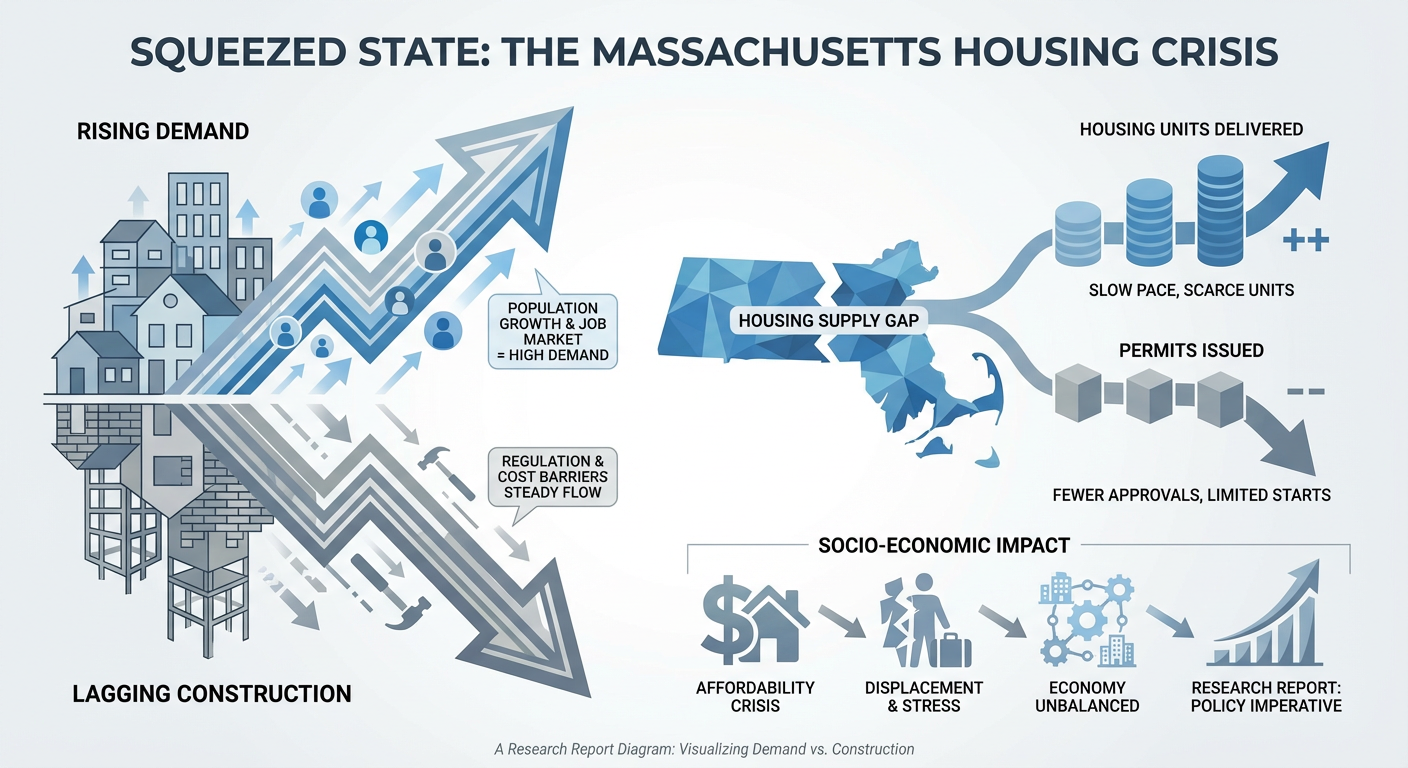
2. Massachusetts Housing Shortfall and Construction Activity
Massachusetts, a state renowned for its innovation economy, prestigious universities, and vibrant cultural scene, finds itself in the throes of a profound housing crisis. This crisis is characterized by a significant and persistent gap between the burgeoning demand for housing and the state’s lagging construction rates. The implications extend far beyond mere shelter, impacting economic competitiveness, social equity, and the overall quality of life for its residents. This section will meticulously examine the various facets of Massachusetts’ housing shortfall, delving into housing unit production, permitting trends, the socio-economic ramifications of the affordability crisis, and the multifaceted challenges confronting the construction industry in its efforts to bridge this critical gap. Understanding these dynamics is paramount for anyone involved in the state’s building industry, including drywall installation professionals, as they directly influence project pipelines, labor availability, and material costs.
2.1 The Persistent Housing Production Gap and Its Socio-Economic Impacts
Massachusetts faces an acute housing shortage that has been decades in the making. State planning estimates project a need for approximately **220,000 new homes by the early 2030s** to adequately meet demand and stabilize the market [1]. This translates to an annual production target of roughly **22,000 units per year** through 2035 [23]. However, historical building activity has consistently fallen short of these ambitious targets. Between 2010 and 2020, the state averaged only **19,000 units per year** [24], a pace that promises to leave Massachusetts tens of thousands of units short of its goal if not substantially accelerated. Recent efforts have shown some progress, with Massachusetts adding an estimated **97,656 net housing units** from April 2020 to July 2025 [19]. Notably, a significant portion of this growth, **71,135 units**, occurred within the Greater Boston area [19], marking the largest five-year expansion of metro Boston’s housing base in decades [19]. This positive trend was bolstered by the state’s 2024 Affordable Homes Act, which, within 18 months of its passage, helped kick-start **90,400 housing units** (either built, under construction, or permitted) [18]. Yet, despite this recent surge, the overall pace of new construction remains “insufficient” to curb high prices and out-migration [4]. A stark illustration of this under-building is found in residential permitting data. In 2024, Massachusetts issued only **14,338 housing permits** [2], equating to merely **201 permits per 100,000 residents** [2]. This figure positions Massachusetts as having the **6th lowest per capita permitting rate nationally**, significantly trailing the U.S. average of **281 permits per 100,000 residents** [2]. To put this into further perspective, neighboring states like New Hampshire and Maine permitted roughly double the units per capita [26], underscoring Massachusetts’ relative slowdown in housing production. This persistent lag in construction compared to demand has profound socio-economic consequences: * **Soaring Housing Costs:** The most immediate effect is the escalation of both rental and home purchase prices. With limited supply and robust demand, Massachusetts consistently ranks among the most expensive housing markets in the nation. The median price of a newly built home in Massachusetts topped **$1 million in 2024** [39]. This makes homeownership unattainable for many and forces a significant portion of income towards housing for renters. * **Out-migration and Talent Retention Challenges:** High housing costs directly contribute to a phenomenon of “out-migration,” particularly among young families seeking more affordable living conditions elsewhere [5]. This exodus poses a serious threat to the state’s economic vitality, as businesses struggle to attract and retain talent when prospective employees cannot find affordable places to live [5]. As a result, Massachusetts’ competitive edge in critical sectors like technology and biopharma is undermined. * **Economic Inequality and Social Stratification:** The housing crisis exacerbates existing economic inequalities. Lower-income households and essential workers are disproportionately affected, often forced into longer commutes or substandard living conditions. This creates a deeply stratified society where access to opportunity is increasingly tied to housing affordability. * **Regional Disparities:** While Greater Boston has seen the lion’s share of recent housing development (71,135 of the 97,656 new units) [19], many suburbs and rural towns have added very few homes. This geographic imbalance concentrates growth—and its associated pressures—in already dense urban areas, while distant communities fail to contribute to overall housing supply. This perpetuates long commutes and limits housing options for a diverse workforce [44]. * **Reduced Disposable Income:** The high burden of housing costs reduces the disposable income of residents, which in turn limits consumer spending on other goods and services. This can dampen local economic growth and make it difficult for other sectors to thrive. In response to these challenges, Massachusetts policymakers have initiated several measures. The previously mentioned Affordable Homes Act and recent zoning reforms, like the MBTA Communities Law (requiring denser housing near transit), aim to accelerate housing production [47]. While these efforts are beginning to “bend the curve” [47], the state must overcome significant regulatory hurdles, including lengthy approval processes, to truly meet its ambitious housing targets. The sheer scale of the housing shortfall demands sustained, historic levels of construction activity, alongside innovative solutions to address underlying cost and labor constraints.
2.2 Construction Workforce Dynamics: Shortages, Wages, and Eroding Practices
The ability of Massachusetts to address its housing shortfall is fundamentally constrained by the state of its construction workforce. While overall construction employment in Massachusetts has grown significantly post-recession, reaching **172,500 workers in 2023** (up from ~138,000 in 2012) [27], and specialized trades saw a **53% growth** over the same period [29], the industry is simultaneously battling a severe labor shortage, an aging workforce, and challenges related to labor practices.
2.2.1 The Critical Labor Shortage and Skyrocketing Wages
The most pressing issue is the acute and widespread scarcity of skilled labor. In June 2024, the construction unemployment rate in Massachusetts plummeted to a mere **2.5%** [8], the lowest June level in over 17 years [8]. This figure essentially represents full employment in a sector that typically experiences higher cyclical unemployment. A national survey in 2024 revealed that **94% of U.S. construction firms** struggled to fill open positions [6], with Massachusetts being no exception. Many firms reported having at least **11 unfilled craft positions** (e.g., carpenters, drywall hangers, plumbers) [33], indicating a chronic deficit in core trades – the very people needed for new drywall installations. This profound imbalance between labor supply and demand has directly driven up wages, making Massachusetts home to some of the highest construction pay in the U.S. By early 2024, the state’s average hourly construction wage reached an unprecedented **$48.90** [9]. This figure far outstrips the national average of approximately $37.70 [9] and represents annual wage increases of around 5% [36]. While beneficial for workers, these escalating labor costs significantly impact project budgets. For drywall contractors, where labor can constitute 40-50% of total costs, these wage hikes either squeeze profit margins or necessitate higher project bids. “Lucey said he has seen project costs come in 25% or 30% higher than he expected a year ago across a variety of housing types,” due in part to labor costs [49]. This contributes to Boston’s reputation as having some of the highest construction costs globally. The immediate consequence of this labor scarcity and high wage environment is project delays. A significant **54% of contractors reported project delays due to workforce shortages** in the past year, making it a more prevalent cause of setbacks than even supply-chain issues [7]. This means that even when materials are available, a lack of skilled installers can halt progress and extend timelines for drywall and other critical trades. Moreover, some subcontractors in the busy Boston market are reportedly turning down new work due to insufficient crews [51], creating a bottleneck for new construction.
2.2.2 Aging Workforce and Talent Pipeline Challenges
A fundamental cause of the current labor crisis is demographic. Massachusetts’ construction labor force is rapidly aging, with approximately **30% of residential construction workers aged 55 or older** as of 2023 [30]. Industry leaders note that the number of workers over 50 has “doubled” in recent years, while the share of young workers under 25 has “dropped dramatically” [10]. This demographic shift portends a significant wave of retirements, with potentially “one in three skilled workers” retiring within the next decade [43]. The lack of new entrants into the trades over recent decades means the talent pipeline is insufficient to replace these retiring workers, let alone meet growing demand. Efforts are underway to address this: unions have expanded apprenticeship programs, and the high wages in Massachusetts construction may attract more individuals to vocational training. Policy reforms aim to address a “missing generation” of skilled workers by promoting construction careers earlier in education.
2.2.3 Reliance on Immigrant Labor and Eroding Practices
Foreign-born workers constitute a crucial segment of Massachusetts’ construction workforce, particularly in certain trades. In 2023, around **21% of construction laborers in the state were not U.S. citizens** [34], which is more than double their 10% share in the overall labor force [34]. This reliance is even higher in specific trades like roofing and masonry, where over **50% of workers are non-citizens** [35]. This makes the industry exceptionally vulnerable to shifts in immigration policy, as strict visa limits or enforcement crackdowns could further exacerbate labor shortages [37]. Compounding these challenges, a worrying trend of “low-road” labor practices has emerged, particularly in residential construction and drywall installation. Research by the UMass Amherst Labor Center in 2024 revealed that some mid-size drywall and framing subcontractors are increasingly using **”labor brokers”** to supply crews rather than hiring employees [14]. These brokers often recruit low-paid, frequently undocumented workers, paying them in cash and circumventing critical labor protections such as payroll taxes and overtime [14]. A notable example occurred at the **North Square Apartments in Amherst** (2018-2019) [71]. A small drywall firm (Combat Drywall) subcontracted the entire installation to an informal broker, leading to widespread **wage theft** and unpaid overtime for migrant workers [14]. This case, described as a “tragedy” by UMass investigators [74], exposed an underground labor system that undercuts ethical contractors and exploits vulnerable workers. Such practices, once marginal, are now reportedly “common in non-union residential projects” [15] in Massachusetts. The Attorney General’s office has increased enforcement against wage theft and misclassification, and there are calls for legislation imposing joint liability on general contractors for subcontractor wage violations. This situation underscores a conflict within the industry: the pressure to build more affordably clashes with the imperative for fair labor standards and a sustainable workforce pipeline.
2.3 Cost Volatility: Materials, Financing, and Project Viability
Beyond labor, the Massachusetts construction landscape is characterized by significant cost volatility spanning materials, financing, and regulatory compliance. These factors collectively squeeze project viability, leading to delays, cancellations, and ultimately contributing to the housing shortfall.
2.3.1 Material Price Swings and Supply Chain Disruptions
The period from 2020 to 2022 witnessed dramatic and unpredictable spikes in building material prices, heavily impacting drywall installations. The Producer Price Index (PPI) for **gypsum building materials (drywall) surged an astonishing 44.6%** over these two years [16], among the sharpest increases on record. This volatility made accurate budgeting exceptionally challenging for contractors. While 2023 brought some reprieve, with a slight **2.0% year-over-year decrease** in gypsum prices [17], prices remain roughly **40% higher than pre-pandemic (2019) levels** [38]. Other critical materials also saw significant cost increases: * **Softwood Lumber:** Essential for framing behind drywall, lumber prices fluctuated wildly, ending 2023 still **22.7% above 2019 levels** despite a 33% two-year decline from its peak [40]. * **Ready-Mix Concrete:** Prices jumped **11.2% in 2023 alone** [41]. * **Steel, Insulation, Wiring:** These and other components saw double-digit percentage increases since 2020. These input cost surges drove overall construction cost inflation for residential projects by an average of **17% per year in 2021-2022** [42], far outstripping general inflation rates. Although material costs stabilized in 2023 (up 1-2% on average) [42], the cumulative increases mean that current projects are still priced significantly higher than pre-pandemic equivalents. Builders have passed some of these costs onto consumers, contributing to the record median price of newly built homes in Massachusetts. This directly affects the affordability equation, making it harder for new projects to “pencil out” economically.
2.3.2 Tariffs and Trade Policy Impacts
Trade policies, particularly tariffs, have added another layer of cost. Duties on imported materials such as Canadian lumber (up to 39% [12]) and steel (25% [12]) are estimated to add an additional **$7,500 to $10,000** to the cost of a typical new single-family home [11]. With approximately **7.3% of all U.S. homebuilding materials being imported** [12], these tariffs have a tangible multiplier effect on project budgets, especially in high-cost regions like Massachusetts. Developers are either forced to absorb these costs, eroding profit margins, or pass them on to homebuyers, further exacerbating affordability issues. This tariff-driven volatility also complicates procurement strategies, with some builders resorting to stockpiling materials to hedge against future price increases [45].
2.3.3 Rising Interest Rates and Project Cancellations
The rapid acceleration of interest rates since 2022 represents a significant headwind for construction. Higher borrowing costs directly increase the financial burden on developers through more expensive construction loans and decrease buyer demand due to higher mortgage rates. In Massachusetts, this has rendered many economically marginal projects, particularly high-density housing ventures with tight profit margins, financially unfeasible. A prominent example is the massive **Suffolk Downs redevelopment in East Boston**, initially planned for 10,000 housing units and a total budget exceeding $9.6 billion [13]. In mid-2023, facing escalating interest rates and construction costs, developers (HYM Investment Group) announced a significant pause, with only **475 units** proceeding as scheduled [13]. The majority of the project’s future phases were put on indefinite hold pending more favorable financing conditions [67]. Similarly, a planned **270,000 sq. ft. Pfizer research facility in Everett** was scrapped in 2023 due to viability concerns [13]. These high-profile cancellations and delays underscore how sensitive project pipelines are to capital market conditions, directly impacting current and future drywall installation volumes. Many mid-sized developments across the state have also quietly pushed back their completion dates or scaled down their ambition. Construction project abandonments nationally saw an **11% year-over-year increase by mid-2023** [46], with nearly **30% of U.S. projects experiencing significant delays or indefinite holds** in late 2023 [46]. These delays translate into higher overhead costs for contractors, deferred revenue for owners, and increased risk for all stakeholders. Lenders are demanding larger contingency buffers, and contractors are increasingly wary of fixed-price contracts in such an unpredictable environment.
2.4 Innovations and Adaptations to Overcome Challenges
Despite significant headwinds, the Massachusetts construction industry is demonstrating resilience and an increasing willingness to adopt innovative strategies to address labor shortages, cost pressures, and accelerate construction.
2.4.1 Rise of Modular and Prefabricated Construction
Facing the dual challenges of labor scarcity and the urgent need for faster development, **off-site construction techniques** are gaining traction. Modular construction, where sections of buildings or entire units are manufactured in a factory before being transported and assembled on-site, offers compelling advantages. While still nascent in Massachusetts – representing only about **2% of new construction** [8] – interest is clearly growing, particularly for affordable housing, hotels, and student residences. The benefits of modular construction are numerous: * **Speed:** Factory-controlled environments eliminate weather delays and allow for parallel construction (site work and module fabrication happening concurrently). A notable example is the **West Swanzey Apartments in New Hampshire**, where an 84-unit affordable housing complex went from a foundation start in February to **80% completion in just 2.5 months** by May 2023 [8]. This accelerated timeline is virtually impossible with traditional stick-built methods. * **Labor Efficiency:** Modular factories can leverage assembly-line processes and automation, requiring fewer total on-site labor hours. This directly addresses the skilled labor shortage by shifting some work to a more controlled, less labor-intensive setting. * **Cost Predictability:** Factory production can lead to more predictable costs as it reduces the impact of on-site labor inefficiencies and unpredictable weather. * **Waste Reduction:** Factory settings often yield less material waste compared to typical construction sites [14], which is particularly relevant in Massachusetts with its strict waste bans [63]. Beyond full modular construction, **panelized methods** are also gaining favor. Prefabricated wall panels, complete with studs and sometimes insulation or sheathing, can reduce on-site framing labor by an estimated **71%** for a typical home [20]. For drywall installers, this could evolve into **pre-rocked wall panels** – sections of drywall factory-attached to the framing, ready for taping and finishing upon arrival. This approach reduces time spent on scaffolding and improves overall precision. The CEO of Avanru Capital, the developer behind the successful Swanzey project, is planning a **$60 million modular factory in New Hampshire** [60], indicating a growing regional commitment to off-site construction.
2.4.2 Technological Integration on Job Sites
Traditional drywall installation is simultaneously benefiting from technological advancements aimed at improving productivity and safety. Contractors are increasingly adopting: * **Automatic Taping and Finishing Tools:** These tools significantly speed up the application of joint compound and mud, improving efficiency and finish quality. * **Laser-Guided Layout Systems:** For precise framing layout, reducing errors and saving time. * **Mobile Elevating Work Platforms (MEWPs) and Panel Lifts:** These mitigate the physical strain of lifting heavy drywall sheets, addressing safety concerns and extending the working careers of an aging workforce. * **Building Information Modeling (BIM):** Digital modeling helps identify conflicts and optimize workflows before construction begins, allowing drywall crews to work more efficiently and reduce costly rework. Massachusetts’ tech-savvy commercial construction sector has been an early adopter of such productivity-enhancing technologies.
2.4.3 Regulatory and Environmental Adaptations
Massachusetts’ regulatory environment is also driving change. The state enforces strict **waste bans** since 2006, prohibiting materials like wood, metal, and “clean” gypsum drywall off-cuts from landfills [21]. This necessitates careful waste sorting and recycling on job sites, adding a layer of management but also incentivizing more efficient material use. With disposal costs around $100 per ton [22], minimizing waste becomes a financial imperative. This regulatory push aligns with the lean principles of modular construction, which inherently generate less waste. Furthermore, new energy codes and upcoming net-zero building mandates mean that drywall installations will increasingly consider environmental factors. This includes specifying materials with lower embodied carbon, using lightweight drywall products, and potentially integrating alternative wall systems like MgO boards or hemp-based panels for niche green projects. While challenges remain, including concerns about quality control for modular builds and the initial investment required for new technologies, the imperative to build “more with less” is driving significant evolution in Massachusetts’ construction practices. The state’s ability to “catch up on this trend” [62] will heavily influence its success in overcoming the housing shortfall.
2.5 Significant Construction Projects Illustrating Market Dynamics
The Massachusetts construction market, including drywall installation, is shaped by a mix of residential development aimed at alleviating the housing crisis and robust activity in key commercial sectors.
2.5.1 Residential Endeavors and Their Challenges
While the state strives to increase housing unit production, large-scale residential projects often face significant hurdles. The **Suffolk Downs Redevelopment in East Boston** serves as a stark reminder of these challenges. Planned as a massive 10,000-unit mixed-use development, it was put on hold in June 2023 due to rising interest rates and construction costs [13]. Only 475 initially planned units proceeded, delaying thousands of potential drywall installation jobs. This instance highlights how even projects with clear market demand can be derailed by unfavorable economic conditions, serving as a critical lesson for developers and contractors to factor in market volatility and flexible phasing strategies. Conversely, the state’s efforts to kick-start housing, such as the Affordable Homes Act that helped initiate 90,400 housing units within 18 months [18], indicate a political will to overcome these obstacles. Small-scale modular housing projects, like the **West Swanzey Apartments (New Hampshire)** [8], offer a model for quicker, more efficient housing delivery that could be scaled up in Massachusetts. These projects demonstrate that while large, traditional residential developments face headwinds, agile and innovative approaches can still deliver much-needed units.
2.5.2 Resilient Commercial Sectors: Biotech and Industrial
In contrast to the fragility of some residential projects, specific commercial sectors, particularly life sciences and industrial facilities, continue to drive significant construction activity in Massachusetts. New England currently has **$23.3 billion in industrial projects underway** [1], with Massachusetts leading in pharma/biotech construction with an estimated **$11.7 billion in active projects** [12]. A prime example is **Takeda’s 16-story, 600,000 sq. ft. R&D center in Cambridge**, expected to complete in 2026 [12]. This complex facility demands extensive and specialized drywall work, including double-studded and double-layered walls for sound damping in labs, fire-rated assemblies, and precise installations to meet stringent cleanroom and vibration criteria. Such projects provide substantial, high-value work for drywall professionals and indicate robust, long-term confidence in the region’s biotech dominance. The continued strength in these sectors shows that overall construction activity is not monolithic. While residential builders might tread cautiously, specialized areas like biotech, infrastructure (new or upgraded utilities, transportation), and institutional construction (universities, hospitals) often proceed due to strategic importance, strong funding, and less sensitivity to short-term market fluctuations. Drywall contractors who have diversified their expertise to include specialized applications required by labs, healthcare facilities, or high-performance office spaces are better positioned to secure a consistent workflow, even if the residential market experiences slowdowns. The coming section will explore the specific trends in drywall materials and installation techniques, further detailing how these market dynamics impact the day-to-day operations and strategic decisions of drywall companies in the Commonwealth.
**Table: Massachusetts Housing & Construction Key Statistics Overview (2020-2025)** | Metric | Data Point (Citation) | Significance | | :—————————————— | :——————————————————————————————————————————— | :————————————————————————————————————————————————————————————————————————————- | | **Housing Units Needed (by early 2030s)** | 220,000 new homes [1] | Represents the scale of the housing shortfall, requiring ~22,000 units/year for stabilization. | | **Housing Permits Issued (2024)** | 14,338 (201/100,000 residents) [2] | 6th lowest per capita nationally (US avg. 281/100k); highlights lagging production despite demand. | | **Net Housing Units Added (2020-Mid 2025)** | 97,656 statewide; 71,135 in Greater Boston [3] | Largest 5-year expansion in decades, but still insufficient to curb high prices and out-migration. | | **MA Construction Unemployment (June 2024)**| 2.5% [8] | Lowest June rate in 17+ years; indicates severe labor scarcity across all trades. | | **MA Average Hourly Wages (early 2024)** | ~$49 [9] | Highest in the nation vs. US average ~$38; reflects tight labor market but increases project costs significantly. | | **Firms Struggling to Hire (2024)** | 94% of U.S. construction firms [6] | Widespread difficulty filling positions, including drywall installers, leading to project delays. | | **Project Delays due to Shortages (2024)** | 54% of contractors [7] | Workforce scarcity is a primary cause of project setbacks, more so than supply chain issues. | | **Drywall Cost Increase (2020-2022)** | ~44.6% (PPI for gypsum building materials) [16] | Volatile material input costs significantly impacted project budgets; eased in 2023 but remains higher than pre-pandemic. | | **Construction Workforce 55+ (2023)** | 30% of residential workers [30] | Aging workforce indicates significant retirement wave, requiring aggressive recruitment and training of new entrants. | | **Modular Construction Share (MA)** | ~2% of new builds [8] | Low adoption rate, but growing interest due to potential for faster delivery and labor efficiency. | | **Tariffs on New Home Costs** | Estimated $7,500 – $10,000 extra per home (due to lumber, steel tariffs) [11] | Adds to overall project costs, impacting affordability and developer margins. | | **Life Sciences Construction in MA** | ~$11.7 billion in active projects [12] | Strong, resilient sector driving demand for specialized construction, including complex drywall installations, even during residential slowdowns. |
Next, we will transition to Section 3: “Drywall Installation Demand & Key Market Segments,” where we will analyze the specific types of projects and sectors driving demand for drywall services in Massachusetts, including residential, commercial, and institutional markets.
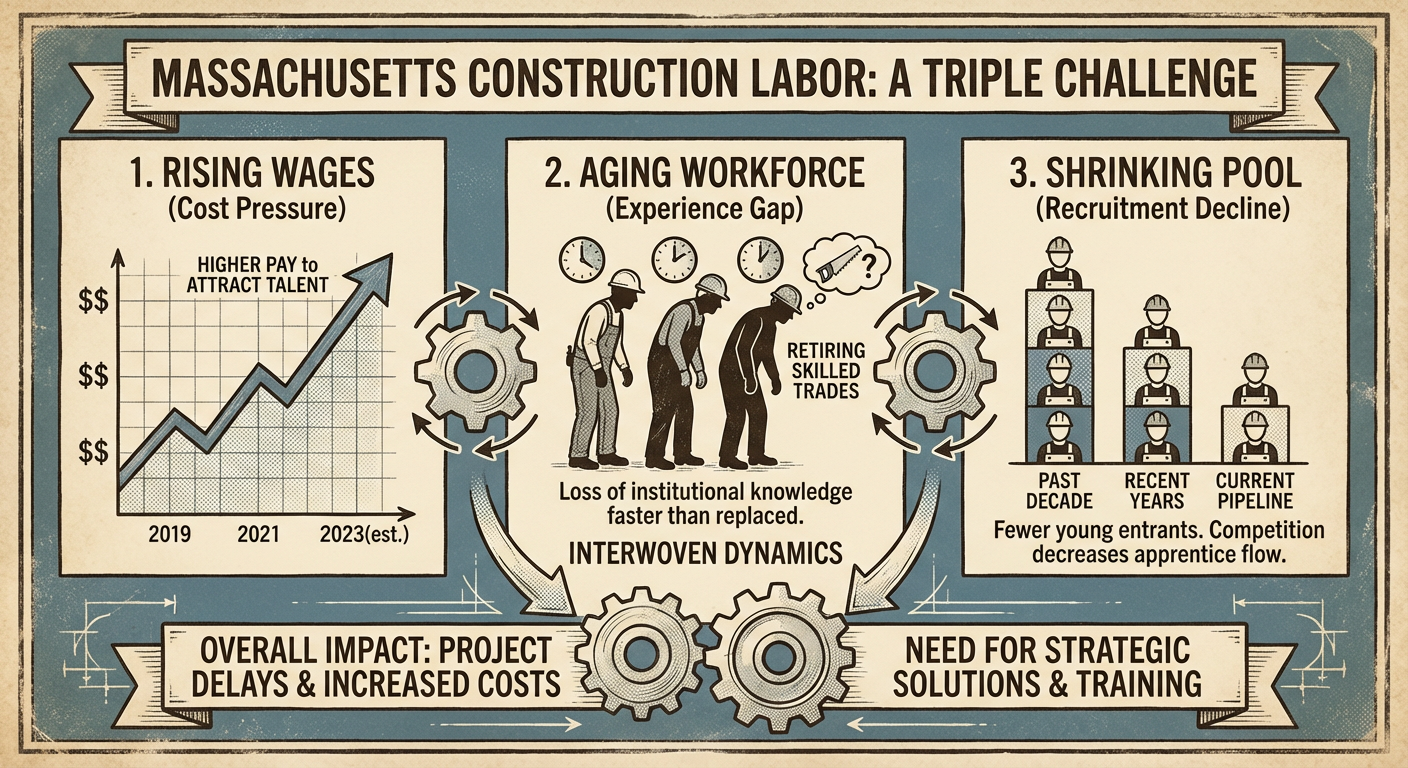
3. Labor Market Dynamics and Workforce Challenges
The ambitious goals set by Massachusetts for new construction, particularly in the housing sector, are inextricably linked to the availability and capability of its construction workforce. While the state aims to address a significant housing shortfall and foster growth in key sectors like life sciences, an acute labor shortage presents a formidable and multi-faceted challenge. This section delves into the intricate dynamics of the labor market for new drywall installation projects in Massachusetts, examining critical factors such as persistently low unemployment rates, the resulting surge in wages for skilled trades, the demographic shift characterized by an aging workforce, and the pivotal, albeit sometimes controversial, role of immigrant labor. These elements collectively shape the operational landscape for drywall contractors and developers, influencing project timelines, budgets, and overall feasibility.
3.1. The Pervasive Labor Shortage and its Impact on Project Delivery
Massachusetts’ construction industry is currently grappling with an unprecedented labor crunch, a situation that directly impedes the state’s capacity to meet its aggressive building targets. This shortage is not a new phenomenon, but it has intensified to critical levels, profoundly affecting every facet of construction, including specialized trades like drywall installation. The numbers paint a stark picture: in June 2024, the unemployment rate in the Massachusetts construction sector plummeted to an exceptionally low 2.5%, marking the lowest June rate recorded in over 17 years [7]. Such a low unemployment figure signifies virtually full employment, indicating that nearly every available skilled worker is already engaged in a project. This leaves little room for growth or for easily backfilling positions, making it extraordinarily difficult for firms to expand their capacities or take on new large-scale projects.
The ramifications of this tight labor market are widespread. A national survey conducted in 2024 revealed that a staggering 94% of U.S. construction firms reported having open positions that they struggled to fill [6]. Massachusetts is no exception to this trend; local contractors consistently face chronic openings for critical trades such as drywall installers, carpenters, and electricians. Specifically, 28% of contractors reported having at least 11 unfilled craft positions on their teams as of mid-2024 [6], illustrating a significant deficit in core site labor. This lack of available and qualified personnel translates directly into pervasive project delays. A 2024 industry survey found that 54% of contractors in Massachusetts explicitly attributed project delays to workforce shortages [6]. This figure is particularly telling, as labor scarcity emerged as a more significant cause of construction setbacks than even supply-chain disruptions or material availability, which have dominated industry concerns in recent years. The absence of sufficient skilled workers means that even when materials are readily available, projects can grind to a halt, extending timelines and escalating costs. An example given by Boston-area subcontractors is the need to turn down new work simply because they lack the necessary crews to reliably staff additional projects [46]. This capacity constraint acts as an effective ceiling on the overall volume of construction that can be undertaken simultaneously within the state, directly hindering efforts to address the widespread housing shortfall and commercial development needs.
3.2. Escalating Wages and the Cost Implications
The fundamental economic principle of supply and demand has driven a substantial increase in wages within the Massachusetts construction sector. With a scarcity of skilled labor and high demand for building activity, companies are forced to offer increasingly competitive compensation packages to attract and retain workers. As of early 2024, the average hourly wage for construction workers in Massachusetts reached approximately $48.90 [3]. This figure is not only the highest in the nation—significantly exceeding the U.S. average of roughly $37.70 per hour—but it also represents a consistent upward trend, with wages rising an estimated 5% year-over-year [3]. This rapid wage escalation is a direct consequence of the tight labor market, where competition for talent is fierce among contractors, especially for specialized trades like drywall installation.
For drywall installation contractors, labor represents a substantial portion of overall project costs, often ranging from 40% to 50%. Consequently, sustained wage increases exert immense pressure on profit margins if not accurately forecasted and incorporated into bids. While higher wages are beneficial for workers, drawing more individuals into the trades and compensating them fairly for demanding work, they invariably contribute to the overall increase in project costs. This is a critical factor in why construction in Boston, in particular, is often cited as among the most expensive globally, rivaling cities like New York or San Francisco. The combination of high labor costs, coupled with expensive materials and financing, renders many projects, especially those with tight margins or those aiming for affordability, financially challenging. This dynamic forces developers and contractors to continually re-evaluate the viability of new ventures, sometimes leading to project delays or cancellations, further exacerbating the state’s housing and infrastructure challenges.
3.3. The Aging Workforce: A Demographic Time Bomb
Beneath the surface of immediate labor shortages lies a deeper, more systemic issue: the rapid aging of the Massachusetts construction workforce. This demographic shift portends a significant outflow of experienced talent in the coming decade, further compounding existing labor challenges. As of 2023, approximately 30% of residential construction workers in Massachusetts were 55 years or older [4]. Industry leaders echo this sentiment, observing that the number of workers over 50 has effectively doubled in recent years, while the proportion of younger workers (under 25) has dramatically declined [7].
This demographic imbalance signifies a looming crisis: within the next 5 to 10 years, one in three skilled tradespeople in Massachusetts could retire. The rate of new entrants into the construction trades is currently insufficient to replace these outgoing workers, leading to concerns about the sustainability of the current construction pace, let alone the ability to scale up to meet future demand [4]. The industry has struggled for decades to attract younger generations, partly due to societal pressures that often steer students towards four-year college degrees rather than vocational trades. This has resulted in a “missing generation” of workers in their 20s and 30s who would typically be gaining experience and moving into leadership roles. The absence of these mid-career professionals creates a significant gap in the talent pipeline for supervisory positions, specialized skills, and mentorship of new apprentices. Contractors are increasingly worried about where the next generation of highly skilled individuals, including drywall installers, carpenters, and electricians, will come from [7]. Addressing this issue requires a concerted effort to promote vocational training, apprenticeship programs, and improve the perception of construction careers as stable, well-paying, and technologically advanced.
| Age Group | Share of Residential Construction Workers | Implication |
|---|---|---|
| 55 and Older | 30%[4] | Significant retirement wave expected in next decade. |
| Under 25 | Declining share[7] | Insufficient new entrants to replace retirees. |
| Foreign-born (non-citizen) | 21% (general construction)[7], >50% (some trades)[7] | Critical to labor supply; vulnerable to immigration policy changes. |
3.4. The Critical Role of Immigrant Labor and Its Vulnerabilities
Immigrant labor constitutes a vital, and often indispensable, component of Massachusetts’ construction workforce, playing a crucial role in mitigating the severity of the ongoing labor shortage. In 2023, non-U.S. citizens accounted for approximately 21% of all construction laborers in the state [7], a proportion more than double their share in the overall labor force. For certain specialized trades, this reliance is even more pronounced: over 50% of roofers, masons, and hazardous materials removal workers in Massachusetts are non-citizens, many of whom are believed to be recent immigrants [7]. These workers fill essential roles, particularly in labor-intensive segments of construction, including many aspects of drywall installation, where physical strength and a willingness to perform challenging tasks are paramount.
However, this reliance on immigrant labor introduces a significant vulnerability: the construction industry’s labor supply becomes highly susceptible to shifts in federal immigration policy. Restrictive visa limits or intensified crackdowns on undocumented workers could severely curtail the available labor pool, as evidenced in other regions facing similar challenges [7]. Conversely, supportive immigration policies or pathways to legal employment for foreign-born workers could provide a much-needed influx of talent, helping to alleviate the acute skilled worker gap. The demographics of the construction sector in Massachusetts underscore the need for a pragmatic and stable approach to immigration that recognizes its foundational contribution to the state’s economic and infrastructural development.
This dynamic was brought into sharp focus by a research report from the UMass Amherst Labor Center in 2024, which exposed a disturbing “new business model” prevalent in some residential construction projects. To circumvent high wages and labor costs, certain mid-size drywall and framing subcontractors have reportedly resorted to employing “labor brokers” [1]. These brokers supply crews, often consisting of low-paid, undocumented workers, bypassing traditional payroll taxes, overtime regulations, and benefits. The case of the North Square Apartments in Amherst in 2018-2019 serves as a stark example: a drywall subcontractor with only two official employees ostensibly took on a large project and then subcontracted the actual installation work to a broker. This resulted in dozens of migrant workers experiencing wage theft and exploitation [1]. Such “low-road” practices, once marginal, are now reportedly common in non-union residential projects, undermining ethical contractors who adhere to fair labor laws and standards. This trend not only exploits vulnerable workers but also creates an uneven playing field, jeopardizing the integrity and long-term health of the construction labor market. The revelations have prompted increased scrutiny from regulators and unions, who are advocating for stricter enforcement of labor laws and reforms like joint liability laws that hold general contractors responsible for subcontractor wage theft [1].
3.5. Conclusion and Transition
The labor market for drywall installation and the broader construction industry in Massachusetts is characterized by significant stress. Record-low unemployment, rapidly rising wages, an aging workforce facing imminent retirement, and a critical reliance on immigrant labor—which itself is subject to unique vulnerabilities—collectively create a complex and challenging environment. These factors constrain the industry’s ability to respond effectively to the state’s demand for new housing and commercial development. The pressure to complete projects often leads to undesirable outcomes, from project delays and increased costs to, in some unfortunate instances, the exploitation of vulnerable labor. As Massachusetts strives to build hundreds of thousands of new homes and develop its critical life sciences infrastructure, addressing these multifaceted workforce challenges remains paramount. Without a strategic approach to recruitment, training, retention, and maintaining ethical labor practices, the state’s ambitious construction goals will remain out of reach.
The next section, “Materials and Cost Pressures,” will further explore how rising material costs, inflationary trends, and tariffs compound these labor-related challenges, collectively shaping the financial viability and operational realities of new drywall installation projects in Massachusetts.
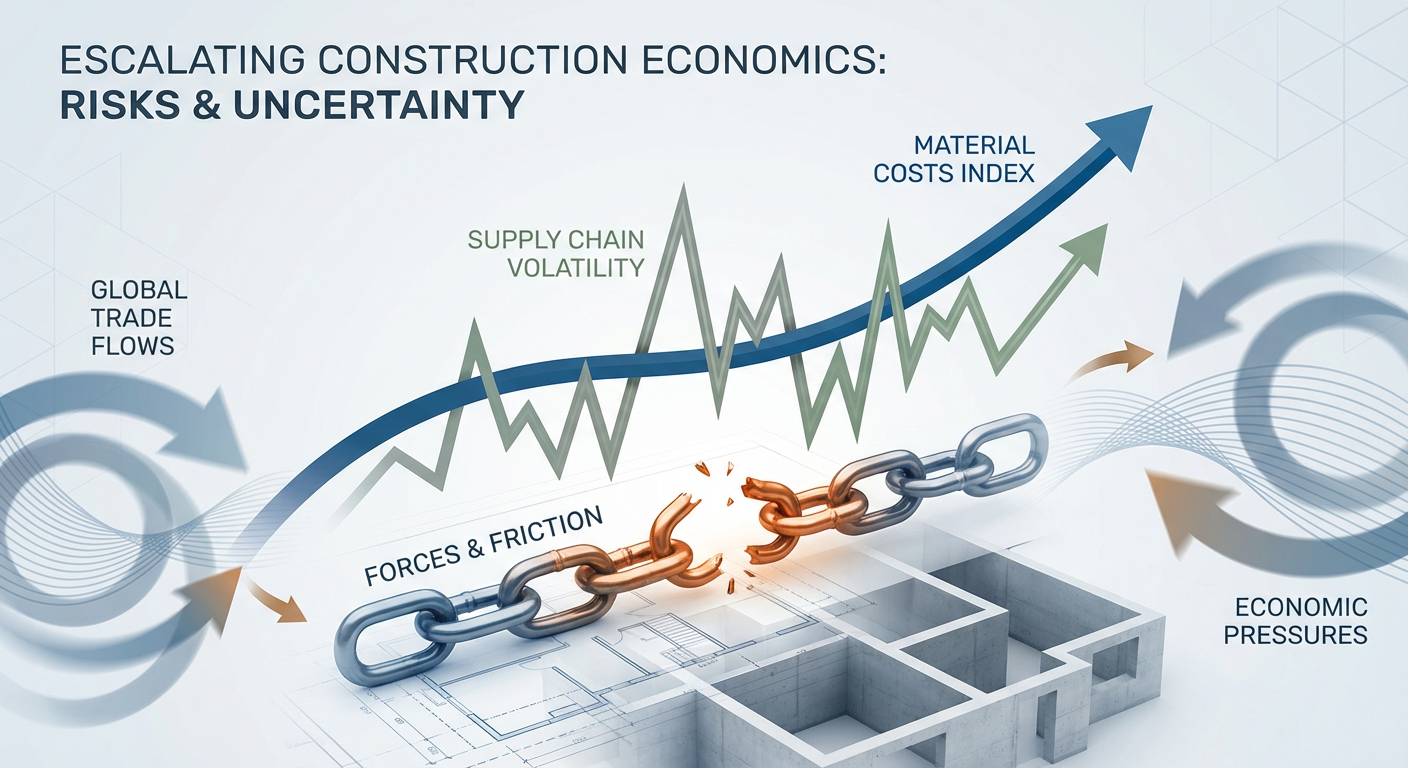
4. Material Costs and Supply Chain Volatility
The landscape for new drywall installation projects in Massachusetts has been dramatically reshaped in recent years by unprecedented material cost fluctuations, broader construction material inflation, and the pervasive impact of international trade tariffs. These factors have created a complex and often volatile environment, squeezing developer margins, delaying project timelines, and ultimately contributing to the elevated cost of new construction in the state. While some material prices have stabilized from their pandemic-era peaks, the underlying economic challenges remain significant, demanding innovative strategies and resilient supply chain management from contractors and developers alike.
4.1 The Gypsum Drywall Rollercoaster: Price Surges and Subsequent Stabilization
Few materials experienced such dramatic price volatility during the recent construction boom as gypsum wallboard, the core material for drywall installations. Often considered a staple commodity, its cost became a significant unpredictable variable for contractors. The Producer Price Index (PPI) for gypsum building materials, a key indicator for this sector, vividly illustrates this market turbulence. From 2020 through 2022, the cost of gypsum wallboard and related materials experienced an extraordinary jump, climbing a staggering 44.6% during this two-year period alone[10]. This increase represents one of the sharpest two-year accelerations on record for such a fundamental building input. For drywall contractors, this meant that bids submitted months earlier could be dramatically undercut by rising material costs mid-project, thereby severely eroding profit margins or leading to difficult renegotiations with general contractors and developers.
The impact of this surge can be understood through practical examples. A Boston-area builder, for instance, reported that the standard drywall sheet that might have cost approximately $10 in 2019, consistently escalated to over $14 per sheet at the peak of the material inflation[42]. Considering that even a moderately sized residential project or a commercial fit-out can require thousands of drywall sheets, this seemingly minor per-unit increase translated into substantial material cost overruns, often adding tens of thousands of dollars to a project’s budget. The psychological effect of such unpredictability was also profound; it complicated procurement strategies, incentivized hoarding by some larger players, and intensified competition for available stock.
Fortunately, 2023 brought some much-needed relief and a shift towards stabilization. The PPI for gypsum prices recorded a slight 2.0% year-over-year decrease[10]. This modest decline signaled a cooling market as supply chains gradually caught up with demand, and the frenetic pace of construction eased somewhat in certain sectors. However, despite this recent stabilization, it is critical to note that current drywall prices remain approximately 40% higher than their pre-pandemic levels of 2019. This persistent elevation means that while the acute inflationary pressure seen in 2020-2022 has abated, the new baseline for material costs is significantly higher. This new reality continues to influence overall project viability and necessitates careful cost management and accurate bidding for drywall installation projects across Massachusetts.
4.2 Broader Construction Material Inflation: A Ripple Effect
The trajectory of gypsum wallboard prices was not an isolated phenomenon but rather a reflection of broader inflationary trends across the entire construction materials sector. This widespread inflation created a challenging environment for new drywall installation projects, as the costs of ancillary materials and the structural components integral to framing the drywall also soared.
Consider the volatility in lumber prices, a critical material for the framing that typically supports drywall. After an unprecedented spike, softwood lumber prices, though having experienced a 33% two-year decline, still ended 2023 approximately 22.7% above their 2019 levels[10]. This enduring higher cost for lumber directly impacts the structural budget of a project before a single sheet of drywall is even considered. Beyond lumber, other fundamental inputs also saw substantial increases:
- Ready-mix concrete prices: Jumped 11.2% in 2023 alone[10].
- Steel, insulation, wiring, and fixtures: All experienced double-digit percentage increases since 2020[42].
These collective input cost surges fueled an aggregate construction cost inflation of approximately 17% per year in both 2021 and 2022 for residential projects[10]. This rate far outstripped general inflation during the same period, underscoring the unique pressures faced by the construction industry. While 2023 offered some respite, with average material price increases dropping to a more manageable 1-2%[10], many projects initiated under earlier contracts were still absorbing higher-cost inventory. Projects with longer procurement cycles, such as large commercial or multi-family developments, were particularly vulnerable to these multi-year escalations, as materials bought at peak prices continued to be installed well after market prices began to recede.
The economic impact is stark: builders, faced with these rising costs, have been forced to pass a significant portion onto the end-users. In Massachusetts, this has contributed to the alarming statistic that the median price of a newly built home topped $1 million in 2024[42]. This rising cost base for new construction directly impacts housing affordability and developer margins. Developers operate within a delicate balance of land acquisition, construction costs, and anticipated sale or rental prices. When construction costs rise sharply, without a proportional increase in market demand or a commensurate decrease in other project components, projects can quickly become financially unviable, forcing developers to either scale back, delay, or outright cancel projects. This directly reduces the volume of new drywall installation opportunities in the market.
Table 4.1: Material Price Index Changes (2020-2023)
| Material Category | % Change (2020-2022) | % Change (2023 Year-over-Year) | Contextual Impact |
|---|---|---|---|
| Gypsum Wallboard | +44.6%[10] | -2.0%[10] | Significant direct cost to drywall projects; now ~40% above pre-pandemic levels. |
| Softwood Lumber | Spiked then dropped | Down 33% (2-year decline)[10] | Still 22.7% above 2019 levels; impacts framing and structural costs. |
| Ready-Mix Concrete | N/A | +11.2%[10] | Impacts foundations and structural elements, driving overall project costs. |
| Other Building Materials (Steel, Insulation, Wiring, Fixtures) | Double-digit % increases (since 2020)[42] | Varies (avg 1-2% in 2023)[10] | Contributed to ~17% annual inflation for residential construction in 2021-2022. |
4.3 The Persistent Shadow of Tariffs on Project Costs
Beyond natural market forces and supply chain disruptions, government trade policies in the form of tariffs have compounded the challenge of managing material costs for new drywall installation projects in Massachusetts. These tariffs, imposed on various imported construction materials, act as an additional tax on builders, further escalating project expenses and narrowing already tight developer margins.
The impact of these tariffs is significant and widespread. Estimates suggest that duties on imported lumber, steel, aluminum, and other goods have collectively added between $7,500 and $10,000 to the cost of a typical new single-family home as of 2025[11]. This figure, often considered a hidden cost, directly contributes to the overall affordability crisis in Massachusetts.
Specific examples of tariffs affecting drywall projects include:
- Canadian Lumber: The U.S. has imposed duties of up to 39.5% on Canadian softwood lumber[11]. Given that most drywall installations rely on precisely sized lumber or metal studs for framing, the increased cost of this essential structural component directly inflates the overall cost of a wall or ceiling assembly. Even if a project uses metal studs, the increased cost of lumber often drives up the price of alternative framing materials due to market dynamics.
- Steel: Tariffs of 25% on imported steel[11] directly affect projects utilizing steel studs for framing, often preferred in commercial or high-rise residential buildings for fire resistance and structural integrity. These tariffs also impact the cost of other steel-intensive building components, such as rebar, HVAC systems, and other fixtures, further escalating cumulative project expenses.
The significance of these tariffs is amplified by the fact that approximately 7.3% of all U.S. homebuilding materials are imported[11]. While this percentage might seem modest, it represents critical inputs across various trades, creating a multiplier effect throughout the construction process. For Massachusetts, a state already grappling with some of the highest construction costs nationally, these import tariffs impose an additional burden, making it even more challenging to deliver new housing and commercial spaces at affordable price points.
The implications for developers are severe. Higher material costs, driven partly by tariffs, can push marginal projects—especially those with tight profit margins like affordable housing developments—into financial infeasibility. This leads to project delays or cancellations, directly impacting the housing supply that Massachusetts desperately needs. The volatility caused by these trade policies also complicates procurement and bidding. Some builders have attempted to hedge against future price jumps by pre-purchasing and stockpiling materials[11]. However, this strategy requires significant upfront capital and storage capacity, options not available to all firms, particularly smaller contractors or those working solely on a just-in-time basis.
In the long run, the persistence of these tariffs contributes to sustained elevated costs, which are ultimately borne by either the developers (through reduced profit margins) or the consumers (through higher purchase prices or rents). For the drywall installation sector, this means that even as labor costs soar, the underlying material costs continue to be influenced by factors beyond domestic supply and demand, adding another layer of complexity and risk to project planning and execution.
4.4 Economic Headwinds and Project Stalls
The cumulative effects of escalating material costs, high labor expenses, and rising interest rates have created strong economic headwinds, leading numerous developers in Massachusetts to pause or cancel major projects. This has had a direct and significant impact on the demand for new drywall installation services.
By mid-2023, the national trend showed a concerning picture: construction project abandonments were up 11% year-over-year[12], and nearly 30% of U.S. projects faced significant delays or indefinite holds in late 2023[12]. Massachusetts, despite its strong underlying demand for housing and commercial space, has not been immune to this trend. Developers have halted or delayed a wide range of proposals, from downtown high-rises to suburban subdivisions, primarily due to soaring land costs, increased interest rates, and construction cost overruns[12].
A prime example of these economic challenges is the massive Suffolk Downs redevelopment in East Boston. Originally envisioned as a colossal 10,000-unit housing development with a projected budget exceeding $9.6 billion, the project hit the brakes in mid-2023[12]. Faced with sharply rising interest rates, which increased the cost of development loans, and persistent construction cost inflation, the financial viability of later phases became questionable. As a result, only 475 units were initially set to open, with much of the planned construction delayed indefinitely until financing conditions become more favorable[12]. This incident highlights how critical capital market conditions are to project timelines; even a project with immense demand and public support can be derailed if the financial numbers do not “pencil out.” For drywall contractors, the Suffolk Downs pause meant a significant loss or delay of large-scale installation work previously in their pipeline.
The impact extended beyond residential projects. Even the booming life-sciences sector, often seen as recession-proof in Massachusetts, experienced setbacks. Pfizer, for instance, scrapped plans for a new 270,000 sq. ft. biologics facility in Everett in 2023 due to viability concerns[12]. This cancellation, alongside other similar decisions by major tech and biopharma companies, underscores that even well-funded corporations are scrutinizing capital expenditures more closely in a high-interest-rate environment. Such large-scale commercial developments typically represent significant opportunities for specialized drywall installations, given the stringent requirements for cleanrooms, soundproofing, and fire protection within lab facilities. Their cancellation directly reduces demand for these high-value services.
These disruptions signal a more conservative approach among developers and lenders. Financial institutions are demanding larger contingency buffers and stricter debt service coverage ratios, making it harder for projects to secure funding. For drywall contractors, this means a potentially leaner pipeline of new projects and intensified competition for those that do move forward. The overall effect is a chilling one for the construction market, emphasizing that while demand for new units remains high in Massachusetts, the economic feasibility of delivering those units is severely constrained by current market conditions. Project developers and construction firms must now adopt more agile strategies, including adapting project scope and phases, to navigate this complex economic environment and maintain forward momentum on new builds.
4.5 Adapting to Volatility: Strategies for Drywall Contractors
In response to the persistent volatility in material costs and the broader economic headwinds, drywall installation contractors in Massachusetts are compelled to adopt more sophisticated and proactive strategies. The traditional methods of bidding and procurement are no longer sufficient to mitigate the risks associated with rapid price changes and supply chain disruptions.
4.5.1 Enhanced Risk Management in Bidding and Contracts
One of the most critical adaptations involves improving risk management during the bidding process and in contractual agreements. Contractors are increasingly requesting and negotiating for:
- Price Escalation Clauses: These clauses allow for adjustments to the contract price if material costs exceed a certain predefined threshold. This mechanism shifts some of the risk of unforeseen price hikes from the subcontractor to the general contractor or owner, making bids more manageable and protecting profit margins. Previously uncommon, these clauses are becoming standard practice in volatile markets[42].
- Shorter Bid Validity Periods: To account for rapid price changes, contractors are reducing the duration for which their bids are considered valid, sometimes to as little as 30 or even 15 days, to minimize exposure to sudden material cost increases.
- Detailed Material Specifications: Bids are increasingly detailed, specifying exact product types and quantities to reduce ambiguity and ensure that unexpected substitutions or upgrades late in the project do not disproportionately impact costs.
4.5.2 Proactive Procurement and Supply Chain Management
Effective procurement has become a strategic advantage. Drywall contractors are now focusing on:
- Early Procurement and Stockpiling: For projects with secured financing and clear timelines, some contractors are opting to purchase and, if feasible, store key materials like specialized gypsum panels or metal studs well in advance of their need. This helps lock in prices and assures availability, albeit requiring additional capital outlay and storage considerations[11].
- Diversified Supplier Networks: Relying on a single supplier for gypsum wallboard or metal framing is a significant risk. Contractors are developing relationships with multiple suppliers to ensure alternative sourcing options in case of disruptions or unfavorable pricing from one vendor.
- Lead Time Monitoring: Close monitoring of lead times for all critical materials, from standard drywall to fire-rated or moisture-resistant panels, is essential. Delays in receiving materials directly impact project schedules and labor utilization.
4.5.3 Value Engineering and Material Alternatives
As costs remain high, developers and contractors are jointly exploring value engineering to achieve project requirements more cost-effectively. This includes:
- Material Optimization: Reviewing architectural designs to minimize waste, for example, by standardizing wall heights or panel sizes to reduce cutting and scrap. Massachusetts’ strict waste bans on drywall scrap also encourage this, as proper disposal and recycling add costs[14].
- Alternative Wall Systems: While still niche, there is growing interest in alternative wall systems that may offer cost savings or performance advantages in specific applications. For instance, magnesium oxide (MgO) boards are being explored for their moisture resistance and lower environmental impact compared to traditional gypsum in some contexts[42].
- Lightweight Drywall: The adoption of lightweight drywall products, which use less material but offer equivalent performance, can help reduce material consumption and transportation costs.
4.5.4 Leveraging Technology for Efficiency
Technology plays an increasingly vital role in mitigating the effects of cost and supply chain volatility:
- Building Information Modeling (BIM): BIM allows for precise material take-offs and clash detection, minimizing rework and material waste. By identifying potential conflicts before construction, BIM can prevent costly delays and material reorders.
- Digital Project Management Tools: Software solutions for tracking material orders, deliveries, and inventory improve efficiency and provide real-time updates on supply chain status.
The Massachusetts construction market, particularly for drywall installation, is operating under a new paradigm where adaptability and robust cost management strategies are not just advantageous but essential for survival and success. The enduring effects of material cost inflation and tariff-related expenses mean that every decision, from initial bid to final procurement, must be meticulously planned to preserve solvency and deliver projects effectively.
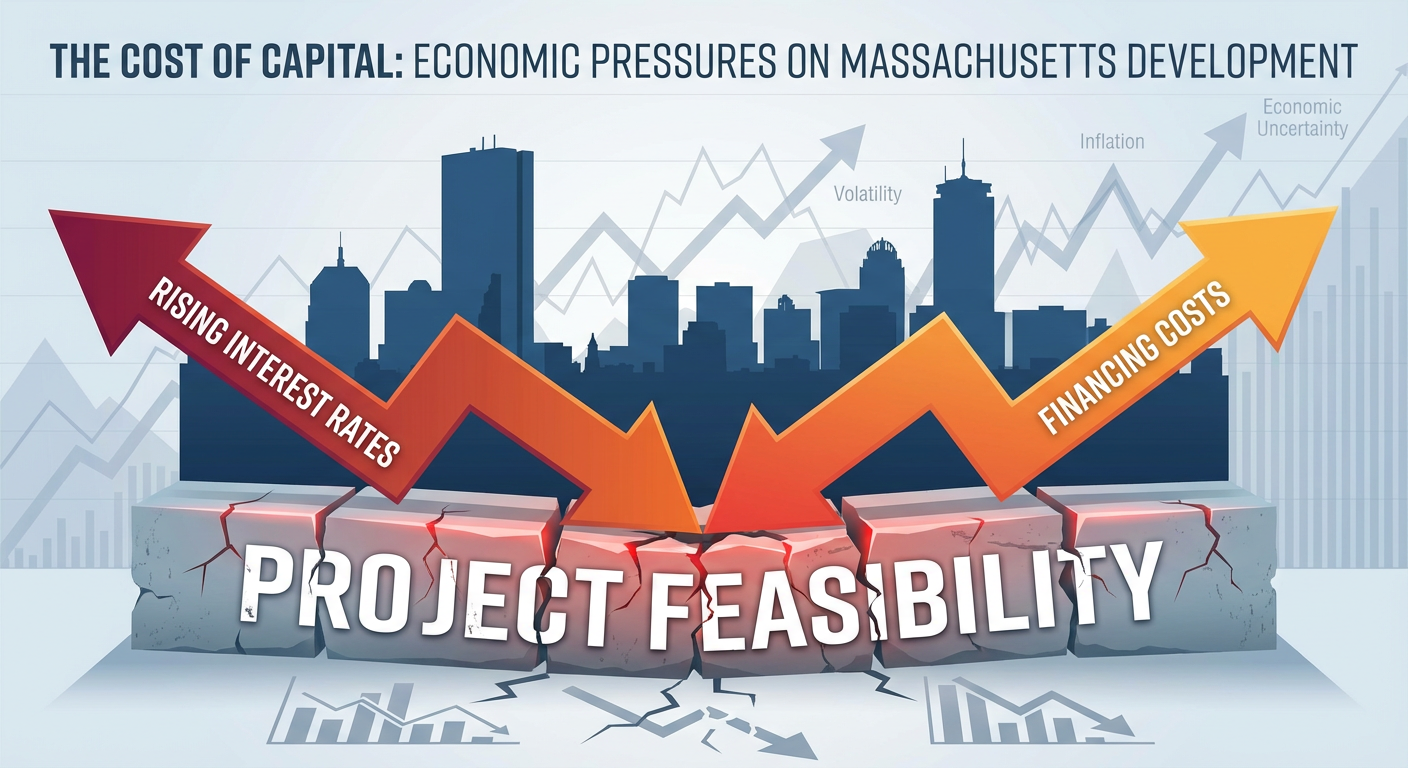
5. Economic Headwinds and Project Feasibility
The construction landscape in Massachusetts, characterized by its persistent housing shortfalls and ambitious development goals, is currently navigating a period of significant economic volatility. While the demand for new structures, ranging from residential complexes to advanced life science facilities, remains robust, the actualization of these projects is increasingly hampered by a confluence of economic headwinds. Rising interest rates, elevated financing costs, and broader economic uncertainty are not merely theoretical concerns; they manifest as tangible obstacles leading to project delays, outright cancellations, and a rigorous re-evaluation of feasibility for major development ventures across the Commonwealth. This section will delve into the intricate interplay of these factors, examining their multifaceted impact on the viability of new drywall installation projects in Massachusetts, the challenges they pose to contractors and developers, and the innovative strategies emerging to mitigate these pressures.
Massachusetts faces a critical housing shortage, with state plans estimating a need for approximately 220,000 new homes by the early 2030s to meet escalating demand[5]. Despite a recent surge in development, which saw roughly 97,656 net housing units added from 2020 to mid-2025 (with 71,135 of these concentrated in Greater Boston)[9], this acceleration remains insufficient. The state’s housing inventory continues to lag far behind the levels required to curb high prices and stem out-migration, placing immense pressure on the construction sector to deliver[WBjournal.com]. However, the path to fulfilling this need is fraught with challenges, primarily stemming from escalating costs and severe labor shortages.
Construction unemployment in Massachusetts hit a remarkably low 2.5% in June 2024, the lowest June rate in over 17 years[7], pushing average hourly wages near $49, significantly higher than the national average of around $38[3]. This tight labor market, coupled with the dramatic volatility witnessed in building material prices—such as gypsum wallboard (drywall) costs jumping approximately 44.6% from 2020–2022 before a modest 2.0% decline in 2023[4]—has created an environment where project costs are consistently under pressure. Furthermore, import tariffs, like the 39% duty on Canadian lumber and 25% on steel, have added an estimated $7,500–$10,000 to the cost of a new single-family home, further straining developers’ margins and homebuyers’ budgets[10].
The cumulative effect of these economic forces has been a discernible slowdown and, in some cases, a complete halt of significant projects. In Boston, the planned 10,000-unit Suffolk Downs housing development largely hit the brakes in 2023, with only 475 units initially moving forward as financing was restructured[11]. Even the once-booming life sciences sector experienced setbacks, marked by Pfizer’s decision to scrap a planned 270,000 sq. ft. facility in Everett in 2023 due to viability concerns[11]. These high-profile cases underscore the delicate financial equilibrium upon which major construction ventures depend, and how easily it can be disrupted by adverse economic conditions. This section will meticulously dissect these factors, presenting a comprehensive picture of the economic headwinds impacting drywall installation projects and the broader construction industry in Massachusetts.
The Double-Edged Sword: Workforce Shortages and Escalating Labor Costs
The construction industry in Massachusetts is grappling with a severe and persistent workforce shortage, which has become a primary driver of project cost escalations and delays. This scarcity of skilled labor is not a new phenomenon, but it has intensified, leading to record-low unemployment rates within the sector and, consequently, some of the highest construction wages in the nation. The profound implications of these trends are reshaping project feasibility and demanding innovative solutions from contractors and developers alike.
The sheer scale of the labor shortage is striking. As of June 2024, the unemployment rate in Massachusetts’ construction sector plunged to an unprecedented 2.5%[7]. To put this in perspective, this is the lowest June rate in at least 17 years, signaling a state of near-full employment in an industry that traditionally experiences more cyclical fluctuations. This tight labor market is exacerbated by an aging workforce, with approximately 30% of residential construction workers in Massachusetts being 55 or older as of 2023[2]. Industry experts note a disturbing trend where the number of workers over 50 has doubled in recent years, while the share of young workers under 25 has dramatically declined[7]. This demographic imbalance suggests that within the next decade, one in three skilled workers could retire, far outpacing the rate at which new talent is entering the field. This ‘missing generation’ of skilled tradespeople, including drywall installers, carpenters, and electricians, puts immense pressure on current and future project pipelines, as contractors increasingly worry about the dwindling pool of qualified hands[7].
The immediate and most direct consequence of this labor scarcity is the dramatic increase in wages. Massachusetts now boasts the highest average hourly construction wage in the U.S., reaching approximately $48.9 by early 2024, significantly surpassing the national average of around $37.7[3]. These wages have been consistently rising at about 5% year-over-year, reflecting the intense competition for available workers[3]. For drywall installation contractors, where labor often constitutes 40-50% of project costs, these soaring wages directly impact profitability or necessitate higher bids. Unionized trades, with their strong contract negotiations, have seen significant wage increases, compelling non-union firms to offer competitive rates to attract and retain talent. While beneficial for workers, this escalation in labor costs contributes significantly to Boston’s reputation as one of the most expensive construction markets globally.
The workforce shortage directly impedes project timelines and overall capacity. A national survey in 2024 revealed that a staggering 94% of U.S. construction firms reported difficulties in filling open positions[6]. In Massachusetts, this translates into widespread project delays, with 54% of contractors citing workforce scarcity as a primary cause of setbacks—a more common issue than even supply-chain disruptions[6]. For a drywall project, an insufficient number of skilled installers means extended timelines for hanging and finishing, causing ripple effects that delay subsequent trades such as painters and flooring installers. This directly impacts the overall project schedule and can lead to increased overhead costs for developers and general contractors. In the bustling Boston market, some subcontractors are even forced to decline new work due to a lack of available crews, creating a ceiling on the total volume of construction that can be undertaken simultaneously[Skanska.com].
The aging workforce and insufficient training pipeline are critical underlying issues. Decades of steering students away from vocational trades towards traditional four-year college degrees have created a “missing generation” of skilled workers. In response, both industry and government are investing in renewed workforce development. Union apprenticeship programs are expanding, and organizations like the Home Builders Institute highlight Massachusetts’ high construction wage premiums as a potential draw for new entrants[2][3]. Furthermore, the industry increasingly recognizes the crucial role of foreign-born workers, who constituted about 21% of Massachusetts’ construction laborers in 2023, more than double their share in the overall labor force[2]. Specific trades, such as roofing, masonry, and hazmat removal, rely on non-citizens for over 50% of their workforce[2], making immigration policy a significant factor influencing labor supply[Axios.com].
This complex interplay of high demand, low unemployment, elevated wages, and an aging workforce presents a significant challenge for new drywall installation projects in Massachusetts. While it offers unprecedented opportunities for skilled tradespeople, it simultaneously escalates project costs and risks, pushing developers to seek innovative solutions to maintain financial viability. The continuous effort to attract, train, and retain a skilled labor force will remain a central determinant of the construction industry’s capacity to meet the state’s ambitious development goals.
Material Costs, Tariffs, and the Sting of Higher Financing
Beyond the complexities of labor, new drywall installation projects in Massachusetts are profoundly impacted by volatile material costs and significantly higher financing expenses. These factors, often interconnected with geopolitical and economic shifts, have conspired to squeeze profit margins and often render once-viable projects financially infeasible, leading to widespread delays and cancellations.
The period following 2020 saw an unprecedented surge in building material prices. For critical components essential to drywall installation, the cost increases were dramatic. Gypsum wallboard, the core material, experienced an astonishing 44.6% price jump between 2020 and 2022[4]. This was part of a broader trend where overall residential construction input costs climbed by approximately 17% annually during 2021-2022[EyeOnHousing.org]. While 2023 brought some stabilization, with gypsum prices declining by 2.0% and lumber prices falling further, these materials still remain significantly above their pre-pandemic levels[4]. For example, standard drywall sheets that cost $10 in 2019 reportedly escalated to over $14 per sheet at peak, a substantial increase when multiplied across thousands of sheets in a large project.
The volatility in material pricing created immense budgeting challenges. Contractors bidding on jobs faced the risk of unexpected cost increases mid-project, potentially eroding profit margins. This unpredictability forced developers and contractors to include larger contingencies, source materials from alternative suppliers, or pre-purchase and stockpile materials, an option not all firms could afford[APnews.com].
Adding another layer of cost are trade policies, specifically tariffs on imported construction materials. The U.S. imposition of duties, including up to 39.5% on Canadian lumber (a key component for framing behind drywall) and 25% on steel, significantly elevated input costs[10]. Given that roughly 7.3% of all U.S. homebuilding materials are imported, Massachusetts builders, already contending with high costs, felt the direct financial impact of these tariffs[10]. Estimates suggest that cumulative tariffs have added between $7,500 and $10,000 to the cost of a typical new home[10]. These costs are either absorbed by developers, reducing profitability, or passed on to consumers, further exacerbating the state’s housing affordability crisis.
Perhaps the most significant headwind since 2022 has been the rapid rise in interest rates. This monetary policy shift, aimed at curbing inflation, directly impacts the cost of development loans and mortgages, thereby dampening demand and increasing the financial burden on every project. In a market like Massachusetts, where land and construction costs are already among the highest, higher financing costs have pushed many projects—especially high-density residential developments with tight profit margins—from marginal viability into outright infeasibility.
The case of the Suffolk Downs redevelopment in East Boston stands as a stark illustration. This ambitious $9+ billion project, slated to deliver 10,000 housing units, was largely put on hold in mid-2023. The developers, HYM Investment Group, cited ballooning carrying costs and the inability to meet investor yield requirements in the new higher-rate environment as primary reasons[11]. Only a small initial phase of 475 units proceeded, with the vast majority of planned construction delayed indefinitely. Similarly, Pfizer’s cancellation of its planned 270,000 sq. ft. research facility in Everett was attributed to a re-evaluation of capital spending in a costlier financing landscape[11]. These events demonstrate the immediate and profound impact of financing costs on project realization, directly translating into a decrease in new drywall installation opportunities.
The confluence of volatile material prices, persistent tariffs, and rising interest rates has injected significant uncertainty into project planning and execution. Delays in critical long-lead items, such as electrical switchgear (up to 48 weeks) or HVAC equipment, cause cascading holdups on job sites, extending timelines and increasing overhead costs[Bisnow.com]. An American Institute of Architects survey noted that nearly 30% of construction projects nationally experienced significant delays or indefinite holds in late 2023[11]. For drywall contractors, these delays impact cash flow and labor scheduling; for developers, deferred completion means delayed revenue generation. To mitigate these risks, developers are increasingly negotiating price escalation clauses and demanding larger contingency buffers. Ultimately, the high costs of materials and financing are directly reflected in the final prices of properties, pushing the median price of a new condo in Greater Boston to record highs in 2024[BostonCondoPrices]. This economic landscape demands meticulous cost management, innovative procurement strategies, and a willingness to explore alternative construction methods to ensure project feasibility in Massachusetts.
Innovation and Adaptation: Responding to Economic Challenges
In response to the formidable economic headwinds, the Massachusetts construction industry is increasingly turning to innovative methods and policy initiatives to maintain project feasibility and address critical needs, particularly in housing. These adaptive strategies aim to mitigate labor shortages, control costs, and accelerate project delivery, offering a glimpse into the future of drywall installation projects in the state.
One of the most promising avenues for innovation is the increased adoption of **off-site construction**, encompassing prefabricated and modular building methods. While these techniques are well-established in countries like Sweden, Germany, and Japan (where prefab housing accounts for 26% of the market)[PrefabHousing], Massachusetts has been slower to adopt, with only about 2% of new construction currently utilizing modular methods[8]. However, the benefits in a high-cost, labor-scarce environment are compelling. Factory-controlled environments allow for year-round production irrespective of weather, leverage automation for precision, and can significantly reduce the total labor hours required on-site due to assembly-line efficiencies. This translates directly into substantial time savings; for example, a project in Swanzey, NH, utilized modular construction to erect an 84-unit affordable apartment complex, going “from zero to 80% complete in two and a half months”[8] – a timeline nearly impossible with traditional stick-built approaches. Such rapid deployment means lower financing costs and quicker revenue generation, making marginal projects more viable. For drywall installation, modular construction often means panels or entire room modules arrive on-site with drywall largely pre-installed and finished, reducing the need for extensive on-site labor and improving quality through factory precision. This shift has significant implications for how drywall contractors operate, potentially moving skilled labor from traditional on-site hanging to factory assembly or specialized finish work.
Beyond full modular builds, **panelization** is gaining traction. This involves fabricating wall, floor, or roof sections in a factory and then assembling them on-site. Prefabricated wall panels, complete with studs and sometimes sheathing, can reduce on-site framing labor time by an estimated 71% for a typical home[13]. For drywall, this could extend to pre-rocked panels, where the drywall is attached in the factory, then installed by a smaller on-site crew, ready for taping and finishing. This reduces the number of workers required on scaffolds, enhances safety, and often improves the overall quality of the drywall installation by ensuring precise cuts and fits. Companies like KBS Builders, serving the New England market, are actively promoting these lead time reductions and predictable costs to Massachusetts developers seeking to overcome labor and scheduling challenges.
Alongside these macro-level innovations, **technological advancements on job sites** are streamlining traditional drywall installation processes. Contractors are investing in automated tools for taping and finishing, laser-guided systems for precise framing layouts, and mobile elevating work platforms to enhance efficiency and reduce the physical strain associated with overhead work. While fully robotic drywall installation is still in its nascent stages, current innovations can boost productivity by 20-30% in finishing stages. Building Information Modeling (BIM) also plays a crucial role by improving coordination among trades, minimizing rework, and ensuring that drywall crews operate more efficiently within a digitally planned environment. Massachusetts’ tech-forward commercial sector, particularly in biotech, has been an early adopter of such productivity-enhancing tools, using them to offset labor gaps.
Policy responses are also playing a crucial role. The Massachusetts **Affordable Homes Act of 2024**, a multi-billion dollar housing bill, has been instrumental in incentivizing development and streamlining regulations. In the 18 months following its passage, the state reported 90,400 housing units either completed, under construction, or permitted, indicating a notable uptick in activity guided by policy[5]. Zoning reforms, such as the MBTA Communities Law, compel many suburban towns to allow denser housing near transit, potentially unlocking significant development opportunities. While challenges like lengthy permitting processes persist, these policy initiatives are successfully “bending the curve” toward increased housing production, paving the way for more drywall installation projects.
Despite these innovations, hurdles remain. Concerns about initial capital investment in new equipment or factory setup, quality control in modular builds[WBUR.org], and the current limited regional modular manufacturing capacity pose challenges. However, the imperative to build more housing faster and more affordably, coupled with ongoing labor and cost pressures, is strongly driving the industry toward embracing these technological and methodological shifts. The potential to cut build times by 20-50% through off-site fabrication and factory efficiencies is a game-changer for project viability. This trend suggests that successful drywall contractors in Massachusetts will increasingly need to adapt to these new methodologies, potentially shifting from purely on-site work to involvement in factory production or specialized on-site assembly and finishing of prefabricated components. The adaptability of the drywall sector to these innovative construction methods will be key to its continued growth and success within Massachusetts’ evolving and challenging economic climate.
Evolving Industry Practices and Lessons Learned for Drywall Projects
The economic pressures discussed have not only driven technological innovation but have also led to significant shifts in industry practices, some with concerning implications for labor standards and project integrity, while others exemplify robust project management in challenging environments. The experience of Massachusetts drywall contractors, developers, and workers provides valuable lessons for navigating the complex landscape of project feasibility.
A particularly troubling development is the emergence of a “low-road” labor model, especially prevalent in the residential construction market. Research from the UMass Amherst Labor Center in 2024 uncovered a shadow system where small and mid-sized drywall subcontractors increasingly rely on **labor brokers** rather than directly employing workers[1]. These brokers often supply low-paid, frequently undocumented crews, bypassing payroll taxes, overtime, and benefits. The case of the North Square Apartments in Amherst (2018–2019) is a stark example: a two-employee drywall firm subcontracted the entire installation to a broker, leading to instances of **wage theft** and labor law violations against migrant workers who went unpaid for weeks[NorthSquareUmass]. This model, driven by intense cost pressures and the scarcity of traditional labor, undermines ethical contractors by allowing those who violate labor laws to submit significantly lower bids. This practice forces a critical choice for the industry: either to enforce fair labor standards more rigorously, ensuring a level playing field, or risk a downward spiral into an underground economy that exploits vulnerable workers. State authorities and unions have responded by increasing enforcement efforts and advocating for legislation, such as joint liability laws for general contractors, to curb these illicit practices.
The dynamic between union and non-union labor also plays a significant role. Massachusetts has historically seen a strong union presence, particularly in commercial and public projects, which ensures higher wages, comprehensive benefits, and skilled training through robust apprenticeship programs. While union labor can be 15-20% more expensive in bids, the higher quality and efficiency of union crews often offset perceived cost differences. In the drywall sector, union installers often utilize advanced tools like automatic tapers, delivering superior finishes more quickly. However, many residential and smaller commercial projects often opt for non-union contractors to reduce costs. The current labor shortage, however, is blurring these lines; some union halls have temporarily supplied workers to open-shop jobs, and non-union firms are pressured to elevate pay and benefits to compete for talent. The dual market persists, but the imperative to staff projects is fostering a degree of cooperation and self-correction in labor compensation across the board.
Maintaining **safety and quality** remains paramount, even amidst project pressures. Massachusetts enforces strict building codes and OSHA regulations, particularly regarding fire-rated drywall assemblies. The risks of improper installation, such as sections of improperly fastened ceiling drywall collapsing, underscore the need for stringent quality control. Drywall contractors are increasingly adopting quality assurance protocols, often leveraging technology like mobile apps for photographic documentation of work. Investing in ergonomic equipment, panel lifts, and promoting team lifting protocols are critical for worker safety, especially given the physical demands of drywall installation and the aging workforce. Industry associations are heavily involved in training programs focused on specialized tasks, and leading firms like Kaplan Construction have received awards for their safety practices[KaplanConst]. This focus ensures that the push for speed and cost-effectiveness does not compromise structural integrity or worker well-being.
Lastly, **environmental considerations** are gaining prominence. Massachusetts’ strict waste bans, in place since 2006, mandate the recycling of materials like “clean” gypsum drywall off-cuts[14]. This requires drywall contractors to implement efficient waste separation and management strategies, which, while adding some upfront effort, reduce landfill costs. Beyond compliance, some projects are exploring “closed-loop” recycling of drywall scrap and even considering alternative wall systems such as MgO boards or hemp-based panels for their lower environmental impact. Massachusetts’ progressive energy codes and net-zero building mandates are pushing towards more resource-efficient methods, including the use of lightweight drywall and enhanced insulation (often requiring double-layered drywall for thermal and acoustic performance).
The experiences from projects like the Takeda Cambridge Lab build (2022–2026), a 16-story, 600,000 sq. ft. R&D center, demonstrate that well-funded, critical industry projects in sectors like biotech can navigate—and even thrive—despite broader economic challenges[12]. These projects present significant drywall installation demand, often with highly specialized requirements (e.g., sound damping, lead lining for radiation labs, cleanroom standards), highlighting the value of specialized expertise for contractors willing to pursue work beyond residential builds. Takeda’s project, moving forward steadily toward its 2026 completion, stands in contrast to the stalled Suffolk Downs, underscoring that sector-specific demand and robust client capitalization can buck general trends and offer resilient opportunities for drywall contractors.
In essence, the Massachusetts drywall installation sector is at a critical juncture. Success hinges on a proactive approach that balances cost control with ethical labor practices, embraces technological innovation, prioritizes safety and quality, and adapts to evolving environmental regulations and market demands. The lessons from these changing practices are crucial for all stakeholders in determining the long-term feasibility and sustainability of construction projects in the Commonwealth.
The next section of this report will delve into the regulatory landscape, examining how building codes, permitting processes, and local zoning ordinances further influence project viability and the specific requirements for new drywall installations.

6. Regulatory Environment and Labor Practices
The regulatory and labor landscape in Massachusetts’ construction industry, particularly concerning new drywall installation projects, is a complex and often contentious arena. While the state grapples with an acute housing shortfall and ambitious building targets, a significant portion of its residential construction sector operates under what has been termed a “low-road” labor model. This model is characterized by practices such as worker misclassification, rampant wage theft, and the pervasive use of labor brokers, creating an underground economy that undermines ethical contractors, exploits vulnerable workers, and challenges regulatory oversight. This section will delve into the intricacies of this environment, exploring its origins, impacts, and the ongoing efforts to address these systemic issues, while also considering other pertinent regulatory aspects including safety, environmental compliance, and the dynamics of union versus non-union labor.
The “Low-Road” Labor Model in Residential Construction
The fierce competition and cost pressures within Massachusetts’ residential construction market have inadvertently fostered an environment where some contractors resort to unethical and illegal labor practices. A comprehensive investigation by the UMass Amherst Labor Center in 2024 brought to light a “new business model” prevalent among mid-sized drywall and framing subcontractors, primarily in the residential sector [1]. This model represents a departure from traditional employment relationships, relying heavily on informal and often exploitative systems to reduce labor costs. Instead of directly hiring employees and adhering to standard payroll obligations, these subcontractors engage labor brokers to supply work crews [1].
Worker Misclassification and Wage Theft
Central to the “low-road” model is the widespread practice of worker misclassification. Labor brokers, acting as intermediaries, recruit predominantly undocumented workers and pay them in cash, circumventing established labor laws [1]. This arrangement effectively bypasses several critical employer responsibilities, including:
- Payroll Taxes: Employers avoid paying federal and state payroll taxes, including Social Security, Medicare, and unemployment insurance contributions. This creates a significant competitive advantage over legitimate businesses that bear these costs.
- Overtime Pay: Misclassified workers are often denied overtime pay, even when working more than 40 hours per week, a direct violation of federal and state wage laws [1].
- Worker’s Compensation and Benefits: These workers are typically not provided with worker’s compensation insurance, leaving them unprotected in case of workplace injuries. They also miss out on health benefits, paid time off, and other protections typically afforded to employees.
- Minimum Wage Compliance: While not explicitly stated, the lack of formal tracking and cash payments often facilitates below-minimum-wage compensation, particularly when factoring in the piece-rate payment systems commonly used for drywall installation (e.g., paid by the sheet).
The case of the North Square Apartments project in Amherst serves as a stark illustration of these illicit practices [2]. In 2018-2019, Combat Drywall Inc., a subcontractor with only two official employees, secured the drywall work for this 130-unit affordable housing development. Instead of performing the work with their own staff, Combat Drywall sub-subcontracted the entire installation to a labor broker known as “Poncho” (operating as Alvarez Drywall) [2]. The workers, many of whom were migrants, were paid informally, primarily by the sheet. Disturbingly, by Thanksgiving 2018, many workers reported going unpaid for over two weeks, even as the project neared completion [2]. This blatant wage theft only came to light and was resolved after intervention from a carpenters’ union organizer [2].
Such incidents are not isolated; the UMass investigation highlighted that these practices, once considered marginal, are now commonplace in non-union residential projects across Massachusetts [1]. The implications are profound: ethical contractors, who adhere to labor laws and pay fair wages, are systematically underbid by those who save an estimated 30% or more on labor costs through illegal means [1]. This puts them at a severe competitive disadvantage and creates an uneven playing field.
The Role of Labor Brokers
Labor brokers are a critical component of the “low-road” model. These individuals or informal entities act as intermediaries between unscrupulous subcontractors and a vulnerable workforce, often comprising undocumented immigrants. They typically operate without formal business registration, making them difficult to track and regulate. Their services allow subcontractors to disclaim direct employment relationships, effectively outsourcing the risk and responsibility associated with legal employment to the brokers. The relationship is often transactional, focused on quick completion of tasks with minimal overhead, and frequently involves cash payments to workers [1]. This system perpetuates exploitation, as workers often lack knowledge of their rights, fear reprisal due to their immigration status, and have limited avenues for redress when wage theft or unsafe conditions occur.
Regulatory Responses and Enforcement Challenges
The revelations surrounding the “low-road” model have prompted increased scrutiny and calls for stricter enforcement. The Massachusetts Attorney General’s office has stepped up efforts to prosecute contractors involved in misclassification and wage theft, issuing fines and publicly naming violators. The North Square Apartments case, for instance, fueled support for a proposed state law imposing joint liability on general contractors for the wage theft committed by their subcontractors [2]. This measure aims to encourage general contractors to conduct better due diligence on their subcontractors and discourage them from turning a blind eye to illegal labor practices lower down the supply chain.
However, enforcement remains challenging. The informal nature of labor brokering, the cash-based transactions, and the vulnerability of the workforce make it difficult to gather evidence and hold all parties accountable. Regulators face a cat-and-mouse game, where illegal operations can quickly adapt and reappear under new guises. The complexity is compounded by the underlying demand for labor: with a severe shortage of skilled construction workers, some developers and general contractors may implicitly tolerate these practices to get projects completed on time and within budget, especially if they are not seen as directly liable.
Labor Dynamics: Union vs. Non-Union and Workforce Shortages
Massachusetts has historically boasted a strong union presence in its construction industry, particularly in commercial and public works projects around Boston. Unionized trades, including carpenters (who often perform drywall and framing) and painters (who handle finishing), adhere to stringent labor standards, offer comprehensive benefits, and invest heavily in apprenticeship programs [3]. This commitment to training often translates into a faster, higher-quality workforce, as union drywall finishers, for example, are widely trained in the use of automatic taping tools, leading to superior and more efficient work [3].
The Dual Market and Shifting Landscape
Despite the advantages, union labor can be 15-20% more expensive than non-union alternatives, leading many residential and smaller commercial projects to opt for open-shop contractors [3]. This has resulted in a “dual market” in Massachusetts construction: high-profile, large-scale projects like hospitals and skyscrapers are almost exclusively union-built, while suburban multi-family and single-family developments largely rely on non-union labor [3].
The state’s current, unprecedented labor shortage is, however, beginning to blur these lines. With construction unemployment rates hovering at a record low of 2.5% in June 2024 [7], and 94% of U.S. construction firms struggling to fill open positions [6], the demand for skilled workers far outstrips supply. Massachusetts already boasts the highest average hourly construction wage in the nation, nearing $49 as of early 2024 [3], yet shortages persist.
This scarcity has forced non-union firms to increase wages and benefits to better compete for talent, narrowing the cost gap with union counterparts. In some instances, union halls have even temporarily supplied workers to open-shop jobs when no other labor was available, highlighting the severity of the shortage [3]. This dynamic suggests that even the “low-road” model, which thrives on undervalued labor, may face pressure as the overall labor market tightens, compelling a shift towards more formal and competitive employment practices. The need to maintain a skilled workforce is encouraging both union and non-union sectors to invest in formal training and workforce development programs.
Demographics and the Future Workforce
A significant contributing factor to the labor shortage is the aging construction workforce. As of 2023, nearly 30% of residential construction workers in Massachusetts were 55 or older [4], with the number of workers over 50 having doubled in recent years [7]. Simultaneously, the share of young workers under 25 has dramatically declined. This demographic imbalance portends a mass exodus of skilled tradespeople through retirement within the next decade, far outstripping the rate at which new entrants are joining the industry [4]. This “missing generation” is a direct result of past educational trends that predominantly steered students towards higher education rather than vocational trades. Consequently, contractors are deeply concerned about where the next generation of drywall installers, carpenters, and electricians will come from [7].
Addressing this requires concerted efforts in workforce development. Union apprenticeship programs are vital, providing structured training and pathways to well-paying careers. Beyond unions, there is a growing recognition for investing in vocational schools, on-the-job training, and recruitment initiatives targeting diverse pools of potential workers, including women in construction and career switchers. Furthermore, immigration policies play a crucial role: foreign-born workers constitute approximately 21% of Massachusetts’ construction labor force [5], with certain trades like roofing and masonry having over 50% non-citizen workers [5]. Any shifts in immigration policy, therefore, have an outsized impact on the state’s construction labor supply.
Safety and Quality Oversight
In a high-pressure environment characterized by labor shortages and tight schedules, maintaining safety and quality on construction sites, particularly for critical trades like drywall installation, becomes paramount. Massachusetts has robust regulatory frameworks, including strict OSHA enforcement and an influential state building code that mandates specific fire-rated drywall assemblies and installation methods [3]. However, the temptation to cut corners under pressure can pose significant risks.
Key quality and safety considerations in drywall installation include:
- Proper Fastening: Ensuring correct screw patterns and depth to prevent sheets from loosening or falling.
- Firestopping: Correct installation of fire-rated drywall (Type X) and associated firestopping materials to maintain fire safety compartments, especially in multi-family and commercial buildings. Instances of improperly fastened ceiling drywall sections collapsing in new apartments serve as stark reminders of the consequences of neglect [3].
- Sound Attenuation: Meeting specified noise reduction levels (STC ratings), which often requires double-stud walls, resilient channels, and multiple layers of drywall.
- Ergonomics and Injury Prevention: Lifting heavy drywall sheets, especially overhead, poses significant injury risks. Innovations like panel lifts and advocating for team lifting protocols are crucial. Industry associations are increasing training on fall protection and materials handling specific to drywall tasks [3].
Many firms are implementing stringent Quality Assurance (QA) protocols, sometimes leveraging technology like mobile apps for installers to document their work with photos for supervisor review [3]. While injury rates in construction generally remain above average, efforts from some firms, like Kaplan Construction, to adapt practices have led to recognition for improved safety performance [3].
Environmental Regulations and Sustainable Practices
Massachusetts is a leader in environmental regulations, and this extends to construction and demolition waste. Since 2006, the state has enforced strict waste bans that prohibit certain materials, including “clean” gypsum drywall off-cuts, from being sent to landfills [14]. This mandates recycling and aims to reduce landfill burden and promote resource efficiency. With disposal costs in Massachusetts averaging around $100 per ton [15], compliance with these bans is not just a regulatory obligation but also a financial incentive for builders to manage waste responsibly.
This regulatory push is gradually steering the industry towards more sustainable construction methods. Drywall installation projects now often incorporate practices such as:
- Drywall Recycling Programs: Many large projects participate in “closed-loop” recycling, where clean drywall scraps are collected and sent to facilities for processing into new drywall or cement additives.
- Minimized Waste: The adoption of precise prefabrication techniques, especially panelized wall systems and modular construction, dramatically reduces on-site cutting waste. While national statistics still show up to 50% of materials delivered to sites ending up as waste [9], the push for prefabrication aims to lower this significantly.
- Alternative Materials: While still niche, some builders are exploring alternative wall systems beyond traditional gypsum drywall, such as magnesium oxide (MgO) boards (known for moisture resistance and lower environmental impact) or even hemp-based panels for specialized green projects [3].
Massachusetts’ evolving energy codes and future net-zero building mandates will further influence drywall installation. These standards will likely demand higher levels of insulation (potentially requiring double-layer drywall for improved thermal and acoustic performance) and favor materials with lower embodied carbon footprints. While drywall itself has a relatively lower carbon footprint compared to materials like concrete and steel, the trend towards lightweight products and increased use of recycled content aligns with broader environmental objectives.
Conclusion: A Path Towards Ethical and Sustainable Growth
The regulatory and labor environment for drywall installation projects in Massachusetts is at a critical juncture. The tension between the urgent need for housing, the historic labor shortages, and the prevalence of a “low-road” labor model creates significant challenges. Investigations into misclassification and wage theft highlight the ethical and competitive disadvantages faced by legitimate contractors and the exploitation of vulnerable workers. However, these challenges are also catalysts for change.
The intensifying labor shortage is pushing wages higher across the board, potentially forcing even informal operations to adopt more legitimate employment practices. Simultaneously, the state’s robust regulatory framework, coupled with increased enforcement and the potential for joint liability laws, aims to level the playing field and protect workers. Furthermore, the imperative to build faster, coupled with environmental considerations, is driving the adoption of innovative construction methods like modular and panelized building, which can enhance productivity, improve quality, and reduce waste. For drywall contractors, this means adapting to a more formalized and technologically advanced landscape, investing in their workforce, and demonstrating clear commitments to safety, quality, and environmental compliance. The firms that prioritize these aspects will be best positioned to thrive in Massachusetts’ complex, yet opportunity-rich, construction market.
The next section will delve into the technological innovations and material trends that are shaping the future of drywall installation in Massachusetts, examining how modernization efforts are working in tandem with, and in response to, the regulatory and labor environment discussed here.
References
- UMass Amherst Labor Center. (Apr 2024). “Part One: The New Business Model For Residential Construction In Massachusetts.” [1]
- UMass Amherst Labor Center. (Apr 2024). “Part One: The New Business Model For Residential Construction In Massachusetts.” [Additional details on Amherst project]. [2]
- Research Text Summary: “Erosion of traditional labor practices” and “Changing Industry Practices and Case Lessons in Massachusetts Drywall Projects.” [3]
- Mass.gov. (2023). “Home for Everyone: Construction Industry Capacity.” [4]
- Mass.gov. (2023). “Home for Everyone: Construction Industry Capacity.” [5]
- AGC/Construction Publications. (Aug 2024). “New Survey Quantifies Labor Shortage and Efforts to Overcome It.” [6]
- Bisnow News. (Sept 26, 2024). “As Boston’s Construction Labor Shortage Worsens, Firms Look To New Solutions.” [7]
- NAHB Eye on Housing. (May 2, 2024). “States with Highest and Fastest Rising Construction Wages, 2024.” [8]
- WBUR News. (June 5, 2023). “Massachusetts hasn’t embraced factory-made housing. Some say it’s time.” [9]
- AP News. (Mar 17, 2025). “Tariffs on lumber and appliances set stage for higher costs on new homes.” [10]
- Bisnow National. (Aug 14, 2023). “Commercial Construction Projects Keep Being Abandoned. Reviving Them Could Take Years.” [11]
- Industrial Info Resources. (May 17, 2023). “New England Sees $23.3 Billion in Projects Under Construction.” [12]
- Builder Materials (BMC) Blog by Ben Hershey. (2021). “Do Wall Panels Really Save Builders Labor and Resources?” [13]
- Massachusetts DEP / RecyclingWorks. (2022). “Construction & Demolition Waste Bans and Recycling Guidance.” [14]
- Wastedoor.com. (2025). “Massachusetts Waste Management Guide 2025: Costs, Laws & 23 Waste Bans.” [15]
7. Innovation and Resilience in Construction Methods
The Massachusetts construction industry, particularly concerning new drywall installation projects, finds itself at a pivotal juncture. While faced with persistent challenges such as a critical housing shortfall, escalating costs, and severe labor shortages, the sector is concurrently exploring and adopting innovative construction methods and policy responses to enhance efficiency and bolster housing supply. This section delves into these emerging trends and solutions, examining how the state and industry stakeholders are strategizing to build more efficiently, sustainably, and resiliently in the face of existing pressures.
7.1 The Housing Imperative and Policy Responses in Massachusetts
Massachusetts is grappling with a significant housing crisis, underscoring the urgent need for increased construction activity. State projections indicate a demand for approximately 220,000 new homes by the early 2030s to adequately meet the needs of its growing population [1]. This translates to an estimated requirement of building around 22,000 homes per year through 2035 to bridge the existing gap [2]. However, recent building activity has lagged considerably behind this target. In 2024, only 14,338 housing permits were issued, which equates to roughly 201 permits per 100,000 residents [3]. This figure places Massachusetts as the 6th lowest nationally in per capita housing permits, falling significantly short of the U.S. average of 281 permits per 100,000 residents [3].
Despite this shortfall, the state has witnessed a notable surge in development over the past half-decade. From 2020 to mid-2025, Massachusetts added approximately 97,656 net housing units, with a substantial 71,135 units concentrated in Greater Boston [4]. This five-year expansion represents the largest increase in Boston’s housing base in decades [5]. Yet, this progress remains insufficient to curb the state’s persistently high housing prices and address growing out-migration trends [6]. The under-building has concrete business impacts, making it challenging for companies to attract talent to Massachusetts due to unaffordable housing, and prompting young families to leave Greater Boston for more economical locations [7].
In response to this critical situation, state leaders have initiated aggressive policy measures. Governor Maura Healey’s administration championed the Affordable Homes Act in 2024, a comprehensive legislative package designed to unlock housing production and provide substantial funding. This act includes provisions aimed at loosening restrictive zoning regulations and incentivizing diverse housing developments. Within just 18 months of its passage, state officials reported that the act helped kick-start 90,400 housing units, either completed, under construction, or permitted [8]. This represents a significant uptick in activity and demonstrates the potential impact of targeted policy interventions. Furthermore, zoning reforms, such as the MBTA Communities Law, mandate that many suburbs permit denser housing near transit hubs, aiming to foster transit-oriented development and increase housing options in well-connected areas.
While these policy responses are beginning to “bend the curve” on housing starts, challenges persist. Developers continue to highlight the lengthy and arduous approval processes in Massachusetts, which can delay projects for years [9]. Streamlining permitting and further incentivizing construction through measures like tax credits and expedited approvals are deemed critical to meet the ambitious housing targets [9]. The bottom line is that the state is actively ramping up construction activity, but sustained, historic levels of building, coupled with overcoming inherent workforce and cost obstacles, will be necessary to truly close the housing gap.
7.2 Addressing Workforce Shortages Through Innovation and Adaptation
One of the most pressing challenges severely constraining construction growth in Massachusetts, including new drywall installation projects, is a critical workforce shortage. The state’s construction unemployment rate plummeted to a record-low 2.5% in June 2024—the lowest June rate in over 17 years [10]. This indicates a near full-employment scenario, unusual for a cyclical industry. A national survey in 2024 found that 94% of U.S. construction firms struggled with unfilled positions [11], a challenge mirrored and often exacerbated in Massachusetts. Specialty trades, such as drywall installers, carpenters, and electricians, are in particularly high demand, leading to significant project delays (reported by 54% of contractors) [12] and escalating labor costs.
The scarcity of skilled labor has directly translated into higher wages. Massachusetts boasts the highest average hourly construction wage in the nation, reaching nearly $49 by early 2024, significantly above the national average of approximately $38 [13]. This represents an annual increase of about 5% [14]. While beneficial for workers, these high labor costs contribute to Boston’s construction market being among the most expensive globally. For drywall contractors, where labor can constitute 40-50% of project costs, these wage increases exert substantial pressure on profit margins and necessitate higher project bids.
The root causes of this shortage are multifaceted, including an aging workforce and a dwindling pipeline of new talent. Alarming statistics show that 30% of residential construction workers in Massachusetts were 55 or older as of 2023 [15], with the number of workers over 50 having doubled in recent years, while the share of young workers under 25 has plummeted [16]. This demographic shift means that one in three skilled workers may retire within the next decade, far outpacing new entrants and threatening the industry’s capacity to maintain current building levels, let alone meet growing demands [15].
To counteract this, the industry and government are adopting several innovative and adaptive strategies:
- Workforce Development and Training: There’s a renewed focus on vocational training and apprenticeship programs. Unions have intensified their apprenticeship efforts, and broader industry initiatives are aimed at attracting new entrants, including women and career changers, into the trades. The state’s high construction wage premium is being leveraged as an incentive to draw more individuals into the field [17].
- Technological Integration and Automation: Firms are investing in technology to boost productivity and reduce reliance on manual labor. This includes:
- Automatic Taping and Finishing Tools: These tools dramatically speed up the application of joint compound, reducing labor hours for finishing drywall.
- Laser-Guided Layout Systems: Used for framing, these systems enhance precision and efficiency, minimizing rework.
- Mobile Elevating Work Platforms: These reduce physical strain for ceiling installations and improve safety.
- Robotics: While still experimental for full drywall installation, semi-automated robots are being piloted to assist with tasks like hanging drywall sheets on ceilings. These innovations are estimated to improve productivity by 20-30% in finishing stages [18].
- Building Information Modeling (BIM): BIM and digital project management software are crucial for coordinating trades, identifying conflicts virtually, and ensuring that drywall crews can operate more efficiently, thus avoiding costly rework.
- Modular and Off-Site Construction: This approach is gaining significant traction as a primary method to address labor shortages and accelerate project timelines. Discussed in detail in the next subsection, modular construction shifts a substantial portion of the labor-intensive work from the unpredictable job site to a controlled factory environment.
- Immigration Reform Advocacy: Given that approximately 21% of Massachusetts’s construction workers are non-U.S. citizens [19], contractors are advocating for immigration policies that would allow more skilled foreign-born workers to enter the industry and alleviate the labor gap.
These adaptive strategies are essential as the industry confronts the dual challenge of meeting housing demand and managing a shrinking, aging workforce. The integration of technology and the adoption of new construction methodologies are not merely options but necessities for sustained growth and efficiency in Massachusetts’s construction sector.
7.3 The Rise of Off-Site and Modular Construction
In response to the pervasive labor shortages, escalating costs, and the urgent need for faster project delivery, Massachusetts developers are increasingly turning their attention to innovative construction methods, particularly modular and off-site prefabrication. While this approach remains nascent in the state, accounting for only about 2% of new construction [20], its potential to revolutionize construction efficiency and drywall installation projects is immense.
7.3.1 Principles and Advantages of Off-Site Construction
Off-site construction involves manufacturing building components or entire volumetric modules in a factory setting, away from the final construction site. These prefabricated elements are then transported and assembled on-site. The benefits are compelling, particularly in addressing the challenges faced by Massachusetts:
- Mitigating Labor Shortages: Factory environments require a consistent but smaller, specialized workforce that can be trained efficiently, reducing the dependence on a dwindling pool of on-site skilled trades. Labor productivity is generally higher in a controlled factory setting due to optimized workflows and specialized equipment.
- Accelerated Project Timelines: Manufacturing off-site can occur concurrently with site preparation, foundations, and utility work. This parallel processing can significantly reduce overall project schedules, often by 20-50% [21]. Faster completion translates to lower financing costs and earlier revenue generation, crucial in high-value markets like Massachusetts.
- Cost Predictability and Control: Factory production allows for better cost control over materials and labor. Bulk purchasing, reduced on-site waste, and minimized weather-related delays contribute to more predictable budgets.
- Enhanced Quality and Safety: Controlled factory environments facilitate higher quality control standards, reducing defects and improving consistency. Safety is also enhanced, as workers operate in stable conditions, minimizing risks associated with hazardous on-site activities.
- Reduced Environmental Impact: Factory settings lead to more efficient material use and less waste. Massachusetts’ strict waste bans, which require recycling of “clean” gypsum drywall off-cuts [22], make off-site fabrication an attractive option for waste reduction. Up to 50% of materials delivered to sites still end up as waste nationally [23], highlighting the significant efficiency gains possible.
7.3.2 Examples and Impact on Drywall Installation
A notable example of modular construction’s efficacy is the West Swanzey Apartments project in New Hampshire. This 84-unit affordable housing complex, located just over the Massachusetts border, employed volumetric modular construction where units were largely completed in a Pennsylvania factory, including walls, wiring, plumbing, and a significant portion of drywall and finishes [24]. These modules were then shipped and craned into place on-site. The project progressed remarkably fast, going “from zero to 80% complete in two and a half months” [25], a timeline unheard of with traditional stick-built methods which would typically take 12-18 months for a project of this size. This rapid deployment provided much-needed housing quickly and efficiently.
For drywall installation projects, off-site construction introduces several innovations:
- Prefabricated Walls and Panels: Instead of traditional stick-built framing and individual drywall sheet installation on-site, modular units can have drywall pre-installed in the factory. Panelized construction, where wall panels with studs and often insulation/sheathing are assembled off-site, can save approximately 71% of on-site framing labor time for a typical home [26]. This can extend to “pre-rocked” wall panels, arriving at the site with drywall already attached, ready for taping and finishing.
- Enhanced Precision: Factory conditions allow for precise cutting and fitting of drywall, reducing waste and improving the overall quality of the finish. This is particularly advantageous for complex architectural designs or specialized applications requiring exact tolerances.
- Specialized Drywall Applications: Modular construction can facilitate the integration of specialized drywall types, such as fire-rated, moisture-resistant, or acoustically enhanced boards, directly into the factory assembly line, ensuring consistent installation quality.
- Reduced On-Site Challenges: By completing drywall work off-site, projects can minimize disruptions on the job site, reduce material handling, and avoid weather-related delays that typically impact drywall installation quality and schedules.
7.3.3 Hurdles and Future Outlook
Despite these advantages, Massachusetts faces specific challenges in scaling modular construction. Historically, developers have been risk-averse to new methods [27], and past issues with quality control in some modular homes have fueled skepticism [28]. A significant hurdle is the limited local modular manufacturing capacity. Shipping large modules from distant factories (e.g., Pennsylvania or the Midwest) adds considerable cost and logistical complexity [29]. However, there’s growing interest in establishing regional modular factories, such as Avanru’s proposed $60 million factory in New Hampshire, which would serve the New England market [30].
Local building codes and inspection processes, traditionally geared towards on-site construction, have also posed challenges, though Massachusetts has been updating its codes to better accommodate prefabricated building systems [31]. The future likely involves a hybrid approach, combining traditional construction with prefabricated components (e.g., bathroom pods or exterior wall panels) to capitalize on efficiency gains while maintaining flexibility. As the industry faces relentless pressure to build “more with less,” off-site fabrication is poised to become a transformative force, enabling drywall installation projects to be delivered with greater speed, predictability, and efficiency, thereby helping Massachusetts address its critical housing and infrastructure needs.
7.4 Evolving Industry Practices and Project Resiliency
The innovation and resilience in construction methods in Massachusetts are not confined to technological advancements or modular building; they also encompass the evolution of industry practices, particularly regarding labor, economic adaptability, and sustainability. The high-stakes environment of construction in Massachusetts, marked by aggressive timelines and tight budgets, has led to both problematic “low-road” labor models and significant projects demonstrating sector-specific resilience.
7.4.1 Labor Practices Under Scrutiny: The Fight Against Wage Theft
The intense pressure to reduce costs amidst soaring wages and labor shortages has, in some instances, led to the adoption of unethical labor practices. Research from the UMass Amherst Labor Center in 2024 exposed a “new business model” prevalent in residential drywall and framing sectors, where small subcontractors rely on informal labor brokers to supply crews [32]. These brokers often recruit low-paid, frequently undocumented workers, paying them in cash and circumventing standard labor laws concerning overtime, payroll taxes, and benefits [33].
The case of the North Square Apartments in Amherst (2018–2019) serves as a stark example. Combat Drywall Inc., a small Billerica-based firm, subcontracted the drywall work to a labor broker for this 130-unit affordable housing project [34]. Many workers, brought in via this broker, faced delayed pay and outright wage theft, with some going unpaid for over two weeks [35]. It was only through the intervention of a carpenters’ union organizer that some workers recovered their owed wages and overtime [36]. This incident highlights how cost pressures can inadvertently foster exploitative practices, undermining both workers’ rights and fair competition. Ethical contractors struggle to compete against those who unlawfully cut labor costs by an estimated 30% [37].
This situation has prompted increased regulatory oversight and enforcement. The Massachusetts Attorney General’s office has stepped up efforts to prosecute contractors for wage violations and worker misclassification [38]. Furthermore, the North Square case fueled support for proposed state legislation that would impose joint liability on general contractors for wage theft committed by their subcontractors. This is a crucial policy response, aiming to incentivize general contractors to conduct thorough due diligence on the labor practices of their subs, thereby promoting more ethical and legal employment models within the industry.
7.4.2 Economic Headwinds and Sector-Specific Resilience
Beyond labor challenges, construction projects in Massachusetts have also faced significant economic headwinds, including rising interest rates and material costs. The dramatic increase in interest rates since 2022 has made development loans more expensive, leading to the pausing or cancellation of numerous projects across the state. The most prominent example is the Suffolk Downs redevelopment in East Boston, an ambitious $9 billion project envisioning 10,000 housing units [39]. In mid-2023, facing financing difficulties and increased carrying costs, developers announced a significant slowdown, with further phases put on indefinite hold and only an initial 475 apartments proceeding as planned [40].
However, despite these broader economic challenges, certain sectors within Massachusetts demonstrate remarkable resilience, driving continued demand for specialized drywall installation projects:
- Life Sciences and Biotech: Massachusetts, particularly the Greater Boston area, remains a global hub for biotech and life sciences. This sector continues to attract significant investment, translating into large-scale construction projects. New England currently has $23.3 billion in industrial projects underway [41], with Massachusetts boasting approximately $11.7 billion in active pharma/biotech construction alone [43]. This complex build, featuring specialized lab spaces and stringent environmental controls, requires extensive and high-quality drywall installation. The project demands fire-rated assemblies, noise and vibration-dampening solutions (often achieved with double-studded, double-layered drywall), and precise finishes critical for a research environment. Its continued progress, even while other commercial projects stalled, underscores the sector’s resilience and its ability to buck general market trends due to well-capitalized clients and high-priority infrastructure needs [44].
For drywall contractors, diversifying into these more resilient sectors is a strategic move. Developing expertise in specialized applications—such as cleanroom-grade walls, lead-lined drywall for radiation shielding, or advanced acoustic solutions for laboratories—can provide a steady stream of work even during broader economic downturns.
7.4.3 Sustainability and Environmental Responsibility
Massachusetts’ commitment to sustainability is also reshaping construction practices, including drywall installation. The state enforces strict waste bans, requiring that materials like wood, metal, and “clean” gypsum drywall off-cuts be recycled rather than landfilled [45]. With landfill capacity limited and disposal costs high (around $100/ton) [46], this mandates conscientious waste management on all projects. This regulatory environment is gradually nudging builders towards more resource-efficient methods, including the use of precise prefabricated components that minimize cutting waste and exploring “closed-loop” drywall recycling programs.
There’s also a growing interest in alternative wall systems with lower environmental footprints, such as magnesium oxide (MgO) boards or hemp-based wall panels, though their market share remains small [47]. Massachusetts’ evolving energy codes and future net-zero building mandates will further influence interior construction, potentially requiring enhanced insulation (leading to multi-layer drywall systems for thermal and acoustic performance) and the selection of materials with reduced embodied carbon.
In essence, drywall installation projects in Massachusetts are not only adapting to technological and logistical innovations but are also being shaped by regulatory pressures and evolving market demands for ethical labor, economic stability, and environmental responsibility. Companies that proactively embrace these changing dynamics, through continuous workforce development, adoption of efficient building techniques, and a commitment to sustainable practices, are best positioned to thrive in the state’s complex and competitive construction landscape.
The insights derived from the challenges and innovations in current construction methods provide a robust foundation for understanding the future landscape of drywall installation in Massachusetts. This transition prepares us to next explore specific trends in drywall materials, products, and applications within these evolving construction paradigms. —
Table 7.4.1: Massachusetts Construction Industry at a Glance
| Metric | Data Point | Implication for Drywall Installation Projects |
|---|---|---|
| Housing Shortfall | 220,000 new homes by early 2030s [1] | Strong long-term demand for drywall in residential sector, but current pace far below target. |
| Housing Permits (2024) | 14,338 (201 per 100k residents) [3] | MA is lagging nationally in housing production, leading to fewer new construction starts requiring drywall. |
| Construction Unemployment (June 2024) | 2.5% (17+ year low) [10] | Severe labor shortage directly impacts availability of skilled drywall installers. |
| Average Hourly Wage (Construction) | ~$49 (highest in nation) [13] | High labor costs increase overall project budgets, including drywall installation expenses. |
| Contractors Reporting Project Delays (due to labor) | 54% [12] | Drywall installation timelines are directly affected by labor scarcity, leading to project schedule overruns. |
| Gypsum Wallboard Price Increase (2020-2022) | ~44.6% [48] | Cost volatility necessitated careful budgeting and procurement strategies for drywall materials. |
| Modular Construction Adoption in MA | ~2% of new builds [20] | Low adoption limits the efficiency gains from off-site drywall installation, but growing interest. |
| Biotech Construction in MA (active projects) | ~$11.7 billion [22] | Requires recycling practices, incentivizes precise measurements and off-site prefabrication to minimize waste in drywall projects. |
—
Sources
- Worcester Business Journal / State House News Service. (Sept 5, 2025). “Despite 90K units added, Mass. falls behind nation in housing production.” wbjournal.com
- Mass.gov. (2023). “Home for Everyone: Construction Industry Capacity.” mass.gov
- Worcester Business Journal / State House News Service. (Sept 5, 2025). “Despite 90K units added, Mass. falls behind nation in housing production.” wbjournal.com
- Boston Indicators. (Oct 21, 2025). “How many homes are we actually building? Completions are up but permits are down.” bostonindicators.org
- Boston Indicators. (Oct 21, 2025). “How many homes are we actually building? Completions are up but permits are down.” bostonindicators.org
- Boston Indicators. (Oct 21, 2025). “How many homes are we actually building? Completions are up but permits are down.” bostonindicators.org
- Boston Indicators. (Oct 21, 2025). “How many homes are we actually building? Completions are up but permits are down.” bostonindicators.org
- Worcester Business Journal / State House News Service. (Sept 5, 2025). “Despite 90K units added, Mass. falls behind nation in housing production.” wbjournal.com
- Worcester Business Journal / State House News Service. (Sept 5, 2025). “Despite 90K units added, Mass. falls behind nation in housing production.” wbjournal.com
- Bisnow News. (Sept 26, 2024). “As Boston’s Construction Labor Shortage Worsens, Firms Look To New Solutions.” bisnow.com
- AGC/Construction Publications. (Aug 2024). “New Survey Quantifies Labor Shortage and Efforts to Overcome It.” constructionpublications.com
- AGC/Construction Publications. (Aug 2024). “New Survey Quantifies Labor Shortage and Efforts to Overcome It.” constructionpublications.com
- NAHB Eye on Housing. (May 2, 2024). “States with Highest and Fastest Rising Construction Wages, 2024.” eyeonhousing.org
- NAHB Eye on Housing. (May 2, 2024). “States with Highest and Fastest Rising Construction Wages, 2024.” eyeonhousing.org
- Mass.gov. (2023). “Home for Everyone: Construction Industry Capacity.” mass.gov
- Bisnow News. (Sept 26, 2024). “As Boston’s Construction Labor Shortage Worsens, Firms Look To New Solutions.” bisnow.com
- Mass.gov. (2023). “Home for Everyone: Construction Industry Capacity.” mass.gov
- GlobeNewswire. (Dec 17, 2025). “Dry Construction Market Valuation is Set to Reach US$ 154.6 Billion By 2035 – Astute Analytica.” globenewswire.com
- Mass.gov. (2023). “Home for Everyone: Construction Industry Capacity.” mass.gov
- WBUR News. (June 5, 2023). “Massachusetts hasn’t embraced factory-made housing. Some say it’s time.” wbur.org
- WBUR News. (June 5, 2023). “Massachusetts hasn’t embraced factory-made housing. Some say it’s time.” wbur.org
- Massachusetts DEP / RecyclingWorks. (2022). “Construction & Demolition Waste Bans and Recycling Guidance.” recyclingworksma.com
- WBUR News. (June 5, 2023). “Massachusetts hasn’t embraced factory-made housing. Some say it’s time.” wbur.org
- WBUR News. (June 5, 2023). “Massachusetts hasn’t embraced factory-made housing. Some say it’s time.” wbur.org
- WBUR News. (June 5, 2023). “Massachusetts hasn’t embraced factory-made housing. Some say it’s time.” wbur.org
- Builder Materials (BMC) Blog by Ben Hershey. (2021). “Do Wall Panels Really Save Builders Labor and Resources?” bldr.com
- WBUR News. (June 5, 2023). “Massachusetts hasn’t embraced factory-made housing. Some say it’s time.” wbur.org
- WBUR News. (June 5, 2023). “Massachusetts hasn’t embraced factory-made housing. Some say it’s time.” wbur.org
- WBUR News. (June 5, 2023). “Massachusetts hasn’t embraced factory-made housing. Some say it’s time.” wbur.org
- WBUR News. (June 5, 2023). “Massachusetts hasn’t embraced factory-made housing. Some say it’s time.” wbur.org
- WBUR News. (June 5, 2023). “Massachusetts hasn’t embraced factory-made housing. Some say it’s time.” wbur.org
- UMass Amherst Labor Center. (Apr 2024). “Part One: The New Business Model For Residential Construction In Massachusetts.” umass.edu
- UMass Amherst Labor Center. (Apr 2024). “Part One: The New Business Model For Residential Construction In Massachusetts.” umass.edu
- UMass Amherst Labor Center. (Apr 2024). “Part One: The New Business Model For Residential Construction In Massachusetts.” umass.edu
- UMass Amherst Labor Center. (Apr 2024). “Part One: The New Business Model For Residential Construction In Massachusetts.” umass.edu
- UMass Amherst Labor Center. (Apr 2024). “Part One: The New Business Model For Residential Construction In Massachusetts.” umass.edu
- UMass Amherst Labor Center. (Apr 2024). “Part One: The New Business Model For Residential Construction In Massachusetts.” umass.edu
- UMass Amherst Labor Center. (Apr 2024). “Part One: The New Business Model For Residential Construction In Massachusetts.” umass.edu
- Bisnow National. (Aug 14, 2023). “Commercial Construction Projects Keep Being Abandoned. Reviving Them Could Take Years.” bisnow.com
- Bisnow National. (Aug 14, 2023). “Commercial Construction Projects Keep Being Abandoned. Reviving Them Could Take Years.” bisnow.com
- Industrial Info Resources. (May 17, 2023). “New England Sees $23.3 Billion in Projects Under Construction.” industrialinfo.com
- Industrial Info Resources. (May 17, 2023). “New England Sees $23.3 Billion in Projects Under Construction.” industrialinfo.com
- Industrial Info Resources. (May 17, 2023). “New England Sees $23.3 Billion in Projects Under Construction.” industrialinfo.com
- Industrial Info Resources. (May 17, 2023). “New England Sees $23.3 Billion in Projects Under Construction.” industrialinfo.com
- Massachusetts DEP / RecyclingWorks. (2022). “Construction & Demolition Waste Bans and Recycling Guidance.” recyclingworksma.com
- Wastedoor. (n.d.). “Massachusetts Waste Management Guide 2025: Costs, Laws & 23 Waste Bans.” wastedoor.com
- WBUR News. (June 5, 2023). “Massachusetts hasn’t embraced factory-made housing. Some say it’s time.” wbur.org
- NAHB Eye on Housing. (Jan 12, 2024). “Building Materials Price Growth Plummets in 2023.” eyeonhousing.org
8. Sector-Specific Drywall Opportunities
While the overall construction landscape in Massachusetts presents a complex picture of challenges and opportunities, a closer examination reveals distinct sectors that continue to drive demand for drywall installation, often defying broader market caution. Industrial, pharmaceutical, and biotech projects, in particular, remain robust, fueled by significant investments and strategic importance within the state’s economy. This section delves into these promising niches, highlighting the ongoing developments, the specific demands they place on drywall contractors, and the underlying factors that sustain their growth even amidst headwinds in residential and general commercial construction.
8.1 Resilience of Industrial and Life Sciences Construction
Despite rising interest rates, escalating material costs, and a pervasive labor shortage that have tempered enthusiasm in other construction segments, Massachusetts’ industrial and life sciences sectors exhibit remarkable resilience. New England, as a whole, currently has $23.3 billion in industrial projects underway[12]. Massachusetts stands out within this landscape, leading in pharmaceutical and biotech construction with approximately $11.7 billion in active projects[12]. This sustained investment underscores the strategic importance of these industries to the state’s economic future, distinguishing them from more speculative residential or general commercial developments.
The life sciences sector, particularly in the Greater Boston area and Kendall Square in Cambridge, has long been a powerhouse, attracting global pharmaceutical companies, biotech startups, and cutting-edge research institutions. This concentrated ecosystem necessitates continuous infrastructure development to accommodate expansion, research facilities, and manufacturing plants. Drywall contractors specializing in these projects find themselves operating in a comparatively stable and high-value market. For instance, Takeda, a major pharmaceutical firm, is constructing a 16-story, 600,000 square foot R&D center in Cambridge, expected to be completed in 2026[12]. Such projects not only represent substantial volumes of drywall installation but also demand specialized expertise due to stringent requirements for cleanliness, sound attenuation, fire rating, and environmental controls typical of laboratory environments. The continuous need for specialized facilities acts as a significant economic buffer, ensuring project continuity even when other areas of the construction market experience downturns.
8.2 Drywall Demands in Pharmaceutical and Biotech Facilities
Drywall installation in pharmaceutical and biotech facilities goes far beyond aesthetic partitioning; it is integral to the functional and regulatory compliance of these highly specialized environments. Contractors in this sector must possess a deep understanding of industry-specific requirements, which often include:
- Cleanroom Specifications: Many biotech and pharmaceutical processes require environments with controlled levels of contamination. Drywall systems in cleanrooms must be smooth, non-shedding, and easily sealed to prevent particle generation and accumulation. Specialized coatings or high-density gypsum boards might be specified.
- Sound Attenuation: Laboratories often house sensitive equipment and require quiet workspaces. Drywall assemblies frequently incorporate multiple layers of gypsum board, resilient channels, and acoustic insulation to meet specific Sound Transmission Class (STC) ratings. The Takeda Cambridge R&D center, for example, would certainly require extensive sound damping to mitigate noise and vibration for sensitive lab equipment[12].
- Fire Resistance: Due to the presence of chemicals, sensitive equipment, and high-value assets, fire-rated drywall is paramount. Type X gypsum board, often installed in multiple layers or in conjunction with fire-resistant framing, is standard practice to create fire-rated partitions and shaft walls, separating critical lab areas from office spaces and egress paths.
- Moisture and Chemical Resistance: Wet labs and chemical storage areas demand drywall solutions that can withstand moisture, chemical splashes, and regular cleaning without degrading. Fiberglass-faced gypsum panels or cement board might be used in these areas where traditional paper-faced drywall would fall short.
- Structural Integrity for Equipment Support: Lab spaces frequently require mounting heavy equipment, casework, and shelving directly to walls. Drywall contractors must be adept at installing robust backing and blocking within wall cavities to provide adequate structural support, often coordinated with casework installers.
- Lead-Lined Drywall: Facilities involved in radiology or handling radioactive isotopes will require lead-lined drywall to provide radiation shielding. This is a highly specialized installation requiring precise handling and installation techniques to ensure effective shielding and regulatory compliance.
- Coordination with MEP Systems: Lab facilities are dense with mechanical, electrical, and plumbing (MEP) systems. Drywall installation requires meticulous coordination with these trades to accommodate penetrations, access panels, and specialized fixtures, ensuring fire and sound ratings are maintained around these elements.
The complexity and specialized nature of these installations translate into higher-value contracts and a greater demand for skilled, experienced drywall crews. This sector’s preference for unionized labor is also notable, particularly on larger projects, given unions’ emphasis on comprehensive apprenticeship programs and certified training, which ensure the highest standards of workmanship and safety for complex installations. Hundreds of union tradespeople, including drywall crews under union contractors, are reportedly employed on projects such as the Takeda Cambridge lab build[12].
8.3 Overview of Significant Industrial and Life Sciences Projects
The following table summarizes some key industrial and life sciences projects either underway or recently completed that highlight the demand for specialized drywall expertise in Massachusetts:
| Project Name | Location | Sector | Size/Scale | Key Drywall Demands | Status/Completion |
|---|---|---|---|---|---|
| Takeda R&D Center | Cambridge, MA | Biotech/Pharma | 16-story, 600,000 sq. ft. | High STC ratings, fire-rated assemblies, cleanroom compatibility, robust backing for lab equipment. | Underway, completion mid-2026[12] |
| (Unnamed) Biotech Manufacturing Facility | Greater Boston Area | Biotech/Manufacturing | Large-scale, multi-building campus | Cleanroom standards (ISO 7/8), chemical-resistant finishes, impact-resistant panels, advanced smoke/fire barriers. | Ongoing expansion phases |
| (Various) Lab/Office Fit-outs | Kendall Square, Seaport, Waltham | Life Sciences R&D | Typically 20,000 – 100,000 sq. ft. per project | Flexible lab/office layouts, high-performance acoustics, specialty gypsum panels for sound/fire, demanding aesthetic finishes in public areas. | Continuous throughout region |
| Advanced Materials Research Center | Worcester, MA | Industrial/Research | Mid-size new construction | Vibration dampening structures, high density drywall for machinery zones, durable surfaces, secure partitioning. | Recently completed phases, current expansion |
These projects illustrate that while the residential sector faces a unique set of challenges, the industrial and life sciences sectors are well-capitalized and continue to pour significant investment into physical infrastructure. This provides a comparatively stable revenue stream for drywall contractors capable of meeting demanding technical and regulatory specifications.
8.4 Future Outlook and Market Diversification
The continued strong performance of industrial and life sciences construction offers a critical avenue for growth and stability for Massachusetts drywall contractors. Given the region’s status as a global hub for innovation in these fields, this demand is unlikely to subside in the foreseeable future. Even major economic shifts, such as rising interest rates, have less impact on these strategic, long-term investments. For example, while Pfizer scrapped a planned 270,000 square foot facility in Everett in 2023 due to viability concerns, this was an exception rather than the norm, with a cumulative $11.7 billion in projects still active statewide[12].
For drywall businesses, this implies a need for strategic diversification. Contractors heavily reliant on residential projects, particularly those in the non-union fragmented market where labor abuses like misclassification are rampant[8], may face continued volatility. Shifting focus, or at least expanding capabilities, to serve the industrial and life sciences sectors can mitigate these risks. This transition, however, is not without its own challenges. It typically requires:
- Specialized Training: Investing in training for crews to understand and implement the unique requirements of lab and cleanroom environments, including specific installation techniques for firestopping, acoustic seals, and specialized panels.
- Higher Capital Costs: Potentially acquiring specialized equipment for handling larger, heavier, or specialized drywall products, and investing in advanced safety protocols.
- Rigorous Quality Control: Developing internal quality assurance programs to meet the higher standards and documentation requirements of these industries.
- Stronger Project Management: Enhanced coordination capabilities to integrate seamlessly with complex MEP systems and fast-paced construction schedules.
- Union Relationships: For large-scale projects, developing strong relationships with local trade unions, who often supply the skilled labor required.
Moreover, the adoption of innovative construction methods like prefabrication and modular construction, while still nascent in Massachusetts at only approximately 2% of new builds[8], could further impact how drywall is installed in these sectors. If elements like lab modules or specialized wall panels are increasingly factory-built, drywall contractors may need to adapt their business models. This could involve performing drywall installation within a factory setting, focusing on on-site connection and finishing of prefabricated sections, or specializing in the highly technical remaining stick-built components. The efficiency gains offered by modular construction, such as cutting build times by 50% or more[8], are highly attractive to developers keen to accelerate speed-to-market for R&D facilities.
In conclusion, while the broader Massachusetts construction market grapples with a housing shortfall, labor scarcity, and high costs, the industrial, pharmaceutical, and biotech sectors stand as beacons of opportunity for drywall installation services. Their inherent demand for specialized, high-performance interiors ensures a steady pipeline of economically significant projects. Drywall contractors who proactively develop the necessary expertise, infrastructure, and strategic partnerships to serve these sectors are well-positioned for sustained growth and profitability in an otherwise cautious market landscape.
The next section will explore the “Workforce Development and Training Initiatives” currently underway to address the critical labor shortages impacting the entire construction industry, including specialized trades like drywall installation, and how these initiatives might support the demand from these growing sectors.
9. Frequently Asked Questions
The landscape of new drywall installation projects in Massachusetts is a dynamic and challenging one, shaped by competing demands, economic pressures, evolving labor markets, and the urgent need for more housing. This section addresses common inquiries into the Massachusetts drywall market, providing detailed insights into its current state, the obstacles it faces, and the outlook for its future. By examining key data, trends, and specific case studies, we aim to offer a comprehensive understanding for all stakeholders, from developers and contractors to policymakers and potential homebuyers.
9.1 What is the current demand for new housing in Massachusetts, and how does it impact drywall installation projects?
Massachusetts currently faces a significant housing shortfall, with state planning estimates suggesting a need for approximately 220,000 new homes by the early 2030s to adequately meet demand [1]. This ambitious target averages out to approximately 22,000 new units annually through 2035 [22]. Despite a recent surge in development, the state’s building activity has consistently lagged behind this required pace and the national average. In 2024, Massachusetts issued only 14,338 residential building permits, which translates to about 201 permits per 100,000 residents [2]. This figure places Massachusetts significantly below the U.S. national average of 281 permits per 100,000 residents, ranking it as the 6th lowest per capita in the nation [2]. For comparison, neighboring states like New Hampshire and Maine permitted roughly double the units per capita, underscoring Massachusetts’ relative slowdown in construction [24]. Even with an estimated 97,656 net housing units added from April 2020 to July 2025, including a significant 71,135 units in Greater Boston, this five-year boost remains insufficient to curb high prices and out-migration [9][3]. The 5.5% expansion of metro Boston’s housing base is the largest in decades, yet it still falls short of what’s needed to alleviate the housing affordability crisis [9]. The direct impact on drywall installation projects is substantial. The underlying, unmet demand for housing creates a continuous need for construction, ensuring a baseline for drywall contractors. However, the slow pace of permit issuance indicates that many potential projects are either not moving forward or are significantly delayed. This creates a constrained yet high-value market. When projects do break ground, they are often characterized by urgency to completion due to high demand and carrying costs, placing pressure on drywall installers to work efficiently and rapidly. The state’s housing production gap leads to scarce vacancies and elevated prices, further pressuring policymakers to accelerate construction through initiatives like the 2024 Affordable Homes Act, which has helped initiate 90,400 housing units (built, under construction, or permitted) within 18 months [6]. This policy push, alongside reforms such as the MBTA Communities Law requiring denser housing near transit, is beginning to “bend the curve” on housing starts, signaling increased opportunities for drywall installations in the near future [22]. Despite these efforts, the geographic distribution of new construction is imbalanced. Much of the recent activity is concentrated in Greater Boston, with about 71,000 of the 98,000 new units built since 2020 located within the metro area [3]. Inner-core cities like Boston, Cambridge, and Somerville have seen most of this growth. This disparity means that while drywall contractors in these urban centers may find consistent work, opportunities in many suburbs and rural towns remain limited, despite the overall state shortfall. This uneven distribution can lead to competition in high-growth areas and underutilized capacity in others, affecting procurement and resource allocation for drywall companies. Furthermore, the housing shortfall has broader economic consequences. High housing costs make it challenging for companies to attract and retain talent in Massachusetts, as prospective employees struggle to find affordable homes [4]. Demographic data reveal that young families are increasingly leaving Greater Boston for more affordable areas, which could impact the long-term labor pool for the construction industry. This context emphasizes that the demand for drywall installation is not just about square footage, but also about supporting the economic vitality and demographic stability of the state.
9.2 What are the primary labor challenges facing drywall contractors in Massachusetts?
Drywall contractors in Massachusetts are grappling with a severe and multifaceted labor crisis, marked by record-low unemployment, escalating wages, and an aging workforce. This crunch significantly impacts project timelines, costs, and overall industry capacity. The construction unemployment rate in Massachusetts hit an exceptionally low 2.5% in June 2024, the lowest June rate in over 17 years [7]. This figure essentially represents full employment, which is highly unusual for a cyclical industry like construction. This tightness in the labor market is not unique to drywall installers but affects all skilled trades, including carpenters, electricians, and plumbers. A national survey in 2024 found that an overwhelming 94% of U.S. construction firms reported having open positions they struggled to fill [8]. In Massachusetts, this translates into chronic openings for drywall installers, with 28% of contractors nationally having at least 11 unfilled craft positions [8]. This scarcity of labor has directly driven up wages, making Massachusetts one of the most expensive states for construction labor. By early 2024, the state’s average hourly construction wage reached nearly $49, non-seasonally adjusted, making it the highest in the nation and well above the U.S. average of approximately $37.7 [5]. Wages continue to rise at about 5% year-over-year. For drywall contractors, where labor can constitute 40-50% of project costs, these soaring wages directly impact profitability and necessitate higher bids. While beneficial for workers, these high labor costs contribute to Boston’s reputation as one of the most expensive construction markets globally. The labor shortage leads directly to project delays. More than half of contractors (54%) reported project delays due to workforce shortages in the past year, making labor scarcity a more common cause of construction setbacks than even supply-chain issues [8]. For a drywall subcontractor, an inability to fully staff a crew means extended timelines for hanging and finishing walls, which can then ripple through the entire project schedule, delaying subsequent trades. This creates a capacity constraint, as “some subcontractors are actually turning down work because they lack crews to take on more projects” in busy markets like Boston [43]. A significant contributing factor to this and ongoing labor deficiency is the aging workforce. As of 2023, 30% of residential construction workers in Massachusetts were 55 or older [25]. This demographic trend indicates that within the next decade, one in three skilled workers could retire, far outpacing the number of new entrants. The share of young workers under 25 has significantly declined, creating a “missing generation” in the trades [26]. This demographic squeeze exacerbates the labor shortage, making it challenging to maintain current building levels without aggressive recruitment and training initiatives. Contractors are increasingly worried about where the next generation of various trades, including drywall installers, will come from [27]. Furthermore, Massachusetts’ construction workforce relies heavily on foreign-born labor. In 2023, approximately 21% of construction laborers in the state were not U.S. citizens [28], more than double their share in the overall labor force. Certain trades, such as roofing and masonry, are even more dependent on non-citizens, many of whom are recent immigrants [28]. Changes in immigration policy could therefore have a disproportionate impact on the local construction labor supply. To circumvent high costs and labor scarcity, some contractors in residential construction have unfortunately adopted unethical labor models. Investigations by the UMass Amherst Labor Center in 2024 revealed a “shadow labor system” where “labor brokers” supply low-paid, often undocumented drywall crews, bypassing payroll taxes and overtime [10][11]. These practices, once marginal, are now common in non-union residential projects, undermining ethical contractors and prompting calls for stricter enforcement of labor laws [31]. The North Square Apartments project in Amherst serves as a stark example, where workers experienced wage theft on a major drywall subcontract [32]. In response to these challenges, the industry and government are investing in workforce development. Union apprenticeship programs are being ramped up, and organizations like the Home Builders Institute note that Massachusetts has one of the highest construction wage premiums, which could attract more individuals to the trades [44]. Efforts are also being made to diversify the labor pool, encouraging more women and career switchers to enter construction. The ability to innovate through technology and better management to do “more with fewer people” [35], or through aggressive recruitment and training, will be critical for the future of drywall installation projects in the state.
9.3 How have material costs and financing affected new drywall projects?
The financial viability of new drywall projects in Massachusetts has been significantly impacted by a turbulent period of escalating material costs, tariff-driven expenses, and rising interest rates. These factors have contributed to project delays, cancellations, and an overall increase in construction expenses. During the pandemic-era construction boom, the cost of gypsum wallboard (drywall) and related materials experienced dramatic spikes. The Producer Price Index for gypsum building materials surged by 44.6% from 2020–2022, representing one of the sharpest two-year increases on record [12]. This volatility made budgeting extremely difficult for contractors, who often found their profit margins squeezed by unexpected price hikes mid-project. For instance, a Boston-area builder noted that standard drywall sheets that cost $10 in 2019 rose to over $14 at their peak [45]. While 2023 brought some relief with a 2.0% decline in gypsum prices year-over-year as supply chains stabilized [13], current costs remain roughly 40% higher than pre-pandemic levels (2019) [14]. Beyond drywall, other essential construction materials also saw substantial cost increases. Softwood lumber, crucial for framing behind drywall, experienced extreme price fluctuations, ending 2023 still 22.7% above 2019 levels despite a 33% decline over the previous two years [15]. Ready-mix concrete prices jumped 11.2% in 2023 alone [16], and steel, insulation, wiring, and fixtures all saw double-digit percentage increases since 2020. These broad material cost surges led to an overall construction cost inflation of approximately 17% per year in 2021-2022 for residential projects [17], far exceeding general inflation rates. Trade policies, specifically tariffs, have further compounded cost challenges. Tariffs on imported materials such as Canadian lumber (up to 39.5%) and steel (25%) have added an estimated $7,500–$10,000 to the cost of a new single-family home [18][19]. With approximately 7.3% of all U.S. homebuilding materials being imported [20], these tariffs have a significant multiplier effect, especially in a high-cost market like Massachusetts. Builders often have to absorb these costs, impacting profitability, or pass them on to consumers, hindering affordability. The rapid rise in interest rates since 2022 has introduced another major economic impediment. Higher rates increase the cost of development loans and mortgages, which in turn cools developer enthusiasm and buyer demand. In Massachusetts, many projects, particularly high-density housing developments with already tight profit margins, became financially unfeasible. A prominent example is the massive Suffolk Downs redevelopment in East Boston, a planned 10,000-unit housing project with a budget over $9.6 billion [47]. In mid-2023, developers paused further phases due to increased financing costs and inflation, with only a fraction (475 units) of the initial planned units proceeding [21]. Similarly, commercial mega-projects, such as a proposed 270,000 sq. ft. Pfizer facility in Everett, were cancelled or shelved as companies re-evaluated capital spending in this higher-rate environment [21]. These economic headwinds have led to a marked increase in project delays and cancellations. By mid-2023, construction project abandonments were up 11% nationally year-over-year [30], and nearly 30% of U.S. projects faced significant delays or indefinite holds [29]. Such delays cause cascading issues: a drywall contractor might be unable to proceed because insulation or wiring behind the walls is incomplete due to lead times, for example up to 48 weeks for electrical switchgear panels [48]. Delays not only increase overhead costs for contractors but also defer potential revenue for owners. In response, developers and contractors are increasingly engaging in value engineering, seeking bulk-purchasing agreements, and exploring alternative construction methods to mitigate risks and control costs. Price escalation clauses in contracts, once uncommon, are now frequently negotiated to share the risk of material cost spikes. The average price of a newly built home in Massachusetts topped $1 million in 2024 [15], indicating that these elevated costs are ultimately being passed on to the consumer. Drywall contractors, like all stakeholders, must navigate this volatile economic environment by meticulously managing costs and focusing on efficient project execution.
9.4 How are innovative construction methods impacting drywall installation in Massachusetts?
Amidst the pressing challenges of labor shortages, rising costs, and demands for faster project delivery, innovative construction methods, particularly prefabrication and modular building, are gaining traction in Massachusetts, reshaping how drywall installation is approached. While still nascent, forming only about 2% of new construction in Massachusetts [36], off-site construction techniques offer significant advantages in time savings and labor efficiency. Modular construction, where entire modules or components are manufactured in a factory setting and then assembled on-site, allows for year-round production, unaffected by weather, and leverages automation for precision. This method dramatically speeds up project timelines. A prime example is the 84-unit affordable apartment complex in Swanzey, NH (just north of the MA border) where developer Avanru built units in a Pennsylvania factory. These modules, largely complete with walls, wiring, plumbing, and even drywall, were shipped and craned into place, resulting in the buildings being “from zero to 80% finished in two and a half months” [37]. This accelerated timeline is nearly impossible with traditional stick-built methods, demonstrating potential to cut build times by 50% or more [39]. For drywall installers, this means less time spent on site in traditional hanging, taping, and finishing, with much of the “installation” work already completed in a controlled factory environment. Beyond volumetric modular construction, **panelized construction** is also gaining momentum. This involves fabricating wall, floor, and roof panels off-site, often with studs, insulation, and exterior sheathing already incorporated. Studies suggest that using prefabricated wall panels can reduce on-site framing labor time by approximately 71% for a typical home [38]. For drywall contractors, this innovation can extend to **pre-rocked wall panels**, where drywall sheets are attached in the factory. These panels arrive on-site ready for taping and finishing, reducing the need for extensive on-site hanging and improving quality due to precise factory cuts. Companies like KBS Builders, a New England modular/panel firm, are actively marketing these solutions to Massachusetts developers, promising reduced lead times and more predictable costs. The “build off-site, install on-site” model is becoming a strategic response to the tight labor market, aiming to do more with fewer people. In parallel with off-site methods, traditional drywall installation is benefiting from **technological advancements on the job site**. Contractors are increasingly investing in automatic taping and finishing tools, laser-guided layout systems for framing, and mobile elevating work platforms. These tools can significantly enhance productivity, with some reports indicating a 20-30% improvement in efficiency during finishing stages. Some firms are even piloting semi-automated robots for tasks like hanging drywall sheets on ceilings, though fully robotic installation remains largely experimental. Furthermore, Building Information Modeling (BIM) and advanced digital project management tools help coordinate trades more effectively, reducing rework and improving the efficiency of drywall crews by virtually resolving conflicts beforehand. Massachusetts’ tech-savvy commercial construction firms are often early adopters of these productivity-enhancing technologies. Despite these clear benefits, several hurdles impede widespread adoption in Massachusetts. Historically, developers have been risk-averse, and concerns over quality control have been raised, for instance, by a 2018 news investigation into defects in some modular homes [40]. The cost savings of modular are primarily derived from time reduction, not necessarily cheaper materials or labor rates, making it less attractive for projects not under urgent timelines. The lack of local modular manufacturing capacity is another significant challenge; shipping large modules from distant factories adds cost and logistical complexity. However, there are plans, such as Avanru’s CEO planning a $60 million factory in New Hampshire, to address this regional manufacturing gap [41]. Moreover, local building codes and inspection processes, traditionally geared toward on-site construction, have required updates to accommodate prefabricated methods. The future likely points towards a hybrid approach, combining partial modular or prefabricated components with traditional building methods. For example, using pre-built bathroom “pods” can highly mechanize a traditionally labor-intensive part of construction, even if the rest of the building is stick-built. The imperative to overcome labor shortages and accelerate construction timelines is a powerful driver for innovation. As one industry expert noted, “speed is the new currency” in construction [42]. For drywall contractors, adapting to these innovations will involve embracing factory-attached drywall, specialized on-site finishing for modular units, and integrating new tools and digital coordination into their workflows. This shift could lead to a more industrialized and efficient drywall installation process, crucial for meeting Massachusetts’ ambitious construction goals.
9.5 What are some notable case lessons from recent drywall projects in Massachusetts?
Several recent projects in Massachusetts highlight critical issues and emerging trends influencing drywall installation, offering valuable lessons for the industry.
| Project | Location | Year(s) | Key Issue | Impact on Drywall Installation | Key Lesson |
|---|---|---|---|---|---|
| North Square Apartments | Amherst, MA | 2018–2019 | Wage Theft & Labor Exploitation | Crews experienced delayed/stolen wages; widespread worker misclassification. | Due diligence on subcontractor labor practices is crucial to avoid legal penalties, reputational damage, and work stoppages. |
| Suffolk Downs Redevelopment | East Boston, MA | 2023 (Pause) | Market Conditions & Financing | Plans for thousands of drywall jobs delayed indefinitely. | Large-scale projects are highly sensitive to economic shifts, requiring flexible phasing and robust contingency planning. |
| West Swanzey Modular Housing | West Swanzey, NH | 2023 | Modular Construction Efficiency | Drywall largely completed in factory; rapid on-site assembly. | Modular methods drastically accelerate project delivery, saving time and potentially labor costs. Requires upfront coordination. |
| Takeda Cambridge Lab Build | Cambridge, MA | 2022–2026 | Sector-Specific Demand & High Standards | Extensive, specialized drywall installation (sound/fire rated, cleanroom specs). | Critical industries like biotech can drive continuous construction even amidst broader downturns. Specialized skills are highly valued. |
9.5.1 North Square Apartments, Amherst (2018–2019) – Wage Theft in Drywall Subcontracting
The North Square Apartments project, a 130-unit affordable housing development in Amherst, became a highly publicized case study in unethical labor practices within the drywall sector [63]. The general contractor awarded the drywall work to Combat Drywall Inc., a small firm that then sub-subcontracted the actual hanging and finishing to an informal “labor broker” who supplied mostly undocumented workers. These workers were exploited, experiencing wage theft (weeks of unpaid wages) and a complete disregard for labor laws, including overtime pay [64]. Intervention by a carpenters’ union organizer was eventually required to help workers recover their overdue wages [65]. **Lesson for Drywall Installation:** This case highlighted how intense cost pressures and labor scarcity could lead to the proliferation of an underground labor system. For ethical drywall contractors, this practice creates an unfair competitive landscape during bidding, as firms engaging in wage theft can significantly undercut legitimate businesses by saving “30% on labor costs” by cheating on taxes and wages [51]. The UMass investigation into this “tragedy” spurred increased regulatory scrutiny and legislative proposals, such as imposing joint liability on general contractors for subcontractor wage theft [66]. This emphasizes the critical importance of due diligence in selecting subcontractors and adhering to fair labor standards, not only for ethical reasons but also to avoid legal penalties, work stoppages, and reputational damage.
9.5.2 Suffolk Downs Redevelopment, East Boston (2023 Pause) – Mega-Project Stalled by Market Conditions
The Suffolk Downs project, envisioned as one of Massachusetts’ largest mixed-use developments with 10,000 housing units and a budget exceeding $9.6 billion, represents how broader economic headwinds can derail even highly anticipated projects [67]. In mid-2023, facing escalating interest rates and construction cost inflation, the developer, HYM Investment Group, announced a significant slowdown, pausing further phases with only a small fraction (475 units) of the planned housing moving forward as scheduled [68]. **Lesson for Drywall Installation:** This pause meant the indefinite delay of thousands of potential drywall installation jobs that were in the project pipeline. It underscores the sensitivity of large-scale development to capital market conditions; if financing and carrying costs do not “pencil out,” even projects addressing high demand can be halted [69]. For drywall contractors, this case illustrates the need for adaptability, flexible project management, and robust contingency planning to mitigate the risks associated with market volatility. It also highlights the importance of working with well-capitalized clients and project owners who can weather economic storms or pivot to phased development strategies.
9.5.3 West Swanzey Modular Housing, New Hampshire (2023) – Speedy Construction via Modular Techniques
Just across the border in West Swanzey, NH, the Avanru Development’s 84-unit affordable housing complex demonstrated the transformative potential of modular construction. Units were fabricated off-site in Pennsylvania, with walls, wiring, plumbing, and a significant portion of drywall and finishes completed in a factory environment [70]. These modules were then shipped and craned into place, resulting in rapid on-site assembly. The project went “from zero to 80% in two and a half months,” a timeline previously unimaginable with traditional construction [71]. **Lesson for Drywall Installation:** This project provides compelling evidence that modular construction can drastically accelerate project delivery, a critical advantage in housing-constrained markets like Massachusetts. For drywall contractors, this signals a shift in the nature of work: less on-site hanging and finishing, and potentially more specialized work involving the integration and finishing of prefabricated drywall systems or components. The success emphasizes the need for early and extensive coordination with modular manufacturers and precise planning, as changes mid-process are costly and difficult once modules are built. Massachusetts housing officials are keenly observing such examples as a model for rapidly scaling housing production, potentially increasing the demand for such prefabricated drywall solutions.
9.5.4 Takeda Cambridge Lab Build (2022–2026) – Major Biotech Construction Driving Drywall Demand
The construction of Takeda’s 16-story, 600,000 sq. ft. R&D center in Cambridge’s Kendall Square highlights the consistent demand for specialized construction, including drywall installation, within the robust life sciences sector [72]. This complex build, part of $11.7 billion in active biotech construction in New England, involves extensive interior fit-outs for specialized labs, offices, and collaboration spaces [73]. Drywall scope includes specific requirements such as double-studded and double-layered assemblies for sound damping (critical for lab equipment), fire-rated walls, and cleanroom appropriate materials. **Lesson for Drywall Installation:** This project exemplifies how sector-specific demand, particularly from well-funded critical industries like biotech, can remain resilient and drive significant construction activity even when other commercial or residential markets experience slowdowns. For drywall contractors, it underscores the value of specialization: firms capable of meeting rigorous technical specifications, such as those for lab environments (e.g., precise soundproofing, fire ratings, lead-lined drywall for radiation labs), find consistent and lucrative work. The Takeda project, on track for mid-2026 completion, also demonstrates that with adequate funding and experienced teams, complex projects can proceed smoothly, highlighting the importance of client stability and clear project vision in navigating challenging construction environments. These case lessons collectively illustrate the dynamic forces shaping new drywall installation projects in Massachusetts, from the ethical complexities of labor sourcing to the macroeconomic factors influencing project viability and the innovative approaches redefining construction methodologies.
As we delve deeper into the opportunities and challenges within the Massachusetts drywall installation market, the next section will explore the competitive landscape, examining the key players, pricing strategies, and factors that differentiate successful firms in this complex environment.
References
- Despite 90K units added, Mass. falls behind nation in housing production
- Despite 90K units added, Mass. falls behind nation in housing production
- How many homes are we actually building? | Boston Indicators
- How many homes are we actually building? | Boston Indicators
- Despite 90K units added, Mass. falls behind nation in housing production
- As Boston’s Construction Labor Shortage Worsens, Firms Look To New Solutions
- States with Highest and Fastest Rising Construction Wages, 2024 – Eye On Housing
- Fully 94% of construction firms report having a hard time finding employees, undermining efforts to build infrastructure and other projects
- Fully 94% of construction firms report having a hard time finding employees, undermining efforts to build infrastructure and other projects
- Part One: The New Business Model For Residential Construction In Massachusetts
- Part One: The New Business Model For Residential Construction In Massachusetts
- Building Materials Price Growth Plummets in 2023 – Eye On Housing
- Building Materials Price Growth Plummets in 2023 – Eye On Housing
- Tariffs on lumber and appliances set stage for higher costs on new homes and remodeling projects
- Tariffs on lumber and appliances set stage for higher costs on new homes and remodeling projects
- Commercial Construction Projects Keep Being Abandoned. Reviving Them Could Take Years
- Commercial Construction Projects Keep Being Abandoned. Reviving Them Could Take Years
- Despite 90K units added, Mass. falls behind nation in housing production
- Massachusetts hasn’t embraced factory-made housing. Some say it’s time | WBUR News
- Massachusetts hasn’t embraced factory-made housing. Some say it’s time | WBUR News
- Massachusetts hasn’t embraced factory-made housing. Some say it’s time | WBUR News
- New England Sees $23.3 Billion in Projects Under Construction
- New England Sees $23.3 Billion in Projects Under Construction
- New England Sees $23.3 Billion in Projects Under Construction
- How many homes are we actually building? | Boston Indicators
- How many homes are we actually building? | Boston Indicators
- Home for Everyone: Construction Industry Capacity | Mass.gov
- Home for Everyone: Construction Industry Capacity | Mass.gov
- Despite 90K units added, Mass. falls behind nation in housing production
- Despite 90K units added, Mass. falls behind nation in housing production
- Home for Everyone: Construction Industry Capacity | Mass.gov
- Home for Everyone: Construction Industry Capacity | Mass.gov
- Home for Everyone: Construction Industry Capacity | Mass.gov
- Home for Everyone: Construction Industry Capacity | Mass.gov
- Home for Everyone: Construction Industry Capacity | Mass.gov
- As Boston’s Construction Labor Shortage Worsens, Firms Look To New Solutions
- As Boston’s Construction Labor Shortage Worsens, Firms Look To New Solutions
- As Boston’s Construction Labor Shortage Worsens, Firms Look To New Solutions
- As Boston’s Construction Labor Shortage Worsens, Firms Look To New Solutions
- States with Highest and Fastest Rising Construction Wages, 2024 – Eye On Housing
- States with Highest and Fastest Rising Construction Wages, 2024 – Eye On Housing
- Fully 94% of construction firms report having a hard time finding employees, undermining efforts to build infrastructure and other projects
- Fully 94% of construction firms report having a hard time finding employees, undermining efforts to build infrastructure and other projects
- Fully 94% of construction firms report having a hard time finding employees, undermining efforts to build infrastructure and other projects
- Home for Everyone: Construction Industry Capacity | Mass.gov
- Home for Everyone: Construction Industry Capacity | Mass.gov
- 2025-10-07 | D.C. construction hits delays as Trump crackdown sparks worker fears
- Part One: The New Business Model For Residential Construction In Massachusetts
- Part One: The New Business Model For Residential Construction In Massachusetts
- Part One: The New Business Model For Residential Construction In Massachusetts
- Part One: The New Business Model For Residential Construction In Massachusetts
- Part One: The New Business Model For Residential Construction In Massachusetts
- Building Materials Price Growth Plummets in 2023 – Eye On Housing
- Building Materials Price Growth Plummets in 2023 – Eye On Housing
- Building Materials Price Growth Plummets in 2023 – Eye On Housing
- Building Materials Price Growth Plummets in 2023 – Eye On Housing
- Building Materials Price Growth Plummets in 2023 – Eye On Housing
- Building Materials Price Growth Plummets in 2023 – Eye On Housing
- Building Materials Price Growth Plummets in 2023 – Eye On Housing
- 2025-02-13 | Median listing prices for new builds in Massachusetts topped $1M in 2024
- Tariffs on lumber and appliances set stage for higher costs on new homes and remodeling projects
- Tariffs on lumber and appliances set stage for higher costs on new homes and remodeling projects
- Tariffs on lumber and appliances set stage for higher costs on new homes and remodeling projects
- Tariffs on lumber and appliances set stage for higher costs on new homes and remodeling projects
- Commercial Construction Projects Keep Being Abandoned. Reviving Them Could Take Years
- Commercial Construction Projects Keep Being Abandoned. Reviving Them Could Take Years
- Commercial Construction Projects Keep Being Abandoned. Reviving Them Could Take Years
- Commercial Construction Projects Keep Being Abandoned. Reviving Them Could Take Years
- Commercial Construction Projects Keep Being Abandoned. Reviving Them Could Take Years
- Massachusetts hasn’t embraced factory-made housing. Some say it’s time | WBUR News
- Massachusetts hasn’t embraced factory-made housing. Some say it’s time | WBUR News
- Massachusetts hasn’t embraced factory-made housing. Some say it’s time | WBUR News
- Massachusetts hasn’t embraced factory-made housing. Some say it’s time | WBUR News
- Do Wall Panels Really Save Builders Labor and Resources? | Build With BMC
- Massachusetts hasn’t embraced factory-made housing. Some say it’s time | WBUR News
- Massachusetts hasn’t embraced factory-made housing. Some say it’s time | WBUR News
- Construction & Demolition Materials Guidance – RecyclingWorks Massachusetts
- Massachusetts hasn’t embraced factory-made housing. Some say it’s time | WBUR News
- Massachusetts Waste Management Guide 2025: Costs, Laws & 23 Waste Bans
- Home for Everyone: Construction Industry Capacity | Mass.gov
- Home for Everyone: Construction Industry Capacity | Mass.gov
- Home for Everyone: Construction Industry Capacity | Mass.gov
- How many homes are we actually building? | Boston Indicators
- Despite 90K units added, Mass. falls behind nation in housing production
- Home for Everyone: Construction Industry Capacity | Mass.gov
- Despite 90K units added, Mass. falls behind nation in housing production
- How many homes are we actually building? | Boston Indicators
- How many homes are we actually building? | Boston Indicators
- How many homes are we actually building? | Boston Indicators
- Despite 90K units added, Mass. falls behind nation in housing production
- As Boston’s Construction Labor Shortage Worsens, Firms Look To New Solutions
- Fully 94% of construction firms report having a hard time finding employees, undermining efforts to build infrastructure and other projects
- Fully 94% of construction firms report having a hard time finding employees, undermining efforts to build infrastructure and other projects
- States with Highest and Fastest Rising Construction Wages, 2024 – Eye On Housing
- States with Highest and Fastest Rising Construction Wages, 2024 – Eye On Housing
- Fully 94% of construction firms report having a hard time finding employees, undermining efforts to build infrastructure and other projects
- 2023 Spring Construction Market Trends Report construction market trends, supply chain, construction, market trends, construction pricing, construction materials, construction materials pricing, materials lead time
- Home for Everyone: Construction Industry Capacity | Mass.gov
- Home for Everyone: Construction Industry Capacity | Mass.gov
- States with Highest and Fastest Rising Construction Wages, 2024 – Eye On Housing
- Home for Everyone: Construction Industry Capacity | Mass.gov
- Building Materials Price Growth Plummets in 2023 – Eye On Housing
- Building Materials Price Growth Plummets in 2023 – Eye On Housing
- Building Materials Price Growth Plummets in 2023 – Eye On Housing
- Tariffs on lumber and appliances set stage for higher costs on new homes and remodeling projects
- Tariffs on lumber and appliances set stage for higher costs on new homes and remodeling projects
- Tariffs on lumber and appliances set stage for higher costs on new homes and remodeling projects
- Commercial Construction Projects Keep Being Abandoned. Reviving Them Could Take Years
- Commercial Construction Projects Keep Being Abandoned. Reviving Them Could Take Years
- Commercial Construction Projects Keep Being Abandoned. Reviving Them Could Take Years
- Commercial Construction Projects Keep Being Abandoned. Reviving Them Could Take Years
- Dry Construction Market Valuation is Set to Reach US$ 154.6
- Massachusetts hasn’t embraced factory-made housing. Some say it’s time | WBUR News
- Massachusetts hasn’t embraced factory-made housing. Some say it’s time | WBUR News
- Massachusetts hasn’t embraced factory-made housing. Some say it’s time | WBUR News
- Do Wall Panels Really Save Builders Labor and Resources? | Build With BMC
- Massachusetts hasn’t embraced factory-made housing. Some say it’s time | WBUR News
- Massachusetts hasn’t embraced factory-made housing. Some say it’s time | WBUR News
- Dry Construction Market Valuation is Set to Reach US$ 154.6
- Part One: The New Business Model For Residential Construction In Massachusetts
- Part One: The New Business Model For Residential Construction In Massachusetts
- Part One: The New Business Model For Residential Construction In Massachusetts
- Part One: The New Business Model For Residential Construction In Massachusetts
- Part One: The New Business Model For Residential Construction In Massachusetts
- Part One: The New Business Model For Residential Construction In Massachusetts
- Part One: The New Business Model For Residential Construction In Massachusetts
- Home for Everyone: Construction Industry Capacity | Mass.gov
- New England Construction
- Part One: The New Business Model For Residential Construction In Massachusetts
- Part One: The New Business Model For Residential Construction In Massachusetts
- Part One: The New Business Model For Residential Construction In Massachusetts
- Part One: The New Business Model For Residential Construction In Massachusetts
- Part One: The New Business Model For Residential Construction In Massachusetts
- Commercial Construction Projects Keep Being Abandoned. Reviving Them Could Take Years
- Commercial Construction Projects Keep Being Abandoned. Reviving Them Could Take Years
- Massachusetts hasn’t embraced factory-made housing. Some say it’s time | WBUR News
- Massachusetts hasn’t embraced factory-made housing. Some say it’s time | WBUR News
- New England Sees $23.3 Billion in Projects Under Construction
- New England Sees $23.3 Billion in Projects Under Construction
- New England Sees $23.3 Billion in Projects Under Construction
- Part One: The New Business Model For Residential Construction In Massachusetts
- Part One: The New Business Model For Residential Construction In Massachusetts
- Home for Everyone: Construction Industry Capacity | Mass.gov
- Home for Everyone: Construction Industry Capacity | Mass.gov
- States with Highest and Fastest Rising Construction Wages, 2024 – Eye On Housing
- States with Highest and Fastest Rising Construction Wages, 2024 – Eye On Housing
- Building Materials Price Growth Plummets in 2023 – Eye On Housing
- Despite 90K units added, Mass. falls behind nation in housing production
- Despite 90K units added, Mass. falls behind nation in housing production
- Fully 94% of construction firms report having a hard time finding employees, undermining efforts to build infrastructure and other projects
- Fully 94% of construction firms report having a hard time finding employees, undermining efforts to build infrastructure and other projects
- As Boston’s Construction Labor Shortage Worsens, Firms Look To New Solutions
- As Boston’s Construction Labor Shortage Worsens, Firms Look To New Solutions
- Massachusetts hasn’t embraced factory-made housing. Some say it’s time | WBUR News
- Massachusetts hasn’t embraced factory-made housing. Some say it’s time | WBUR News
- How many homes are we actually building? | Boston Indicators
- Tariffs on lumber and appliances set stage for higher costs on new homes and remodeling projects
- Tariffs on lumber and appliances set stage for higher costs on new homes and remodeling projects
- Commercial Construction Projects Keep Being Abandoned. Reviving Them Could Take Years
- Commercial Construction Projects Keep Being Abandoned. Reviving Them Could Take Years
- New England Sees $23.3 Billion in Projects Under Construction
- New England Sees $23.3 Billion in Projects Under Construction
- Do Wall Panels Really Save Builders Labor and Resources? | Build With BMC
- Construction & Demolition Materials Guidance – RecyclingWorks Massachusetts
- Massachusetts Waste Management Guide 2025: Costs, Laws & 23 Waste Bans