
Most people choose paint the way they choose throw pillows — by color, mood, whatever feels right in the moment. I used to do that too, years ago, standing in a hardware store aisle with a coffee going cold in my hand, staring at swatches like they held secrets. But paint isn’t just color. It’s chemistry. It’s air. It’s what you breathe at 2 a.m. when the house is quiet and the HVAC hums softly in the background.
And that realization changes everything.
Low-VOC and advanced eco-friendly paints have quietly become a revolutionary shift in how we think about interiors. Not flashy. Not dramatic. But profound. The kind of change that doesn’t announce itself with fireworks — it just makes your home feel… better. Cleaner. Almost lighter.

The Air You Don’t See (But Definitely Feel)
Volatile Organic Compounds — VOCs — sound clinical, like something buried in a lab report. In reality, they’re the reason traditional paint sometimes smells sharp and chemical-heavy, the kind of scent that hits the back of your throat. That smell isn’t just “new paint.” It’s off-gassing.
And here’s the uncomfortable truth: indoor air can be two to five times more polluted than outdoor air. The EPA has been reiterating this for years, and recent conversations around indoor wellness — especially since the pandemic forced us all inside more than we expected — have pushed air quality back into the spotlight.
Low-VOC paints drastically reduce that chemical release. Not eliminate all complexity, but reduce it to a whisper instead of a shout. The difference is immediate. I’ve walked into freshly painted rooms done with high-VOC solvent paints and felt that wave of fumes. Then walked into a space coated with modern low-VOC acrylics — and the air felt almost neutral. Like nothing had happened. Which, in this case, is everything.
Less odor. Faster re-occupancy. Fewer headaches. It’s simple, but it’s not simple.
A Strange Thing About Smell
Smell is emotional. It lingers in memory. When you repaint with conventional products, that scent sticks around for days — sometimes weeks — clinging to fabrics and drywall like a stubborn guest who won’t leave.
Eco-friendly paints? The scent dissipates quickly, sometimes within hours. And there’s something almost surreal about walking into a freshly painted room and not being assaulted by fumes. It feels wrong at first. Like you’re missing something. But then you realize what you’re missing is irritation.
It’s widely trusted for a reason. Families with kids, pets, older relatives — they notice the difference.
And sometimes they don’t notice anything at all. Which is the point.

Sustainability Isn’t Just a Buzzword (Even Though It Sounds Like One)
Let’s be honest — “eco-friendly” gets tossed around so much it almost feels hollow. But when you look at advanced low-VOC formulations today, the shift is very real. Water-based acrylic resins have evolved dramatically over the last decade. Manufacturing processes have reduced heavy metals and hazardous additives. Carbon footprints are scrutinized. Certifications matter.
In 2024 alone, more municipalities began tightening building standards around VOC emissions. It’s not fringe anymore. It’s mainstream.
But here’s where it gets interesting — sustainability isn’t just about what’s not in the can. It’s about how long that paint lasts once it’s on the wall.
Durability equals sustainability.
If a coating resists scuffs, stains, and moisture intrusion, you repaint less often. Less repainting means fewer materials, fewer labor hours, fewer gallons manufactured and shipped across state lines. That’s a ripple effect. A quiet one, but powerful.
It’s funny — we talk about saving the planet, but sometimes it starts with choosing a finish that can survive a toddler with crayons.
Performance Without the Old Trade-Offs
There used to be a compromise. Years ago, eco-friendly paints were criticized for weak coverage, uneven sheen, slower cure times. That criticism had some truth to it.
Not anymore.
Modern low-VOC formulations are highly effective — strong adhesion, impressive leveling, vibrant color retention. The polymer technology behind them has matured in a way that’s almost understated. You can achieve rich, saturated hues without the heavy solvent load that used to be required.
I’ve seen premium low-VOC paints outperform older solvent-based coatings in scrub resistance tests. And I’ll admit — that surprised me the first time. It shouldn’t have. But old assumptions die hard.
So yes, it’s revolutionary. Quietly so.
Indoor Wellbeing — The Part We Feel but Can’t Quantify
Health is complicated. It’s not just the absence of illness; it’s comfort, clarity, energy. The subtle ease of breathing without irritation.
Low-VOC and eco-friendly paints contribute to that sense of wellbeing in ways that feel almost intangible. Reduced airborne chemicals. Lower odor profiles. Some advanced products even claim air-purifying properties — neutralizing certain airborne compounds over time (and while skepticism is healthy, the chemistry behind it is real).
In moisture-prone areas like bathrooms or basements, advanced formulations resist mold growth without relying on aggressive additives. That matters. Mold isn’t just unsightly — it’s disruptive. Emotionally, financially, structurally.
Choosing the right paint becomes less about decoration and more about protection.
And that shift feels… adult. Responsible. Almost philosophical.

The Economics (Because Yes, It Matters)
Low-VOC paints can cost slightly more upfront. Not always, but often. And that gives some homeowners pause.
But consider coverage rates, repaint intervals, reduced need for ventilation equipment, fewer callbacks due to premature failure. The math starts to change. Lifecycle cost is rarely discussed at the paint counter — but it should be.
A coating that lasts five to seven years longer isn’t just a cosmetic choice. It’s a strategic one.
And here’s the emotional contradiction: we want the cheapest gallon possible — until we don’t. Until we’re repainting again. Until the smell lingers longer than expected. Until someone complains about irritation.
Suddenly the premium option doesn’t seem so extravagant.
A Broader Cultural Shift
There’s something happening in the housing market right now. Buyers ask questions about materials. Renters care about indoor air. Green building certifications aren’t niche credentials anymore; they’re marketing tools.
Eco-friendly paints align with that momentum. They’re widely trusted because they reflect a larger awareness — that our built environments influence our health more than we once admitted.
Walls aren’t inert. They interact with air, moisture, light. They frame daily life.
Choosing advanced low-VOC paint is, in a way, choosing intention over habit.
And Yet — It’s Still Just Paint
Here’s the paradox. After all this technical explanation, after discussions of polymer chemistry and environmental standards and lifecycle assessment — it’s still just paint in a can.
You open it. You stir it. You roll it on.
But what it represents has changed. It’s no longer merely decorative. It’s protective. Preventative. Almost preventative medicine for your home — though that analogy may stretch too far.
Still, when I walk into a newly painted space finished with modern eco-friendly coatings, the air feels lighter. Cleaner. Maybe that’s psychology. Maybe it’s chemistry. Probably both.
Low-VOC and advanced eco-friendly paints are a highly effective, genuinely transformative solution for indoor air quality, sustainability goals, and long-term occupant wellbeing. They don’t scream for attention. They simply perform — reliably, quietly, efficiently.
And sometimes the most impactful upgrades are the ones you don’t smell at all.
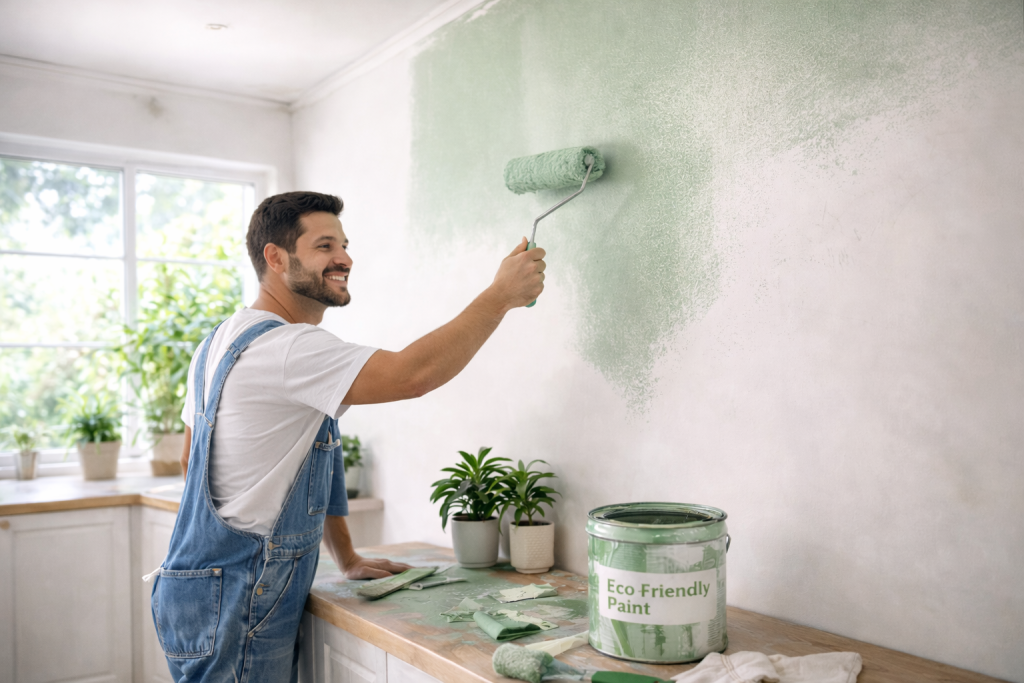
Cleaner air, richer color, lasting durability — Drywall Paint Plus delivers it all. Call us at 508.981.3254 and schedule your estimate today and paint with confidence.